


Trauma healing coach certification
Trauma healing coach certification is a focused certification course and training program for coaches, practitioners, wellness professionals, and helping experts seeking practical skills, a credible certificate, and client-centered methods for growth, healing, and transformation.


10
모듈
13h 16min
오디오 수업
4.9/5
코스 리뷰
∞
평생 이용권
기능
이 코스에는 다음이 포함됩니다

10 모듈들
완전한 커리큘럼

10 PDFs
다운로드 가능한 가이드

13h 16min 분량의 오디오 강의 콘텐츠.
나레이션 수업

인터랙티브 퀴즈
지식 테스트

수료증
수료 시 수여

보험 적용 가능 (ICHAP)
보험 인증 자격

평생 이용권
모든 기기에서 24/7 액세스 가능

주간 라이브 Q&A
매주 라이브 세션
개요
강좌 설명
Trauma Healing Coach Certification: Guiding Recovery and Resilience 🌱💪
The Trauma Healing Coach Certification offers a comprehensive framework for understanding trauma, its impact on the mind and body, and effective coaching strategies for fostering healing and resilience. Designed for coaches, therapists, and professionals working in mental health and wellness, this program provides in-depth knowledge of trauma-informed approaches, nervous system regulation, and evidence-based healing techniques. Through a structured ten-module curriculum, participants explore key concepts such as the neurobiology of trauma, somatic healing, cognitive reframing, and compassionate coaching methods. Each module blends theoretical insights with practical exercises, case studies, and self-reflection prompts to ensure both understanding and application. With integrated assessments and interactive learning tools, this certification empowers participants to support clients in their healing journey with confidence, sensitivity, and professionalism.
🔑 Foundations and Core Skills
The course begins by introducing the foundational principles of trauma-informed coaching, emphasizing a client-centered approach. Participants learn to create safe, empathetic environments essential for addressing trauma's impact. Core modules include techniques in emotional regulation, guided visualization, and rapport-building strategies, all aimed at helping clients navigate their healing journeys effectively
🎯 Advanced Coaching Techniques
Advanced modules delve into specialized practices such as hypnotic techniques, storytelling, and self-hypnosis to deepen client engagement. Participants are trained to address challenges like resistance, limiting beliefs, and fear of judgment. These tools enable coaches to unlock clients' latent potential and help them achieve sustainable progress. The program also covers adapting strategies to meet diverse needs, from anxiety to career transitions
🎓 Professional Growth and Accreditation
The program includes practical insights for establishing a successful coaching practice. Topics such as marketing, identifying target audiences, and developing a unique coaching niche are emphasized. Participants benefit from a globally recognized certification accredited by leading organizations like the IPHM, CMA, and CPD. This credential ensures that graduates meet high professional standards, bolstering their credibility in the coaching industry
🤝 Program Features and Community Support
The certification consists of 10 detailed modules, offering a mix of interactive quizzes, audios, and downloadable resources. Participants gain access to a global peer community for networking and skill-sharing. Additional perks include tools for business management and a platform for connecting with potential clients. Each enrollment also supports environmental initiatives through tree planting, reflecting the program’s holistic values.
By completing this program, participants are empowered to make a meaningful impact, guiding clients toward emotional and mental well-being while building rewarding coaching careers.
더 많은 옵션을 찾고 계신가요? 모든 Coaching & Counseling 강좌 탐색하기 →
 모듈
모듈
코스 강의 계획서
Module 1 : Introduction to Trauma Healing
1:03:05
This introductory module offers a holistic approach to understanding and treating trauma, exploring its effects on mind, body and spirit. It combines theory and practice to equip practitioners with effective skills tailored to the varied needs of survivors. Key points: - Global impact of trauma: It simultaneously affects an individual's emotional, psychological, physical and spiritual dimensions. - Typologies of trauma: Identification of acute trauma (isolated events), chronic trauma (prolonged exposure), complex trauma (multiple and often relational) and collective/generational trauma. - Fundamental theories: Introduction to key concepts such as polyvagal theory, attachment, and the neurobiology of trauma. - Evolution of trauma studies: Historical overview from the World Wars to recent neuroscientific discoveries. - Integrative approaches: Combining somatic, cognitive and cultural techniques for holistic healing. - Principles of trauma-informed care: Creating safe spaces, promoting autonomy, and respecting individual narratives in the healing process.
Module 2 : Understanding the Neurosciences of Trauma
1:11:07
This module explores the neurological impact of trauma, providing an in-depth understanding of brain alterations and techniques to promote regulation and healing. It focuses on brain plasticity and integrative approaches to recovery. Key points: - Brain regions affected: Trauma alters the amygdala (fear), hippocampus (memory) and prefrontal cortex (emotional regulation), disrupting stress response and cognition. - Nervous system dysfunction: Trauma causes sympathetic (hypervigilance) or parasympathetic (numbness) overactivation. - Neuroplasticity: The brain can reorganise itself through targeted interventions, enabling positive neuronal pathways to be rebuilt. - Polyvagal theory: Understands the importance of the vagus nerve in states of safety, fight/flight or immobility, guiding physiological approaches. - Somatic regulation: Techniques such as breathing, movement and mindfulness to stabilise the nervous system and reduce traumatic symptoms. - Practical applications: Integration of psychoeducation, graded exposure and sensory activities to support clients in their recovery.
Module 3: Somatic Approaches to Trauma Healing
1:03:23
This module emphasizes the importance of somatic (body-based) approaches in trauma healing, recognizing the profound impact trauma has on both mind and body. It explores techniques to reconnect with the body, regulate the nervous system, and release stored trauma.
Key Points:
- Body-Mind Connection: Trauma is stored in the body as physical tension, altered breathing patterns, and somatic memories. Addressing both physical and emotional aspects is essential for comprehensive healing.
- Somatic Awareness: Techniques like body scans and mindful movement help trauma survivors reconnect with their bodies, identify tension, and manage triggers.
- Breathwork: Practices such as diaphragmatic breathing and box breathing regulate the nervous system, reduce stress, and facilitate emotional processing.
- Movement-Based Therapies: Dance and expressive movement therapies enhance body awareness, release emotions, and build community support, addressing non-verbal trauma expressions.
- Bodywork: Hands-on approaches like massage therapy release chronic tension, improve physical awareness, and activate the parasympathetic nervous system for relaxation.
- Gradual Integration: Safety and client comfort are prioritized by introducing techniques gradually, respecting individual boundaries, and tailoring interventions to unique needs.
Module 4: Psychological Approaches to Trama Healing
34:29
Dive into cognitive-based methods such as Cognitive Behavioral Therapy (CBT) and Cognitive Processing Therapy (CPT). Learn how to reframe trauma-related thoughts and beliefs and support clients in processing traumatic memories. Key Points Cognitive Behavioral Therapy (CBT): Reframes trauma-related thoughts. Techniques include cognitive restructuring, exposure therapy, and behavioral activation. Mindfulness-Based Approaches: Enhances present-moment awareness and emotional regulation. Practices include body scan meditation and mindful breathing. Compassion-Focused Therapy (CFT): Reduces self-criticism by fostering self-compassion. Techniques like compassionate imagery promote emotional balance. Narrative Therapy: Encourages clients to re-author their trauma stories. Techniques focus on identifying unique outcomes and rebuilding agency. Exposure Therapy: Reduces avoidance by gradual exposure to trauma triggers. Effective for addressing PTSD-related fears. Integration of Approaches: Combining methods tailors healing to each client, ensuring a holistic approach.
Module 5: Evidence Based Treatment for Trauma and Healing Emotional Wounds
1:13:54
Module 5 delves into evidence-based treatments (EBTs) for trauma, emphasizing their scientific validation and practical applications. It highlights the importance of tailoring these approaches to individual needs while maintaining a compassionate therapeutic alliance. Key Points Prolonged Exposure Therapy (PE): Gradual exposure to trauma-related cues helps reduce PTSD symptoms. Techniques include imaginal exposure, in vivo exposure, and breathing retraining. Somatic Experiencing (SE): Focuses on body awareness and completing the nervous system’s stress response. Techniques like pendulation and grounding address somatic symptoms of trauma. Focalizing: Builds resilience through body-centered awareness and present-moment focus.Techniques include body scanning and titration to regulate the nervous system. Integrative Approaches: Combining EBTs enhances holistic trauma treatment. Integration addresses cognitive, emotional, and somatic aspects. Grief and Trauma: Grief linked to trauma requires addressing loss-oriented and trauma-related symptoms. Techniques include narrative therapy, expressive arts, and trauma-informed grief counseling. Building Emotional Resilience: Fosters long-term recovery through mindfulness, cognitive reframing, and social support. Promotes self-compassion and active coping strategies.
Module 6 - Trauma and Relationships
1:21:14
Module 6 explores how trauma affects relationships, focusing on attachment styles, trust-building, intimacy, and conflict resolution. It provides strategies for practitioners to support clients in healing relational wounds and fostering secure connections. Key Points Trauma and Attachment Styles: Trauma impacts attachment, often leading to insecure styles (anxious, avoidant, or disorganized). Healing involves developing secure patterns through self-awareness and emotional regulation. Rebuilding Trust: Trauma erodes trust, making safety and consistency essential. Techniques include gradual exposure, cognitive restructuring, and fostering self-trust. Conflict Resolution: Trauma can heighten emotional reactivity and miscommunication. Strategies include emotion regulation, "time-outs," and active listening. Intimacy Challenges: Trauma disrupts emotional and physical intimacy. Healing requires gradual rebuilding of safety, boundaries, and self-intimacy. Navigating Memories: Trauma affects implicit and explicit memories. Techniques like grounding and narrative therapy aid integration. Application Tools: Tools such as mindfulness exercises and cognitive worksheets support healing. Cultural sensitivity is vital in applying these methods effectively.
Module 7 : Cultural Sensitivity and Ethical Considerations in Trauma Work
1:02:01
Module 7 emphasizes the importance of cultural sensitivity and ethical practices in trauma healing. It guides practitioners to navigate cultural contexts, ethical dilemmas, and systemic factors affecting trauma experiences and recovery.
Key Points:
- Cultural Context in Trauma: Understanding how culture shapes trauma experiences, healing approaches, and expressions is crucial. Practitioners must respect diverse cultural norms and integrate culturally relevant practices.
- Intersectionality: Clients' identities, including race, gender, and socioeconomic status, intersect to influence trauma impacts and recovery needs, requiring nuanced approaches.
- Community-Based Models: Engaging in communal healing and integrating traditional rituals strengthen recovery, especially for marginalized groups.
- Collective and Intergenerational Trauma: Addressing shared or inherited trauma through community-led initiatives and cultural revitalization fosters deeper healing.
- Ethical Practices: Practitioners must balance confidentiality, informed consent, and client autonomy while prioritizing safety, particularly in sensitive cases like self-harm.
- Practitioner Self-Care: Preventing burnout and vicarious trauma is essential for maintaining effective, ethical care and fostering resilience.
Module 8 : Advanced Trauma Healing Techniques
1:06:44
Module 8 focuses on advanced trauma healing methods, integrating innovative, body-oriented, and evidence-based approaches to address the complex impacts of trauma. These techniques provide deeper and more comprehensive recovery opportunities by blending traditional therapy with novel interventions.
Key Points:
- Eye Movement Desensitization and Reprocessing (EMDR): This technique uses bilateral stimulation to reprocess traumatic memories, facilitating emotional resolution and reducing PTSD symptoms.
- Somatic Experiencing (SE): Developed by Dr. Peter Levine, SE helps release trapped trauma energy in the body and restores the nervous system’s balance through gradual bodily awareness.
- Hypnotherapy: By inducing a trance state, it accesses the subconscious to process repressed memories and emotions, often enhancing emotional regulation and symptom reduction.
- Sensorimotor Psychotherapy: This combines cognitive and somatic approaches, addressing the physical imprints of trauma through mindful awareness and movement.
- Energy Healing: Modalities like Reiki and chakra balancing target trauma stored in the body's energy field, promoting relaxation and emotional release.
- Virtual Reality (VR) Therapy: VR creates immersive, controlled environments for exposure therapy, aiding PTSD treatment by simulating scenarios for gradual trauma processing.
Module 9 : Integrating Trauma Healing with Other Therapies
1:10:14
Module 9 delves into combining various therapeutic modalities to create holistic and personalized trauma recovery plans. By addressing the mind, body, and spirit, this integrative approach enhances resilience and promotes comprehensive healing.
Key Points:
- Nutritional Therapy: Highlighting the link between diet and mental health, this includes omega-3s, probiotics, and mindful eating to support brain health, reduce inflammation, and stabilize mood.
- Art and Expressive Therapies: Non-verbal creative modalities like art, music, and drama foster emotional expression, integration, and catharsis, making them ideal for processing deep-seated trauma.
- Nature and Eco-Therapy: Engaging with natural environments reduces stress, improves mood, and promotes grounding through mindfulness and sensory awareness in outdoor settings.
- Breathwork and Cognitive Integration: Breathwork supports emotional regulation, enhances cognitive restructuring, and deepens the mind-body connection during trauma therapy.
- Trauma-Informed Yoga: This emphasizes choice, safety, and mindfulness, fostering body awareness and emotional regulation through gentle movement and breath techniques.
- Technological Innovations: Tools like VR and mobile apps extend therapeutic support, improve accessibility, and complement traditional therapy methods.
Module 10 : Facilitating Trauma Healing as a Practitioner
1:30:15
This module focuses on essential skills and approaches for trauma healing practitioners, emphasizing the importance of safety, adaptability, and cultural awareness. It provides tools for creating supportive environments and addressing client needs effectively.
Key points:
- Facilitation Skills: Practitioners must master active listening, empathy, communication, and boundary-setting to guide clients' healing journeys.
- Engagement Strategies: Techniques such as building therapeutic alliances, goal-setting, and addressing barriers improve client retention and treatment outcomes.
- Managing Emotional Overwhelm: Recognizing triggers, using grounding techniques, and working within the “window of tolerance” help maintain a safe and effective session.
- Group Healing: Creating structured, flexible environments with clear norms promotes shared healing and reduces isolation among participants.
- Virtual Platforms: Adapting therapeutic techniques for online settings ensures accessibility while maintaining confidentiality and engagement.
- Practitioner Growth: Continuous learning, self-reflection, supervision, and personal development are vital to providing effective care and preventing burnout.
혜택
왜 Naturalistico를 선택해야 하나요
즉시 액세스
모든 강의 콘텐츠에 즉시 평생 액세스하세요
미국에서 인증됨
당사의 인증은 귀하의 실무를 보호하고 보장합니다
478.4K 학생
성장하는 글로벌 코치 커뮤니티에 참여하세요
30일 무료 체험
모든 강의에 30일 환불 보장
 인증
인증
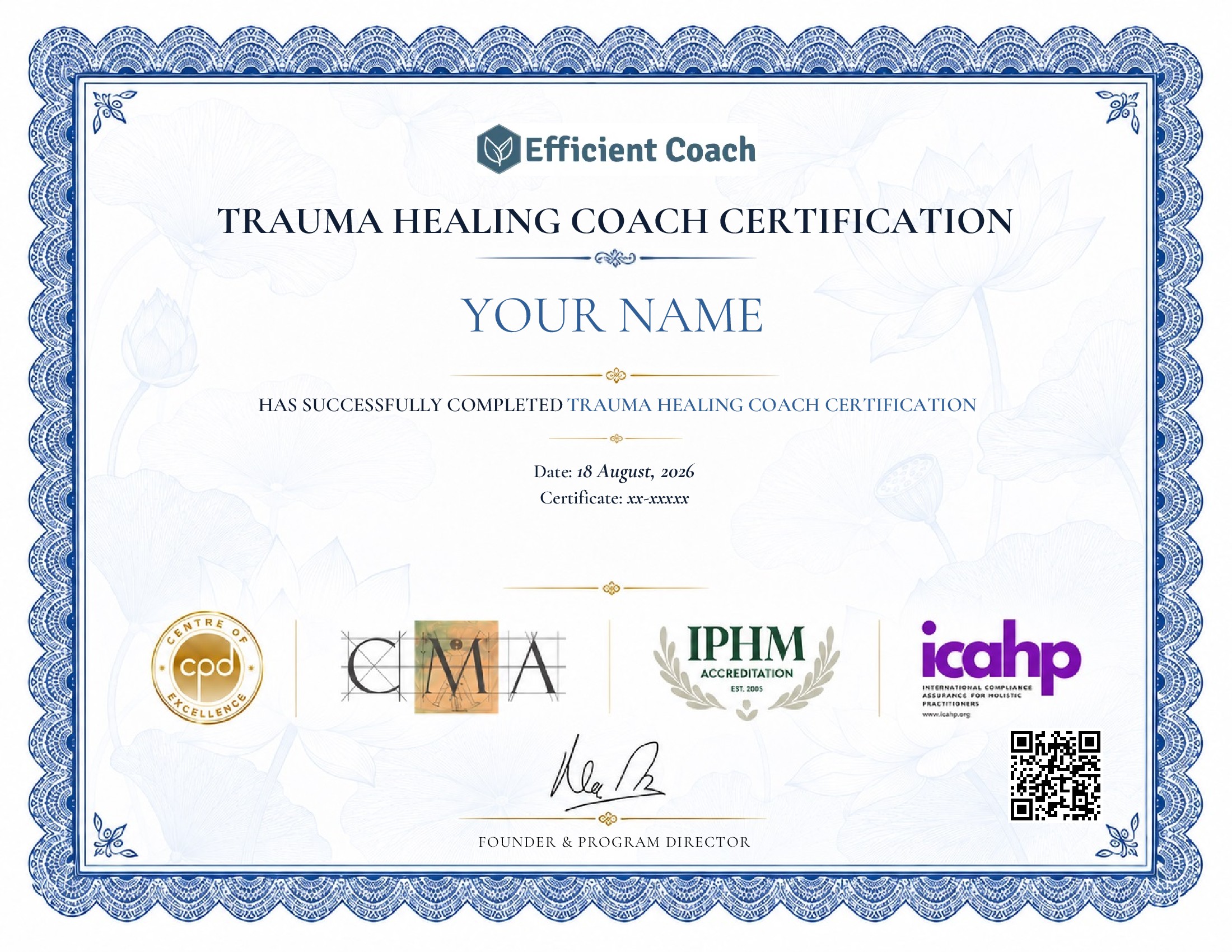
우리의 인증서는 국제적으로 인정받고 있습니다
우리의 인증서는 IPHM(국제 전인 의학 실무자 협회), CMA(보완 의학 협회), 및 CPD(우수 센터)에서 인증을 받았으며, 이는 국제적으로 평가되고 인정되었음을 의미합니다.
강좌 제공 기관
강좌를 만든 기관을 만나보세요

Efficientcoach
전문화
홀리스틱 의학
코칭 및 상담
에너지 치료법
강좌
Art Life Coach Certification
Positive Psychology Coach Certification
Life Coaching Certification
Spiritual Coach Certification
Relationship Coach Certification
At Efficient Coach, we are dedicated to helping you unlock your true potential through personalized, transformative coaching. By combining proven techniques with modern, data-driven methods, we tailor every step of your journey to your unique needs and aspirations. Our mission is to guide you in overcoming challenges, fostering personal growth, and achieving self-mastery. We believe in the power of self-reflection, curiosity, and continuous evolution, creating a supportive space where you can thrive and reach new heights.
비교하기
전문가들이 Naturalistico를 선택하는 이유
| 기능 | 우리의 접근 방식 Naturalistico $97.00, 공인 인증, 자기 주도 학습 | ICF / PAAC 프로그램 $4,000.00~$13,000.00 | 대학 학위 $40,000.00~$120,000.00 |
|---|---|---|---|
| 수업료 | $97.00 | $4,000.00~$13,000.00 | $40,000.00+ |
| 형식 | 자기 주도, 완전 온라인 | 실시간 그룹 수업, 일정 진행 | 대면 또는 하이브리드 |
| 이수 기간 | 약 40시간 | 6개월~24개월 | 2년~6년 |
| 인증 | IPHM, CPD, CMA | ICF, PAAC | 지역 학술 인증 |
| 적합한 대상 | 신뢰할 수 있고 합리적인 가격의 자격을 원하는 전문가 | 특정 직무를 위해 ICF 또는 PAAC가 필요한 분 | 임상 또는 학술 진로 |
| 지속적인 이용 | 평생 이용, 추가 비용 없음 | 제한적, 프로그램에 따라 다름 | 졸업생 전용 이용 |
| 환불 정책 | 30일 환불 보장 | 제한적이거나 없음 | 없음 |






Practitioners certified across 6 continents
 보너스
보너스
이 강좌와 함께 독점 보너스를 즐기세요
이 과정에 등록한 학생들도 이것들을 즐겼습니다.

보너스 1
Automatic Client Enrolment Super System
Ready to grow your holistic practice? Join our Automatic Client Enrolment Super System Certification course!

Holistic-Focused Strategies
Proven Techniques
Get Certified
보너스 2
Student map
Calling all students! Explore our Student Map platform designed to help you connect, chat, and collaborate with fellow students worldwide.
Easy Student-to-Student Connections
Global Networking Opportunities
Chat and meet others to practice your craft

보너스 3
Forum
Students, it’s time to connect, discuss, and share your insights on our vibrant Student Forum.
Engage with Peers Worldwide
Explore Diverse Topics
Collaborate and Learn

보너스 4
Holistico CRM business suite
Experience the power of Holistico Professional+ with a complimentary trial, your all-access pass to our most advanced tools. Or keep exploring with our Free Plan, always on us.
Take payments
Manage your appointments
Have your services discovered

보너스 5
Every Purchase Plants 1 Tree!
With every order, we're teaming up with One Tree Planted to plant a native tree, creating a greener planet. 🌱
Improved Air Quality
Restore wildlife habitats
Support sustainable communities

보너스 6
Earn $15 in Credits with Your First Purchase! (300 points)
Start your learning journey and get rewarded instantly — earn 300 points ($15 value) on your first course purchase! Redeem your points for free courses and exclusive rewards. 🎓
Earn while you learn
Redeem for free courses
Grow your rewards with every purchase

보너스 7
Free Weekly Live Classes
Get free access to our Weekly live classes to learn new skills and keep growing personally and professionally.
Interactive Live Sessions
Learn from Experts
Connect with a Global Community
한시적 특가
$2,503.00
96% OFF
패키지 총 가치
오늘 특별가로 등록
$97.00
$97.00 결제 시 아래 모든 것이 포함됩니다.
$2,503.00 패키지 — 프리미엄 Naturalistico 인증서, 전문 마케팅 교육, 라이브 수업, 비즈니스 소프트웨어, 전 세계 학생 커뮤니티 — 오늘 등록 시 모두 포함됩니다.
- 인증을 받아 더 많은 고객을 유치하세요
- 전문 비즈니스 도구로 실습을 운영하세요
- 라이브로 배우고 전 세계 학생들과 연결하세요
 혜택
혜택
자주 묻는 질문
당신에게 질문이 있다면, 저희에게 답이 있습니다.
어떻게 코스에 등록할 수 있나요?
원하는 과정을 선택한 후 ‘장바구니에 추가’ 버튼을 클릭하세요. 원하는 만큼 과정을 추가할 수 있습니다. 장바구니에 들어가면 결제를 확인할 수 있습니다. 이 단계에서 종이 증명서를 주문하는 것도 가능합니다. 이 옵션은 선택 사항입니다. 결제가 완료되면 주문 확인 이메일을 받게 됩니다.
코스를 완료하는 데 얼마나 걸리나요?
코스를 완료하거나 최종 시험을 보는 데 기한은 없습니다. 등록 후에는 코스에 평생 접근할 수 있습니다. 대부분의 코스는 약 40시간이 걸리는 것으로 추정되지만, 학생마다 학습 속도는 다릅니다. 일부 코스 활동은 다른 것보다 시간이 더 걸릴 수 있으며, 일부 개념을 복습해야 할 수도 있습니다. 가장 중요한 것은 학습 과정에서 편안함을 느끼는 것입니다.
코스에 대해 도움이 필요하면 질문할 수 있나요?
네, 물론입니다. 학생 포럼이 이 목적을 위해 마련되어 있습니다. 질문을 하면 강사나 다른 학생들이 답변할 수 있습니다. 학습에 어려움을 겪지 않도록 필요할 때 언제든지 질문하시길 권장합니다. 주말 및 공휴일을 제외하고 강사가 답변을 드리기까지 최대 48시간이 소요될 수 있습니다. 학습 진행 상황과 성과도 자유롭게 공유해 주세요!
로그인 정보를 잃어버리면 어떻게 해야 하나요?
[email protected]으로 이메일을 보내 메시지를 보낼 수 있습니다. 로그인 화면에서 ‘비밀번호를 잊으셨나요?’를 클릭할 수도 있습니다. 그러나 등록 확인 이메일을 받으면 로그인 정보를 바로 기록해 두는 것을 권장합니다.
여행이나 워크숍이 필수인가요?
아니요, 모든 과정은 온라인으로 진행됩니다. 여행이나 워크숍은 필요하지 않습니다. 독립적으로 학습하며 자신의 속도에 맞게 진행할 수 있습니다. 강의 모듈과 오디오 파일을 다운로드하여 어디에서나 들을 수 있습니다. 질문이 있으면 포럼에서 물어보세요.
코스 동안 어떻게 평가받나요?
각 코스는 여러 모듈로 구성되어 있습니다. 각 모듈이 끝날 때 학습 평가를 위한 퀴즈가 제공됩니다. 또한 여러 실습 활동을 통해 배운 지식을 적용할 수 있습니다. 코스가 끝나면 다지선다형 설문지 형태의 최종 온라인 시험을 보아야 합니다. 최소 점수는 80%이며, 80%에 도달하지 못한 경우 언제든 시험을 다시 볼 수 있습니다. 하지만 사전에 코스를 복습하는 것을 권장합니다.
필수 조건이 있나요?
필수 조건이나 최소 학력 요구 사항은 없습니다. 모든 강의는 최대한 많은 사람들이 참여할 수 있도록 신중하게 설계되었습니다. 컴퓨터, 태블릿 또는 스마트폰을 통해 학습할 수 있습니다. 인터넷 연결이 불안정하다면 PDF 모듈과 오디오 파일을 다운로드하여 언제든 오프라인에서 접근할 수 있기를 권장합니다. 하지만 퀴즈를 완료하고 최종 시험을 보려면 인터넷 연결이 필요합니다.
코스가 끝나면 인증서를 받을 수 있나요?
등록 시 종이 인증서를 주문하셨다면 받으실 수 있습니다. 그렇지 않다면 학생 포털의 '인증서' 섹션에서 나중에 주문할 수 있으며, PDF 형식으로 무료 다운로드도 가능합니다.
이 인증서는 공식적으로 인정되나요?
저희 코스가 준비시키는 직업은 대부분의 국가에서 규제되지 않는 직업군에 속합니다. 이는 공식적인 인정을 받지 못한다는 것을 의미합니다. 그러나 지역 규정은 다를 수 있습니다. 관련 기관에 문의하시길 권장합니다.
한시적 특가
Trauma healing coach certification
모든 강의에 30일 환불 보장
오늘 특별가로 등록
$97.00
$398.00 · 76% 할인
- 평생 이용권
- 수료증 포함
- 30일 환불 보장
30일 환불

Naturalistico 고객지원
보통 몇 초 안에 답변합니다
🎓 오늘 자격증 시작 — 76% 할인
안녕하세요 — 이 과정에 대해 궁금한 점 있으신가요? 👋
Trauma healing coach certification에 대해 무엇이든 물어보세요. 가격, 인증, 수업 방식, 환불까지요. 아래에서 주제를 골라도 됩니다.
Powered by Naturalistico
Trauma healing coach certification for $97.00
 30일 보증


