Practitioners can plan timing, scope, and technique beautifully—and still find the session’s tone set by the room’s very first breath. Many clients arrive carrying stress histories and scent sensitivities that shape how they meet a space. A lingering diffuser note, detergent, or even a previous visitor’s fragrance can land before any words do.
Because smell connects quickly with emotion and memory, it works best as a small, precise choice—not a constant backdrop. Used gently, aroma can help someone settle and support recall through repetition. The craft is simple: subtlety, consent, and the ability to go fully scent-free at any point.
Key Takeaway: Use scent as a small, client-led intervention: keep it subtle, choose one clear note, and make “scent-off” easy. When paired consistently with a simple practice, aroma can help shape the session’s emotional climate and become a reliable cue clients can use to return to regulation and insight.
From threshold to felt sense
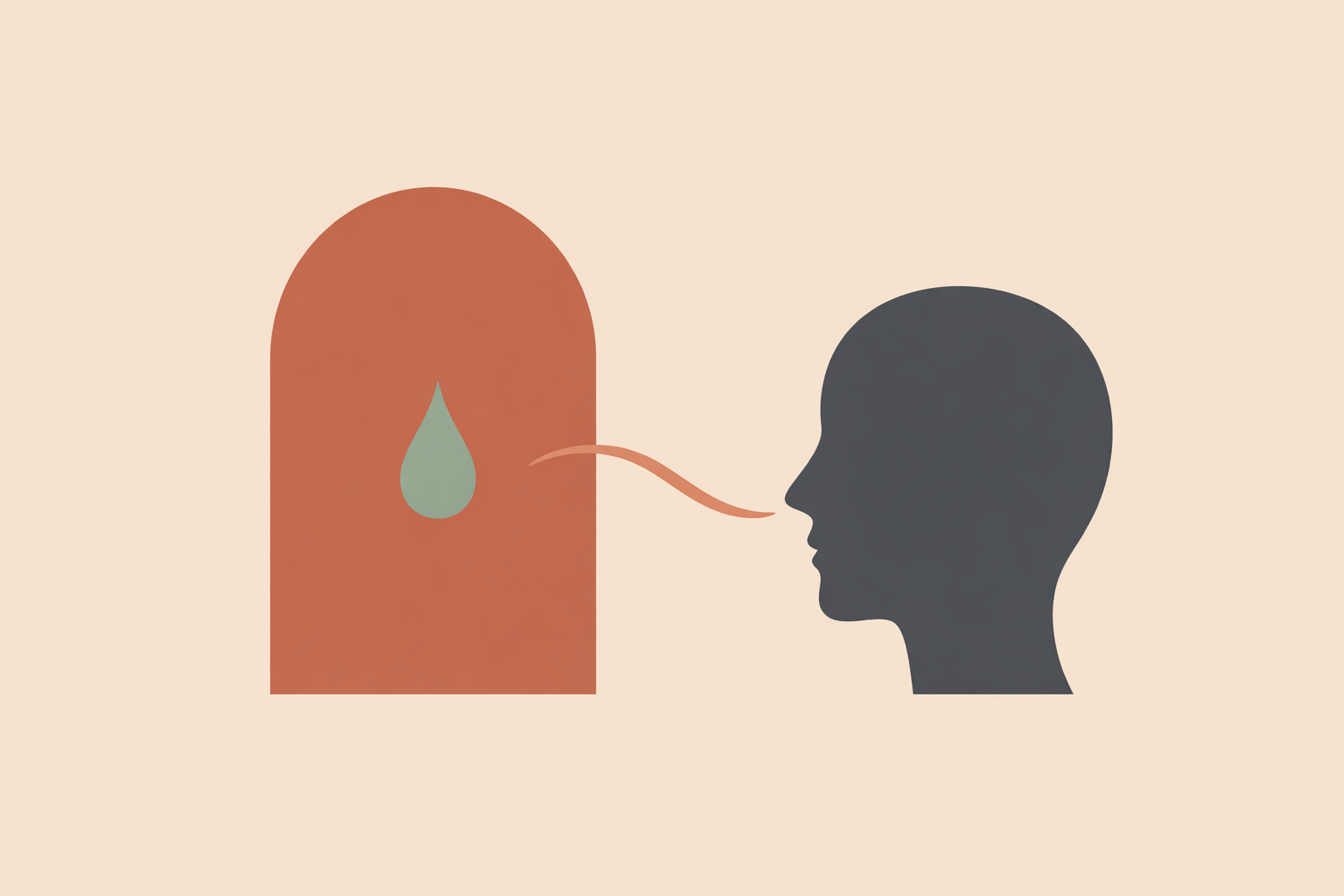
Many practitioners recognize the moment: someone steps in, catches a trace of resin, citrus, or floral water, and their posture changes. That speed makes sense—olfactory input travels quickly into brain regions involved in emotion and memory, which is why smell can feel immediate, vivid, and pre-verbal.
That same pathway helps explain why gentle aroma can set the room’s “felt sense” so fast. Reviews suggest inhaled scents like lavender and chamomile may relate to reduced stress for some people. Here’s why that matters: a light touch can soften the threshold, while a strong or mixed scent can make the doorway feel narrower.
How to shape the threshold well
- Keep aroma whisper-level rather than room-dominating.
- Choose one clear note instead of a complex blend.
- Air the room between sessions so older odors do not stack.
- Offer a scent-free option that feels just as thoughtful as the aromatic one.
- If in doubt, use less.
Subtlety also works better because nose adaptation happens quickly. What feels supportive at first can fade into the background—or start to feel heavy—when it never pauses.
Co-creating the sensory field
The most reliable way to work with scent is to design it with the client, not for them. Think of it like adjusting the lighting together: choice turns the environment into a shared support rather than a fixed condition someone must tolerate.
A simple opening does the job: “Some people enjoy a light aroma in the room, and some prefer none. Do you have any scents you love, dislike, or prefer to avoid today?” This makes room for preference, memory, lineage, ritual meaning, and plain practicality.
It also helps to ask about common triggers before using anything. Indoor fragrance findings suggest discomfort isn’t rare, with many respondents reporting health problems from fragranced products. So even when scent is only a minor part of your setup, client-led choices keep the space steadier and more inclusive.
Useful client-led tools
- A 0–10 scent dial: “How strong is this for you right now?”
- Personal inhalers or simple inhalation tools like scent strips instead of room-wide diffusion.
- A visible “scent-off” card the client can use without explanation.
- One short opening ritual, such as three soft breaths with or without aroma.
When clients help author the atmosphere, aroma becomes a form of cooperation—quiet, practical, and respectful.
Scent, memory, and integration beyond the session
Scent doesn’t only influence mood in the moment; it can support learning, too. Pairing a distinct aroma with a meaningful practice or insight creates a cue someone can use later when they want to return to a grounded, focused state.
Building aroma anchors that last
Recall often strengthens when context cues repeat. Research on matching cues supports the idea that consistent signals can help retrieval. Put simply: if a scent accompanies a settling breath or key reflection often enough, it can become a reliable “way back in.”
Traditional lineages have applied this for centuries. Incense, resins, aromatic woods, and floral waters weren’t valued only for pleasantness; they were also used to mark time, signal intention, and give important moments a sensory signature.
In session, it can stay beautifully simple: one aroma, one purpose, one practice—repeated until it feels familiar.
How to create a reusable anchor
- Pick a single state to support: grounded presence, softer breathing, clearer focus, gentle courage.
- Choose one scent for that state and keep it consistent.
- Pair it with a micro-practice: three breaths, a phrase, a hand on heart, feet on floor.
- Rehearse it before the session ends so the client experiences the full pairing once more.
- If appropriate, send the client away with a scent strip or personal inhaler for later use.
Over time, the aroma matters less as a fragrance and more as a doorway—an easy prompt to return to something the person already knows how to access.
There’s also growing interest in structured smell practice. One line of work links regular olfactory enrichment with improved cognition and changes in brain connectivity in older adults. That doesn’t mean everyone needs a formal routine, but it does reinforce a traditional truth: conscious engagement with scent can be meaningful.
Light follow-through between sessions
- Invite the client to try the scent anchor in one real-life moment that week.
- Ask what shifted and what did not.
- Adjust the scent, intensity, or practice if needed.
- Encourage everyday noticing: tea, herbs, rain, wood, citrus peel, cooking spices.
Regularly noticing everyday aromas can support brain vitality—and just as importantly, it builds sensory literacy. Essentially, the more someone can notice and name what their environment is doing to them, the more choice they tend to have inside it.
Scent, safety, and practitioner presence
Smell is one of the body’s oldest ways of reading safety. From an evolutionary perspective, olfaction helped living beings quickly assess what was nourishing, risky, or worth avoiding—and that fast “read” still shapes modern spaces.
Using scent as a gentle safety signal
Some odors can prime vigilance or relaxation before conscious thought catches up. Olfactory systems evolved to detect cues important for survival, which is why a clean, quiet scent can support focus, while layered or clashing aromas can do the opposite.
Traditional practice often matches scent families with intention—frankincense for settling, citrus for uplift, rosemary for alertness. Rosemary, for example, has research associated with alertness and aspects of cognitive performance. Still, the most skillful choice is rarely the trendiest one; it’s the one that fits the person, the moment, and the intensity they actually want.
Rhythm matters as much as selection. Because continuous exposure can fade perception, intermittent use often keeps the space clearer—aroma, then pause, then neutral air.
Simple regulation rituals
- Begin with one shared breath and one optional aroma.
- Use a grounding triangle: feet, exhale, scent.
- If activation rises, return to neutral air first.
- Let pauses and ventilation be part of the method, not an afterthought.
The practitioner’s own regulation also matters. Research on interpersonal synchrony suggests people can quickly resonate with another person’s affective state. In everyday terms, if you arrive settled and unhurried, that steadiness is often felt before it’s explained—sometimes supported by a quiet personal scent ritual of your own.
“Smell is one of the body’s oldest ways of reading safety.”
Consent, inclusion, and clear stop rules
Consent around scent should be explicit, easy, and ongoing. A simple question is enough: “Would you like a very light aroma today, or would you prefer the room unscented?” Every answer should feel equally welcome.
Inhalation is generally considered a low-risk route for emotional support when used appropriately—but “low risk” still means paying attention. If someone experiences headache, nausea, dizziness, coughing, or agitation, the response can be immediate and calm: stop the scent and ventilate the space.
Good inclusion practices
- Keep unscented linens, cleaners, and base oils available.
- Label blends clearly and avoid mystery mixtures.
- Prefer personal inhalers over full-room diffusion when possible.
- Ventilate between sessions.
- Make scent-free participation normal, not secondary.
When the sensory field is adjustable, trust often deepens. People don’t have to endure the environment—they can help shape it.
Conclusion
Aromatic practice has long been used to settle, uplift, focus, and mark meaningful moments. Modern research helps describe why it can work so quickly, and traditional wisdom keeps the method human: keep scent light, clear, respectful, and optional.
Use aroma to soften the threshold, reinforce a practice worth remembering, and support steadiness without crowding the room. Done well, scent doesn’t dominate a session—it quietly strengthens it.
Small rituals can carry real continuity: a familiar inhaler before a hard conversation, a single grounding note during breathwork, a few seconds a day noticing what’s already present in ordinary life. That’s the deeper value—not fragrance for its own sake, but a thoughtful sensory language that supports presence, recall, and well-being in ways clients can actually use.
Train in Aromatherapy Certification
Learn client-ready aromatherapy skills that prioritize consent, subtlety, and effective scent anchors for practice.
Explore Aromatherapy Certification →