If you coach adults with ADHD, you’ll hear the same painful refrains: “I’m lazy.” “I can’t follow through.” “Something is wrong with me.” By the time someone reaches out for support, years of missed tasks, criticism, and inner pressure have often hardened into identity. In that state, even a solid planning system can collapse after one difficult email or a forgotten commitment—because shame arrives first, and the tools never quite land.
That’s why rebuilding self-esteem isn’t separate from practical ADHD coaching. It’s the foundation under it. When people feel safer in themselves, they can experiment, recover, and try again. When they don’t, every setback gets folded into a story about who they are.
What tends to help most is a sequence that protects identity while creating steady, believable wins: separate behavior from self-worth, work with shame in the moment, design goals that feel genuinely engaging, replace performance policing with supportive accountability, and root change in values, culture, and a livable future.
Key Takeaway: Sustainable progress in adult ADHD coaching depends on protecting identity while building consistent, believable wins. When clients learn to separate self-worth from behavior, regulate shame in real time, set meaningful goals, and use shame-safe accountability, they can recover from setbacks and keep moving.
Move 1: Separate Identity From Behavior
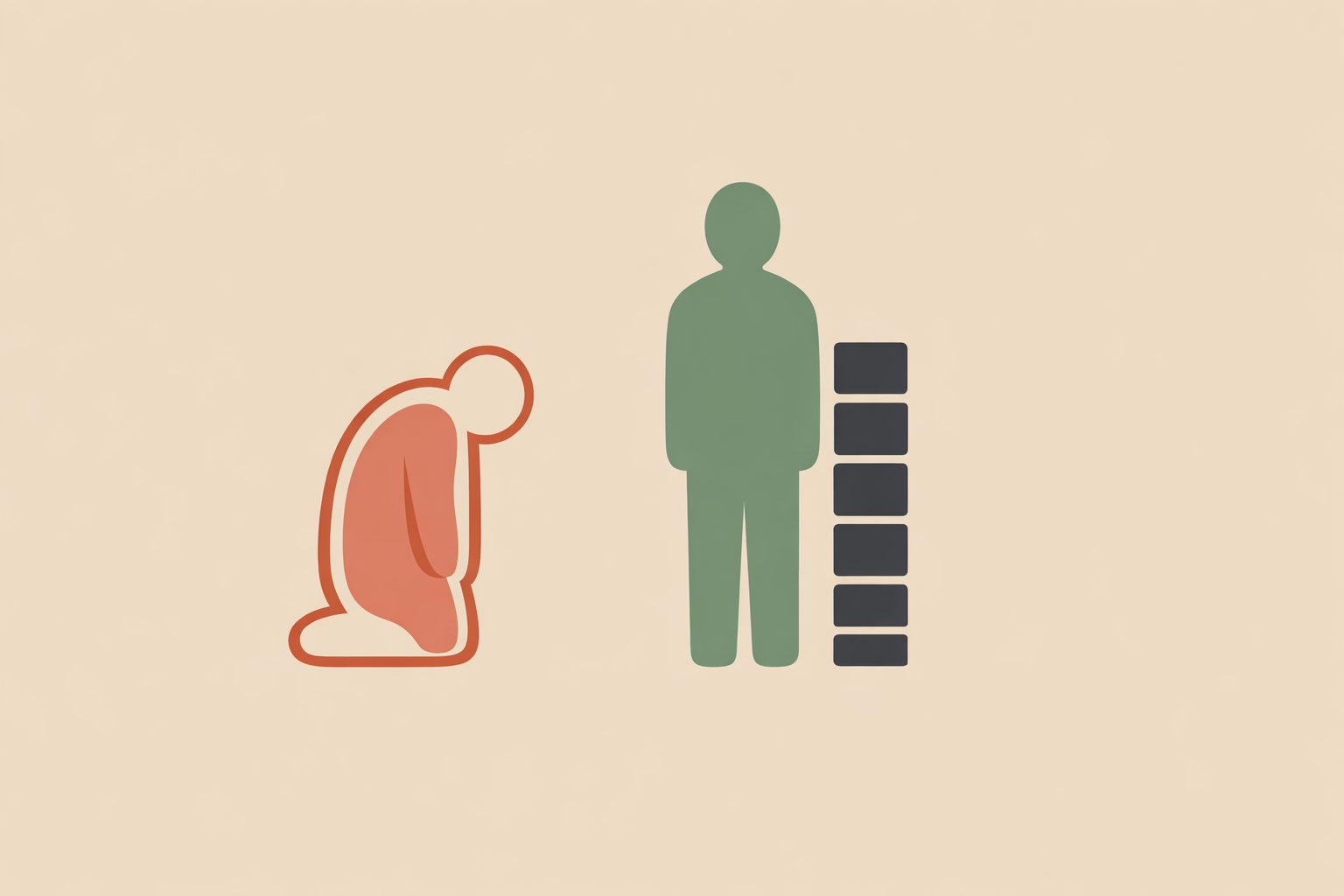
Self-esteem begins to shift when a client stops treating every struggle as proof of personal failure. The first move is simple, but it changes everything: name what happened without turning it into a character verdict.
Many adults with ADHD arrive with what feels like a long record of “evidence”: missed deadlines, lost items, unfinished admin, inconsistent follow-through. Over time, behavior fuses with identity. “I missed two emails” becomes “I’m irresponsible.” “I forgot the appointment” becomes “I can’t be trusted.”
Your job is to slow that fusion down—gently, consistently, and without debate.
A strong opening question is: “What story did your inner critic tell about this?” Then help the client separate story from facts. Facts are specific and workable. Story is global and punishing. Put simply: facts can be coached; shame-stories just bruise.
- Instead of: “I’m lazy.”
- Try: “I avoided starting the task for three days.”
- Instead of: “I always ruin things.”
- Try: “I sent that message too quickly when I was overwhelmed.”
From there, bring in a strengths-based understanding of ADHD—so patterns stop looking like defects. Interest, activation, working memory, time awareness, and task initiation all shape follow-through. A respectful map lowers self-blame and gives you both something real to build around.
“You are not your to-do list. Let’s learn how your brain prefers to work, and build around that.”
This is also where small wins matter. Over time, small wins can support stronger self-esteem—especially when clients notice not only what they completed, but how they showed up: persistence, creativity, honesty, humor, effort.
- Ask: “What strength did you use this week?”
- Then ask: “Where did it show up in real life?”
Here’s why that matters: a strength becomes believable when it’s experienced in daily life, not just named in a session.
Move 2: Work With Shame and Rejection Sensitivity in the Moment
For many adults with ADHD, one piece of criticism can trigger a much bigger internal reaction than the situation seems to justify from the outside. A missed task, a flat response from a colleague, or an impatient message can quickly spiral into shutdown, defensiveness, or collapse.
Practitioners see this often. Rejection sensitivity and emotional intensity commonly travel with ADHD, and perceived criticism can light up shame fast. When that surge is running the system, productivity tools rarely help—because the real need is safety and steadiness first.
So the next move isn’t to push harder. It’s to help the person come back into choice.
Begin by naming what’s present in a warm, ordinary way: “What’s here right now—fear, shame, frustration, sadness?” Essentially, you’re moving the client from a global self-attack into something specific enough to hold.
Then use a brief body-based reset. Traditional lineages have long recognized that breath, rhythm, warmth, touch, and grounding can help someone settle enough to reorient. In coaching, that might look like:
- three slow exhales, longer than the inhale
- pressing both feet firmly into the floor
- a minute of rhythmic movement or shaking
- holding a warm mug and taking three fully present breaths
- looking around the room and naming five things that are steady
Once intensity drops even a little, use a simple micro-protocol to restore agency:
- Pause.
- Name what happened.
- List only the facts.
- Generate one to three options.
- Choose the smallest next step.
“Let’s pause for three slow exhales. Okay—what emotion is most present? What’s one step that’s 60 seconds or less?”
That final question is often the turning point. It transforms overwhelm into motion—small, doable, and self-respecting.
As Zawn Villines notes, “It can help people steadily master executive functioning, determine which environments are most effective for them, and advocate for themselves” (executive functioning).
With repetition, clients learn something deeper than regulation: a wave of shame doesn’t get to decide the rest of the day.
Move 3: Build Goals Around Meaning, Interest, and Achievability
Many adults with ADHD don’t struggle because they lack goals. They struggle because the goals are too vague, too heavy, or too disconnected from what genuinely moves them. “I should” is rarely enough fuel.
Motivation tends to strengthen when goals combine meaning, interest, and achievability. Think of it like lighting a lantern: values provide the wick, interest provides the spark, and a small next step provides the steady flame.
Start with values. Ask what truly matters right now: steadiness, creativity, family, dignity, service, spiritual practice, contribution, rest. Values-linked actions often reduce avoidance because the person isn’t just “doing tasks”—they’re building a life that feels like their own.
Then shape the task so it invites energy rather than drains it:
- Can it be shorter?
- Can it be turned into a challenge or a sprint?
- Can music, color, ritual, or timing make it more appealing?
- Can the first step be made almost laughably easy?
It can also help to include culturally rooted practices where appropriate and welcome. Ask respectfully: “What helps you focus or reset in a way that feels natural to you?” For one person, that might be a morning prayer. For another, tea prepared the way a grandparent made it. For another, drumming, nature time, incense, or a familiar song before beginning. These anchors can restore belonging and direction, and purpose can be strongly supportive in difficult periods.
From there, reduce everything to a minimum viable action:
- Vision: “I want calmer mornings.”
- Value: “I want steadiness and self-respect.”
- Minimum viable action: “Lay out tomorrow’s clothes before bed.”
- Add interest: “Play one favorite song while doing it.”
- Add support: “Send one check-in emoji when it’s done.”
Self-esteem rarely grows from heroic plans. It grows from repeated evidence: “I said I would do something, and I did some part of it—then I returned to it.”
That’s why tracking effort and partial progress can be more protective than tracking outcomes alone. Many people benefit from celebrating small achievements instead of waiting for perfect results.
- Use “I started” as a valid success marker.
- Track attempts, not only completions.
- Review what made the action easier, not only whether it was finished.
Over weeks and months, that repeated evidence becomes trust—and trust is a sturdier form of confidence.
Move 4: Replace Performance Policing With Shame-Safe Accountability
Accountability helps, but only when it feels like support—not surveillance. For clients with a harsh inner critic, binary systems can quickly become another stage for self-judgment.
If the only outcomes are “done” or “failed,” shame often takes over. People hide, overexplain, or quit before the next check-in. Collaborative accountability usually works better because it keeps dignity intact while still creating momentum.
Ask questions that generate learning rather than self-attack:
- What helped?
- What got in the way?
- What part worked better than expected?
- What would make this 20% easier next time?
Assume revision from the beginning. If a plan doesn’t hold, treat it as information. “Great data point” often lowers the temperature instantly and keeps the client in relationship with the process.
Environment design matters too. For ADHD coaching, shaping physical and digital spaces can reduce decision friction and improve follow-through. Common supports include:
- body doubling
- visual cues placed where the task actually happens
- timed work sprints
- reducing extra tabs, notifications, or setup steps
- keeping needed items visible and easy to reach
- building defaults so the next action is already prepared
“What’s the smallest next step? When will it happen? What signal tells us it worked?”
Keep reinforcing progress in a believable way. Self-esteem is tied to daily functioning, and daily functioning often dips when self-worth is low. When clients experience systems that fit them, confidence grows from lived proof—not pep talks.
“ADHD coaching had a positive impact on the lives of people with ADHD,” writes Joyce A. Kubik. In real sessions, that impact becomes most visible when accountability reduces shame and increases ownership.
Move 5: Support Identity, Culture, and Future Vision
At some point, coaching has to become bigger than task management. A person needs a future they can believe in—and a self-story spacious enough to hold both struggle and strength.
Low self-esteem often hardens into identity: “I’m broken.” “I’m unreliable.” “I’ll never get it together.” If that story stays in place, practical gains can feel fragile. The deeper work is helping clients author something truer and kinder.
This isn’t about empty positivity. It’s about accuracy: someone with patterns, pressures, gifts, limits, and agency. Someone who can learn. Someone whose way of functioning deserves respect.
Narrative prompts can help:
- What headline have you been living under?
- What would a fairer headline be?
- Which parts of you have helped you survive this far?
- What do you want to remember about yourself when things get hard?
Cultural roots belong here too, held with care. Many people carry practices that help them return to themselves: song, prayer, communal meals, seasonal rituals, quiet time outdoors, craft, chanting, rhythm, elder wisdom. Welcoming those into reflection and goal-setting can make change feel grounded and human.
Then turn toward future visioning—realistic, not fantasy. Explore what “living well with ADHD” could look like across home, work, relationships, creativity, rest, and community. From there, design seasonal experiments rather than permanent overhauls:
- Choose one theme for the next season.
- Name three small experiments.
- Review what felt natural, what felt forced, and what should stay.
A strong prompt is: “If your week honored your values and your nervous system, what would be different by Friday?”
This is where self-esteem often matures—not into perfection, but into steadier self-trust. The person starts to experience themselves as someone who can adapt, recover, and build a life that fits.
Practice Boundaries and Ethical Care
Even in a warm, strengths-based coaching space, boundaries matter. Low self-esteem isn’t always just about confidence; sometimes it sits alongside deeper risk. That’s why clear pathways for referral and escalation are part of ethical, responsible practice.
Self-esteem is linked to overall well-being and everyday functioning, shaping relationships, motivation, and a person’s sense of possibility. More seriously, low self-esteem is associated with increased risk of suicidal behaviors—so noticing red flags and referring onward when needed is essential.
Watch for signs such as hopelessness, repeated talk of not wanting to be here, self-harm, or distress beyond coaching support. In those moments, stay calm, take the concern seriously, and follow your referral or emergency process. Compassion includes knowing the limits of your role.
Ethics also include cultural respect. Invite clients to bring their traditions, but don’t romanticize, generalize, or borrow from lineages that aren’t yours to teach. Let their own roots lead whenever possible.
Done well, these five moves create a humane arc: separate identity from behavior, meet shame in the moment, build goals around real motivation, create accountability without humiliation, and help the client grow into a future that feels grounded and possible.
Master ADHD Coach Certification
Deepen these shame-safe coaching moves with Naturalistico’s ADHD Coach certification.
Explore ADHD Coach certification →