If you coach, lead, or support people inside complex teams, emotional load shows up fast. Someone tears up in a 1:1, a handoff gets missed, Slack keeps buzzing, and “quick favors” quietly consume your focus. You want to be helpful, but constant availability can turn into leakage: you absorb moods, say yes on adrenaline, soften feedback until nothing changes—or deliver it sharply and meet resistance.
Over time, conflict takes more space than it should, roles blur, and even your body starts reacting—heart rate up, patience down. That’s usually the moment boundaries stop feeling “nice to have” and start feeling essential.
These five emotional-intelligence boundaries turn care into clarity and stamina. The aim isn’t to be less present; it’s to be reliably present in the right ways, so people consistently get your best energy.
Key Takeaway: Five emotional-intelligence boundaries help you stay helpful without burning out: contain emotions without absorbing them, protect focused time, deliver direct humane feedback, de-escalate conflict in real time, and clarify roles. Together they create a repeatable system that stabilizes communication, reduces overload, and makes your presence more dependable.
Boundary 1: Emotional Containment – Holding Space Without Absorbing Everything
Emotional containment is the ability to be fully present without taking on what isn’t yours. When you can notice and name your own state, you can hold space generously while keeping the conversation clear.
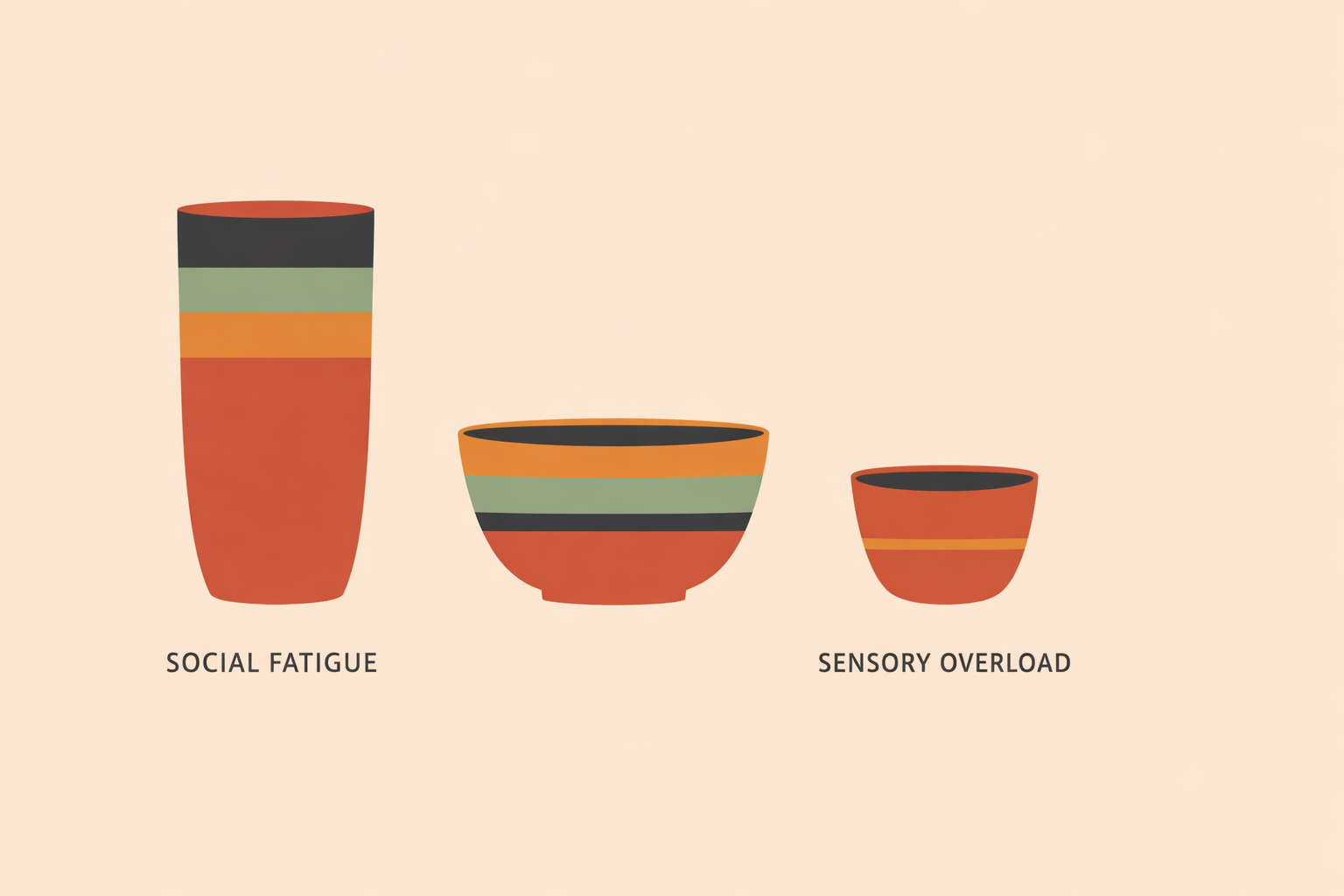
Think of containment as a bowl holding hot stew: you can feel the heat, but you don’t become the stew. That ability to resonate without absorbing often helps teams reduce conflict, because steady presence lowers the emotional “temperature” in the room.
On the level of day-to-day experience, simply naming what you feel can interrupt the reactive spiral and bring your thinking back online. Put simply: when you can label the feeling, you can lead the moment instead of being led by it.
Practices for separating “my emotion” from “their emotion”
- Pause–Reflect–Label: Pause for one breath; reflect, “Is this mine or theirs?”; then label what you notice: “Tight chest—anxiety.” This quick reset uses emotion awareness to settle your system.
- RAIN in 60 seconds: Recognize what’s present, Allow it to be there, Investigate lightly (“Where in my body?”), Nurture with a kind phrase. Many find the RAIN approach keeps empathy high without over-identifying.
- Boundary breath: Inhale, “Yours.” Exhale, “Mine.” A tiny mantra that reminds you to witness feelings without merging with them.
Traditional contemplative lineages and Stoic training point to the same core skill: observe, don’t fuse. Modern readers often meet this through Stoic reflection, but the underlying wisdom is older than any single school—steady mind, steady words, steady actions.
As David Caruso put it, “emotional intelligence…is the unique intersection of both” head and heart.
Containment isn’t coldness; it’s warmth with edges. Once you can hold your own center, you can protect the resource that gets drained next: your time.
Boundary 2: Time Boundaries – Protecting the Energy Behind Your “Yes”
Time boundaries turn scattered availability into reliable support. When your schedule protects focused energy, your “yes” carries more quality—and people feel that consistency.
In workplaces, protected focus supports better outcomes, and teams that build space for real concentration are often more productive. Essentially, you’re designing your week to create room for thinking, not just reacting.
From always-available to clear, reliable support
- Protect 1–2 deep-work blocks daily. Many practitioners use 60–90 minute blocks most days. This kind of protected focus keeps your work from fragmenting.
- Set response windows. For example: “I reply to messages 11–12 and 4–4:30.” Clear expectations reduce anxiety for everyone.
- Shorten the default meeting. Try 25 or 50 minutes, with small buffers for notes and a breath.
- Require an agenda. “Please share an agenda by EOD; otherwise let’s reschedule.” This “who does what” discipline keeps conversations useful and time-respectful.
If boundaries feel awkward, scripts keep them kind and clean: “I can allocate 30 minutes to this on Thursday—does that work?” or “Given other commitments, I can offer two options next week.” Simple language like this can improve prioritization by guiding people toward realistic choices.
And expectations are shifting. Deloitte reports that 78% of younger cohorts value mental and time boundaries at work—clear availability is increasingly seen as professional maturity, not distance.
“What really matters…is a definite set of emotional skills—your EQ.” – Daniel Goleman
Time boundaries are EQ made visible. With steadiness inside and structure outside, feedback becomes much easier to deliver with both honesty and respect.
Boundary 3: Emotionally Intelligent Feedback – Caring Deeply Without Collapsing or Attacking
Feedback works best when it’s direct and humane. Emotional intelligence helps you name what isn’t working while protecting dignity, trust, and your own center.
A reliable structure is simple: state what you observed, name the impact, then ask for consent before problem-solving. Think of it like building a bridge—facts are the foundation, impact is the meaning, and consent is the doorway into change.
Using observation, impact, and consent in feedback
- Observation: “I noticed the report arrived after the deadline.” Clear observations are associated with higher receptivity to feedback.
- Impact: “That pushed our launch and created stress on support.” Impact-focused language is linked with better engagement than character judgments.
- Consent: “Are you open to discussing how to prevent this next time?” This protects relationship equity and supports ongoing rapport.
When emotion is high, validate first, then draw the line: “I’m not dismissing how hard this is, and I also need us to address the handoff plan.” That’s the craft of balancing compassion with clear expectations.
Consistent, behavior-focused language also reduces defensiveness and strengthens working alliance—the sense that you’re on the same side, even when the message is hard.
Goleman captured the inner move behind all of this: “Self‑absorption…kills empathy.” See the Goleman quote. When you stop making the conversation about your discomfort, you can speak plainly—and listen well.
Even skillful feedback can raise the temperature. That’s where de-escalation becomes a boundary you practice in real time.
Boundary 4: Conflict De-escalation – Staying Connected When Tension Rises
De‑escalation starts with pace and presence. You name tension without blame, reconnect to purpose, and reset the “container” of the conversation when needed.
A helpful opener is simple and respectful: “It seems like this feels frustrating—am I reading that right?” Early emotional acknowledgment often reduces intensity because people feel seen rather than opposed.
At the same time, steer away from contempt and character attacks. Relationship research offers strong guidance on how to avoid contempt, and it maps cleanly onto team dynamics: once contempt enters, problem-solving shrinks.
- Name and normalize: “We both care about getting this right, and it’s getting tense. Let’s slow down.”
- Slow the cadence: Use shorter sentences and longer pauses; invite one point at a time.
- Reset the container: “Our goal is a plan we both can stand behind. Let’s identify options, then choose next steps.”
- Offer a boundary pause: “Let’s park this and reconvene at 3 PM.” Timed pauses can protect mental health when emotions are running hot.
- Choose the right medium: Some issues cool down faster in writing; others need voice and tone. Choosing intentionally helps you avoid the always‑on trap.
When organizations teach these skills, overload tends to drop—especially in high-conflict environments. SHRM has highlighted how widespread emotional overload is at work, which is exactly why boundaries are a practical leadership competency, not a personal preference.
As Robert K. Cooper notes, under stress we tend to go “autopilot”—usually the wrong move.
De-escalation boundaries help you step out of autopilot and choose a wiser response. And once the heat is lower, one root cause often becomes obvious: unclear roles.
Boundary 5: Role Clarity – Being a Support, Not a Savior
Role clarity keeps your work sustainable, respectful, and clean. It tells people what you offer—and what you don’t—so you can partner effectively without sliding into over-responsibility.
In fast-moving teams, taking on too much leads to burnout; taking on too little erodes trust. When roles and boundaries are explicit, teams tend to hold together better and experience lower turnover. And cultures with emotional intelligence support a stronger sense of belonging.
Clarifying what you are (and are not) responsible for
- Scope statement: “I support clarity, accountability, and sustainable habits. I don’t offer crisis support.” This kind of scope clarity protects everyone involved.
- Decision rights: “You own the decision; I’ll help you think and plan.”
- Referral pathways: “If we hit topics outside my scope, I’ll suggest trusted resources.”
- Cultural humility: Name your lens, invite theirs, and avoid appropriating traditions—ask how they’d like practices adapted.
- Right role in context: Many ancestral systems emphasize “right role”—are you the listener, mediator, facilitator? This mirrors modern guidance about choosing the appropriate role in context.
These choices align with well-being frameworks that emphasize supportive environments and clear role boundaries in organizational life.
As Robert Kiyosaki reminds us, the character to face failures and learn is central to growth.
With role clarity, your presence becomes kinder and sturdier—and your conversations get simpler, because the “job” of each person in the moment is no longer a mystery.
Conclusion: Weaving the Five EI Boundaries Into a Sustainable Practice
These five boundaries work best as one system. Containment steadies you. Time boundaries protect the energy behind your yes. Feedback keeps honesty humane. De‑escalation keeps connection intact under pressure. Role clarity prevents the slow drift into resentment and overload.
To build momentum, keep it small and repeatable: use Pause–Reflect–Label before three challenging conversations, protect one daily focus block, try Observation–Impact–Consent once, and in your next tense moment, name the emotion and reset the container. Then review your scope statement and referral pathways.
Modern research and long-standing practitioner wisdom point in the same direction: emotional intelligence skills help leaders create healthier work climates, and healthy climates make space for clearer communication over time.
From a traditional practice lens, boundaries aren’t walls—they’re the frame that allows warmth to stay warm, not spill everywhere. A steady presence, the “right role,” and compassionate candor are time-tested principles; modern tools simply give you more ways to apply them in today’s teams.
As a final note, keep boundaries ethical and context-aware: adapt them to culture, power dynamics, and organizational expectations, and use referral pathways when something is outside your scope. Done well, these boundaries don’t distance you from people—they make you dependable.
Master Emotional Intelligence Skills
Build these five boundaries into real client work with Naturalistico’s Emotional Intelligence Certification.
Explore Emotional Intelligence →