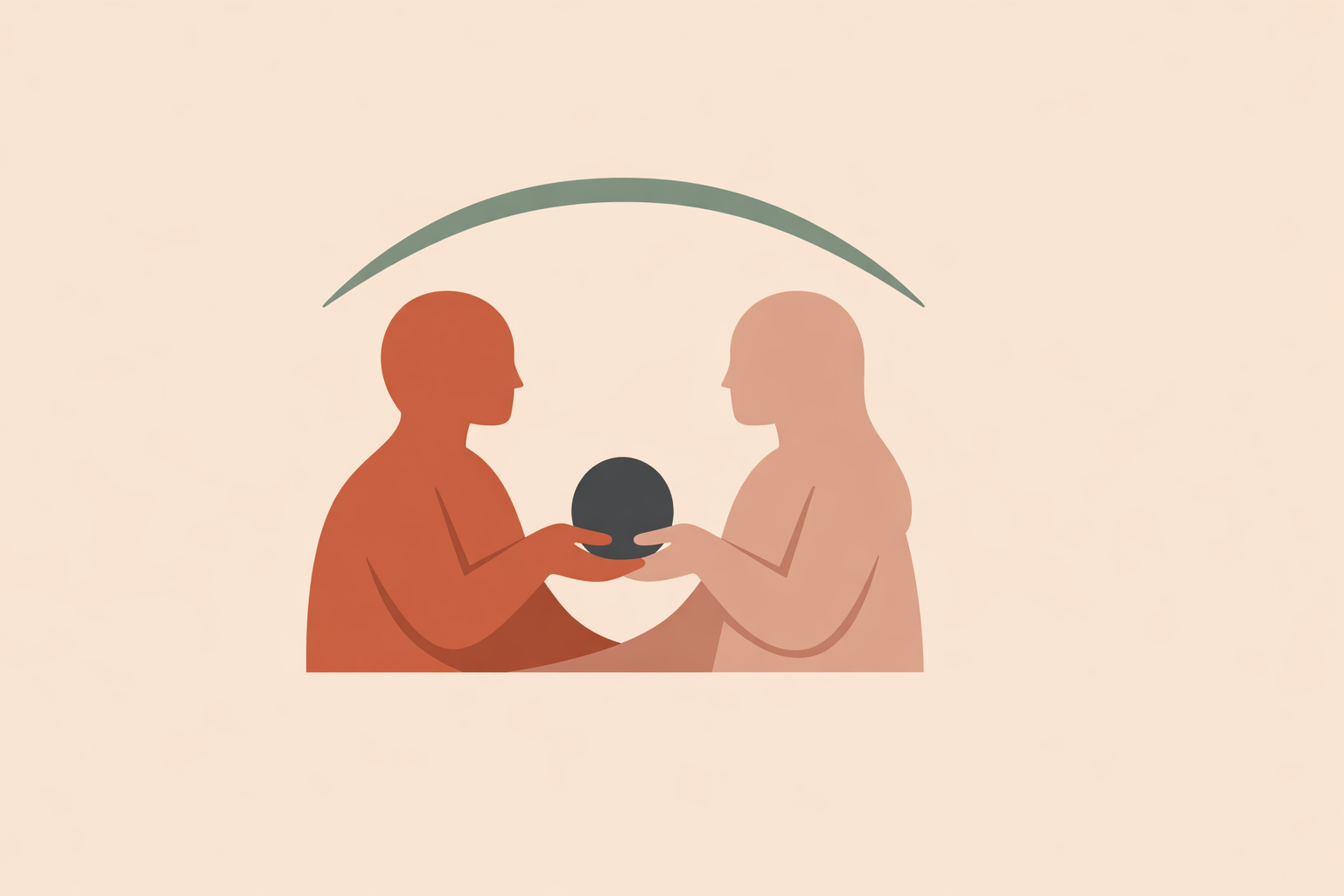
Ethics are the quiet scaffolding that make trauma-informed neural repatterning not only effective, but genuinely safe and respectful. When our methods honor both modern neuroscience and ancestral wisdom, people’s nervous systems can soften, learn, and integrate.
In practice, that foundation looks like relationships built on trust, transparency, and cultural responsiveness—often summarized as SAMHSA’s six principles of trauma-informed approaches. It also includes a subtle but crucial shift from “What’s wrong?” to “what happened?”—a stance consistently linked with better engagement and steadier outcomes across organizations.
For those practicing Deep Neural Repatterning (DNR), ethics aren’t an add-on; they’re the architecture behind every technique. They protect choice and dignity while we work with regulation, memory, and meaning—starting with the move that makes all neural change more available: safety and consent.
Key Takeaway: Ethical trauma-informed neural repatterning is built on safety, consent, and collaborative pacing, supported by regulation-first sequencing and cultural humility. When you honor lineages, share power through clear boundaries, and normalize repair, the nervous system can learn new patterns without re-activation or coercion.
Ethical Move 1: Lead with Safety and Consent
Trauma-informed neural repatterning begins before any technique—with felt safety and clear, ongoing consent. If the body doesn’t feel safe in the moment, the brain is far less likely to integrate new patterns. Building trusting relationships that recognize power imbalances and offer calm, collaborative responses increases people’s comfort and sense of safety.
A practical guiding map comes from SAMHSA’s four R's: realize the impact of trauma, recognize signs, respond skillfully, and resist re-activation. Put simply: we design for choice, not compliance—and we prioritize what the nervous system can trust over what a protocol demands.
Design sessions the nervous system can trust
Safety is sensory, not theoretical. Lighting, sound, scent, temperature, seating, and timing all matter. Many trauma-informed programs actively assess environments for potential triggers and make small, thoughtful adjustments—like offering seating options, allowing the door to remain cracked open, or co-creating a “pause” signal.
Consent is equally practical—and it has to stay “alive” throughout the session. For trauma-impacted systems, even gentle practices can feel invasive without explicit consent. That includes nonverbal options too: slowing down, adding wait time, matching pace, and making “stop” easy and consequence-free.
From a traditional lens, this is also deep respect for the body’s innate wisdom. Trauma-informed embodiment emphasizes gentle grounding over forced catharsis, using steady, nonverbal support to calm the deeper brain regions affected by overwhelm. Think of it like approaching a shy animal: safety first, then proximity—always with permission.
Micro-practices you can use today
- Open: “We’ll move at your pace. You can pause, change direction, or stop at any time. Does that feel okay?”
- Orient: Offer two seating choices, a stable object to hold, and a visible clock for time anchoring.
- Consent check-ins: “Would you like to continue with this line of inquiry or try a gentler track?”
- Exit ramp: Build 5 minutes at the end for re-grounding, breath, and water before re-entry into the day.
Ethical Move 2: Regulate, Relate, Reason in Every Session
Sequence shapes outcome. When we regulate first, connect second, and reflect last, we work with the brain’s learning rules instead of fighting them. Many trauma-informed practitioners use a “regulate–relate–reason” arc because insight and cognitive reframing rarely land when the body is highly braced or activated.
Once arousal settles and connection is established, reflection becomes more durable. Approaches that prioritize open communication and trust make people more likely to stay engaged and keep meeting what’s arising with steadiness.
Work with, not against, neuroplasticity
Neural learning depends on time and repetition. Brain networks have a remarkable ability to store information across seconds to years, shaped by repeated patterns of activity.
Essentially, repeated and well-sequenced experience supports long-term potentiation—the strengthening of connections that helps new responses “stick.” That’s why ethical DNR tends to favor small, successful reps of regulation and meaning-making over single dramatic pushes.
In session, this often looks like: downshift arousal (breath, orienting, bilateral movement), then co-create language and imagery that feel resourcing and true, and only then explore reframes. The nervous system learns, “I can feel, I can relate, and I can think—safely—in this order.”
Session cadence (example)
- Regulate: 2–4 minutes of exhale-weighted breathing or slow gaze-orienting.
- Relate: Co-sense one concrete resource (place, ancestor, value) and anchor it in the body.
- Reason: From that anchor, gently test a new narrative or micro-choice and note the body’s response.
Ethical Move 3: Practice Cultural Humility and Honor Lineages
Tools have roots. Ethical neural repatterning means knowing where methods come from, crediting lineages, and respecting boundaries around what is shared, what is taught, and by whom.
Trauma-aware cultural work asks us to stay curious about each person’s background and the impacts of historical trauma—what many describe as cultural humility. Practically, it’s listening, co-deciding, and letting culture be a source of strength and safety rather than an afterthought.
Honor where your tools come from
In the well-being space, decontextualized “spiritual props” can cause real harm when they’re lifted from living cultures without relationship or understanding. Native-led resources offer clear appropriation guidance, including naming power dynamics and avoiding commercialized versions of sacred items and practices.
For techniques like tapping, some commentators note how Western branding can obscure Chinese medicine foundations, calling for credit and context for EFT roots. The broader principle is simple: if a stream feeds your toolkit, acknowledge it—and don’t strip it of meaning to make it marketable.
It’s also important to remember that not everything is for everyone. Many Indigenous leaders clarify that certain rites are closed practices, reserved for initiated members or those specifically invited. Asking—rather than assuming—protects relationships and keeps wisdom intact.
Ways to embody cultural humility
- Source-tracking: In your intake and onboarding, name the origins of your practices and how you learned them.
- Consent with culture: “Would you like to include elements from your tradition today—or keep it secular?”
- Reciprocity: Support community-led projects connected to the lineages you draw from.
Ethical Move 4: Share Power with Consent and Clear Boundaries
Power-sharing turns neural repatterning from a top-down “fix” into a collaborative practice. Client-led pacing, clear agreements, and consistent follow-through are core ingredients of stronger emotional safety and steady engagement.
Boundaries aren’t barriers; they’re bridges. Clarity about roles, scope, and communication protects everyone involved, and trauma-informed principles show that transparent collaboration can foster resilience rather than create distance.
Shift from expert-on to partner-with
Invite the client to be the primary author of pace and intensity. As one coach put it, “He who does the work, does the learning.” Your skill is in guiding the process; their body sets the timing.
Power-sharing also means strengthening support beyond you. Trauma-informed care highlights that involving people in planning improves sustained engagement and safety. When you help someone map and access cultural, spiritual, or peer supports they trust, you decentralize yourself and reinforce their wider web of belonging.
For many Native communities, culturally grounded practices like Talking Circles reduce isolation and amplify connection. A HaRTC pilot suggests that virtual, community-requested circles can be feasible and supportive. Here’s why that matters: ethical practice doesn’t compete with community—it reconnects people to it.
Practical boundary rituals
- Written scope: Share what you offer (coaching, education, practices) and what you don’t.
- Session agreements: Time, fees, rescheduling, and touch policy—all in plain language.
- Power check-ins: “On a scale of 1–10, how much voice do you feel you have in our work right now?”
- Community map: List cultural, spiritual, or peer supports the client wants in their ecosystem.
Ethical Move 5: Prevent Retraumatization and Practice Repair
Integrity isn’t a posture; it’s a daily practice. Preventing re-activation, repairing missteps, and caring for our own nervous systems keeps the work trustworthy over time.
Re-activation and retraumatization often happen when helpers unintentionally mirror oppressive dynamics or judge survival strategies instead of honoring resilience. Trauma-informed approaches explicitly aim to avoid retraumatization by recognizing trauma’s impact and adjusting how support is offered.
Let your integrity evolve as fast as the brain can
Cultural humility is a lifelong practice, not a badge. It means you keep learning, welcome feedback—especially from communities whose wisdom you draw on—and adjust quickly when harm is named. Indigenous-led guides emphasize listening and repair, echoed in detailed appropriation guidance.
Ethics also include caring for the practitioner. Compassion fatigue and secondary trauma are common among helpers; evaluations of trauma-informed care note reduced burnout and compassion fatigue when these principles are embedded consistently. Reflective supervision, spacious scheduling, and basic nervous-system support aren’t indulgences—they’re part of the container.
Within sessions, make repair ordinary. If a cue lands wrong or the pace feels too fast, name it, slow down, and re-contract. Keeping intensity under someone’s threshold aligns with practices that reduce retraumatization risk. The nervous system often learns safety less from perfection and more from how swiftly and sincerely you adjust.
Anti-retraumatization checklist
- Pre-brief: “Here are 3 ways we can pause if something feels off. Which do you prefer?”
- Titration: Keep intensity under the client’s threshold; stop two steps before overwhelm.
- Repair ritual: “I see this didn’t feel right. Thank you for telling me. Let’s renegotiate our next step.”
- Practitioner care: Build your own regulation stack between sessions: breath, brief movement, sunlight, water.
Conclusion: Making These Five Ethical Moves Your Daily Practice
Ethics are the practice, not the preface. When you lead with safety and consent, sequence with regulate–relate–reason, honor lineages, share power through boundaries, and normalize repair, neural repatterning becomes steadier, kinder, and more effective.
Within Naturalistico’s community, Deep Neural Repatterning (DNR) sits inside this ethical container by design. The focus is on skills that support nervous system regulation and meaning-making, held within an ongoing commitment to cultural respect and collaborative growth. Many somatic repatterning approaches draw strength from this same alignment, and trauma-informed approaches more broadly have been linked with improved engagement, stronger relationships, and better well-being outcomes across settings.
As you deepen your capacity, keep building trust through client-led pacing, clear agreements, and consistent follow-through—key ingredients of steady trust and engagement. A final note: these practices work best when paired with humility—knowing when to slow down, when to refer out, and when cultural boundaries mean “not mine to use.” Tend the container, and the nervous system can do what it naturally does: learn, reorganize, and move toward wholeness.
Published April 20, 2026
Train in DNR Ethics
Deepen these trauma-informed principles with the Deep Neural Repatterning (DNR) Certification.
Explore DNR Certification →