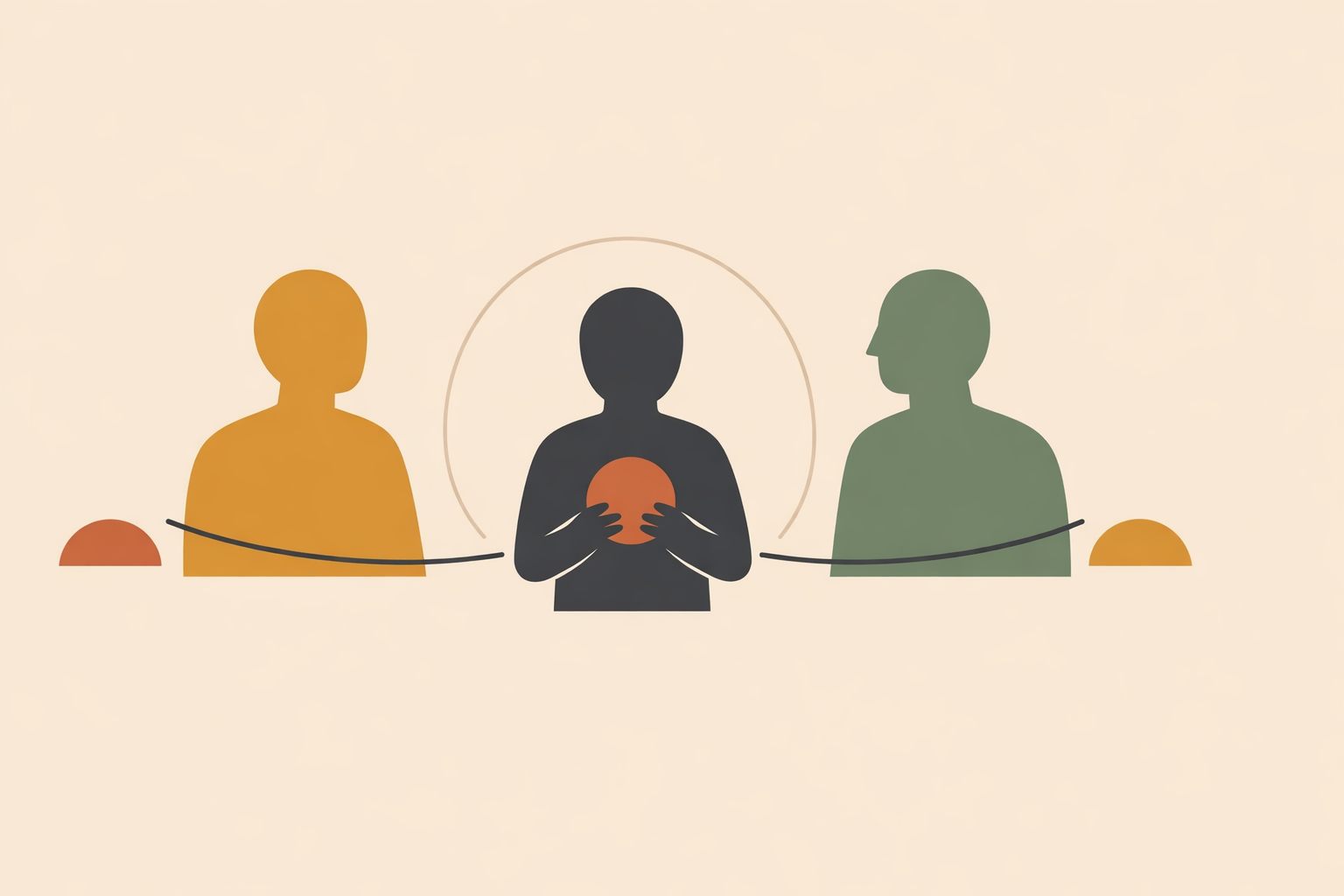
Teen coaching “rarely happens” as a clean one-to-one relationship and typically involves parents/schools expecting updates and data.
The day-to-day choices a coach makes—what gets shared, how structure is held, and whose goals are prioritized—shape whether coaching builds teen agency or quiet compliance, and whether trust grows or the teen withdraws.
Done with integrity, this wider system can actually strengthen the work: adults get clarity, and teens get a steady space where their voice remains central.
Key Takeaway: Teen coaching works best when it’s designed as a transparent, consent-led system: the teen’s goals stay central, confidentiality is explicit, and updates and boundaries are co-created. This protects trust while still giving parents and schools the clarity they need—without turning coaching into compliance or surveillance.
Agency grows when teen goals and consent lead the process
Centering a teen’s goals and consent in coaching builds “genuine agency” rather than short-term compliance.
Coaching adolescents that prioritizes scaffolding (rather than steering) better fits adolescent development. Essentially, scaffolding means offering a supportive framework—questions, reflections, and options—so the teen learns to choose and adjust, rather than being directed.
Offering traditional practices (e.g., breathwork/visualization/ritual) supports teen autonomy when framed as choices the teen can adapt.
Many commonly used modern mindfulness/breathwork tools draw from Buddhist, yogic, and Indigenous lineages. Practicing with respect means naming roots when appropriate, avoiding “mix-and-match” that strips context, and inviting teens to choose what genuinely fits their values and background.
Teens benefit more (learning “lands deeper”) when practices are culturally relevant and consent-based.
Confidentiality and perceived safety are the foundation of trust
Confidentiality is the “currency of trust” in teen coaching (i.e., confidentiality materially increases trust/engagement).
Vague confidentiality promises often lead teens to feel betrayed later. Clear agreements—what stays private, what might be shared, and how decisions get made—protect the relationship before it’s tested.
If coach and teen don’t feel safe enough to be honest, confidentiality “exists in name only” (i.e., perceived safety is necessary for confidentiality to function).
Think of confidentiality like a roof: it only works if the teen believes it will hold when it rains. Safety isn’t a “nice-to-have”; it’s what lets the teen speak in a real voice.
Updates work best when teens co-create them
Programs have better youth engagement when teens co-create sponsor/parent updates rather than adults discussing them without the teen’s voice.
That can be as simple as agreeing together what themes can be shared, what progress looks like in the teen’s words, and what the teen wants adults to understand about the support they need.
“Theme-only” reporting is commonly used by educators to inform institutions while protecting student privacy.
In school settings, using mindfulness/coaching mainly for discipline tracking causes adolescent mistrust and erodes trust. Put simply, when tools meant for self-awareness get repurposed as surveillance, teens learn to perform—not to reflect.
Boundaries around messaging protect the relationship and build life skills
Unbounded coach-teen messaging increases complaints and dependency (and clear response-time boundaries reduce these issues).
Without clear hours/platforms, teen support can shift into constant crisis texting that drains coaches and fosters teen dependency.
Setting communication windows, session structure, and homework rhythms helps teens learn self-organization (i.e., boundaries build skill, not just protection).
Teens need predictable structure and choice to feel safe in coaching relationships. What this means is: consistency creates steadiness, and choice creates dignity—together, they help teens practice independence in a supported way.
Hold the teen’s experience in context—especially systemic pressures
Many teens experience significant stress due to systemic pressures (e.g., racism, homophobia, poverty, ableism, migration).
Naming systemic pressures (instead of pathologizing reactions) helps teens avoid internalizing blame and supports a stronger “identity anchor.”
Here’s why that matters: when a teen can locate their stress in a real-world context, they often feel less “broken” and more capable of choosing responses that align with who they are.
Mindfulness, compassion, and cultural respect help practices “land”
Mindfulness practices are more beneficial for teens when paired with compassion (i.e., compassion enhances mindfulness outcomes/benefit).
In practice, compassion keeps mindfulness from turning into harsh self-monitoring. It invites a teen to notice what’s happening without attacking themselves for having feelings in the first place.
A minority of youth who do mindfulness experience adverse reactions.
Traditional practices can be offered confidently and respectfully, while still staying attentive to fit: offer choices, go step-by-step, and keep the teen in control of intensity and pace.
Youth coaching is professionalizing—and ethics should keep evolving with youth voices
Youth coaching as a field is moving toward specialized competencies/standards, indicating increasing professionalization.
Programs serving marginalized youth emphasize ethics as an evolving practice that improves by seeking youth input, iterating methods, and repairing harms.
That mindset pairs beautifully with tradition: long-standing practices bring depth and continuity, while ongoing feedback keeps the work responsive, respectful, and aligned with real teen needs.
Conclusion: clear agreements, real choice, and respectful tradition create lasting trust
When teen goals and consent lead, scaffolding replaces steering, and structure supports—not controls. When confidentiality is explicit and updates are co-created, teens feel seen rather than managed. And when traditional practices are offered as adaptable choices, they can become tools teens genuinely own.
Most risks in teen coaching come from blurred lines: unclear sharing, unclear messaging expectations, and practices introduced without consent or cultural care. The simplest safeguard is also the most relationship-building—make agreements visible, revisit them often, and keep the teen’s voice at the center.
Train as a Teen Life Coach
Build ethical, consent-led coaching skills with the Teen Life Coach course for teens, parents, and schools.
Explore Teen Life Coach →Teen coaching “rarely happens” as a clean one-to-one relationship and typically involves parents/schools expecting updates and data.
The day-to-day choices a coach makes—what gets shared, how structure is held, and whose goals are prioritized—shape whether coaching builds teen agency or quiet compliance, and whether trust grows or the teen withdraws.
Done with integrity, this wider system can actually strengthen the work: adults get clarity, and teens get a steady space where their voice remains central.
Key Takeaway: Teen coaching works best when it’s designed as a transparent, consent-led system: the teen’s goals stay central, confidentiality is explicit, and updates and boundaries are co-created. This protects trust while still giving parents and schools the clarity they need—without turning coaching into compliance or surveillance.
Agency grows when teen goals and consent lead the process
Centering a teen’s goals and consent in coaching builds “genuine agency” rather than short-term compliance.
Coaching adolescents that prioritizes scaffolding (rather than steering) better fits adolescent development. Essentially, scaffolding means offering a supportive framework—questions, reflections, and options—so the teen learns to choose and adjust, rather than being directed.
Offering traditional practices (e.g., breathwork/visualization/ritual) supports teen autonomy when framed as choices the teen can adapt.
Many commonly used modern mindfulness/breathwork tools draw from Buddhist, yogic, and Indigenous lineages. Practicing with respect means naming roots when appropriate, avoiding “mix-and-match” that strips context, and inviting teens to choose what genuinely fits their values and background.
Teens benefit more (learning “lands deeper”) when practices are culturally relevant and consent-based.
Confidentiality and perceived safety are the foundation of trust
Confidentiality is the “currency of trust” in teen coaching (i.e., confidentiality materially increases trust/engagement).
Vague confidentiality promises often lead teens to feel betrayed later. Clear agreements—what stays private, what might be shared, and how decisions get made—protect the relationship before it’s tested.
If coach and teen don’t feel safe enough to be honest, confidentiality “exists in name only” (i.e., perceived safety is necessary for confidentiality to function).
Think of confidentiality like a roof: it only works if the teen believes it will hold when it rains. Safety isn’t a “nice-to-have”; it’s what lets the teen speak in a real voice.
Updates work best when teens co-create them
Programs have better youth engagement when teens co-create sponsor/parent updates rather than adults discussing them without the teen’s voice.
That can be as simple as agreeing together what themes can be shared, what progress looks like in the teen’s words, and what the teen wants adults to understand about the support they need.
“Theme-only” reporting is commonly used by educators to inform institutions while protecting student privacy.
In school settings, using mindfulness/coaching mainly for discipline tracking causes adolescent mistrust and erodes trust. Put simply, when tools meant for self-awareness get repurposed as surveillance, teens learn to perform—not to reflect.
Boundaries around messaging protect the relationship and build life skills
Unbounded coach-teen messaging increases complaints and dependency (and clear response-time boundaries reduce these issues).
Without clear hours/platforms, teen support can shift into constant crisis texting that drains coaches and fosters teen dependency.
Setting communication windows, session structure, and homework rhythms helps teens learn self-organization (i.e., boundaries build skill, not just protection).
Teens need predictable structure and choice to feel safe in coaching relationships. What this means is: consistency creates steadiness, and choice creates dignity—together, they help teens practice independence in a supported way.
Hold the teen’s experience in context—especially systemic pressures
Many teens experience significant stress due to systemic pressures (e.g., racism, homophobia, poverty, ableism, migration).
Naming systemic pressures (instead of pathologizing reactions) helps teens avoid internalizing blame and supports a stronger “identity anchor.”
Here’s why that matters: when a teen can locate their stress in a real-world context, they often feel less “broken” and more capable of choosing responses that align with who they are.
Mindfulness, compassion, and cultural respect help practices “land”
Mindfulness practices are more beneficial for teens when paired with compassion (i.e., compassion enhances mindfulness outcomes/benefit).
In practice, compassion keeps mindfulness from turning into harsh self-monitoring. It invites a teen to notice what’s happening without attacking themselves for having feelings in the first place.
A minority of youth who do mindfulness experience adverse reactions.
Traditional practices can be offered confidently and respectfully, while still staying attentive to fit: offer choices, go step-by-step, and keep the teen in control of intensity and pace.
Youth coaching is professionalizing—and ethics should keep evolving with youth voices
Youth coaching as a field is moving toward specialized competencies/standards, indicating increasing professionalization.
Programs serving marginalized youth emphasize ethics as an evolving practice that improves by seeking youth input, iterating methods, and repairing harms.
That mindset pairs beautifully with tradition: long-standing practices bring depth and continuity, while ongoing feedback keeps the work responsive, respectful, and aligned with real teen needs.
Conclusion: clear agreements, real choice, and respectful tradition create lasting trust
When teen goals and consent lead, scaffolding replaces steering, and structure supports—not controls. When confidentiality is explicit and updates are co-created, teens feel seen rather than managed. And when traditional practices are offered as adaptable choices, they can become tools teens genuinely own.
Most risks in teen coaching come from blurred lines: unclear sharing, unclear messaging expectations, and practices introduced without consent or cultural care. The simplest safeguard is also the most relationship-building—make agreements visible, revisit them often, and keep the teen’s voice at the center.
Published May 24, 2026
Train as a Teen Life Coach
Build ethical, consent-led coaching skills with the Teen Life Coach course for teens, parents, and schools.
Explore Teen Life Coach →