


Psychoeducation earns its keep in the hardest minutes of a session—when someone surges into fight-or-flight, goes numb, or describes a sensory “clip” that feels present tense. In those moments, language needs to do two things at once: reduce shame and increase a sense of choice.
Many practitioners run into the same tension. Technical explanations can lose people, while gentle metaphors may soothe without giving anything usable in the moment. What often lands best is brief, accurate story-work that frames reactions as protective—and points to actions someone can actually remember under pressure.
Key Takeaway: Trauma psychoeducation tends to stick when it uses accurate, everyday metaphors that reframe symptoms as protection rather than pathology. Simple images like alarms, dashboards, projectors, breakers, and a coordinated inner crew give clients language and practical cues they can recall and use during stress.
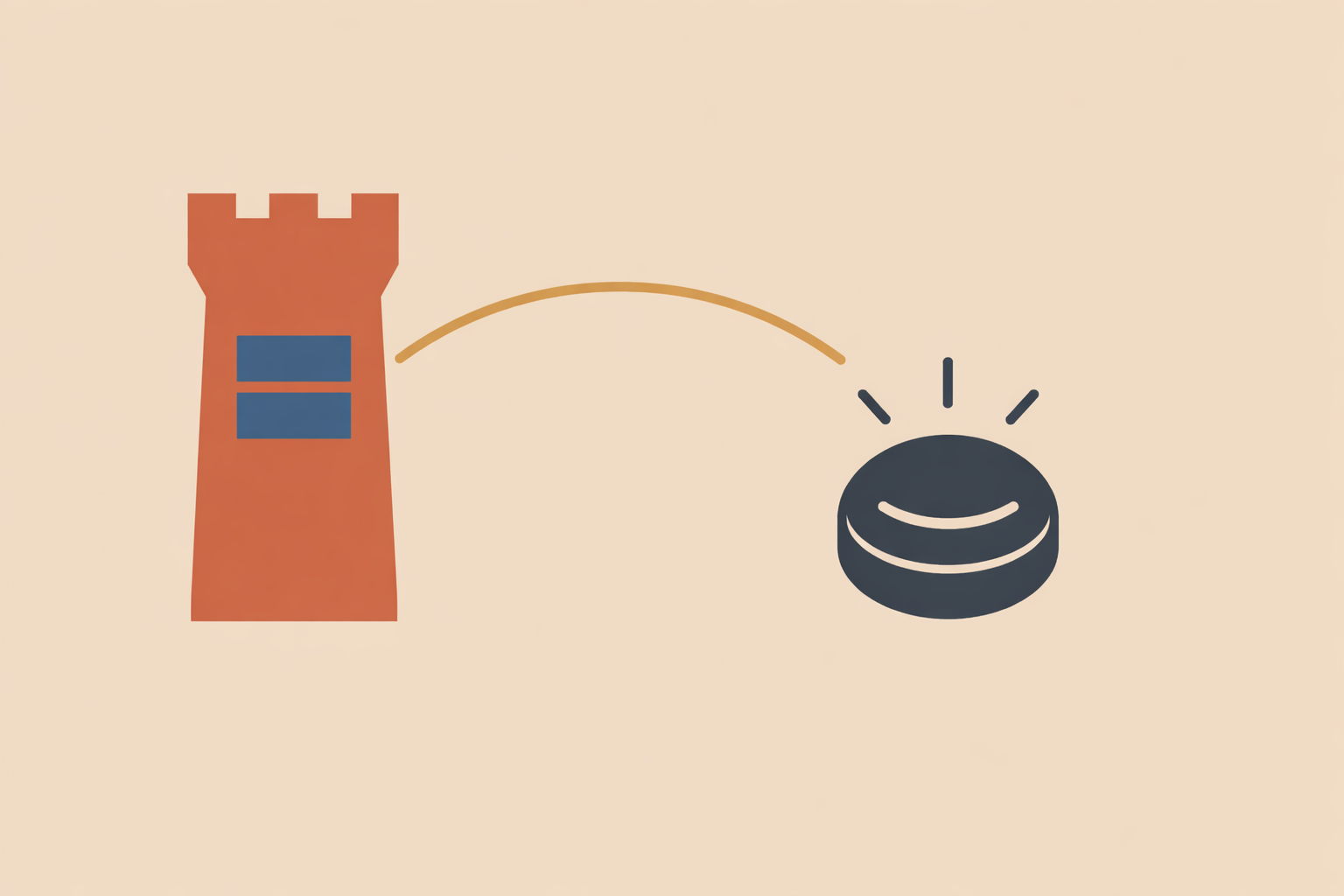
1. Smoke Alarm and Watchtower: A Fast Reframe for “Overreactions”
When a reaction seems to come out of nowhere, it usually makes more sense as protection than as dysfunction. The smoke alarm goes off fast; the watchtower comes online more slowly.
After overwhelming experiences, threat-detection can become quick to spark while reflective systems take longer to reassure. Put simply, people can react in the present as if danger is happening now. That doesn’t mean anything is “broken”—it means protection is taking the lead.
This kind of naming can be immediately settling. Acute trauma education highlights that psychoeducation and normalization can reduce fear around common reactions, which often makes room for choice to return.
“Accessible neuroscience can help people reframe trauma responses as survival strategies rather than signs of a ‘broken brain.’”
That’s why the smoke-alarm metaphor works so reliably in practice: it’s simple, memorable, and respectful. A quick reframe creates just enough space for the “watchtower” to re-engage.
How to teach the smoke alarm story in 60 seconds
- “You have a smoke alarm that detects danger quickly, and a watchtower that checks the bigger picture.”
- “Under stress, the alarm takes the lead. That is protection, not failure.”
- “Our work is to help the watchtower come back online sooner, so both parts can do their jobs.”
Once that clicks, many people are ready for a second map—one that explains not just what’s happening, but the speed their system is moving at.
2. Accelerator and Brakes: A Simple Map of Survival States
Wired, jittery, foggy, flat, heavy—these are often better understood as speed settings than as personality traits. The accelerator-and-brakes metaphor helps people recognize their state quickly, name it, and respond with something practical.
Modern trauma education often frames trauma less as a single event and more as a period of overwhelm, with difficulty returning to a felt sense of safety. Acute guidance describes many reactions as physiological stress responses and emphasizes calming and grounding.
In lived experience, people commonly swing between high activation and collapse—sometimes even feeling both at once. A car or dashboard image normalizes that complexity and gives a shared language: accelerator on, steady cruise, emergency brake.
Think of it like giving someone a simple instrument panel. Pedals, speedometers, and gears turn a hard-to-describe inner experience into cues they can use outside a session, much like nervous system regulation tools do in practice.
Turning “too much” and “numb” into a dashboard clients can steer
- Name the state: “accelerator on,” “steady cruise,” or “emergency brake.”
- Pair each state with one or two practices: orienting to the room, lengthening the exhale, standing and shaking out tension, or feeling both feet on the floor.
- Track movement rather than perfection: “I moved from 80 to 60” is real progress.
When the body’s “speed” starts to make sense, people are often more ready to understand why certain scenes, sensations, or reminders keep replaying.
3. Short Film and Projector: Making Intrusive Memories Less Mystifying
Flashbacks and sudden reminders aren’t proof someone is permanently stuck. They can be understood as unfinished filing: the projector keeps replaying short films because the system is still trying to sort and store them.
Trauma education consistently notes that flashbacks and triggers are common reactions after overwhelming events. And in real life, these moments can feel intensely present, even when the original situation is long over.
This metaphor can be deeply relieving because it changes the emotional meaning: the projector isn’t attacking you—it’s trying to protect you with urgent old material.
Here’s why that matters: when symptoms are framed as protective, people often gain a more workable inner narrative. Narrative approaches can help clients rewrite scripts with more dignity and agency.
From there, tools tend to land more easily. Instead of battling the “film,” someone can work with it—lower the volume, widen the frame, add a timestamp, and guide attention back to the present.
Helping clients understand reliving as unfinished filing
- Introduce the projector: “These clips show up quickly because your system is trying to protect you.”
- Offer “remote controls”: a longer exhale as volume control, looking around the room as input switch, or naming colors to anchor in the present.
- Celebrate partial shifts: noticing the clip and reorienting is already meaningful progress.
Sometimes, though, protection moves in the opposite direction—not by speeding up, but by shutting down. That response deserves the same respect.
4. Circuit Breaker and Surges: Normalizing Shutdown
When the current is too strong, the breaker flips. Numbness, spacing out, heaviness, or collapse can function as protection rather than defect.
Trauma guidance describes reactions like numbness and dissociation as normal responses to extreme stress. For many people, that reframe is pivotal: the experience may still be hard, but it no longer has to mean weakness.
The breaker metaphor also highlights the intelligence of the response. Essentially, the system is preventing overload. That often reduces self-judgment and invites better questions: What are your early warning signs? What helps reduce the surge?
People already say things like “frozen,” “switched off,” or “shut down.” Meeting that lived language with a respectful image helps someone feel understood rather than labeled, especially in more trauma-aware work.
Teaching that going numb can be protective
- Normalize it: “This may be your system’s safety switch.”
- Pre-plan it: identify early signs such as cold hands, tunnel vision, muffled sound, or heaviness.
- Create a de-surge protocol: soft eyes open, gentle exhales, feel the chair, sip water, orient slowly.
- Respect pacing: re-engagement should feel chosen, not forced.
Once people can recognize both activation and shutdown as meaningful protective responses, it becomes much easier to talk about inner conflict without turning it into an identity story.
5. Inner Crew and Deep Ocean: Working with Parts and Emotional Waves
Instead of “broken into pieces,” imagine a capable crew on a strong vessel moving through changing waters. Each part has a role. The work is to listen, coordinate, and steer with wisdom.
Across many healing traditions, the idea that we hold multiple inner voices is neither strange nor shameful—it’s simply human. People often describe competing impulses, inner conflict, or feeling pulled in different directions. A crew metaphor keeps that complexity while making cooperation possible.
What this means is the question shifts. Instead of “What is wrong with me?” it becomes “Who is trying to help right now?” The vigilant lookout, the quick-acting protector, the exhausted deckhand, the quiet navigator—each may be carrying a role shaped by experience.
Placing symptoms into a meaningful story can support coherence and change. Narrative approaches can help clients explore stories with more dignity and choice.
The deep-ocean image adds another layer. Waves can be strong, but they are not the whole sea. Many contemplative and ancestral traditions have long used weather, sky, tide, and ocean imagery to remind us that intense experience can move through something larger and steadier.
Using the crew-and-ocean story to honor many inner voices
- Name the crew with respect: “Lookout,” “Protector,” “Navigator,” “Resting Crew.”
- Map the waters: what situations bring rough swells, and what anchors help?
- Practice handovers: “Thank you, lookout. Can the navigator take the wheel for the next 30 seconds?”
Together, these five metaphors interlock: the alarm detects, the watchtower assesses, the dashboard tracks speed, the projector explains replay, the breaker prevents overload, and the crew coordinates the journey.
Using Metaphor Well: A Few Grounding Principles
Used with care, metaphors become shared maps that reduce shame, restore dignity, and support practical change. They bridge contemporary language with older, story-based ways of making sense of hardship—bringing complex inner experience into words people can actually use.
Three principles keep this clear and respectful.
- Check fit. A metaphor should feel like an invitation, not a label.
- Prefer the client’s imagery. Your metaphor can open the door, but their own language usually carries the deepest meaning.
- Foreground adaptation and possibility. Leading trauma educators recommend normalization and skills-based framing. Trauma-focused psychoeducation is encouraged to promote coping.
In day-to-day practice, simple visuals help these ideas stick: smoke alarm and watchtower, dashboard states, projector controls, breaker panel, crew and ocean. Keep them flexible, culturally respectful, and shaped around the person in front of you—not imposed on them.
Carry these five images lightly, offer them with kindness, and listen for the client’s own words. The most useful map is the one you build together, whether that sits inside trauma case formulations or more informal session language.
Explore Trauma Healing Coaching
Build metaphor-based psychoeducation skills in Naturalistico’s Trauma healing coach certification.
Explore Trauma healing →










