There isn’t one “right” way to become a herbalist in 2026. Most people build it the way real life asks them to: through lived experience, study, and community—layer by layer, season by season.
Modern herbal learning often blends self-study, family lineages, apprenticeships, and structured coursework. That mix is a strength when it’s guided by good ethics and real practice. And because there’s no licensure standardizing the field globally, credibility tends to come from education, experience, transparent boundaries, and community accountability—not paperwork alone.
As Paracelsus reminded us, “art of healing comes from nature,” which is why herbal paths begin with relationship: to plants, place, and people.
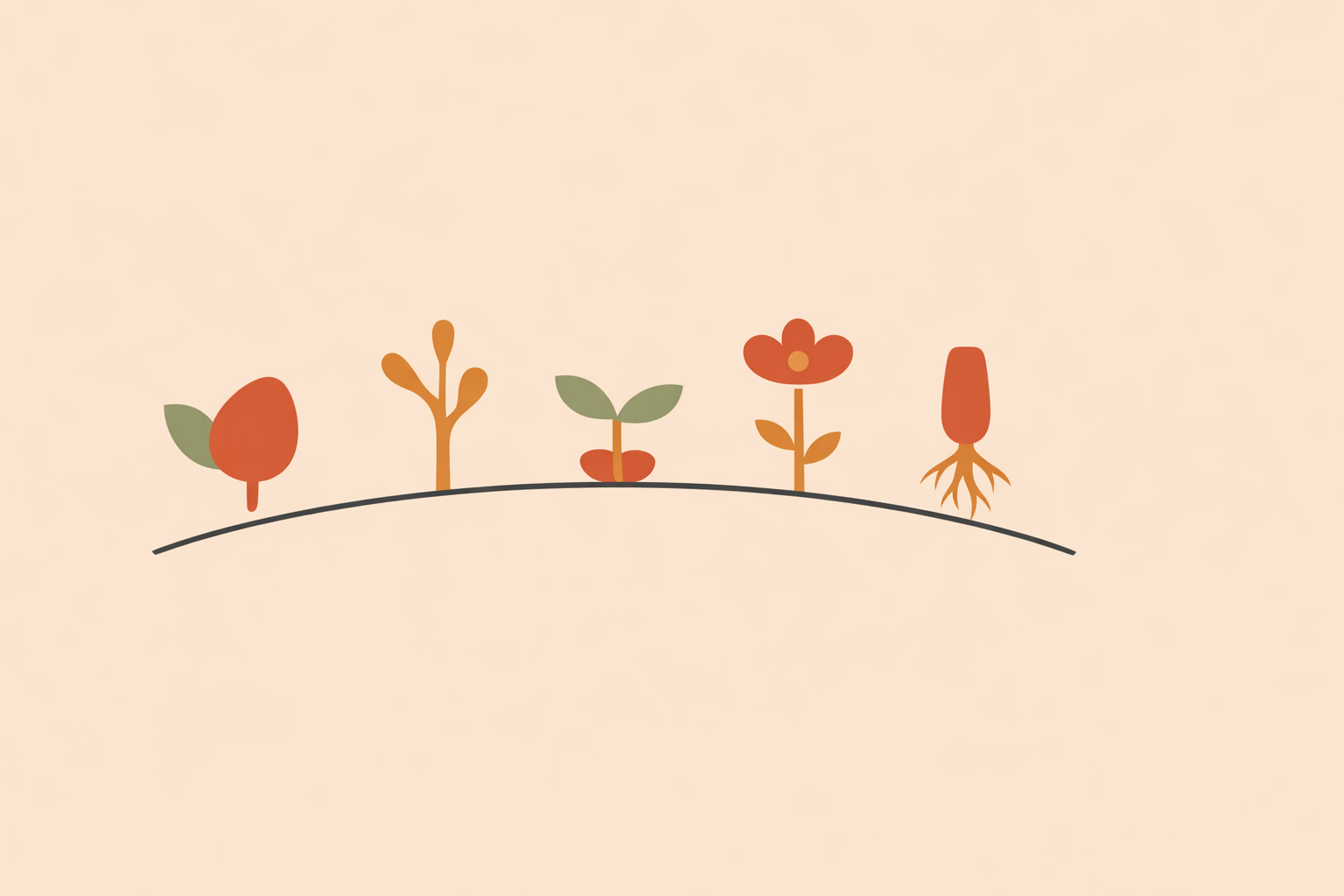
In practice, five routes show up again and again:
- Home Herbalist
- Community Herbal Educator
- Herbal Product Maker & Apothecary
- Herb Grower & Bioregional Farmer
- Client-Support Herbal Practitioner
More learners are also choosing flexible formats that combine field time with online structure, making deeper study easier to fit around work and family through hybrid programs. Consider the five paths a map you can roam: many people walk two or three at once, but choosing one as your main focus for the next year keeps your learning steady and grounded.
Key Takeaway: Herbalism in 2026 is built through a clear focus and consistent practice, not a single credential. Choose one primary path for the next year, then develop credibility through plant relationship, hands-on skills, strong ethics, and transparent boundaries that are reinforced by community accountability.
Path 1: Home Herbalist – Start with Your Own Body and Home
Home practice is where most herbal journeys begin. Your kitchen, daily routines, and a small garden space—windowsill or backyard—become your first classroom.
Start with plant identification (including local toxic look-alikes), then move into a few dependable preparations: teas and infusions, tinctures, syrups, infused oils, and salves. These “simple” skills are not beginner fluff—they’re the backbone of real competence, and they grow beautifully through self-study and careful hands-on repetition.
Depth usually beats breadth. Many traditional teachers recommend getting to know 25–40 herbs closely—how they taste, how they’re traditionally prepared, what they’re commonly paired with, and what cautions belong with them—rather than skimming hundreds. Think of it like building friendships: a few strong relationships teach you more than a room full of strangers.
Most people learn in layers: safety and ID first, then basic preparations, then deeper materia medica (your body of plant knowledge) and body-system frameworks like digestion, the nervous system, respiratory support, and skin. With consistent hands-on practice, many learners build a solid base in about 6–18 months. As Avicenna put it, there are “no worthless herbs — only the lack of knowledge.”
Starter practice (first 60 days):
- Choose 6 herbs to meet deeply this season; keep a tactile journal (taste, smell, form, origin, stories).
- Make three basics weekly: one tea/infusion, one infused oil, one tincture or syrup. Label with plant, date, source, and ratio.
- Build a simple home materia medica card for each herb: energetics, parts used, key preparations, personal notes, cautions.
Once that home foundation feels steady, it’s natural to want to share what you’ve learned—especially in group settings.
Path 2: Community Herbal Educator – Sharing Plant Wisdom with Groups
Teaching what you’ve truly practiced is one of the most community-rooted ways to work with herbs. You move from tending your own learning to tending a circle of learners.
Community herbal educators often lead herb walks, seasonal workshops, and beginner classes. The craft is curation: deciding what belongs in a 60–90 minute class, what needs more context, and where clear cautions keep people safe—without drifting into individualized guidance.
Your notebook becomes your strongest teaching tool. Careful notes on sourcing, preparation choices, and real-world observations make your material clear, repeatable, and trustworthy. Many educators also weave in community projects and accessible learning opportunities, reflecting the tradition of herbalism as shared care and mutual aid.
This path can also support you financially earlier than some others; workshops and short courses often show up as early income building blocks while you grow your skills and local relationships. And it helps to keep your sense of humor—Christopher Hedley liked to quip, “try anything until you see someone else try it first!”
How to launch your first workshop in 4 steps:
- Pick a topic you’ve practiced for at least one season (e.g., “Bitters for everyday digestion,” “Calming teas for busy brains”).
- Design a 60–90 minute flow: welcome, plant stories, a tasting, a make-and-take, Q&A, resources.
- Create a one-page handout with clear cautions and sources; keep scope educational, not individualized advice.
- Invite 6–12 people; price accessibly; gather feedback; iterate.
Some people stay joyfully in teaching for years. Others feel pulled toward crafting physical goods—something tangible they can share more widely.
Path 3: Herbal Product Maker & Apothecary – Crafting Teas, Tinctures, and Salves
If you love making things, this path brings your skills into consistent, repeatable craft. The heart of it is quality: careful sourcing, thoughtful extraction, and labeling that earns trust.
Product-focused herbalists go deep into preparation methods like maceration, percolation, infusion, pressing, and filtration so formulas are both beautiful and dependable. You refine your extraction craft—knowing when to use water, alcohol, glycerin, honey, or oil, and why.
For many dried and fresh non-juicy herbs, an ethanol range around 40–50% is a practical starting point; juicier aromatics and resins often require more. A common home guideline is a 1:1 fresh plant-to-alcohol ratio, and roughly 1:4 for dried (adjusted by herb and outcome).
When alcohol extracts are made well and stored properly, they can remain shelf-stable up to 10 years. Meticulous labeling—plant part, menstruum ratio, extraction dates, lot numbers, allergens—supports clarity, consistency, and safer use.
Sourcing deserves equal seriousness. DNA barcoding research on commercial products found 59% contained unlisted species, including substitutions and fillers. That doesn’t discredit herbalism—it highlights why skilled makers matter. As Sajah Popham writes, the herbalist’s work is to understand the “intricate patterns of Nature” and honor them from wild to bottle.
Quality checklist for 2026 apothecaries:
- Transparent sourcing: origin, grower, harvest date, and ethics (wildcrafted vs. cultivated).
- In-house specs: moisture thresholds for drying, mesh sizes for teas, solvent strengths, and press pressure notes.
- Lot numbers, batch logs, and retention samples for traceability.
- Clear cautions where relevant; educational framing on labels and website.
- Environmental reciprocity: compost streams, glass reuse, and support for local growers.
As your formulas get stronger, many makers start wanting more control over the plants themselves—which leads naturally into growing.
Path 4: Herb Grower & Bioregional Farmer – Growing Your Own Materia Medica
Whether it’s a balcony, a community plot, or several acres, growing herbs anchors your work in place. You learn directly from the plants, and you build reciprocity into the process.
Many modern paths emphasize bioregional practice: prioritizing local plants, ethical harvesting, and relationships with land stewards in your ecosystem. Regular field time teaches details no book can deliver, which is why many teachers point people toward field identification and garden walks as durable learning.
Growing can also raise the bar for quality. A review found 16.4% of sampled herbal products exceeded contaminant limits, and other reviews highlight microbial contaminants when drying or storage is poor. Consumer testing in North America also found heavy metals in about one-third of brand-name herbs and spices. What this means is simple: careful cultivation, drying, storage, and transparent sourcing are powerful ways to protect integrity.
As Christopher Hedley joked, to be a good herbalist you’ve got to “potter”—in the garden, the kitchen, and your ongoing learning. Growing invites exactly that kind of attentive pottering.
A 6-plant starter garden (temperate climates):
- Calendula (resilient, abundant petals, skin support)
- Lemon balm (joyful aroma, nervous system ease)
- Chamomile (gentle digestion and rest ally)
- Thyme (aromatic ally for cool, damp seasons)
- Yarrow (field teacher of edges and boundaries)
- Nettles (minerals, spring vitality, excellent tea base)
With that relationship to plants and place, some herbalists feel ready to hold more structured one-to-one support.
Path 5: Client-Support Herbal Practitioner – One-to-One Plant Guidance
One-to-one work is an advanced path because it asks for strong ethics, clean boundaries, and steady mentorship alongside plant knowledge. The role is educator, ally, and coach—never a diagnostician.
Many herbalists build toward this with case studies, mentorship, and supervised hours. A clear intake, thoughtful follow-ups, and consistent documentation form the skeleton of practice. Professional associations emphasize a scope of practice centered on education, careful records, and timely referrals when a situation calls for different kinds of support.
Over time, your portfolio becomes more cohesive: documented case histories, personal materia medica assessments, and a working philosophy that carries tradition forward while staying open to modern inquiry. Many practitioners commit to multi-year study and continuing development so their work keeps evolving.
“Healing is an art. It takes time, it takes practice. It takes love.” – Maza Dohta
Core elements of an ethical 1:1 session:
- Education-first framing and informed consent about your scope.
- A thorough intake that includes lived context, goals, and daily patterns.
- Simple, testable suggestions; one or two changes at a time.
- Clear documentation and suggested check-ins to notice what shifts.
- Referrals when you see signs best served by different kinds of support.
Whether you move into one-to-one work now or later, it’s built on the same roots: relationship with plants, place, and community.
Conclusion: Choose Your Herbal Path for 2026 and Plan Your Next 12 Months
Becoming a herbalist is a lifelong apprenticeship to nature—and it’s also very doable when you choose one clear next step. Pick one primary path for the year, then let the other interests support it rather than compete with it.
A grounded foundation often takes around 6–18 months of steady practice, while one-to-one skills typically deepen over additional years with guidance. In 2026, more practitioners are also aligning their learning with recognized continuing development through bodies like IPHM, the CMA, and CPD—less as a badge, and more as a commitment to clarity and shared standards. And when you feel stuck, choosing one next step that honors reciprocity and cultural roots will usually move you forward.
Your 12-month plan (example):
- Months 1–3: Home Herbalist focus. Meet 8 herbs deeply; make tea, tincture, and oil each week; build your materia medica cards.
- Months 4–6: Community Educator. Offer two seasonal workshops; lead one herb walk; refine your handouts and cautions.
- Months 7–9: Product Maker. Develop three staple products; pilot with a small circle; finalize sourcing, labels, and batch logs.
- Months 10–12: Grower focus. Plant a 6-plant garden; set up drying and storage; map local growers for future collaboration.
Choose your primary path for 2026, sketch your first 90 days, and begin. The plants will meet you where you are—and they’ll keep teaching for a lifetime.
Train in Herbalism Certification
Build practical skills and ethical boundaries with the Naturalistico Herbalism Certification Course.
Explore Herbalism Certification →