Polyvagal language now shows up in intake forms and mid-session check-ins. Clients arrive having heard about ventral, sympathetic, and dorsal, and many appreciate the compassion in that frame—until it gets used to push pace, justify techniques, or sell certainty.
You may notice a client repeating the theory but still feeling numb, or tracking “Am I in ventral yet?” with rising self-criticism. Online, thinner cues can make it harder to settle into the work, and your own urgency can quietly take the wheel. Even well-intended education can drift from orienting to overexplaining—stirring vigilance rather than ease.
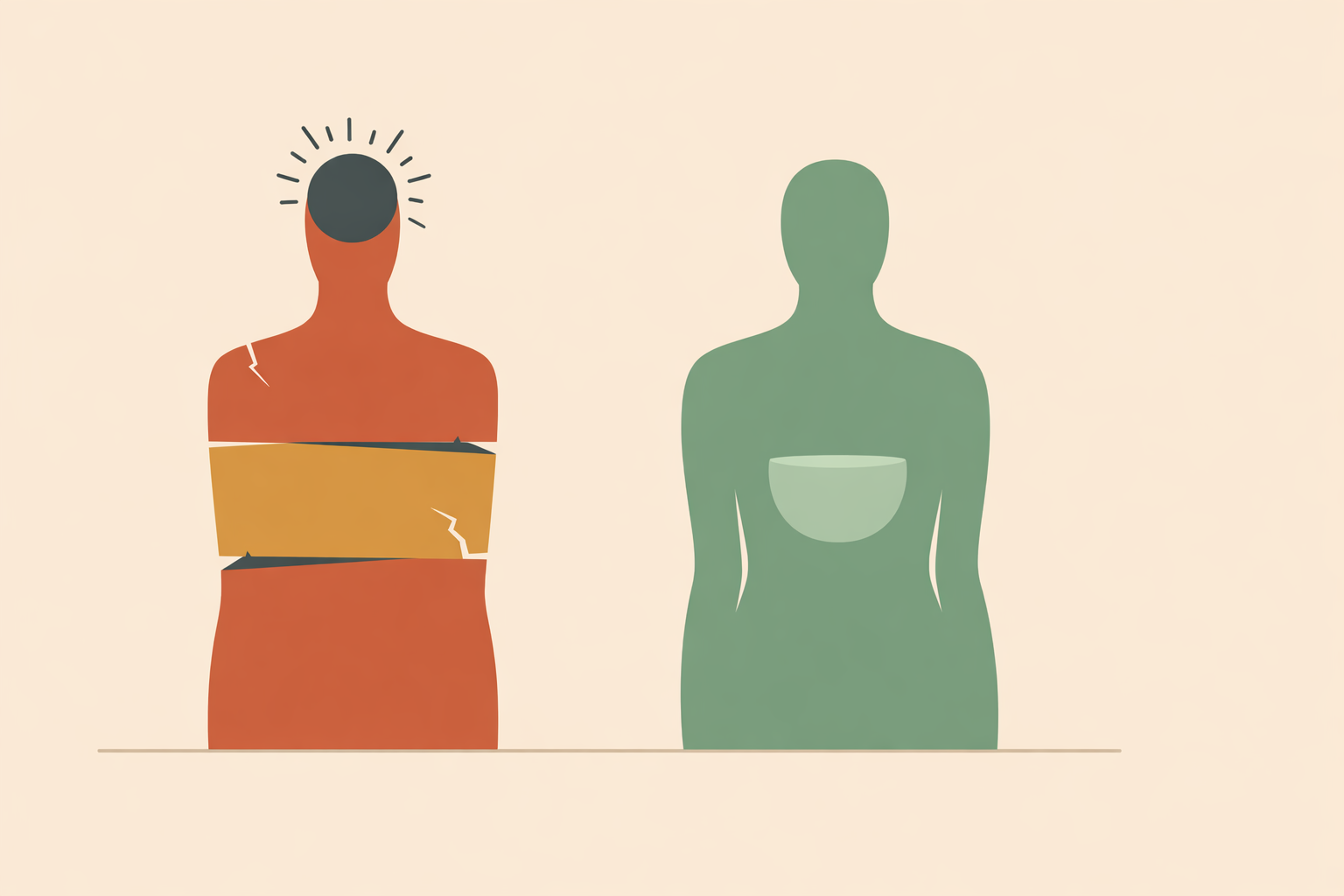
The real risk is simple: when the map replaces the person, felt safety tends to drop.
Key Takeaway: Polyvagal-informed work is safest when the theory stays secondary to what actually increases felt safety in the moment. Hold state language lightly, track your own nervous system, go slower than urgency suggests (especially online), and fit any “map” to the client’s culture, history, and lived context.
Polyvagal therapy pitfall 1: Treating the theory as settled science
Polyvagal Theory can be a helpful map—but it works best when it’s offered as a living framework, not a final verdict about a person’s body. When it’s presented as unquestionable truth, trust can quietly thin out, and so can safety.
Many practitioners value Polyvagal Theory because it brings a compassionate storyline: your body is protecting you, not failing you. At the same time, some core biological claims have been challenged as untenable. Naming that plainly—without drama—often helps clients relax. It communicates: “No one is trying to convince you. We’re here to notice what genuinely supports you.”
Stephen Porges, the originator, has argued that critics often target a “reconstructed proxy” of his work, and that the core insight still stands: autonomic states shape perception, emotion, and behavior. His response is a useful reminder that debate doesn’t erase value; it can sharpen how the model is used. As he puts it, “feeling safe” comes first—because the body reads risk before the mind tries to make meaning.
This is where integrity protects the work. Some trainings lean into neuroscience-flavored certainty while drifting into hype, and discerning clients can feel that mismatch immediately. A steadier stance is to name Polyvagal Theory as one lens, holding it as a provisional framework while still keeping its most human contribution: shifting from “what’s wrong with you?” to “how is your body protecting you?”
That honesty lowers pressure and makes room for traditional, culturally rooted practices—breath, chant, prayer, drumming, communal ritual—approaches many families have relied on for generations because they help people feel held and connected.
Try this, verbatim: “I use Polyvagal Theory as a map to guide us, not a set of rules about you. We’ll keep checking what actually helps your body feel safer and steadier, including the practices from your own roots.”
From elegant story to grounded, observable change
Instead of proving mechanisms, anchor sessions in what you can actually observe and co-confirm: breath softening, eyes brightening, voice warming, a little more space between sensations and reaction. Put simply, the body’s “yes” is more regulating than any perfect explanation.
Pitfall 2: Turning adaptive survival states into new labels to feel trapped in
State language can be freeing—until it becomes a new identity to get stuck inside. Used well, it honors survival intelligence. Used poorly, it creates fresh ways to feel “wrong.”
Polyvagal-informed education often reframes hyperarousal, collapse, and dissociation as adaptive responses. For many people, that shift is profound: shame drops, curiosity rises, and they stop fighting their own protective patterns.
Deb Dana’s arc—Recognize, Respect, Regulate/co-regulate, Re-story—helps many clients befriend their experience (“the four R’s”). With warmth, naming “ventral, sympathetic, dorsal” can invite curiosity rather than judgment, which fits Dana’s emphasis on respect.
But labeling can also tip into self-surveillance. If a client is constantly checking “Am I in ventral yet?”, they may start policing themselves instead of listening inwardly. Practitioners note that an overemphasis on labels can intensify vigilance. And with Porges’ reminder that some people misinterpret safety as danger (and vice versa), it’s easy to see why gentle language matters: many people arrive already unsure whether their body can be trusted.
Think of state words like weather reports, not character traits. “Some sympathetic wind today” is different from “I’m dysregulated.” It also leaves space to respect dorsal as a wise pause, not a failure. Signs of dorsal shutdown—canceling plans, numbness, the flat “I’m fine”—can be met with dignity before inviting even a small return toward contact.
Somatic educators often describe a supportive “ventral vagal” climate as one that supports curiosity and connection. Here’s why that matters: you earn that climate through pacing and respect; you don’t demand it with the right label.
Language shifts that reduce shame:
- From “dysregulated” to “protecting” (“Your body protected you by slowing everything down.”)
- From “get to ventral” to “add 2% more ease” (tiny, doable shifts)
- From “fix it now” to “let’s listen first” (the body leads, we follow)
Micro-practice: Invite a “both-and” check-in: “Part of me is alert; part of me is steady.” This normalizes mixed states and softens the climb-to-ventral pressure.
Pitfall 3: Tracking the client’s nervous system and ignoring your own
Your state is part of the session. When you tend it well, co-regulation is more available. When you don’t, clients often feel the mismatch before you can name it.
Polyvagal Theory describes the body’s threat/safety scanner as neuroception. Essentially, clients are reading your cues continuously—eyes, breath, pace, tone, micro-pauses—often more than your words.
Work on therapeutic presence suggests that calm, attuned presence supports parasympathetic settling—softening and engagement—which deepens relational work. That’s not about being “perfectly regulated.” It’s about being real, steady, and responsive.
A common pitfall is subtle urgency. The client stays numb, so you add more tools, more explanations, more effort. Your body shifts into “do more,” and theirs may hear pressure. Writers note that our activation can transmit danger cues that get mislabeled as “resistance”. A more useful move is to name the shared moment and slow down together. As Porges says, “Playing nice” becomes possible when the body reads enough safety.
A simple discipline is to check yourself first: “Is my breath behind my words?” If you notice tightness or speed, naming it plainly can be regulating in itself. Many educators also encourage regular self-inquiry so you can recognize your own sympathetic or dorsal drift early and respond with care.
Pre-session 90-second reset:
- Exhale longer than you inhale (for example, 4-in, 6-out) for four breaths.
- Soften eyes and jaw; let your shoulders drop with gravity.
- Feel your sit bones, then widen attention to the room’s edges and soften into peripheral vision.
In-session repair line: “I notice I started to speed up. I’m going to slow my breath and we can take this at your pace.”
Pitfall 4: Rushing into techniques before there is enough embodied safety (especially online)
Tools don’t create safety on their own—relationship and pacing do. Techniques tend to land when the ground is steady enough to hold them, especially in video sessions where cues are thinner.
Online support asks for extra intention. A bit of structure helps bodies orient: clear agenda, visual anchors, and gentle transitions. Telehealth discussions note that structured design and shortening sessions can support engagement. Optimizing audio, camera placement, and privacy are foundational telepsychology practices that reduce background threat cues.
Light scaffolding can also help clients feel held by the process: a one-minute “body weather” rating, a simple scale, a quick end-of-session recap. Routine measurement-based check-ins can support continuity, and in some contexts remote work has shown no difference in outcomes compared with in-person support.
The bigger risk is doing too much too soon—long body scans, intense breathwork, heavy education—before enough trust is present. Somatic educators note that “signs of safety” tend to relax the system, while danger cues increase activation. So the skill is titration: less, slower, more choice.
Online session template (50 minutes):
- Minute 0–5: Land. Camera/sound check, privacy check, 0–10 “body weather.”
- Minute 5–10: Focus. Choose one focus, one practice. Co-create a micro-goal (for example, “2% more ease”).
- Minute 10–30: Practice. Practice in tiny slices (30–90 seconds), with frequent pauses for noticing.
- Minute 30–40: Integrate. Name what helped, what didn’t, and one home rhythm to test.
- Minute 40–50: Close. Orient to the room, future pace, confirm aftercare (water, walk, music, prayer—whatever soothes).
Red flag to watch: If a client can explain the theory but can’t feel their feet or name one point of ease, pause education and return to safety-building basics: slower pacing, warmer tone, clearer choices, and steadier exhalation.
Pitfall 5: Applying polyvagal maps without cultural and ancestral context
Safety isn’t generic. It’s communal, contextual, and carried by culture. When one story of “social engagement” becomes universal, clients can feel unseen—and their most reliable settling practices may get sidelined.
Cultural work on safety emphasizes that it is communal and contextual. Even proponents acknowledge that some evolutionary claims risk oversimplifying how safety and social signaling developed. What this means is there is no single template for safe eye contact, ideal proximity, or “connection.”
Polyvagal-informed work becomes stronger—not weaker—when it’s placed inside a client’s cultural reality. Done respectfully, the emphasis on co-regulation and community often echoes ancestral wisdom: many traditions have long used rhythm, voice, ritual, shared meals, prayer, and nature to restore steadiness. That’s resonant with how traditional practices support regulation through breath, voice, rhythm, and ritual.
Intercultural work also suggests that bringing clients’ cultural and ancestral rituals into their regulation plan can improve safety and effectiveness compared with using polyvagal tools alone. The guiding principle is respect: traditions aren’t “tools to borrow,” they’re living contexts to honor.
In practice, invite clients to teach you their safety language. Which sounds, scents, and textures soften their breath? Which gatherings steady them? Which words or gestures create pressure? Then co-create a menu that blends polyvagal-informed options with their own practices—sung grace, cacao with elders, braiding hair, morning ocean dips, temple bells.
Five questions to honor roots:
- Who helps your body remember it belongs?
- What sounds or rhythms mean “home” for you?
- Where does your body soften most easily (kitchen table, forest path, prayer mat)?
- Which practices from your people bring steadiness (song, story, incense, dance)?
- What boundaries protect your safety (touch, pace, topics, camera on/off)?
When you follow their answers, safety becomes something you build together—not something you apply.
Conclusion: Turning polyvagal therapy pitfalls into safer, deeper practice
Safer polyvagal-informed work isn’t about perfect technique. It’s about humility, presence, and partnership—holding the theory lightly while standing firmly for each client’s dignity, culture, and pace.
Start by treating Polyvagal Theory as useful and provisional. Name the debate without making it the main event, and orient to what’s observable: breath loosening, voice warming, shoulders dropping. Welcome ongoing research and discussion without waiting for consensus to offer grounded support today.
Then build around what reliably stabilizes: your regulated presence, titrated pacing, and the client’s inherited wisdom. Combine simple somatic tools (slow exhale, orienting, gentle movement) with clear structure—especially online. Let Polyvagal Theory sit alongside traditional practices like singing, prayer, communal meals, drumming, and nature time. Invite reflection, because—true to Deb Dana—“Reflection practices strengthen our connection to self.”
Most of all, keep the work human. When you hold the map loosely and the person closely, the nervous system often recognizes something old and trustworthy: safe enough, here, to explore and evolve.
Train in Polyvagal Therapy Certification
Deepen your pacing, presence, and culturally grounded practice in Naturalistico’s Polyvagal Therapy Certification.
Explore Polyvagal Therapy →