Aspiring yoga teachers often hit the same bottlenecks: choosing training that truly prepares them, knowing when to start charging, and getting a venue to call back. Early on, many name confusion around certification, pricing, and getting hired as the biggest hurdles.
Meanwhile, students tend to want clear cues and options, and studios often value dependable subs more than showy shapes. Add a sincere desire to honour yoga’s cultural roots, and the path can feel like a tug-of-war: study deeply or earn quickly. The most sustainable answer is a sequence that respects lineage and still leads to real, paid classes—without turning teaching into performance.
A practical approach is to pair lineage-grounded education with live practice-teaching, a focused offer, professional reliability, and simple systems that make it easy for students and organisers to say yes. Preparation that blends tradition with strong content knowledge, practicum, and professionalism is associated with better employability and sticking with teaching over time. The goal is readiness: clear cueing, accessible sequencing, ethics you can actually apply, and straightforward admin that supports everyone involved.
Key Takeaway: The quickest, most sustainable route to paid yoga teaching is a sequence: lineage-grounded training plus lots of practice-teaching, then a clear beginner-friendly niche, reliable sub/community work, and simple boundaries and admin systems. This builds trust with students and venues while keeping your teaching ethical, accessible, and consistent.
Way 1: Choose yoga teacher training that deepens lineage and employability
One of the fastest and most ethical ways to begin teaching is to choose training that deepens your roots while building day-one classroom skills. A strong program doesn’t just hand you a certificate—it trains you to cue clearly, sequence accessibly, and lead with confidence and care. Many standards (including Yoga Alliance) emphasize the foundation of philosophy/history alongside teaching methodology and practicum.
Think of it like this: honour yoga’s source wisdom, then learn how to translate it into real rooms.
Honour lineage and build modern skills
The heart of teaching is relationship—to your teachers, to your own practice, and to the people who show up in front of you. The most meaningful trainings make philosophy, breathwork, mantra/chant, and ethics living tools, not trivia.
As one experienced trainer puts it, “One of the primary benefits of completing a yoga teacher training program is the opportunity to deepen your knowledge and understanding of yoga… you’ll delve into the philosophy, history, and anatomy of yoga, as well as learn about different styles and techniques.”
That depth becomes even more usable when it’s paired with modern teaching skills: inclusive alignment, choice-based language, consent-led adjustments, and beginner-friendly planning. Clear consent matters—consent practices can support a stronger sense of safety and engagement. And “good alignment” doesn’t mean chasing ideal shapes; it means stability, awareness, and options in the body you have today.
Spot an “income-ready” training
You can usually tell a program supports employability when it includes:
- Live practice-teaching: with coaching on pacing, voice, and timing
- Accessible sequencing: with chair and prop options
- Class templates: you can adapt for beginner and mixed levels
- Ethics in action:—scope, consent, cultural respect, and boundaries
- Community hours: or practicums that mirror real settings
In broader teacher development, preparation that includes practicum, learning to support diverse learners, and professional ethics is linked to stronger teaching and longer-term commitment. In yoga spaces, that tends to translate into the kind of teacher venues trust: grounded in lineage, clear in delivery, and consistent in how they run a room.
When you graduate with both ancestral context and practical teaching skill, “how to become a yoga instructor” becomes concrete—and “yoga certification jobs” feel far more reachable.
Way 2: Practice-teach generously so your first paid classes feel natural
Before you ask for payment, teach often. Repetition is what turns philosophy and anatomy into instinct, so when money enters the picture, you’re not “performing”—you’re simply doing what you’ve already practiced.
In education research, repeated rehearsal is associated with higher confidence and stronger performance, and deliberate practice helps knowledge become automatic skill. Put simply: reps create ease.
Build teaching muscles through repetition
Try a simple 4–6 week sprint. Offer a weekly practice class to friends, colleagues, or a local community space. Keep the overall structure steady for a couple of weeks, then refine it—small changes, clear improvement.
A consistent feedback loop supports skill growth faster than going it alone. And it also trains the “real-world essentials”: starting on time, giving clear options, managing energy, and ending cleanly.
That matters because studios repeatedly point to professionalism and beginner-serving ability as hiring priorities. Early on, people don’t choose you for prestige—they choose the teacher who is prepared, steady, and easy to follow.
As one training team likes to remind new instructors, “Ironically, one of the benefits of becoming a yoga teacher is having the opportunity to develop your skill set. Your expertise grows exponentially when you step into the role of teaching others.” And from educational psychology, teaching others can deepen the teacher’s understanding as well.
Use feedback to refine your voice
After each practice session, ask three questions:
- What felt easy to follow? (Keep those cues.)
- Where did you feel rushed or lost? (Adjust pacing.)
- What options would you like next time? (Expand variations.)
Collect short, one-line testimonials about clarity, calm, and accessibility. Over time, these become a simple “start teaching yoga classes” portfolio—proof that you can guide beginners well.
As one new teacher reflected after her training, “Over the past 3 months, I’ve learned more about yoga than I thought possible, but perhaps more importantly, I’ve learned so much about life.”
Predictability also helps beginners settle in. Clear expectations and consistent routines can make it easier for newcomers to relax and learn. In yoga terms, a reliable class arc becomes a quiet signal of trust.
Way 3: Choose a clear, beginner-friendly niche people can find fast
Most people don’t search for “yoga” in the abstract—they search for outcomes they can feel. In the wider wellness space, many choose services based on stress relief and similar practical goals. When you name a simple, beginner-friendly niche, you become easier to find without reducing yoga’s depth.
From a positioning perspective, clear positioning helps people quickly understand what you offer and why it matters. Essentially, your niche is how students recognize, “This is for me.”
Let your story guide your niche
Pay attention to who you naturally serve well during practice-teaching. Are you great with first-timers? Desk-bound bodies? Slower pacing and breath-led classes? These are often both traditional and timely, because they meet people where they are.
There is growing interest in gentle and stress-relief options, including chair-based and beginner-friendly formats, especially in community and organisational settings.
Keep your niche rooted in outcomes, not labels. Instead of “Vinyasa for everyone,” try:
- Beginner Basics: build confidence and feel at home on the mat
- Desk-Worker Reset: shoulders, hips, and breath in 30 minutes
- Balance and Stability: gentle standing series with chair options
- Stress-Aware Flow: slower pacing, longer exhales, guided rest
As one group of teacher trainers puts it, “They come for personal transformation… learning how to live differently, move with less pain, and build a deeper and more authentic relationship with themselves.” It’s a helpful reminder: your niche is simply your doorway into that bigger human purpose.
Turn your niche into outcome-based offers
Once your angle is clear, shape it into offers people can say yes to quickly:
- Series: 4-week Beginner Basics (60 minutes, mat + chair options)
- Pop-ups: 30-minute Desk-Worker Resets at lunch
- Community classes: donation-based Stress-Aware Flow
- Mini-workshops: Balance & Stability with a simple home-practice handout
Match your visuals and language to your niche so people can picture themselves there. Clear, kind clarity makes “how to market yoga classes” feel less like noise and more like being findable by the right people. It also supports business health over time—many teachers find that a focused, realistic structure is part of what makes a practice feel sustainable.
Way 4: Become the reliable sub and community teacher venues call first
For many new teachers, the first steady income comes from subbing and community classes. It’s a common starting point—substitute slots and local classes help you build experience, visibility, and confidence.
The secret advantage here is simple: when you’re reliable, you become memorable.
Start with subbing to get into real rooms
Studios and community centres need substitutes regularly. Reach out with a short, respectful message: your niche, availability, certifications, and two lines of feedback from students. Then do the basics exceptionally well—arrive early, follow house guidelines, and finish on time.
Operations run on trust, and many managers highlight clear communication and reliable scheduling as key factors when choosing teachers. A quick confirmation system helps: confirm time, props, and any room notes; share a short plan; follow up with one thank-you note.
Turn community classes into a living portfolio
Community offerings—libraries, parks, small centres—let you refine your niche with real people. Consistency supports attendance: keeping a regular slot over several weeks can help build habits and momentum.
Invite one sentence of feedback after class and ask permission to share it with a first name and initial. Over time, this becomes proof of clarity and care—especially valuable when you’re pitching new venues.
A recent graduate captured the feeling you’re aiming to create: “I felt safe and heard at every moment… the contents were complete and allowed me to feel confident to start teaching.”
To support re-bookings, keep expectations visible and simple: start/end on time, reply within a set window, and state cancellation terms. Transparent policies can increase trust, and clear boundaries often make collaboration easier for everyone.
Way 5: Expand into corporate, private, and online offers with clear systems
Once you’ve built trust locally, it’s natural to expand into workplace classes, private 1:1 support, and online groups. Many teaching roadmaps suggest a grounded progression—training first, then practice-teaching and community/studio work, then expansion.
The key isn’t complexity. It’s clear offers, ethical scope, and smooth onboarding so people know exactly what they’re signing up for.
Design clear offers for workplaces, 1:1s, and online groups
Keep each format simple and outcome-based:
- Corporate yoga classes: “Midday Mobility: 30 minutes to reset posture, breathe, and return clearer.” Workplace decision-makers often prefer outcome-focused proposals and easy logistics. Include rate, headcount, onsite/virtual, equipment needs, start/end times, and invoicing.
- Private yoga sessions: Offer 3- or 6-session packages like “Beginner Foundations” or “Calm & Restore.” Use a short welcome form, a clear scope statement, and a brief post-session recap so clients feel supported between sessions.
- Teach yoga online: Use a stable platform, camera at eye height, quick mic check, and clear visual options (mat and chair). Clear instructions can improve show-up rates and confidence—send calendar invites, access links, and a couple of setup tips in advance.
For organisational work especially, concise language plus administrative ease often wins. Aim for an offer that fits on one screen and removes friction.
Use boundaries and systems as trust signals
Boundaries aren’t walls—they’re clarity that protects everyone’s time and energy. In every agreement, include:
- Payment terms: and cancellation windows
- Response times: (e.g., replies within 24–48 business hours)
- Scope:—what you offer and what you don’t—so people understand how yoga can support well-being
- Session limits:—start/end times and rescheduling rules
On the practical side, instant confirmations, clear join instructions, and straightforward booking links help people relax. User-friendly booking can reduce anxiety for new students and signals professionalism to organisers.
As one online graduate shared, “I really enjoyed this course because I was able to work at my own pace.” Good systems create that same feeling: human, predictable, and flexible within a clear container.
Conclusion: Weave these 5 ways into one path from training to paid classes
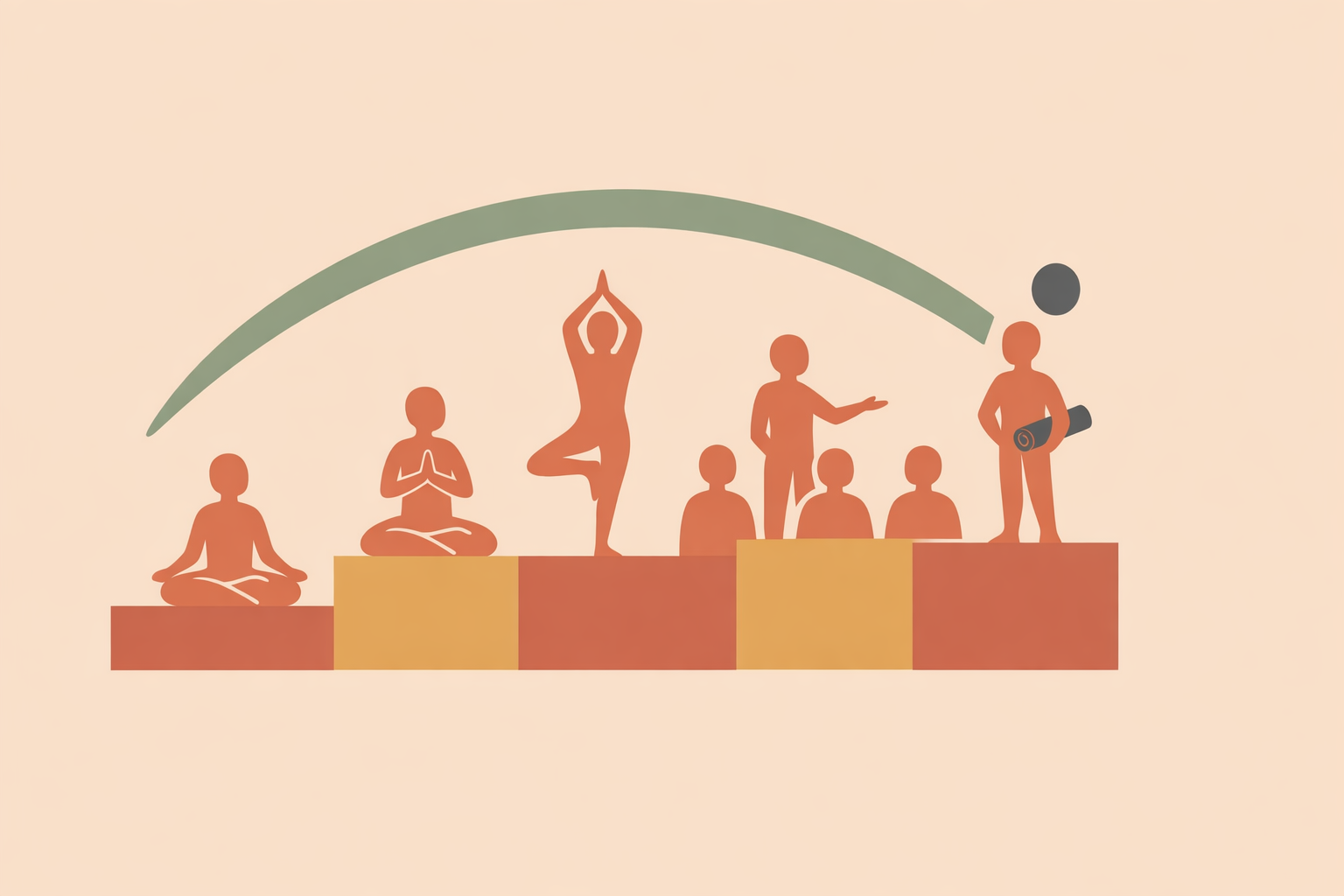
There isn’t one gate you must pass through to become a yoga teacher—there’s a path you can walk with integrity. Choose training that honours lineage and builds employability, practice-teach generously, name a clear niche, become the reliable sub and community guide, then expand into workplace, private, and online formats with clean systems.
Each step strengthens the next: deep roots in philosophy and ethics shape your voice; repetition turns knowledge into skill; a simple niche makes you findable; reliability earns invitations; and boundaries keep your energy steady as opportunities grow. This sequence—training → practice-teaching → niche → sub/community work → corporate/private/online—matches common mentor roadmaps and supports faster movement into paid teaching while staying grounded.
None of this requires hype. It asks for steadiness, respect for yoga’s cultural roots, and a commitment to serve people as they are—in real rooms, with real lives. Over time, clear offers, ethical pricing, and diversified income streams often add up to long-term sustainability.
If you want a simple next step, choose one: enroll in lineage-honouring training that includes live practice-teaching, schedule a four-week practice series, clarify your beginner-friendly niche, email three venues to join their sub list, or draft one workplace offer and one private package with clear scope and boundaries.
This is how a teaching path becomes both practical and meaningful—one breath, one room, one relationship at a time.
Train to Teach Yoga
Naturalistico’s Yoga Teacher Certification supports lineage, practicum, and systems to move into paid teaching.
Explore Yoga Teacher Certification →