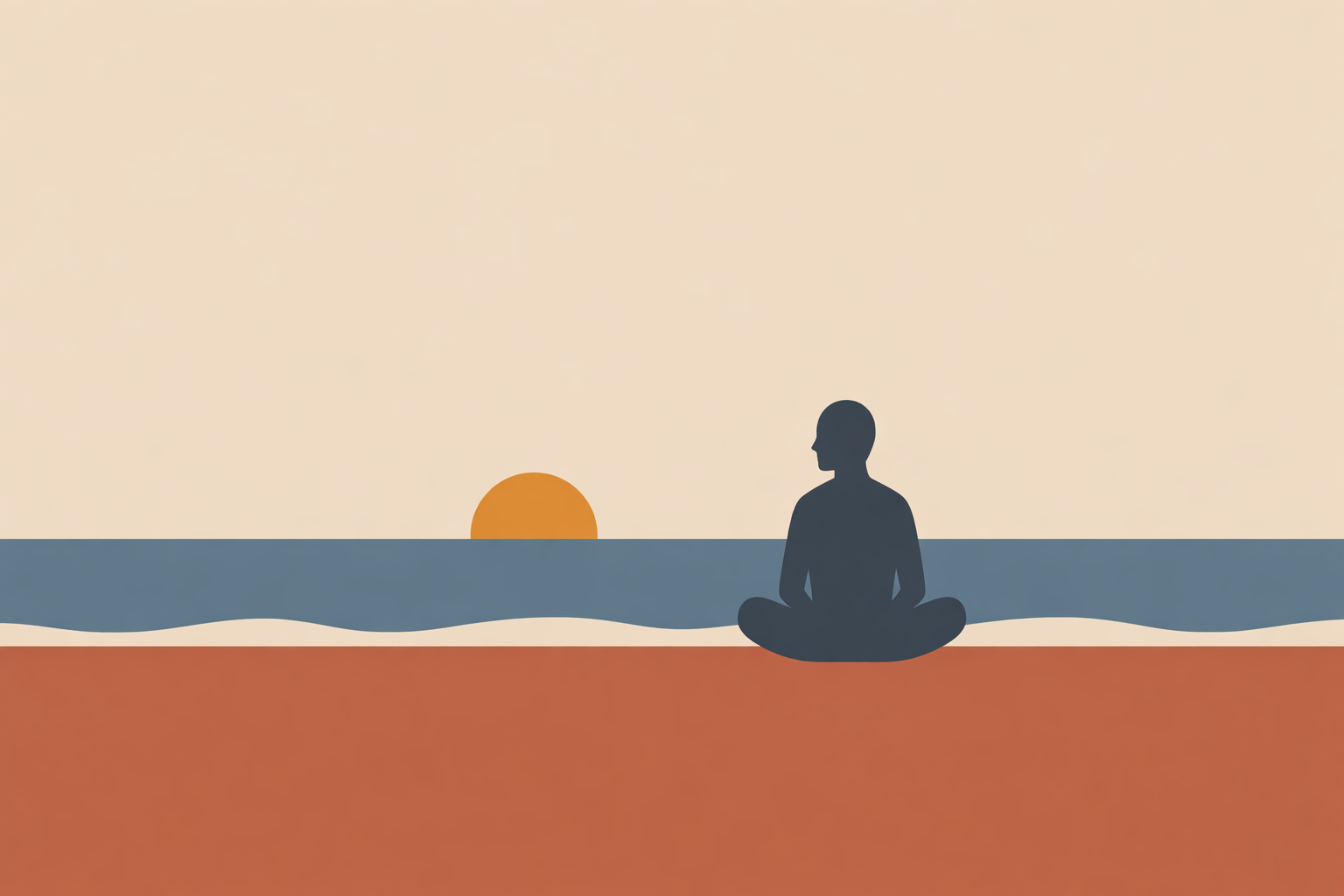
When sessions happen beside water, practitioners borrow its steadiness. The shore offers a clear boundary, the surface invites reflection, and the rhythm creates room to breathe—an element-based wisdom that feels both ancient and surprisingly practical.
Blue therapy weaves mindful contact with oceans, rivers, lakes, rain—or symbolic indoor water—into client work to support presence and emotional balance. For many practitioners, this isn’t a passing trend; it’s a return to ancestral respect for water, shaped into simple, evidence-informed practices that fit modern lives.
Modern research increasingly echoes what many traditions have long observed. Time near “blue spaces” is linked with reduced stress and steadier mood, sometimes in ways comparable to green spaces. Put simply, positive effects. With that foundation, the seven techniques below support safe, smooth outdoor sessions you can adapt across abilities, cultures, and climates.
Key Takeaway: Blue therapy works best when sessions follow a consent-led arc: begin at the water’s edge with view and sound, add gentle movement or listening, and introduce touch only when welcomed. With clear agreements, safety planning, and small integration rituals, water becomes a steady partner for regulation and resilience.
Technique 1: Edge Mindfulness at the Water’s Edge
Start at the edge. A careful arrival beside water—literal or symbolic—creates a container that feels both open and held. Think “first contact,” not “big release.”
Choose an appropriate spot: a shoreline, canal bench, or a safe rail above a fountain. Before anything else, make clear agreements for public spaces, including discretion, pause signals, and physical boundaries. Outdoor work asks for special attention to confidentiality and safety, and naming this early helps clients settle.
Then guide a short orientation: feel the ground, notice light and wind, and let the client choose their pathway—view, sound, or touch. Blue sessions often begin with consent-led pacing and breath grounding at the water’s edge, supported by clear pre-session agreements and a simple close.
Research connects blue spaces with steadier mood and reduced stress, including older-adult benefits. In practice, that simply reinforces a timeless principle: stay responsive to the person in front of you.
“I feel enriched when I can truly prize or care for or love another person and when I can let that feeling flow out to that person.” – Carl Rogers
- Simple consent signals: thumbs‑up to continue; hand to heart to slow down; a shared “hard stop” phrase to pause.
- Arrival script: “Let’s feel the ground. Notice the air. Choose view, sound, or touch for today.”
- Boundary cues: “We’ll stay at the rail/bench today and check in before changing anything.”
Technique 2: Shoreline Walk-and-View for Moving Regulation
Once a client feels steady at the edge, add gentle movement. A slow shoreline walk paired with horizon-gazing can regulate the system and loosen tight, repetitive thinking.
Walk-and-talk approaches translate naturally outdoors, supporting grounded conversation in a way that feels organic (walk-and-talk outdoors). Many clients also experience blue spaces as less formal than indoor rooms—easier to breathe in, easier to be themselves.
Try a simple rhythm: walk steadily, then pause every few minutes to rest the eyes on the far line where water meets sky. This kind of panoramic viewing often re-centers the breath. Add sensory noticing—light on the surface, wind, distant calls—to build sensory engagement. Even indirect water views (images or video) have been linked with physiological relaxation.
As some authors note, blue can create a feeling of space. Essentially, the horizon does what good sessions aim to do: widen the inner room.
- Route plan: a low‑traffic path with two “pause points” for seated reflection.
- Cue set: “Notice the far line,” “Let your breath match your steps,” “What softens when you widen your view?”
- Timing: 20–30 minutes of walk‑and‑view, then 10 minutes seated to integrate insights.
Technique 3: Sound-Focused Sessions with Waves and Streams
From sight, shift to sound. Waves, rain, and streams offer a steady rhythm that helps clients drop into the body and soften mental noise.
Listening is a core strand in blue work, and many clients intuitively describe water sound as settling. This aligns with the role of auditory engagement in blue practice. If access or weather is limited, recorded water can still be a meaningful focus (recorded water).
A helpful progression: begin with breath, then guide attention through layers of sound (near, far, constant, intermittent), and only then invite reflection. This kind of paced practice progression keeps attention anchored. Sensory nature practices can also ease stress without forcing insight or “figuring it out.”
Blue-space research similarly links water contexts with reduce stress, boost mood, and a sense of peace and security. Think of it like the element sharing the holding role—so the session can stay gentle, not effortful.
- Prompt trio: “What is the nearest water sound? The farthest? What fades in and out?”
- Integration cue: “If this sound had advice for you today, what one sentence would it say?”
- Accessibility: offer headphones for recorded water if onsite sound is inconsistent.
Technique 4: Gentle Touch and Fingertip Immersion
When sight and sound feel steady, invite light, consent-led touch. Starting with fingertips keeps contact small and manageable, while still opening the door to embodied calm—and sometimes a tender emotional shift.
Use a clear progression scale: begin with fingertip or hand rinsing, and only later consider deeper immersion if the client actively welcomes it (progression scale). Keep consent overt, with easy ways to pause or shift back to view and sound (consent signals).
Temperature and texture pull attention out of rumination and into present sensation. What this means is the water becomes a simple “now” anchor, supporting a stronger mind-body connection. Nature-based blue practices have also been associated with psycho-social wellbeing across diverse groups.
A review of “blue care” initiatives reports wellbeing benefit and highlights how water-centered programs can foster social connectedness. Even in one-to-one work, water often makes relational warmth easier to feel and name.
- Safety check: test water access and footing yourself; avoid strong currents; account for temperature.
- Touch script: “Let’s begin with one fingertip. Notice temperature, texture, rhythm. We can stop at any time.”
- Exit plan: towel, warm layer, and a transition back to viewing or listening before session closing.
Technique 5: Portable Bowls and Symbolic Water
Not every session can happen at a shoreline. Portable bowls, cups, or mists create a safe, mobile water focus that still honors the element—useful for parks, balconies, or office-adjacent outdoor spaces.
Symbolic water setups travel well. A small bowl for fingertip immersion, or a mister bottle, can stand in when access is limited (symbolic water). A simple ritual can be surprisingly grounding: a few breaths, orient to light and sound, touch the water, then “release” a question into the bowl (water rituals).
Many lineages have used water vessels as focal points for reflection and intention. With cultural respect and explicit consent, modern practice can adapt these ideas (water-altar adaptations). A desk or outdoor-table bowl can also support quick resets between sessions using desk-bowl pauses. Reviews also point to wellbeing benefits across settings.
- Field kit: palm‑sized bowl with lid, small towel, and a travel mister.
- Micro‑ritual: name your intention, touch the water, and take one small action aligned with what you heard.
- Respect note: avoid using culturally specific vessels or symbols without community guidance.
Technique 6: Fountain Walks and Urban Blue Routes
Cities can be excellent studios. Canals, fountains, and waterfronts offer repeatable routes for grounded conversation—close to public transport and everyday life.
Urban blue spaces can reduce stress and offer a clean break from routine. Co-design a dependable route: a fountain at the start, a slow loop, a seated pause, then a closing breath at the water. Repetition matters; it’s how clients build trust in a practice, and in themselves (weekly blue rituals).
Outdoor settings often support more relaxed, side-by-side relating (outdoor relating). On a broader level, time in blue spaces has been associated with lower stress and reduced risk of stress-linked difficulties. The color and atmosphere of blue may also boost mood, which helps explain why even short fountain stops can feel like a reset.
- Route design: two water touchpoints (start and finish) with sheltered seating midway.
- Safety checks: public visibility, non‑slippery surfaces, shade options, and clear exit paths.
- Practice cue: “Let’s take the same three breaths at the fountain each visit to anchor your system.”
Technique 7: Seasonal Rain and Weather Rituals
Weather is part of the practice. When clients learn to meet rain, wind, and seasonal shifts with steadiness, they build flexibility that often carries into daily life.
A favorite ritual is a seasonal rain bowl: place a vessel outdoors and let it catch rain. At each session, pause to observe what’s changed—water level, leaves, light—and explore what it mirrors in the client’s current season. If appropriate and comfortable, a few minutes of barefoot grounding can complement the water work, especially after damp weather.
Many traditions pair water rituals with sky watching and seasonal observance; blue work echoes that by naming the weather at the start of a session (seasonal observance). Short daily outdoor pauses have been associated with reduce anxiety, and “blue care” literature points to wellbeing benefit for mental and psycho-social wellbeing.
“Nothing ever goes away until it has taught us what we need to know.” – Pema Chödrön
Put simply, the weather teaches relationship with change. Practicing steadiness in drizzle or bright winter light is a rehearsal for everyday resilience—at work, at home, and in rest.
- Weather script: “What’s the sky teaching us today, and what’s one way you can meet it kindly?”
- Safety gear: spare ponchos, warm layers, and a sheltered backup spot.
- Integration: a 1‑minute “rain breath” at home—listening to any water sound and syncing inhale/exhale.
Bringing It Together: A Blue-Informed Session Arc
Blue therapy is a practice of edges, rhythm, and respectful pacing. Begin with clear agreements, then start at the edge—view and sound first, touch only when welcomed. Layer in one or two techniques (walk-and-view, sound layers, fingertip immersion), and finish with a brief reflection that helps insights travel home. That’s the heart of a blue-informed session arc.
Integration is where the work becomes lived. Invite small between-session anchors like shower rituals, desk bowls, or weekly fountain visits using integration practices. Over time, these repeats become a steady bridge between outdoor sessions and daily self-support.
To close with wise caution: outdoor sessions deserve thoughtful planning—route choices, privacy considerations, access needs, weather backups, and clear consent—so the element stays supportive rather than overwhelming. When those foundations are in place, water becomes a remarkably reliable partner for steadiness, reflection, and forward movement.
Train in Blue Therapy
Build safer, consent-led water sessions with the Naturalistico Blue Therapy Certification.
Explore Blue Therapy Certification →