Many clients want more self-sufficiency, but not as an all-or-nothing identity. They’re looking for steadier weeks, less waste, and more ease when small disruptions show up. Apartment living, long workdays, and limited storage can make “gear-first” advice feel unrealistic. What actually sticks are small, repeatable practices that fit real life—and that reconnect people with time-tested household wisdom in a modern, doable way.
Key Takeaway: Practical self-sufficiency grows fastest through small, repeatable habits that match real constraints like time, space, and storage. Start with one tiny system at a time—food growing, preservation, water awareness, outage readiness, a repair skill, or one circular loop—so resilience builds through visible wins, not overwhelm.
Tool 1: Micro-gardening for quick, confidence-building wins
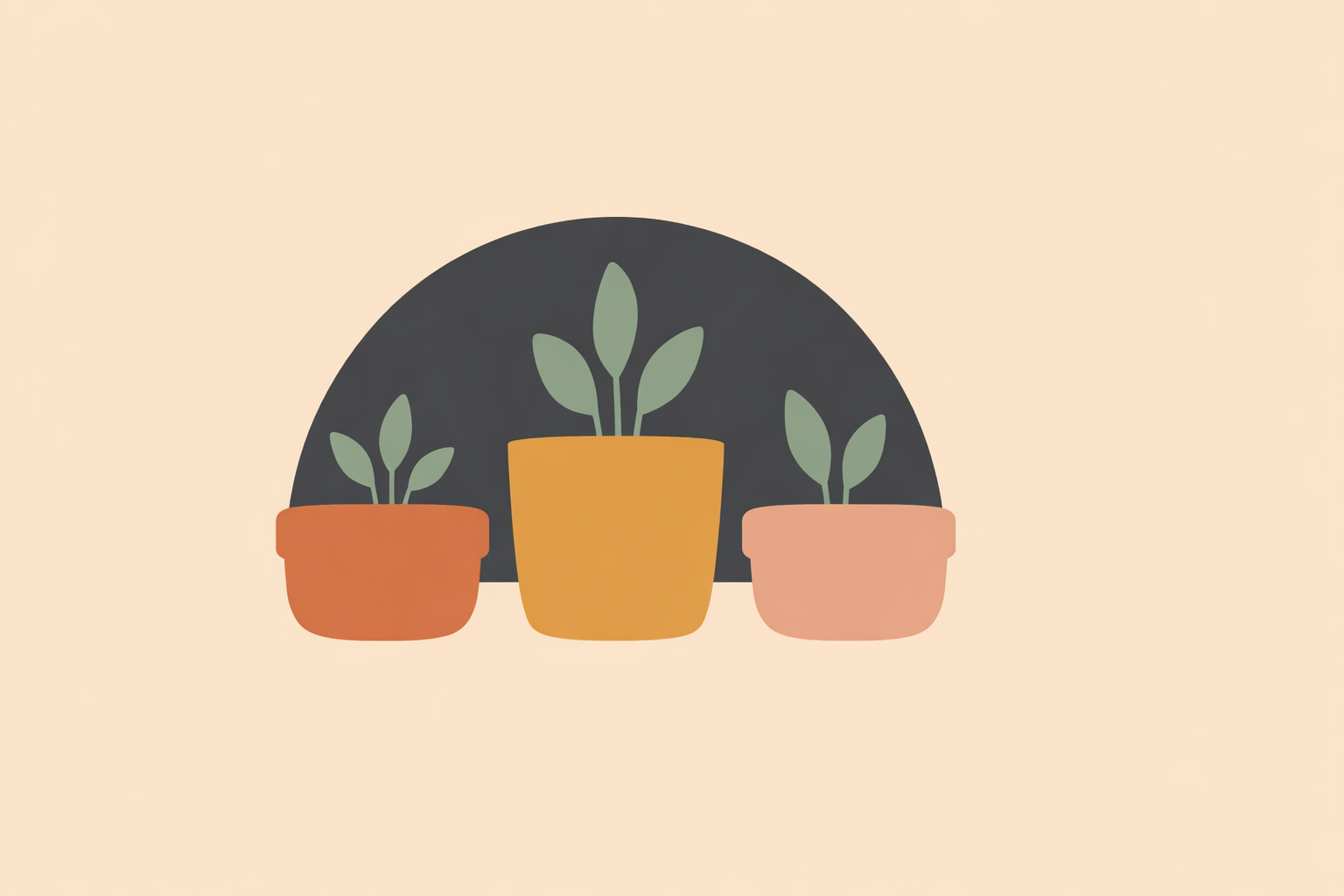
The most encouraging place to begin is small enough to succeed. A windowsill, balcony rail, or a couple of containers can deliver early wins—often within weeks—and those wins build confidence fast.
That first harvest matters because it’s tangible: growth you can see, leaves you can touch, food you can taste. Many people also notice better mood and lower tension when tending even a modest growing space becomes part of the week. The goal isn’t volume at first—it’s relationship: with plants, with meals, and with the older food traditions that once lived naturally in households.
Design a minimum-viable garden
Keep the first plan tightly focused, so it’s easy to maintain:
- Choose 3–5 crops the household already enjoys.
- Use 2–3 containers only.
- Set one daily watering check and one weekly harvest moment.
Leafy greens, basil, radishes, and microgreens tend to work beautifully here: forgiving, quick, and easy to fold into everyday meals.
It helps to frame small-scale growing as cultural reconnection rather than productivity pressure. A few herbs on a sill can restore respect for seasonality, household rhythm, and foodways many families once knew intimately.
As Susan Lambert reminds us, “Self-sufficiency is not a static end state; it is a capacity for adaptive problem-solving.” A tiny garden is often the safest, simplest place to practice exactly that.
When the first leaves arrive, encourage a small ritual—basil over eggs, mint in water, greens tucked into lunch. Think of it like striking a match: a little taste can light the next step.
Tool 2: Pantry resilience through simple food preservation
Once food is growing or arriving in seasonal abundance, preservation turns short bursts of plenty into steadier nourishment across the week—and across the season.
Traditional preservation has always been a household stabilizer. Practices like fermenting, drying, and root storage helped families carry food through leaner times. On a wider scale, these approaches also reduce post-harvest losses and support year-round availability.
For many households, freezing is the friendliest entry point—especially for soups, herbs, fruit, cooked beans, and meal components. From there, one jam recipe, one quick pickle, or one drying experiment is usually more sustainable than trying to learn everything at once.
Build a realistic pantry, one habit at a time
- Choose one gateway skill: freezing soup portions, drying herbs, or making a small batch pickle.
- List 10 familiar meals and the shelf ingredients they rely on.
- Add one seasonal “put-up” day to the calendar.
Preservation is often easier—and more enjoyable—with others. A shared preserving day with family, neighbors, or friends returns this work to its natural setting: a seasonal household practice, not a lonely task.
It also helps to add simple “scaffolding” so progress is visible. As Jeffrey Lubell notes, Family Self-Sufficiency participants who hit their goals see average over $6,000 in escrow savings. Randi Nelson adds that pairing coaching with incentives produces larger impacts than services alone. In home practice, that “incentive” can be wonderfully simple: a checklist on the fridge, a photo of filled jars, or a celebratory meal featuring something preserved by hand.
When clients open the cupboard and see their own efforts lined up on a shelf, it’s grounding. Not perfection—steadiness.
Tool 3: Everyday water stewardship that fits the home
Water work expands self-sufficiency from food alone to the everyday systems that support it. Even small changes can shift how people relate to their home, their growing space, and their local environment.
Start with place: what water is available, where it moves, and what constraints the household is working within. For gardeners, even a modest rain setup can offset garden watering over time—especially when paired with mulch and more targeted irrigation.
This is also where local awareness matters. Rain capture, greywater use, and plumbing changes sit within regional rules and real-life limits. The coaching role is to help clients notice flows, options, and boundaries—then choose something that fits.
Use a simple household water audit
- Map showers, laundry, kitchen use, outdoor taps, and roof runoff.
- Choose two practical swaps, such as a rain barrel or more targeted watering.
- Pair any new water habit with a weekly garden check-in.
Essentially, this builds systems thinking: resilience isn’t one dramatic solution, it’s a relationship with everyday resources—built through observation and adjustment.
As Susan Lambert frames it, programs that explicitly teach planning, self-monitoring, and cognitive flexibility build more durable outcomes through adaptive problem-solving. Water stewardship offers a grounded way to practice that skill.
Tool 4: Right-sized energy backup for everyday disruptions
Before buying anything, shrink the problem. Most households need far less electricity during a short outage than they imagine, because true essentials are fewer than normal habits.
Preparedness guidance consistently emphasizes prioritizing a few essential loads rather than trying to maintain whole-home use. Along the same lines, small solar or balcony-scale systems are generally better suited for critical loads than full household coverage.
That shift alone can calm the whole conversation. Often, what’s needed is simple: phone charging, a few lights, a way to keep key food cool temporarily, and a basic plan for meals.
Build a simple energy resilience stack
- Power bank for communication.
- Lanterns or rechargeable lights.
- Outdoor-safe cooking option.
- Cooler or other way to protect key foods temporarily.
Safety stays central. Fuel-burning cooking devices don’t belong indoors; clear setup, storage, and use habits matter more than collecting extra gear.
What this means is: build structure around the habit, not just the objects. A named backup kit, a storage spot everyone knows, and one practice run usually does more for confidence than another purchase.
The aim is simple and reassuring—a home that stays steady through minor interruptions without turning preparedness into another source of overwhelm.
Tool 5: DIY and repair as confidence practice
One make-or-mend project can change a person’s sense of capability. Repair isn’t only about saving money or extending the life of an object; it’s the lived experience of competence.
This matters because success in one area often supports confidence elsewhere. Classic research shows that mastery experiences support generalized self-efficacy across other goals and challenges.
Keep the first project humble: sharpening knives, fixing a loose hinge, mending clothing, or building a simple planter. Traditional hand skills have long marked contribution and adulthood across cultures, and social participation has often been closely tied to practical skill.
Pacing and protection are part of learning. Rushing or skipping basic precautions increases the risk of cuts and eye injuries when using tools. And because time scarcity and fatigue make follow-through harder, keeping the project small is often the real secret to success.
Choose one self-efficacy lab project
- Keep it to 60–90 minutes.
- Prepare the tools in advance.
- End with a visible result the client can name and remember.
As Karin Martinson emphasizes, the strongest gains come from tracking a few clear milestones clients define and care about.
When a hinge is tightened or a seam is closed, the practical result counts. But so does the deeper message: “I can learn this. I can handle more than I thought.”
Tool 6: Composting and circular household systems that stay manageable
Circular living works best when it’s small enough to maintain. Composting, upcycling, and reuse can bring real beauty and discernment into a home—when the boundaries are clear.
Start with what the household already produces, and choose just one stream: kitchen scraps, cardboard, worn textiles, or a monthly repair basket. The goal isn’t moral perfection; it’s one loop that feels satisfying and repeatable.
Many practitioners notice composting becomes easier to sustain when the finished compost has a visible home—garden beds, pots, or houseplants. Put simply, when the “return” is obvious, the habit has somewhere to land.
It also helps to guard against “save everything, just in case.” Circular habits should reduce friction, not create hidden clutter. Shared agreements with family or housemates about what to keep, repair, pass on, or release can protect the spirit of the practice.
Design one circular habit with clear boundaries
- Choose one material stream only.
- Set a container limit so the practice stays contained.
- Celebrate exits as much as entries.
As the International Coaching Federation community reminds us, when a project starts to fuel avoidance or conflict, it helps to surface the pattern, simplify, and seek added support if needed.
Circularity can become a quiet teacher of timing, boundaries, and return. It reminds clients that a household doesn’t need to waste less by force—it can learn to move resources with more care.
Shared practice makes resilience easier
These skills deepen when they’re shared. Family workdays, neighbor swaps, and simple “learn together” moments often make resilience-building more successful because social participation strengthens adaptive capacity. In real life, people tend to keep going when their habits are witnessed, encouraged, and exchanged.
Self-sufficiency rarely thrives as isolation. It grows in relationship: one person shares cuttings, another brings jars, another knows how to mend, another hosts the workday. With care, steady habits spread through networks—and that’s how resilience becomes easier to hold.
Conclusion
Homesteading-style self-sufficiency plans are less about withdrawal and more about strengthening everyday life. A handful of living practices—growing some food, preserving it, using water more thoughtfully, preparing for short outages, repairing what can be repaired, and closing one household loop—can change how a home feels.
For practitioners, the through-line is human scale: small pilots, clear milestones, safe setups, and room for seasonal pacing. Traditional knowledge has always understood this. Confidence grows through repetition, not performance.
Bring in one tool at a time. Let clients taste, store, stitch, save, and share their progress. Over time, modest actions become something much larger: grounded resilience they can feel in the kitchen, on the balcony, in the cupboard, and in the rhythm of the week.
Explore Self-Sufficiency Certification
Deepen these household resilience habits with structured guidance in Naturalistico’s Self-Sufficiency Certification.
Explore Self-Sufficiency →