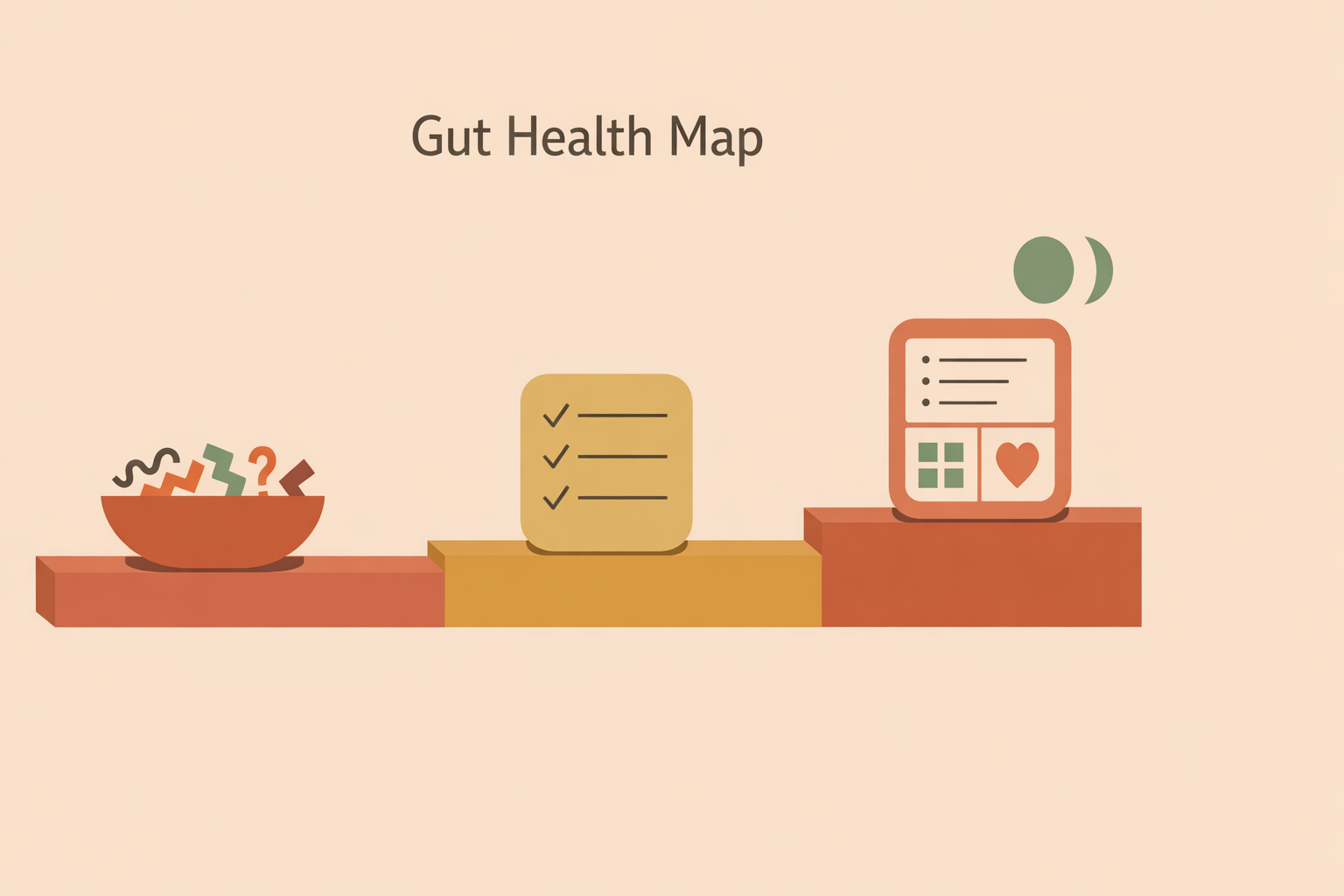
Food-sensitive clients rarely arrive with tidy data. You hear “bloating after dinner” or “fine some days,” then spend half the session reconstructing meals, portions, prep methods, and context from memory. Weekdays don’t match weekends, stress and sleep complicate the picture, and well-meant elimination plans can slide into unnecessary restriction. What improves outcomes is not more theory, but better notes—simple structures that translate lived experience into patterns you and the client can test, refine, and sustain.
Strong templates create a repeatable flow: baseline observation, targeted refinement, and a return to nourishing, culturally grounded meals. They also protect client dignity by replacing all-or-nothing rules with observable data—so choices stay flexible, personal, and realistic.
Key Takeaway: Use structured, repeatable note templates to turn messy symptom stories into testable patterns, then run short, reversible experiments that lead back to nourishment. Tracking food, context, and the gut–brain layer helps clients identify thresholds, protect flexibility, and build sustainable, culturally grounded meals.
Template 1: 7-Day Food & Symptom Tracker for Food Sensitivities
This simple, shared log turns scattered recall into a clear picture. In one week, you and your client can spot timing, portion, and preparation patterns that often get missed in conversation alone.
I start almost every digestion-focused session here because a consistent 7-day diary becomes your map. Ask clients to record meals, approximate portion size, beverages, prep method, and a simple 1–10 symptom score across the day. If you want a ready-made structure, point them to a practical 7-day diary and the GERD-focused version below for extra symptom prompts.
Precision is what makes this usable. “Two slices white bread, mayonnaise, cheese, tomato” beats “sandwich,” because it gives you something concrete to test. Many nutrition teams explicitly encourage precise descriptions so patterns don’t hide behind vague labels.
What to capture in week one:
- Record everything (including sauces, dressings, snacks, and alcohol).
- Prep method (fried, steamed, raw) and an approximate portion.
- Timing plus severity; many diaries list common symptoms such as heartburn, bloating, gas, nausea, cramps, urgency, constipation, and diarrhoea.
- Include weekends; many people find 7–14 days is where the “real life” patterns show up.
“Quite literally, your gut is the epicenter of your mental and physical health,” Kris Carr reminds us—an invitation to take this first note seriously as the foundation for everything that follows.
By the end of week one, you’re no longer guessing. You’re working from the client’s real rhythm—which makes the next step feel focused rather than restrictive.
Template 2: FODMAP-Focused Diary for Bloating and Gas
When bloating, gas, or irregularity keep showing up, a FODMAP lens can sharpen the picture. This diary refines your baseline without rushing into rigid rules or long lists of “don’ts.”
I introduce a FODMAP-focused note when the first diary suggests reactions to fermentable carbohydrate patterns. The template groups foods by high, medium, or low FODMAP categories and tracks symptom intensity over a 7–14 day window. Many practitioners use a printable or digital FODMAP diary that layers symptom ratings onto food groups.
This is also a great moment to clarify the landscape: many clients are dealing with sensitivities and thresholds, not true allergies. Notes help you distinguish repeatable patterns and support clients in understanding sensitivities vs. allergies without fear-based thinking.
Keep the window long enough to include weekends—portion sizes, meal timing, and social eating change then. A steady 7–14 days often makes the difference between “random symptoms” and a clear category-level trend.
In my practice, I pair this log with short reflection prompts so clients learn what’s working, not just what to avoid. Naturalistico’s overview of coaching integration echoes that blend of structure and self-observation—making change sustainable instead of rigid.
This refinement isn’t about perfection. It’s about finding the gentlest path to a calmer belly—then using that clarity to build nourishment back in.
Template 3: Microbiota Nurture Log – From Avoidance to Nourishment
Restriction alone rarely restores a sense of balance. This log shifts the focus toward plant diversity, traditional ferments, and fibres that tend to support the inner ecosystem over time.
Once the first two templates highlight likely irritants, I add a microbiota nurture note to track what we’re building, not only what we’re reducing. We log how many different plants appear across the week, which ferments feel supportive, and whether fibre variety is rising gently. This matters because a diverse gut microbiota is widely associated with resilient digestion and broader well-being.
Many traditional and holistic frameworks also use a flexible “5R” scaffold—remove, replace, reinoculate, repair, rebalance—as a practical way to keep the journey nourishment-led. Naturalistico’s explanation of the 5R structure translates beautifully into notes like: what did we add this week that helped the body settle?
- Plant diversity: Work toward roughly 30 plants in a week (each distinct fruit, veg, herb, spice, nut, seed, legume, or whole grain counts once).
- Traditional ferments: Foods like sauerkraut, kimchi, and kefir—honoured in many cultures—are often discussed alongside fibres for supporting microbial diversity.
- Fibre variety: Many guides cite around 25–35 g/day, ideally from diverse sources that support short-chain fatty acids and gut lining integrity.
“Your gut is vital for your overall health and well-being. Look after it and it will help keep you in good shape,” as Dr. Chris Steele puts it. This log is how we “look after it”—add by add, week by week.
Clients often feel a mindset shift here: from “my body is difficult” to “my body responds to care.” That momentum sets the stage for the gut–brain layer.
Template 4: Symptom–Mood Tracker for the Gut–Brain Connection
Digestion responds to more than food. This note layers stress, sleep, movement, and vagal tone onto symptom timing so patterns become unmistakable.
Here, we timestamp digestive responses alongside emotional state and a few simple nervous system markers—breath depth, tension, sense of ease, or overwhelm. You don’t need anything fancy; even basic tracking templates are enough to reveal correlations with sleep debt, work pressure, travel, or conflict.
This is also where traditional practices become measurable in a down-to-earth way. Breathwork, prayer, nature time, and other centring rituals can be logged alongside symptoms. Naturalistico’s coaching resources discuss practices that stimulate the vagus nerve and how they may relate to calmer digestion and steadier mood.
- Sleep: Regular rhythms matter; general gut-health discussions often connect 7+ hours with steadier microbial ratios.
- Movement: Gentle daily motion supports motility and reflects ancestral activity patterns (many clients do well with a simple walking habit).
“The gut can influence our basic emotions, our pain sensitivity, and our social interactions,” writes Emeran Mayer. I see this truth weekly: when we log inner state alongside the plate, adjustments become clearer and kinder.
With food patterns and nervous system patterns both visible, you can design experiments that are respectful, reversible, and clear.
Template 5: Elimination Evolution Guide for Food Sensitivity Experiments
When the first four notes converge on a handful of suspects, we shift into a structured, reversible experiment. The goal is clarity—not permanent restriction.
I frame this as an evolution, not a “diet.” Choose a short, realistic reduction phase, document the new baseline, then bring foods back one at a time with a day or two of observation. Many practical guides emphasize reintroducing foods thoughtfully, because that’s where personal truth emerges.
The guide tracks three things: what’s reduced (and for how long), daily symptoms/mood, and what happens during each reintroduction. Keep the list small and focused; structured logging helps reveal individual responses without turning life into a constant “avoid” list.
Methods vary widely, which makes clean documentation even more valuable. Reviews often describe a two-step pattern (reduce, then challenge) while noting how different the details can be. For specific explorations such as histamine, early pilot work has reported 40% reductions in bloating for some diary users—useful encouragement for careful tracking, without turning it into a promise.
Most importantly, protect satisfaction and cultural belonging. Build swaps and additions that fit the client’s heritage and preferences—whether that’s teff, quinoa, plantains, legumes, or broths. Naturalistico’s guidance on client scope supports this values-led approach: experiments are for self-knowledge and well-being, not identity or fear.
As a mentor once told me, don’t let a temporary phase become an identity. The reintroduction is where the wisdom crystallizes—so your note must make it easy to see what truly matters and what can return.
Template 6: Seasonal Sensitivity Mapper for Ancestral Eating Rhythms
Our bodies live in seasons. This mapper honors environmental shifts—foods, climate, pollen, humidity—and how they interact with digestive comfort.
After the core experiments, I widen the lens. A seasonal mapper tracks seasonal produce, staple dishes, preparation changes, and environmental cues like heat, cold, travel, and pollen. Many printable logs include space for seasonal factors, which helps clients see patterns that a food-only diary can miss.
This is where ancestral foodways deserve to be treated as wisdom, not a “special case.” Clients often do best when their notes reflect their real home foods—plantain-based cuisines, legume-forward plates, fermented dairy traditions, or organ-meat stews—rather than forcing someone else’s ideal. Naturalistico highlights adapting tools to diverse foodways so practitioners support ancestral patterns instead of overriding them. For deeper training, the course also explores aligning with ancestral rhythms in a practical, client-led way.
“The road to health is paved with good intestines!” The humor sticks, but the wisdom is real: seasons and culture shape our bellies. When notes honor that, solutions feel human—and sustainable.
Now you have rich information. The final step is to compress it into something the client will actually use week after week.
Template 7: Community-Shareable Summary for Gut Health Sessions
Busy clients won’t re-read a dozen pages. This one-page weekly summary distills the signal: top triggers, nourishing wins, and the next focused experiment.
I ask clients to summarise the week in three short sections: observations, what helped, and open questions. Many practitioners use a simple sheet that calls out top triggers and “keepers,” with quick symptom and energy scales that work well for group or community spaces.
To keep it human, pick a few gentle metrics: a 1–10 bloating scale, a self-rated vitality check-in, and a small habit score for one to three supportive practices. Naturalistico’s coaching articles show how well-chosen metrics can support clarity without turning life into a spreadsheet. In surveys referenced on the platform, structured tracking has been associated with 70% of clients reporting improved well-being when traditional wisdom is woven with modern insights.
Some clients prefer pen-and-paper; others enjoy apps that generate simple heatmaps. Either can work when it encourages consistent reflection—an idea reinforced in mainstream discussions of diary use. The summary is simply the bridge between one week’s learning and the next small step.
Conclusion: Choosing the Right Note Template for Food Sensitivities and Gut Health Sessions
These seven note templates form a natural arc. Start with a baseline (Template 1), refine with a FODMAP lens if it fits (Template 2), then pivot toward nourishment—plant diversity, traditional ferments, and fibre variety (Template 3). Add the gut–brain layer (Template 4), run a reversible remove-and-reintroduce experiment (Template 5), widen into seasons and culture (Template 6), and finish with a short weekly summary that keeps momentum (Template 7).
Used together, they create a values-led, traditional-meets-modern approach that’s organised, respectful, and practical. Naturalistico’s Certification emphasises blending ancestral foodways with current microbiome conversations to co-create personal, sustainable plans. Just as importantly, the platform’s guidance on integrity keeps the work grounded in supportive coaching—clear notes, clear choices, no inflated promises.
A few cautions belong at the end: tracking can be empowering, but for someone with a history of disordered eating it may feel activating, so adapt, simplify, or pause as needed. Neurodivergent clients may also thrive with shorter formats, predictable prompts, and fewer fields—what matters is consistency, not complexity.
Ultimately, the best note is the one that turns experience into insight—and insight into one gentle, doable change. Choose the template that matches today’s question, keep it culturally rooted and client-led, and let the notes guide the next step.
Explore Gut Health Practitioner Certification
Apply these tracking templates confidently with the Gut Health Practitioner Certification.
Explore the Certification →