


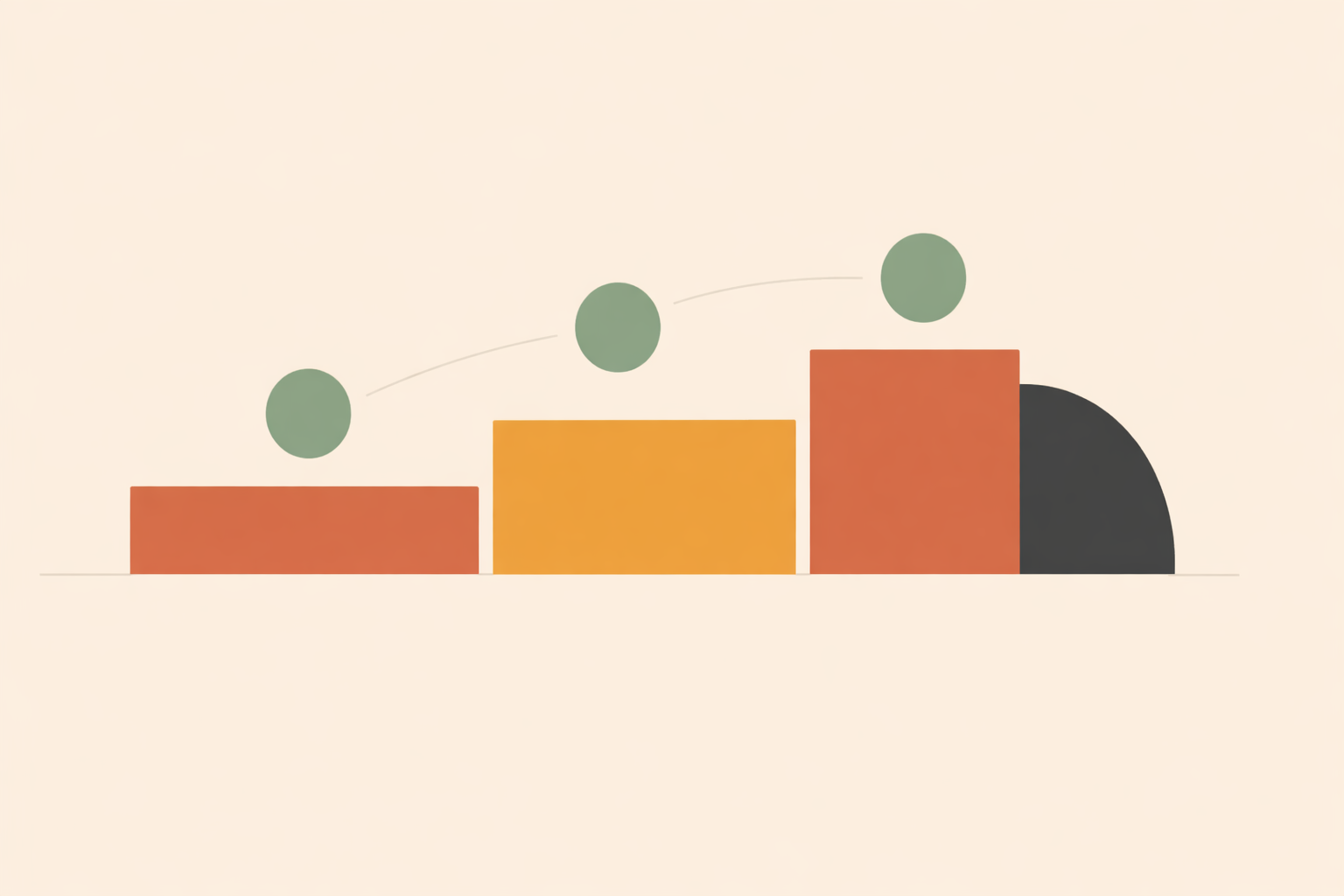
Most progress happens between sessions. Clients try things out in real, messy weeks, then show up saying, “I’m not sure anything changed.” In practice, between-session work often carries more weight than the hour you share together.
The challenge is familiar: vague progress can quietly drain motivation, yet complex tracking systems usually fall apart fast—and can feel heavy, clinical, or shaming. tracking fatigue is real.
A better approach is light, specific, and deeply human: tools that capture meaningful movement without turning growth into performance. In practice, multi-tool approaches tend to make change easier to notice and easier to sustain.
Below are seven positive psychology tools that work especially well together: co-created scales, quick trend check-ins, whole-life context, tiny actions, brief reflection, strengths, gratitude/savoring, and compassionate pulse checks. Used this way, progress becomes visible while client agency stays at the center. person-centered measurement is the thread that ties it all together.
Key Takeaway: Progress between sessions becomes easiest to see when clients use light, co-created tools that combine a clear goal ladder, tiny action evidence, and brief meaning-making. A flexible mix of quick ratings, whole-life context, strengths, gratitude, and compassion keeps tracking supportive, sustainable, and aligned with real life.
Tool 1: Goal Attainment Scaling and 1–10 Check‑Ins
Start with shared, visible markers of progress. Goal Attainment Scaling plus simple 1–10 check-ins helps clients see real movement between sessions—without turning growth into a harsh scorecard.
Many people improve in real life before they can describe the change clearly. Positive interventions can create measurable shifts even when participants struggle to explain what’s different. Goal Attainment Scaling turns a hope into a simple ladder (from −2 to +2), so gradual or non-linear progress becomes easier to recognize. Goal Attainment Scaling
This visibility matters because when progress feels fuzzy, people often assume nothing is happening and disengage. vague progress reduces engagement Put simply: if clients can’t “see” progress, it’s hard to keep choosing it.
The key is writing each rung as an observable behavior, not a mood label. Think of it like laying stepping-stones: “stated a boundary,” “took a short walk,” “started the conversation,” “held the new rhythm for three days.”
Keep it humane by building it together. Person-centered guidance supports co-created measurement and adapting the format—words, colours, sliders, or numbers—so the tool feels like support, not surveillance.
Once the ladder is set, add a quick 1–10 check at the start or end of sessions. Repeated 0–10 ratings are a simple way to track change trajectories over time. A “6” can be a win if it reflects steadiness, honesty, and returning after a wobble.
If one simple overview number helps, a monthly “goal ratio” (completed or meaningfully advanced) offers an at-a-glance indicator without flattening the richness of the work.
“Positive psychology is about building the best things in life, not just repairing the worst.” – Martin Seligman Positive psychology
This first tool sets a clear foundation, so everything that follows stays rooted in strengths, values, and lived reality.
Tool 2: The Wheel of Life for Seasonal Whole‑Life Balance
Goals show direction, but the Wheel of Life shows proportion. It helps clients see where energy is actually going, so progress stays aligned with the whole person—not just one target.
Life-domain mapping tools like the Wheel of Life let people visually appraise how time and energy spread across work, relationships, rest, learning, contribution, and home life. life-domain mapping
Here’s why that matters: the Wheel highlights the distribution of attention. A client can be “winning” one goal while slowly draining themselves elsewhere. The Wheel makes that cost visible early, when change is still easy to adjust.
This wider lens also fits naturally with traditional, cyclical ways of understanding wellbeing. Cross-cultural positive psychology recognizes wellbeing as connected to season and meaning—including community roles, duty, rest, and purpose. Many practitioners find the Wheel echoes seasonal review: pausing at turning points to ask what’s thriving, what’s neglected, and what needs tending now.
A quarterly rhythm is often enough: revisit the Wheel every few months, then use brief monthly notes to spot what rose, what dipped, and where a gentle reset would bring the most relief.
Positive psychology also keeps the definition of success honest: flourishing includes meaning and balance, not achievement alone. So if goals advance while rest or belonging collapses, the Wheel offers a calm, clear prompt to rebalance.
“The good life is a process, not a state of being.” – Carl Rogers good life
The Wheel isn’t about perfect balance. It’s about recognizing the season you’re in—and responding with wiser choices.
Tool 3: Tiny Behavior and Energy Tracking
Small actions often tell the truth faster than big intentions. Tiny behavior and energy tracking helps clients build momentum in a way that survives real life.
After the whole-life view, zoom into what’s actually being lived. Habit work consistently supports the value of frequent small actions, and design research warns that overbuilt tracking tends to collapse under everyday pressure.
Specificity is the difference between intention and evidence. specific actions like “ten-minute walk,” “two focused work blocks,” or “phone off by 9 p.m.” are easier to remember, repeat, and learn from than “take better care of myself.”
To make the data meaningful, pair action with a simple feeling signal. Self-tracking approaches recommend combining behavior logs with affect ratings (energy, ease, steadiness), so clients can see patterns between what they do and how they feel.
For overwhelmed clients, use a “tiny-win ladder”: the smallest version that still counts. This mirrors approaches that can reduce avoidance and increase follow-through. Essentially, you’re lowering the entry cost so consistency can grow.
- Action: What did you do?
- Size: Full version or tiny version?
- Energy: Before and after?
- Pattern: What helped you follow through?
Because positive approaches focus on strengthening what works, this becomes discovery, not policing: “What conditions help you keep promises to yourself?”
“A rainbow is a reminder that even after a storm, something beautiful can emerge.” – Charles Snyder on hope and small steps toward goals hope
Tiny actions build self-efficacy in a grounded way—each step becomes proof that change is already underway.
Tool 4: Reflection Notes and Milestone Memos
Numbers show movement, but reflection shows meaning. Short notes and milestone memos help clients understand what changed and why it matters.
Without reflection, subtle gains can vanish into the pace of life. Positive psychology encourages reflection to make wellbeing visible, so progress becomes something clients can actually feel and integrate.
Light prompts usually work best long term. Many people stick more easily with weekly reflection than intense daily journaling. A couple of sentences can be enough.
A monthly milestone memo adds another layer: it captures shifts that numbers miss—the boundary held, the old pattern noticed early, choosing rest without guilt, speaking with more honesty.
This matters because awareness-building is a bridge between intention and action. awareness supports follow-through Reflection turns experience into learning, and supports longer-term wellbeing. reflection supports wellbeing
Traditional knowledge also understands this deeply: wisdom is often carried through story, evening recall, seasonal review, and shared reflection. Cross-cultural work highlights the role of narrative reflection in cultivating wellbeing. Used respectfully, modern prompts can echo this timeless human way of making meaning—without borrowing ceremony out of context.
- What changed this week?
- What felt easier or steadier?
- What surprised you?
- What do you want to carry forward?
Daniel Kahneman reminds us that nothing feels quite as important as it does while we are thinking about it in the moment. moment feels important
Reflection creates enough distance to see the bigger pattern, so clients respond with perspective rather than getting pulled around by the latest spike in emotion.
Tool 5: Strengths‑in‑Action Logs
Progress holds when it grows from what’s already alive in the person. Strengths-in-action logs help clients see their natural capacities in everyday life, not just in a one-time inventory.
At this point you can ask a powerful question: how is this person creating change? Strengths-based approaches show stronger outcomes when growth builds on existing strengths and aligns with values and natural ways of contributing. strengths align with values
Tools like VIA can help with naming, but the real shift comes from practice. Research suggests that using strengths tends to create more durable gains than labeling alone.
A strengths-in-action log keeps it practical: courage in a difficult email, kindness inside a firmer boundary, creativity in solving scheduling, perseverance in returning after a missed week. strengths in action
As patterns emerge, clients often stop forcing themselves into someone else’s model of success and start asking better questions: “Where did I use this strength?” “What shifted when I did?” strengths questions
Many traditional perspectives also frame growth as deepening one’s gifts and place in community, rather than “fixing” oneself. Cross-cultural accounts describe flourishing as fulfilling communal roles and deepening gifts. A strengths log naturally fits that worldview: it honors what’s inherent and cultivates it with care. strengths tools
Ryan Niemiec describes strengths as capacities that are authentic and energizing and that support optimal functioning over time. strengths are energizing
If a goal repeatedly drains a client while bypassing their genuine strengths, the issue often isn’t discipline—it’s misalignment.
Tool 6: Gratitude and Savoring Journals
Not all progress looks like productivity. Gratitude and savoring journals track what’s growing in attention, emotional tone, and receptivity—so change is felt as well as measured.
Gratitude practices can also serve as an ongoing record of growth. Exercises like “Three Good Things” have been linked with improved mood over time, functioning as an log of positive change.
The “why” matters, because it reveals what the client is learning to notice. Over time, gratitude tracking can show shifts in attention and emotional tone—from only pressure to also seeing support, beauty, relief, or connection. Difficulty may still be present, but awareness becomes wider and more balanced.
Savoring deepens this by training people to prolong positive experiences and revisit them mentally, building emotional resources. This matters because many clients move so fast that good moments barely land; progress happens, but it isn’t integrated. savoring supports adherence
Simple prompts usually win:
- What did I pause to enjoy?
- What felt nourishing today?
- What goodness did I almost miss?
Gratitude also has deep roots across cultures—daily thanks, blessings, offerings, communal acknowledgment. Modern exercises can respectfully echo longstanding gratitude traditions without copying ceremonies that aren’t ours to claim.
Robert Emmons notes that gratitude affirms that a source of goodness exists in our lives beyond ourselves. gratitude beyond ourselves
In coaching, this is grounding: progress isn’t only personal effort. Support, timing, relationship, community, and grace shape the path too.
Tool 7: Mindful, Self‑Compassionate Pulse Checks
The best tracking systems are kind enough to survive hard weeks. Mindful, self-compassionate pulse checks keep clients connected to their process without turning difficulty into shame.
At this stage it’s clear: tracking isn’t about collecting more data—it’s about building enough awareness to respond wisely. Mindfulness-based practices support present-moment awareness and clearer self-observation, which makes them ideal for brief check-ins.
Keep it light. Self-tracking design cautions that complex systems reduce adherence. Short ratings (presence, stress, steadiness) are often enough to show meaningful trends. trendlines over time
Then add the most important question: not only “Did I do it?” but “How did I treat myself when I didn’t?” Tracking self-compassion helps distinguish resilience from harsh self-pressure. Combining mindfulness, self-kindness, and monitoring is linked with stronger long-term engagement and functioning. mindfulness plus self-kindness
One-minute pulse questions keep friction low:
- How close do you feel to your goal today?
- What felt most supportive this week?
- Where did you get stuck?
- How kind were you to yourself when things felt hard?
Person-centered frameworks recommend tools that are choice-based and shame-sensitive, especially when capacity changes week to week. That keeps the check-in as information for learning, not a verdict on worth.
The Dalai Lama has often spoken about compassion as a source of both immediate and long‑term happiness, underscoring its role in sustainable inner growth. compassion supports happiness
Compassion protects the whole system. Without a kind stance, even helpful tools can become another way to feel behind. kind stance matters
Conclusion: Weaving 7 Tools into a Humane, Ancestrally Aware System
These seven tools work best as a flexible ecosystem, not a rigid formula. Together, they create a client-led way to track progress that’s clear enough to guide action, spacious enough for real life, and grounded in both modern insights and enduring traditional wisdom.
Each piece has its role: goal scales clarify direction, the Wheel restores proportion, tiny behaviors show what’s being lived, reflection adds meaning, strengths highlight natural capacity, gratitude and savoring track what’s growing, and pulse checks keep the whole approach kind.
In practice, the most effective systems tend to combine multiple tools with reflection and light-touch metrics rather than relying on one technique. Progress becomes easiest to see when numbers, stories, patterns, and felt experience inform each other. systems improve visibility
If you’re building your own approach, start small:
- One goal scale for direction
- One tiny-action tracker (daily or weekly) for consistency
- One reflection prompt for meaning
Then let clients choose how they capture their process: words, numbers, colours, sliders, check marks, or voice notes. Person-centered approaches emphasize real choice and focusing on trendlines, not perfection.
Ultimately, between-session tracking is a bridge between insight and everyday life—because that’s where real-world change unfolds.
As Mihaly Csikszentmihalyi put it, a joyful life is an individual creation, not something copied from a recipe. joyful life
Master Progress Tracking Skills
Positive Psychology Coach Certification helps you apply humane, person-centered tracking tools confidently between sessions.
Explore the Certification →










