Most herbal practitioners learn the same hard lesson: generosity alone won’t structure a practice. Days can disappear into unpaid DMs, informal advice at community events, and the occasional workshop or jarred blend. Income stays inconsistent, boundaries get fuzzy, and quality systems feel “too big” for a solo practitioner.
You may be supporting real, everyday needs—stress, sleep, digestion—yet your offers sit in separate silos that don’t quite add up to stability. The work isn’t the question. The question is how to translate everyday herbal support into an ethical, durable set of offerings that people can understand, trust, and return to.
The most practical path is sequencing: begin with focused one-on-one support, then grow into group education, digital learning, written guides, and a small set of thoughtfully crafted products that can later scale through partnerships. Anchor the whole ecosystem with a website so everything connects, and your standards are visible from the start.
Key Takeaway: Build a sustainable herbal practice by sequencing offers from one-on-one support into workshops, courses, guides, products, and partnerships, all connected through a clear website hub. Let recurring client questions shape what you teach and sell, and keep trust high with visible boundaries, scope, and quality standards.
Way 1: Turn Everyday Herbal Questions Into Paid One-on-One Coaching
Start with focused one-on-one herbal coaching that supports common concerns like stress, sleep, and digestion. Offer single sessions or packages so people can choose a pace that fits their budget and life.
This is where trust is built: deep listening, a few well-chosen herbs, and steady follow-up. Many practitioners keep sessions consistent (often 45–60 minutes) and guide people toward foundations over “quick fixes,” tracking sleep quality, digestive regularity, and stress resilience as coaching outcomes—an approach aligned with system-level support.
Scope is what keeps this work clean and sustainable. Clear agreements, consent, and boundaries protect both you and the person you’re supporting—especially with sensitive topics like mood, energy, and long-standing discomforts. Training that emphasizes clear scope and inclusive communication helps you stay helpful without drifting into restricted roles. When in doubt, return to foundations, share options, and let clients choose what feels right in their bodies.
Shape scope-safe sessions for stress, sleep, and digestion
- Session flow: 10 minutes intake and intentions, 20 minutes on daily rituals and herbs, 10 minutes integration and next steps, 5 minutes scheduling and check-ins.
- Focus areas: sleep routines, gentle breathwork, bitters for digestion, nervines for daytime steadiness, evening teas for winding down.
- Simple herbs first: Choose kitchen allies and widely known plants that are easy to find and integrate as teas or supplements and are broadly available in many regions.
- Follow-up method: brief check-ins via email or voice notes with one reflective question (e.g., “What felt most supportive this week?”) and one small adjustment.
One-on-one work does something else, too: it reveals patterns. The same questions will come up again and again—and those are your best signals for what to teach in groups.
Way 2: Teach Small Herbal Workshops and Community Classes
Turn your most common questions into evening workshops or weekend community classes. Group learning strengthens local relationships and can bring a steadier rhythm to your income without losing the heart of your work.
Begin where your community already gathers—libraries, yoga studios, farms, neighborhood parks. Keep it practical: seasonal herbs, simple kitchen apothecary skills, approachable routines people can repeat at home. Workshops can generate income on their own, and they also function like a living “open house” for your deeper offerings. Many practitioners use recurring workshops to build momentum and keep community engagement warm.
Use common herbs as simple teaching anchors
Pick one or two herbs per class and let them hold the lesson. Ginger, for instance, can open a full conversation about digestive comfort, bitters, mindful eating, and mealtime breath. White willow bark’s historic use for aches is a natural bridge into plant constituents—like salicin—and how traditional observation has long guided our understanding of plants beyond any single-molecule story.
Keep the frame on whole-person foundations—sleep hygiene, steady digestion, supportive stress practices—principles aligned with whole-system support. Close with something tangible: smelling a tea blend, labeling a jar, or a short journaling prompt. These little rituals help the learning land.
Once a topic consistently fills seats, it’s ready to travel beyond your town.
Way 3: Turn Your Best Classes Into Online Herbal Courses
Record, refine, and expand your strongest workshops into online courses so your plant wisdom can reach people who aren’t local. Done well, this creates semi-passive income while preserving the fidelity of your teaching.
Think in clear learning arcs: an entry-level course on kitchen infusions, a deeper journey on sleep rituals and nervines, or a signature program built around a theme your community keeps requesting. Digital courses can passive revenue, and they pair naturally with live classes and one-on-one support for layered income.
Build niche programs around hormone and immune balance
Small, focused programs often serve best: gentle herbs and rituals for cyclical energy, or kitchen and garden allies for seasonal immune steadiness. Keep them modular—short videos, printable guides, recorded Q&A circles—so learners can move at their own pace.
Here’s why that matters: over time, you build a digital library that supports people continuously, while also freeing you from having to “show up live” for every hour you earn. Let traditional uses lead the practical choices, and teach what someone can do tonight in their own kitchen—always with respect for cultural roots, clear credit to teachers, and a grounded tone.
Once your course material is solid, the next step is simple: distill it.
Way 4: Capture Your Frameworks in eBooks and Downloadable Guides
Turn your most reliable teaching frameworks into eBooks and downloadable guides. These lower-priced resources widen the doorway into your work while adding an additional income stream.
People love clear, field-tested structure: “Top 12 Kitchen Herbs for Everyday Comfort,” “Evening Wind-Down: A 14-Day Nervine Ritual,” or “Bitters & Breakfast: Simple Digestion Support.” Writing books and eBooks can create residual income, and approachable pricing makes them easy entry points—ranges that have been successfully used in practice.
Turn client-tested frameworks into digital references
- Start with your notes: Pull the 3–5 practices you recommend most. Organize them into a friendly, step-by-step mini-guide.
- Make it visual: Include photos of simple preparations, quick-reference charts, and one ritual per chapter.
- Connect the dots: Each guide naturally points to deeper courses or coaching, creating a gentle, non-hypey pathway through your ecosystem.
Share guides on the same platforms that host your courses and blog, and offer a low-commitment way for newcomers to experience your approach.
For many practitioners, the next expression is something people can hold in their hands—ritual support they can return to daily.
Way 5: Craft Thoughtful Herbal Products for Everyday Discomforts
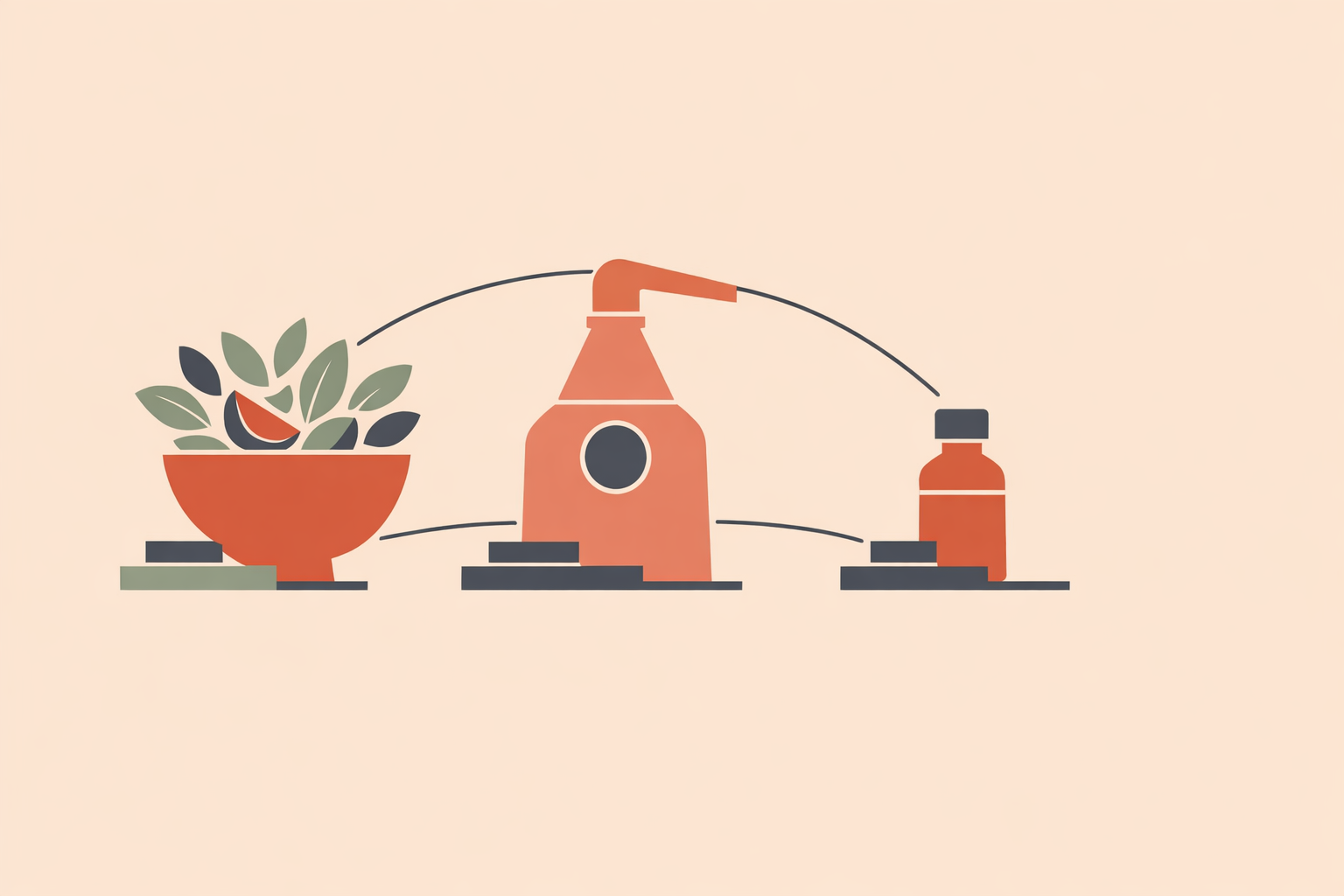
Create teas, oils, and blends that feel like your teaching in a jar. Products help people integrate what they’ve learned into daily routines, while you build income that isn’t tied to your calendar.
Start small and make it coherent: one evening tea for winding down, one daytime focus blend, one belly-soothing bitter, one grounding body oil. Selling physical products can expand income beyond time-for-money sessions, and thoughtful curation can increase margins. The wider market also reflects strong plant-based demand, which makes quality and clear positioning even more valuable.
Design teas, oils, and blends that express your philosophy
- Signature blends: Start with 2–4 ingredients each. Keep flavor profiles friendly and rituals simple.
- Story labels: Share origin stories respectfully, credit lineages, and avoid appropriating sacred practices.
- Sourcing: Build relationships with growers, prioritize organic or wild-harvested-with-consent plants, and pay fair prices.
Build quality and compliance into every product
Trust grows when your quality practices are visible. Independent analyses have found problems across the broader supplement market; one JAMA review of immune-support supplements reported 57% misbranded or adulterated. That reality makes your transparency a genuine service to your community.
In the U.S., many herbs sold as capsules, tinctures, or powders fall under DSHEA, with expectations around truthful labeling and good manufacturing practices. Many responsible brands use third-party testing to confirm identity and check for contaminants such as heavy metals. Even for small batches, simple product specs (identity, purity expectations, reasonable strength ranges) plus batch records go a long way toward consistency and care.
When a few products truly resonate, the next step is scaling—without flattening what makes them special.
Way 6: Scale Your Best Herbal Products With Wholesale and Partnerships
When a handful of products consistently serve people well, expand through wholesale accounts and collaborations. The aim is to move from single-jar sales to reliable batch orders—while keeping integrity at the center.
Local boutiques, farm shops, and cafes often welcome well-presented teas or oils. Many small herbal businesses use wholesaling to stabilize revenue, and long-term profitability is supported by building repeat customers while steadily reducing variable costs through smarter systems.
Move from single jars to bulk orders—without losing integrity
- Supplier vetting: When suppliers are properly vetted, you can rely on their Certificates of Analysis; see FDA-aligned guidance on supplier COAs.
- Test every batch: Quality systems expect that every batch meets specifications through scientifically valid methods.
- Recognizable seals: If you pursue third-party certifications, NSF/ANSI 173 can verify label claims and screen for contaminants, which can help when entering retail channels.
As volume grows, so does responsibility: keep documentation tidy, keep labels conservative and accurate, and tell plant stories in ways that honor cultural roots rather than borrowing what isn’t yours.
Managing all these moving parts gets far easier when everything connects back to one digital home.
Way 7: Build a Digital Home That Connects All Your Herbal Income Streams
Your website is the backbone of a modern herbal practice. It’s where coaching, classes, courses, products, and community meet—and where your voice can stay consistent over time.
Use your blog and website as your practice hub
Choose a platform you can maintain, then create clear paths: a Services page for one-on-one work, a Calendar for workshops, a Courses area, and a Shop. A blog can monetize a website through ads or ethical partnerships, and it can also guide readers toward your core offerings. Many practitioners also use values-aligned affiliate links they genuinely stand behind.
Weave traditional wisdom and modern research into your content
Write as a practitioner, not a siloed scholar. Name the ancestors, teachers, and lineages that shaped you. When it fits, add grounded modern guidance—like NCCIH’s advice to choose supplements wisely and pay attention to quality. This “evidence-informed” stance, where research, practitioner experience, and client preferences all matter, can increase trust while keeping agency in the learner’s hands.
Remember: you’re building an ecosystem, not a catalog. Naturalistico is designed as more than a static course marketplace, combining certification-level learning, community, and practical tools that support real client work—so your digital home can evolve as your practice matures.
With that ecosystem in place, the final step is simply to let your values steer.
Conclusion: Let Common Herbal Support Ethically Sustain Your Practice
Coaching, workshops, courses, guides, products, partnerships, and your digital home work best when they share the same roots: respect for ancestral knowledge, clear scope, and steady quality. Together, they support everyday wellbeing in your community and a livelihood that can actually sustain you.
Make your standards easy to see. Share your sourcing values, keep labels conservative and accurate, and echo public guidance to choose supplements wisely and look for quality seals when relevant. Encourage clients to listen closely to their bodies and track simple rituals—sleep hygiene, mindful digestion, stress steadiness—day by day.
Walk steadily. Start small. Let integrity lead. When you do, the plants have a way of opening doors—one thoughtful offering at a time.
Train in Herbalism Certification
Build scope-safe client skills with the Herbalism Certification Course as you develop coaching, classes, and products.
Explore Herbalism Certification →