Clients rarely ask “acupressure vs acupuncture” just to compare techniques. More often, they’re asking what they can do on the other six days of the week. When progress depends on daily choices and consistent practice, in-session needle work can only carry so much on its own. That’s where acupressure shines: it gives people a simple, repeatable way to stay connected, build confidence, and keep momentum at home.
Seen this way, acupuncture and acupressure aren’t competing methods. They’re two expressions of the same meridian map, using different kinds of stimulation and different levels of intensity. Needles offer depth and precision. Pressure offers continuity, accessibility, and a realistic daily rhythm. Together, they create a more coherent pathway for client support.
Key Takeaway: Acupuncture and acupressure are complementary tools on the same meridian map: needles offer deeper, more precise stimulation, while pressure supports daily continuity. When clients use brief, repeatable acupressure at home, it helps consolidate in-session work and builds sustainable momentum between visits.
Acupressure vs acupuncture: one map, different tools
Acupuncture and acupressure come from the same meridian system. The difference is the kind of stimulation used—and once clients understand that, the comparison becomes simple.
Whether you use a thumb or a needle, you’re working with the same meridians, the same point locations, and the same pattern-based reasoning. That shared structure makes it natural to turn in-session selections into home routines built around same acupoints.
From a contemporary perspective, point stimulation may influence nerves, fascia, local circulation, and the stress response. Think of it like offering the body a clear “signal” through touch—traditional language explains the map, and modern language can help some clients feel oriented and reassured.
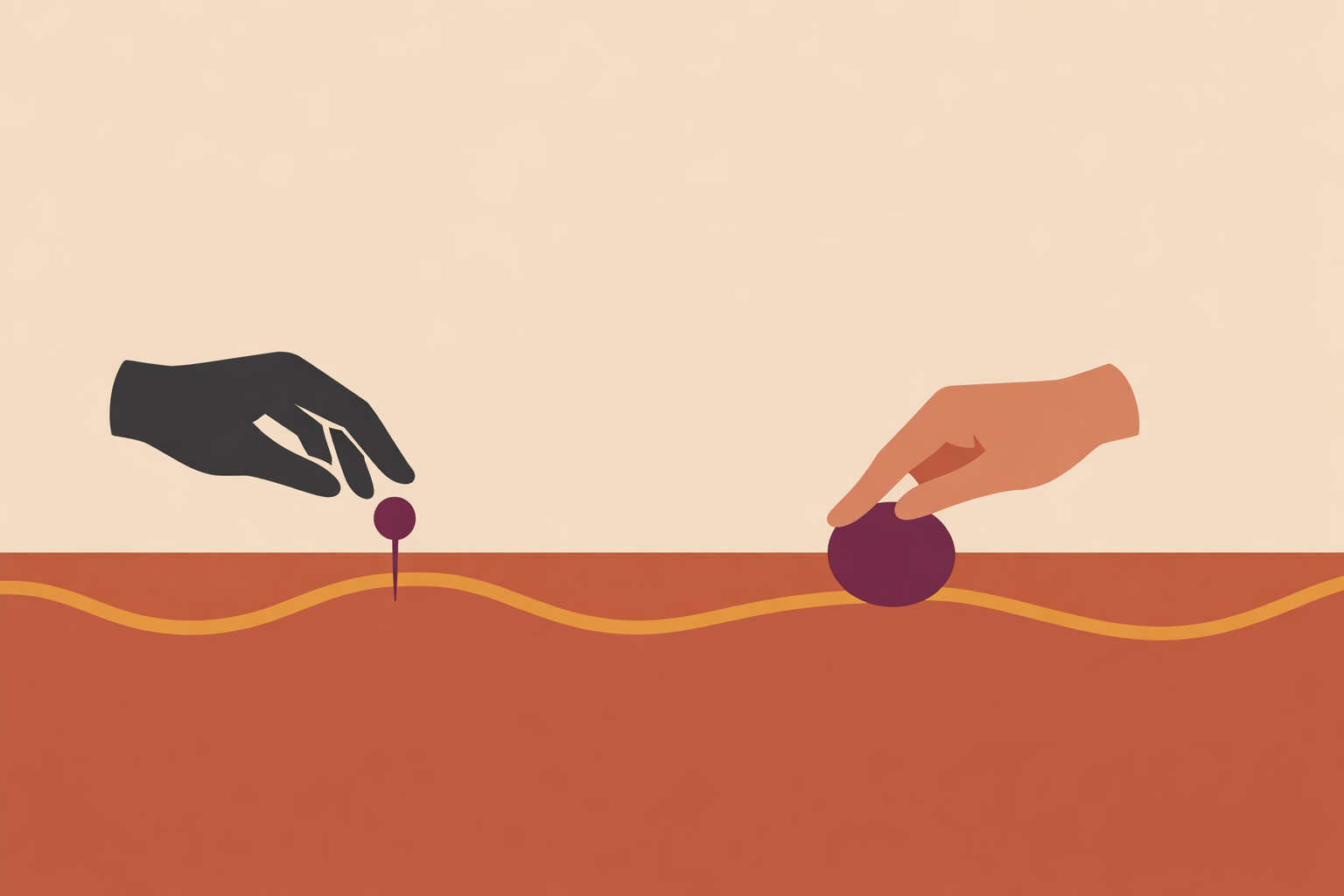
Acupuncture uses needle insertion for more targeted, layered stimulation. Acupressure uses fingers, palms, or simple tools for gentler, non-penetrating support—often a comfortable fit for stress, tension, and everyday maintenance.
The deeper principle, though, isn’t the tool. It’s the pattern logic underneath it. You’re looking at relationships among sleep, digestion, energy, temperature, movement, cycle patterns, and daily habits, then choosing points that fit the whole picture rather than chasing isolated complaints. That’s a big part of what makes traditional Chinese medicine internally coherent.
A widely cited overview notes that the tradition includes pre-scientific concepts that don’t always map neatly onto modern frameworks. In practice, that doesn’t diminish the system—it simply asks practitioners to translate thoughtfully, without stripping away the original meaning.
How to build an at-home acupressure routine clients will actually follow
Acupressure works best when it’s brief, clear, and easy to repeat. The goal isn’t to add more tasks; it’s to offer something small enough to become part of daily life.
Because it’s non-invasive and straightforward to learn, acupressure is often considered very low-risk with sensible boundaries. Evidence-informed summaries also suggest it may help with everyday stress, minor pain, headaches, and nausea.
Short routines tend to beat ambitious ones. A few minutes done consistently is usually more valuable than a long sequence that gets abandoned. In many cases, keeping home sets around 3 to 6 minutes noticeably improves follow-through.
A simple structure works well:
- Find the point: Use clear landmarks and practical guidance—close is usually close enough.
- Build pressure gradually: Start light, then move toward a comfortable, steady intensity.
- Hold the point: Around 30–90 seconds per point is typically plenty.
- Use a few rounds: One to three rounds with slow breathing keeps it manageable.
- Repeat consistently: Once or twice a day is often more realistic than complex schedules.
To make the routine feel like a “thread,” it helps to organize it using classical frameworks—yin-yang, the five phases, or zang-fu relationships. Essentially, you’re giving clients a map, not just a list, with a clearer client journey.
This emphasis on daily cultivation has deep roots. As Sabine Wilms writes, “In Sun Simiao’s model, healing without drugs was not a secondary option but a core strategy”. Small repeated actions are central to the tradition, not an afterthought.
When to lean on acupressure and when to choose acupuncture
Use the tool that fits the moment. Acupressure is excellent for continuity, self-support, and gentle daily regulation. Acupuncture is often the better choice when you want more precise, layered stimulation—or when home practice isn’t shifting the pattern enough on its own.
Acupuncture involves sterile needles placed with trained attention to depth and angle. In real-world practice, many reserve it for more complex or long-standing patterns, or when a more focused in-session approach is needed.
Acupressure, by contrast, is easy to integrate into everyday life. It’s especially useful as ongoing support for tension, stress, neck-and-shoulder tightness, and general maintenance between visits.
A practical rhythm often looks like this:
- Start with acupressure when the issue is mild, intermittent, or closely linked to daily stress and routine.
- Shift toward acupuncture when the pattern is persistent, more disruptive, or unchanged after steady home practice.
- Combine both when you want the depth of in-session work plus the continuity of daily self-care.
Both methods are often understood to influence pain pathways, stress responses, and circulation. Needles can reach deeper tissue layers, while sustained touch tends to engage more superficial mechanoreceptors—one reason these two tools complement each other so naturally.
Safety, consent, and clear boundaries
At-home work is most effective when expectations are simple and explicit. Clients should know what to do, how often to do it, what a comfortable response feels like, and when to stop.
For self-acupressure, keep guidance plain:
- Avoid open wounds or irritated skin.
- Use gentler pressure over recent injuries.
- Pause if discomfort increases rather than softens.
- Stop if new dizziness or faintness appears.
- Use extra care in areas with reduced sensation.
Common references describe both methods as low-risk when practiced appropriately, with acupressure benefiting from especially straightforward, common-sense precautions.
Just as important is respect for cultural roots. Traditional Chinese medicine shouldn’t be reduced to trend language or stripped of its East Asian lineages. Good practice means naming sources, honoring context, and avoiding the habit of turning living traditions into lifestyle aesthetics.
Professional ethics matter here too. Research on TCM professionalism describes dual accountability: responsibility both to traditional expectations of virtue and to modern standards of conduct. That’s a steady anchor when teaching at-home methods—clarity, integrity, and respect are part of the work.
From single points to a real self-care curriculum
The strongest home plans don’t feel like scattered tips. They feel like a small curriculum: repeatable, observable, and easy to refine over time.
Start by demonstrating one or two points in session. Let the client feel the pace, pressure, and quality of touch. Invite them to notice simple signals—warmth, softening, or a deeper exhale. What this means is they’re learning confidence alongside technique.
Then anchor the routine to daily life:
- Morning: one or two points for steadiness and focus.
- Midday: a short sequence for shoulder and neck release.
- Evening: two or three calming points with slower breathing.
Simple documentation keeps continuity strong and makes follow-ups smoother. Track:
- Points used and the pattern logic behind them.
- What the client noticed during the demonstration.
- The exact home plan including order, pressure, and frequency.
- The next review point and what progress would look like.
Organized notes support consistency and make refinement easier over time. They also help clients see their home practice as an evolving process—not a one-off suggestion.
Many students find that weaving ancestral diagnostic logic into modern tools deepens personal cultivation and strengthens client confidence. Digital reminders, templates, and remote check-ins can support this beautifully when used with care and clear boundaries.
And the practitioner’s presence still matters. As one teacher-scholar puts it, “the practitioner is taught to be both technician and medicine”. Your steadiness, clarity, and restraint are often what make home practice feel safe and sustainable.
Conclusion
Acupuncture and acupressure are best understood as two expressions of one system. Use needles when you need more depth and precision. Use pressure when you want continuity, accessibility, and daily participation. Together, they create a pathway that’s practical, respectful of tradition, and easier for real people to sustain.
When you teach acupressure this way, you’re not just giving points. You’re giving language, structure, and a way for clients to stay in relationship with the work between sessions.
Master Chinese Medicine Practitioner
Connect point selection, pattern logic, and ethical client homework with the Chinese Medicine Practitioner course.
Explore Chinese Medicine Practitioner →