Across studios, schools, and online spaces, many teachers are noticing the same shift: students are arriving overstimulated and asking for practical ways to settle down, sleep better, and stop carrying tension all day. An APA survey found 87% of teachers reported increased student stress, along with more sleep problems and difficulty with self-regulation since the pandemic. Fast flows and ambitious ranges can energize a room, but they can miss what weekday bodies often need most: steadiness, safety, and a clear path out of vigilance.
A scoping review found gentler yoga, with more relaxation and breathing, offered more support for stress and anxiety than vigorous, fitness-centered styles. At the same time, many teachers feel pressure to perform, package, and entertain—sometimes at odds with the traditions that drew them to teach in the first place. Interviews with teachers describe commercialization pressures to deliver “spectacle” classes and maintain a marketable image, conflicting with traditional values.
The result is a gap: classes that look impressive, and students who still leave without tools they can use when life gets messy. One qualitative study found many students viewed yoga mainly as exercise and reported limited carryover of self‑regulation skills into daily life. That gap is exactly where a focused, scope-sound niche belongs: yoga for stress and anxiety.
2026 is a particularly strong moment to build this niche because the need is growing, and because students are increasingly seeking practices they can rely on during ordinary, difficult days. The work is a shift from generalist instruction to nervous-system guidance—using accurate, non-clinical language, and centering repeatable practices that help downshift arousal and restore a sense of agency. The aim isn’t performance or promises; it’s dependable regulation students can actually trust.
Key Takeaway: In 2026, yoga students increasingly want regulation-first classes that reliably reduce arousal and build repeatable skills for sleep, stress, and daily self-regulation. A strong stress-and-anxiety niche centers scope-aware language, predictable structure, gentle pacing, and simple tools—especially slow, exhale-led breathing and supported postures.
From generalist yoga teacher to nervous-system guide
To support stressed and anxious students well, the role becomes more specific: less performer, more guide. This isn’t about stepping outside scope. It’s about refining presence, pacing, and language so practice supports regulation rather than overload.
A generalist class often tries to offer a little of everything. A stress-and-anxiety-focused class is more intentional: “What helps this person soften vigilance, reconnect with breath, and leave feeling more resourced than when they arrived?” That single question shapes sequencing, timing, and even how you use silence.
Evidence reviews suggest yoga can ease anxiety for many practitioners, especially when it’s gentle and consistent rather than intense and brief. Essentially, the point isn’t to push harder—it’s to create conditions where students can stay in relationship with their experience without being driven past capacity.
That’s why the craft here is attunement:
- You slow transitions when the room is already running “high.”
- You offer options before strain appears, not after.
- You allow stillness without demanding it from everyone.
- You remember that for some students, closing the eyes, holding the breath, or staying too long in a posture can be dysregulating rather than calming.
Traditional yoga gives a strong map for this approach. In Patañjali’s eight-limbed framework, āsana is one limb within a wider path of ethical grounding and meditative practices. What this means is that breath awareness and inward attention aren’t “extras”—they’re central technologies of steadiness.
From that lens, you’re not trying to “fix” anyone. You’re helping students build skills: breath as a resource, choice as a resource, rhythm as a resource. With repetition, many people start to notice their patterns earlier and respond with more kindness and less force.
It also helps to keep language grounded and scope-aware. Public guidance tends to place yoga alongside other forms of wellbeing support, rather than as a stand-alone answer for every challenge. Clear boundaries don’t shrink your work—they make it trustworthy.
In practice, that can sound like:
- Instead of: “This will get rid of your anxiety.”
Say: “This practice may help you feel more grounded and settled.” - Instead of: “Everyone should do this breath.”
Say: “Notice whether this breath pattern feels supportive for you today.” - Instead of: “Push through the discomfort.”
Say: “Let comfort and steadiness guide the depth.”
As Anusree Roy put it, the deeper gift of training was learning to see her own patterns so she could stop passing them on to students, as she explained. In this niche, that inner work matters: students don’t only learn from your sequence—they learn from your pacing, your steadiness, and the atmosphere you create.
Once the role is clear, the next step is the practical one: what tools reliably help stressed systems settle?
Your core toolkit for stressed and anxious students
The most reliable tools are usually the simplest: slow breath, gentle shapes, mindful attention, and repeatable rituals that help students feel safe enough to soften. Depth here comes less from complexity and more from skillful repetition—like a well-worn path that’s easy to find in the dark.
Breath: your fastest doorway into steadiness
Breath is often the quickest way in. Movement can help discharge restlessness and restore body connection, but breath directly influences rhythm and felt steadiness. Reviews of slow breathing show it can quickly shift state, supporting calmer physiology and less anxious arousal. Many teachers find that a slightly longer exhale is one of the simplest, most repeatable ways to invite settling.
This is why many regulation-focused sessions start with very little movement. Trauma-sensitive yoga guidelines recommend beginning with grounding and simple breath awareness to support regulation. Think of it like giving the system a steady handrail: feet on the ground, a hand on the belly or ribs, and a few minutes of easy nasal breathing.
Movement still matters—but sequencing matters, too. Trauma-focused guidance emphasizes establishing safety and steadiness first, then adding movement so effort doesn’t amplify hyperarousal. In plain terms: movement tends to work best when it follows regulation, rather than trying to force it.
Gentle, supported shapes that communicate safety
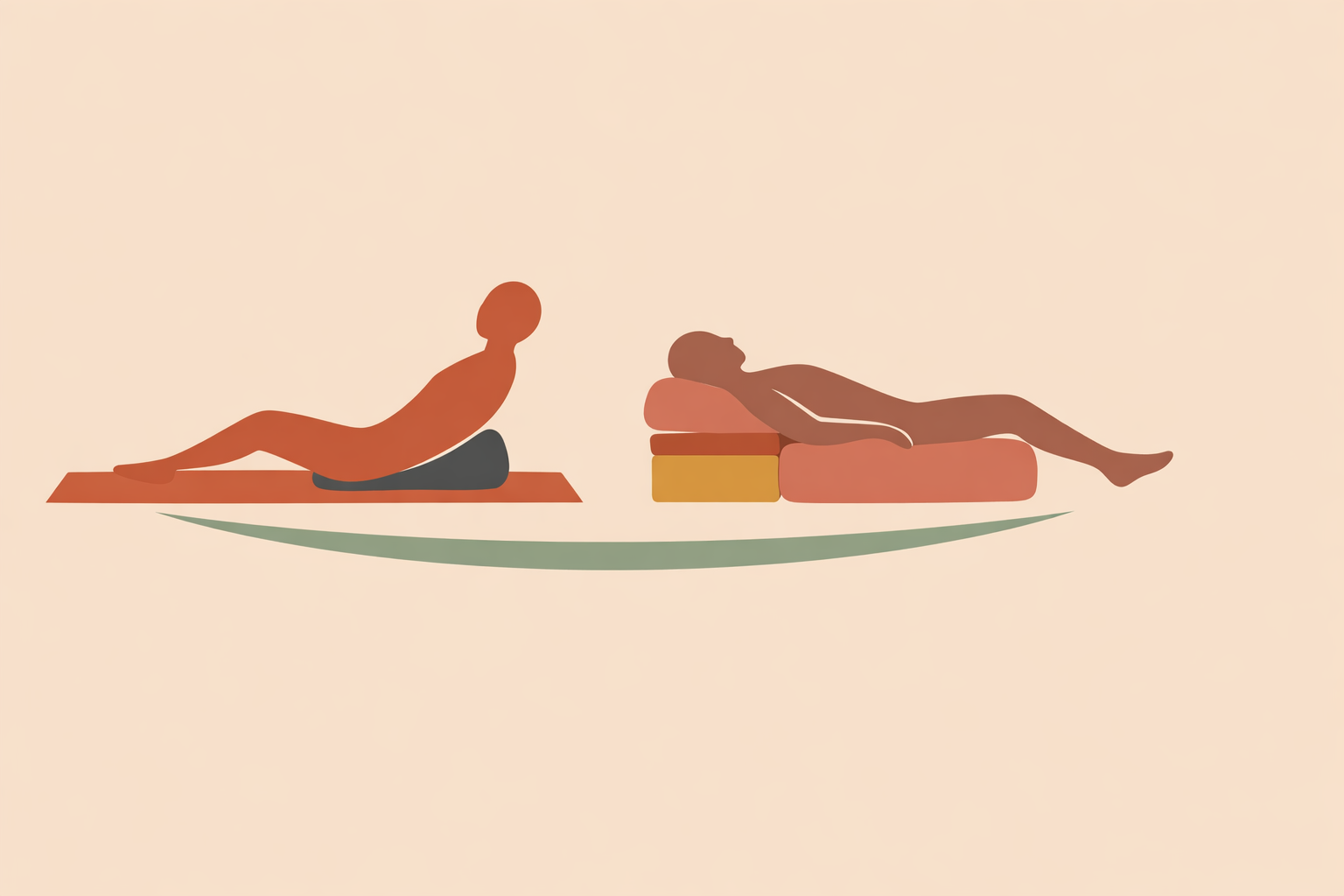
Gentle shapes communicate safety through direct experience, especially when they’re well-propped and clearly optional. Supported child’s pose, legs up the wall, reclined twists, constructive rest, and easy forward folds give students time to arrive—without turning stillness into an endurance test.
A trial of restorative yoga found it supported reductions in anxiety and stress for stressed practitioners. Here’s why that matters: the message isn’t “go deeper.” It’s “you can be here without bracing.”
Mindful attention that builds self-trust
Mindful attention completes the picture. Once breath and pacing soften the edges, simple awareness practices help students notice what is changing. A body scan, attention to contact points, orienting to sound, or a gentle cue like “Notice what feels one percent easier” can steadily build self-trust.
Mindfulness-based approaches are linked with improved coping, and combining breath practices with present-moment awareness is associated with better self-regulation and more confidence working with stress. In the room, mindfulness isn’t an abstract concept—it’s the bridge from “I’m overwhelmed” to “I can notice what’s happening and choose my next step.”
Simple rituals and predictable structure
Simple rituals are powerful because stressed students often need predictability more than novelty. Trauma-informed education resources highlight that consistent routines can support a greater sense of safety and regulation. Research on classroom routines similarly links consistent structure with better behavioral self-regulation over time.
In yoga terms, a class that reliably begins with orienting, moves into slow breath, uses a few familiar supported shapes, and closes with a short rest becomes easier to trust. Over time, that familiarity becomes part of the regulation.
Your core toolkit might include:
- Breath: easy nasal breathing, lengthened exhale, simple counted breath, hand-to-ribs awareness
- Shapes: supported forward folds, reclined rest, gentle twists, wall-based grounding postures
- Attention practices: body scans, sensory orientation, noticing contact with the floor
- Rest practices: short guided relaxation, yoga-nidra-inspired closing, evening wind-down rituals
- Class design: slower transitions, clear choice points, fewer complex cues, more pauses
The thread through all of this is felt safety, agency, and repeatability. Students should leave with practices they can remember when they’re tired, tense, overstimulated, or awake at 2 a.m.
Conclusion: building a niche with roots and real usefulness
A yoga-for-stress-and-anxiety niche works in 2026 because it meets people where they truly are: overstretched, overstimulated, and hungry for practices that feel humane. Done well, this isn’t narrowing your relevance—it’s sharpening your usefulness.
The path is straightforward: recognize the cultural shift toward regulation and rest, let your teaching identity evolve into grounded guidance, and center what consistently helps—slow breath, gentle pacing, mindful attention, and predictable structure.
There’s real integrity in holding both streams of knowledge. Traditional yoga offers a lineage of insight into breath, attention, discipline, and inner steadiness. Modern research adds helpful language for communicating why these practices matter now. Together, they make the work clearer—and more usable for everyday life.
To keep the niche ethical and sustainable, keep your claims modest, your language non-clinical, and your class environment choice-rich. Not every practice fits every body or every nervous system on every day, and that’s exactly why options and pacing are part of the craft.
If your classes consistently lower the volume of life for an hour and send students back out with something they can repeat, you’re building a niche with roots, purpose, and lasting value.
Train in Yoga Teacher Certification
Naturalistico’s Yoga Teacher Certification supports scope-aware, regulation-focused teaching for stress, sleep, and everyday resilience.
Explore the Certification →