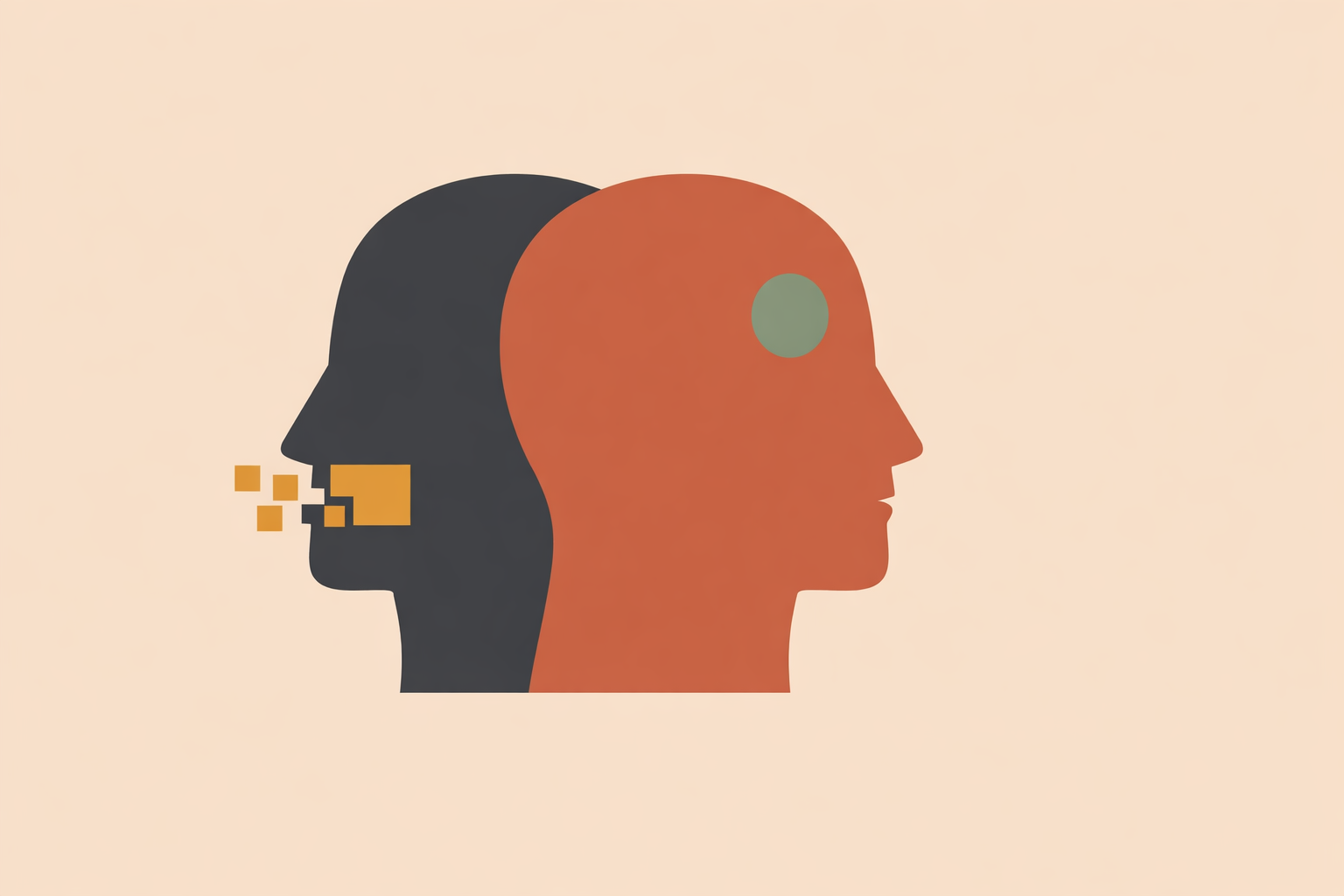
Most coaches meet the imposter pattern in a familiar way: a capable client shows up with a crisp, punishing story—“I just got lucky,” “Any minute they’ll find out,” “I’m not good enough.” It often spikes around reviews, presentations, or a new level of responsibility. Reassurance doesn’t land, and confronting the belief head-on can even make it dig in.
A more reliable approach is to meet the pattern where it actually lives: in language and felt state. NLP, used with clear ethics, offers practical moves clients can repeat when the stakes are real—softening harsh inner labels, turning vague shame into coachable specifics, and building steadier states they can access on demand.
Traditional practices have always understood the power of naming, story, and simple ritual to shape identity and behavior. NLP fits naturally into that lineage: it’s a modern way to work with words, imagery, and embodiment so clients can keep the wisdom of their standards—without being ruled by fear.
Key Takeaway: Work with the imposter pattern where it lives—in language and state—by turning global shame into specific, testable statements and practicing resourceful states on cue. When clients can reframe, question, and rehearse steadiness in real situations, perfectionism loosens and action becomes easier.
Idea 1: Reframe imposter stories with NLP language work
Imposter feelings feed on rigid, high-pressure inner language. NLP reframing loosens that grip—without dismissing reality—so clients can keep their ambition and lose the sting.
When imposter experiences flare, they often come as rehearsed lines. Across coaching case material, the same recurring patterns show up: discounting success, magnifying mistakes, and fearing exposure—nearly always delivered as a story.
This is exactly where NLP shines. It explores how we model inner experience through words, images, and body sensations. So when a client says, “I’m a fraud,” the goal isn’t to argue; it’s to work with the structure of the statement—labels, absolutes, and tone—and open up better options.
Traditional lineages have long trusted story, mantra, and naming to shape identity. Modern work echoes that: rewriting inner narratives can shift how people inhabit their roles and make meaning from pressure.
Start small and believable. A simple shift from global, shaming language to specific, humane language can change how a client moves through the rest of their week.
- Externalize the voice: “If this inner critic had a name, what would you call it?” Naming creates space between the person and the pattern.
- Soften the label: Shift “I’m a fraud” to “I’m learning a bigger role.” Still honest—much more usable.
- Reclaim the frame: Replace “lucky break” with “prepared and ready.” The facts stay; dignity returns.
- Anchor the language: Pair the new phrasing with a slow three-count exhale so the body recognizes it as safe.
As Chartered Psychologist Kate Bramham notes, NLP education is designed to build behavioural flexibility and communication that facilitates change—exactly what’s needed when a client’s inner dialogue has become harsh and fixed.
Seeing imposter thoughts as stories, not truth
Descriptions of the impostor phenomenon generally frame it as self-doubt and fear of being exposed as a fraud, not an actual lack of ability. Once “the story” is visible, the work becomes clearer, kinder, and far more practical.
Idea 2: Use NLP questions to loosen “I’m a fraud” beliefs
After the story is named, the next step is to question it with care. NLP-style precision questions turn vague, global claims into specifics you can coach.
Imposter beliefs commonly arrive as sweeping statements—the kind of deletions, distortions, and generalizations the Meta Model was built to untangle. When a client moves from “everything” and “always” into “this meeting” and “this moment,” shame often loses momentum.
These prompts help you get there without debating the client’s experience:
- Generalizations: “I always mess up.” → “Always? Can you think of one exception this month?”
- Unspecified agents: “They’ll find out I don’t belong.” → “Who specifically?” and “What would ‘belonging’ look like this quarter?”
- Mind reading: “They think I’m underqualified.” → “How exactly would you know?” and “What evidence would change your mind?”
- Nominalizations: “My failure is inevitable.” → “What does ‘failure’ look like in behaviors?” and “What could we measure in the next two weeks?”
Research on expressive writing supports the broader principle: changing the frame can support emotional processing and well-being. In coaching rooms, specificity often brings immediate relief—because specifics create choice.
This also brings fairness into the picture. Many workplaces run on unclear expectations and opaque decisions, and role ambiguity is a recognized stressor. Good questions help clients separate internalized shame from genuinely unclear structures—so the action plan is grounded in reality.
Tone matters as much as technique. The aim isn’t to interrogate; it’s to witness the story and invite a truer, more workable version—especially when identity, culture, or organizational history is part of the picture.
Idea 3: Use perspective shifts and visualization for kinder self‑assessment
When a story loosens cognitively, the body still needs a felt sense of safety and steadiness. Perspective work and visualization help clients assess themselves with the kind of clear-eyed generosity a trusted mentor—or elder—would bring.
Many people wrestling with the imposter pattern are far kinder to others than to themselves. Research suggests higher self-compassion is associated with lower imposter feelings, which aligns with what practitioners see: a gentle perspective shift can expose how harsh the inner scoring system has become.
In NLP, this is often taught through perceptual positions: Self (first position), Other (second), and Observer (third). Traditional communities have long used parallel supports—elders, guides, and ancestral “witness” figures who help a person hold their role with dignity. The modern form can be simple, respectful, and highly effective.
A short in-session practice:
- Seat One — Self: “Recall a recent moment you judged harshly. Notice the images, inner voice, and sensations.”
- Seat Two — Mentor/Friend: “Change seats. Speak to ‘you’ in Seat One: what do you admire, what would you normalize, and what’s a kinder frame?”
- Seat Three — Observer: “From a neutral seat, summarize what each perspective values. What feels truer now?”
Research on self-distancing suggests perspective shifts can reduce emotional reactivity and support more balanced reflection. In NLP terms, you can deepen this by adjusting submodalities (the sensory “settings” of experience): shrink the inner critic image, lower its volume, and bring memories of competence closer and brighter. Think of it like adjusting the contrast and sound on a screen—same content, very different impact.
To consolidate the shift, invite a short integration practice: a brief letter from a wiser future self, or a week of check-ins written in the mentor voice. This gives clients something portable they can return to.
“NLP is an attitude of curiosity and experimentation that leaves behind it a trail of techniques.” — Richard Bandler
This attitude-first stance keeps the work ethical and collaborative: you’re exploring with the client, not trying to “fix” them.
Idea 4: Anchor grounded confidence so imposter spikes don’t run your day
Perspective shifts are powerful—holding them during high visibility is the real test. Anchoring and state practices help clients access grounded confidence on cue, especially when pressure rises fast.
Imposter spikes are often situational, tied to evaluation and performance. Reviews highlight the impostor phenomenon commonly appears in achievement and evaluation contexts, which makes these moments ideal for deliberate rehearsal.
Anchoring in NLP means pairing a vivid internal state with a unique cue so it can be evoked later. A client recalls a moment of real capability, amplifies the sensory detail, and links it to a consistent breath count, finger press, or stance. With repetition, the cue becomes a reliable doorway back to steadiness.
Many performance approaches also use brief pre-event routines—breaths, posture, gaze, a 30-second visualization. Research on pre-performance routines suggests they can reduce anxiety and increase perceived control, which matches what clients often report when they practice consistently.
Traditional cultures have always used simple embodied cues before stepping into important roles—touching the earth, adjusting a garment with intention, a brief invocation. With respect for context, clients can craft modern equivalents that feel grounded rather than performative.
For coaches, state regulation is also part of professional presence. Research suggests helpers and clients can show physiological synchrony, and attention training is linked with better regulation—both reminders that your steadiness supports the whole coaching space.
A simple 60-second ritual clients can use before a high-stakes moment:
- Exhale to arrive: Three slow exhales, twice as long as the inhale.
- Posture check: Tall but soft; shoulders down; feel the feet.
- Recall and anchor: Bring up a short scene of genuine competence; press thumb to middle finger as you breathe it in.
- Intention phrase: Quietly say, “I’m here to serve, learn, and grow.” Then begin.
And keep Bandler’s cue close: stay curious. When clients treat this as experimentation—not a test—they learn faster and feel safer doing it.
Idea 5: Redesign perfectionism loops so real work gets into the world
Once language, beliefs, perspective, and state are shifting, the final move is behavioral. You map the perfectionism/avoidance loop that keeps the imposter story alive—and redesign it around values and sustainable excellence.
NLP treats behavior as the output of internal strategies: sequences of images, words, sensations, and micro-actions. That’s good news—because strategies can be elicited, tested, and upgraded step by step.
A common loop looks like: Trigger (new task) → comparison (“Others could do this better”) → catastrophic imagery → anxiety → over-preparing or freezing → last-minute push → relief plus “I fooled them again.” When the sequence is visible, shame often softens—because it’s a pattern, not a personality. This aligns with the idea that normalizing can reduce self-blame.
Redesign is practical and humane:
- Pattern interrupts: When comparison starts, stand, shake out, and breathe for 30 seconds. Add a marker phrase: “Back to craft.”
- Voice upgrades: Replace “This must be perfect” with “This must be clear and useful.”
- Good-enough criteria: Define three quality markers per deliverable; when they’re met, you ship. The idea of satisficing—choosing “good enough” rather than perfect—helps end endless polishing.
- Timeboxing and review: Work in focused sprints; finish with a two-minute check against your three markers.
Values provide the compass. Pair loop redesign with values clarity so energy moves toward meaning—craft, contribution, service—instead of fear. In broader behavior-change work, values clarification is linked with greater psychological flexibility, which often softens perfectionistic rigidity.
When clients combine reframing, questioning, perspective work, anchoring, and strategy redesign over several weeks, changes often become steadier—because multiple levers are working together. At the same time, independent reviews note the research base is still limited, so it’s best framed as a set of skills to explore and evaluate in real life, not guaranteed outcomes.
Finally, standards matter. NLP isn’t a licensed profession in most places, yet many trainings follow a progressive certification structure with agreed standards and ethical codes at certain levels. For working coaches, that structure supports consistency, integrity, and client trust.
Conclusion: Bringing NLP into imposter-pattern coaching ethically
Used with care, NLP gives coaches a respectful, usable toolkit for imposter-heavy seasons: reframe the story, ask precision questions, install kinder perspectives, anchor resourceful states, and redesign perfectionism loops so good work can ship.
These shifts tend to stick when they’re lived, not merely understood. Brief daily practice, paired with reflection after real-world moments, is often where clients notice the biggest difference.
Scope and ethics stay central. NLP-informed coaching typically focuses on present and future functioning, values, and skills. When someone is facing severe, persistent distress—or operating inside a persistently hostile environment—coaches can encourage additional support and, where possible, advocate for systemic improvements. Workplaces also need to do their part: reducing workplace bias and clarifying expectations requires organizational change as well as individual tools.
Imposter stories may visit. With grounded NLP practice—and a respectful bow to the ancestral arts of story, naming, and ritual—they don’t have to drive.
Train NLP Practitioner Skills
Apply these reframing and state tools with confidence in Naturalistico’s NLP Practitioner Certification.
Explore NLP Practitioner →