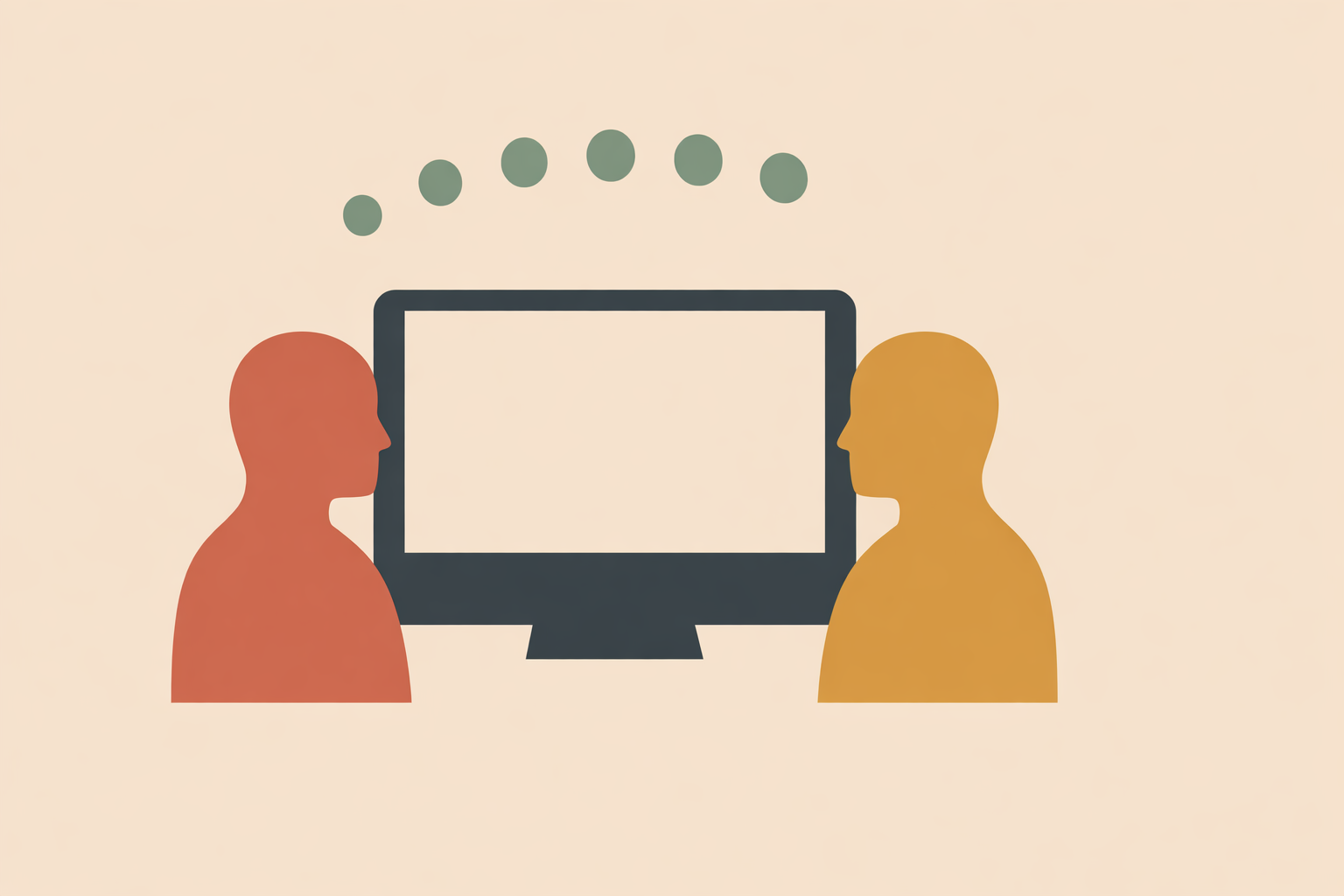
When many NLP practitioners first moved sessions onto video, it was for practical reasons. Then something interesting happened: a lot of clients preferred it—for access, timing, and the comfort of being in their own space. That wider reach mirrors how remote support can increase access by removing common logistical barriers.
At the same time, the worries are real: Will rapport feel thinner on camera? Will calibration be less precise? What happens if a big emotional state shows up and you’re not in the same room? Add privacy, consent, data handling, and a plan for tech failures—and it becomes clear that in-room habits don’t automatically translate online.
The good news is that online delivery can absolutely hold depth and standards—when it’s treated as a craft in its own right. What makes the work land isn’t charisma, intensity, or the platform. It’s the same foundations: a trusted container, clean structure, a clear scope, deliberate pacing, and simple ways to track what’s changing.
Key Takeaway: Online NLP can be deep and effective when you build a trustworthy digital container, stay clear on scope and safety, and choose processes that fit the medium. The platform matters less than deliberate rapport, pacing, and simple tracking that shows what’s changing over time.
2. What actually makes online NLP work: it’s not the platform, it’s the pattern
Online NLP works when the core ingredients of change are preserved. The screen is just the container; the engine is rapport, listening, structure, and respectful pacing.
When people doubt online NLP, they often assume transformation depends on physical co-presence. In practice, change comes from pattern-level skill: noticing language structures, guiding attention, and helping a client reorganize their experience in a workable way. Karin Lubin puts it simply: training teaches you to listen to “the structure of a client’s language, not just the content of their story.” That skill travels well through live video.
Online formats can also hold real depth when designed intentionally. In training and group settings, live video plus breakout practice and shared documents can create strong engagement, reflecting findings that virtual groups can support high engagement when interaction is real. And where feedback and practice stay intact, online learning can support comparable outcomes to in-person formats.
What does change is how rapport is built. With fewer nonverbal cues, the work becomes more deliberate. Tele-support guidance emphasizes frequent check-ins and clearer verbal skills to compensate. Think of it like adjusting your “resolution”: you rely less on assumptions and more on respectful confirmation—tone, pacing, micro-pauses, and explicit consent.
At the center is psychological safety—the felt sense that exploration is welcome and pressure is absent. When protocols and safety procedures are clear, clients commonly report feeling safe and satisfied online.
Traditional practice supports this view. Inner work has long happened across distance through storytelling, prayer, chant, and guided imagery; contemplative literature describes how such methods can facilitate inner experience without sharing a physical space. As traditional lineages remind us, the room isn’t the magic—the attention and skill are.
And that leads to the first non-negotiable online: the container must be trustworthy before any technique matters.
3. Before any technique: creating a safe digital container
If the container is shaky, the process will be shaky too. Safe online NLP begins with privacy, clear agreements, informed consent, and honest scope.
It’s tempting to focus on interventions, but clients can’t settle into change if they don’t feel protected and respected. Ethical standards emphasize confidentiality and integrity, and those become even more visible online, where insecure platforms can increase breach risk.
Start with practical security: reputable video tools, passwords, waiting rooms, and locking meetings. National cybersecurity guidance notes that locking meetings and similar features reduce interruptions and protect privacy—standards clients increasingly expect.
Then make privacy human and clear. People relax when they know how notes are stored, whether anything is recorded, and how communication works between sessions. Having written privacy policies supports trust and satisfaction, and clear data storage boundaries remove ambiguity before vulnerability appears.
Consent should be meaningful, not ceremonial. Cover the nature of the work, realistic outcomes, confidentiality limits, and what happens when tech fails. Be explicit that this is coaching and personal development support, and that you will signpost other support if needs move beyond scope.
Clear edges aren’t “cold”—they’re caring. Good limits can increase safety and engagement. In traditional terms, it’s the same role that ritual boundaries play: they define the space so deeper work can unfold more safely.
The ANLP Certification Standards Committee highlights that, in an unregulated field, the value of certification depends on standards and assessment. Online work makes this easier to see: without structure, presence can be mistaken for competence.
Once the container is solid, technique choices become clearer—because not every process belongs online in the same way.
4. Which NLP processes belong online—and which need extra care
Many NLP processes translate beautifully online, but not all of them should be used in the same way. Match intensity to what video-based work can safely hold.
Processes rooted in dialogue, attention, and imagination often adapt smoothly: reframing, language pattern work, belief exploration, and gentle submodality shifts. Because these rely on internal representation more than physical setup, they align well with core NLP tools.
Work that uses space or movement can still be done, but usually needs simplification. For timeline-style approaches, for example, guiding a client to work safely within their own room—with clear instructions and shorter sequences—makes client-directed space part of the method.
The firmest boundary is high-intensity work that risks overwhelm, disorientation, or destabilization. Tele-support guidance cautions against high-risk interventions delivered remotely, and ethical standards emphasize extra caution here. Skill shows in choice—not only knowing what to do, but knowing what not to do.
So build grounding into your process design: agree on a stop signal, use a 0–10 intensity scale, and normalize pausing. These practices help titrate intensity so change stays workable rather than overwhelming, supporting meaningful change without outpacing the container.
Damon Cart says strong training builds pattern recognition so coaches know when not to use an NLP tool—“which is where most ethical mistakes are made.” Traditional practice echoes this: powerful methods are paired with containment, clear roles, and strong openings and closings.
Once process-fit is clear, the next question is client-fit: who and what goals belong in this container?
5. Who online NLP is (and isn’t) for: scope, red flags, and respectful referral
Online NLP is a strong fit for some goals and a poor fit for others. Ethical work means matching the approach to the person’s needs, stability, and context.
Online NLP tends to serve focused, practical goals well: confidence in specific contexts, communication patterns, decision clarity, habit change, performance blocks, and everyday self-leadership. Research suggests remote coaching can be effective for goals like confidence and communication when it’s structured and goal-led, aligning with lower-risk goals where future-focused change work fits naturally.
Scope gets blurred when enthusiasm replaces discernment. Ethics frameworks are clear that situations involving suicidal thinking, self-harm, or severe disruption to daily functioning require referral to specialist support rather than being held in independent coaching.
Screening doesn’t have to feel like interrogation. Gentle questions often work best: what support do they have around them, what would “better” look like, and do they feel steady enough for reflective work right now? It also helps to name upfront that you may pause and help them find other support if the picture changes.
Even with appropriate goals, some people benefit from slower pacing—especially young clients, neurodivergent clients, or those from very different cultural contexts. Tele-support resources highlight the value of adapted communication and more explicit check-ins. Essentially, it’s cultural and nervous-system respect: you’re making sure your language and metaphors actually land.
Clear role boundaries protect everyone. Compassionate signposting can be one of the kindest choices you make. Regular consultation is also linked with better outcomes and less burnout, which matters when you’re holding deep conversations through a screen.
As Karen Moxom explains, practitioner training provides the structure everything rests on—scope included. Without scope, technique becomes overreach.
When the fit is right, depth is absolutely possible online. With sound structure, people can experience depth and alliance comparable to in-person work.
6. Designing online NLP sessions that still create deep, sustainable change
Depth online usually comes from pacing, not pushing. Sustainable change tends to come from structure and integration rather than chasing dramatic breakthroughs.
Online work often supports a steady rhythm. For many adults, 45–60 minutes weekly or biweekly is both practical and deep enough, matching common formats of 45–60 minute sessions.
But you don’t always need “full length.” Shorter 20–30 minute follow-ups can work well for rehearsal, accountability, or tightening a single pattern, and brief check-ins can maintain gains while reducing screen fatigue. Used well, micro-sessions keep momentum without forcing intensity.
Think in arcs rather than isolated calls: set a direction, do the change work, then return to test what actually shifted in daily life. Evidence suggests multiple planned sessions support more durable change than a single contact.
Between-session integration is where online craft really shines. Journaling, brief visualization, noticing language patterns, and small behavioral experiments help turn insights into stable shifts. In structured approaches, between-session exercises are consistently linked with better outcomes.
Damon Cart describes realizing he’d been trying to motivate clients through willpower, while NLP helped him work with unconscious patterns driving behavior. That’s a helpful reminder online: intensity isn’t the same as depth. Approaches to deep processing emphasize pacing and titration as central—often the deepest work is quiet, repeatable, and lived out over time.
Traditional systems have long “closed the loop” after inner work with something concrete—a walk, a song, a reflection—so the shift lands in ordinary life. Online NLP benefits from the same wisdom: give the client one simple practice to test before the next session.
Group education can also complement one-to-one work when it’s used thoughtfully. Online group experiences can hold lighter teaching and community reflection while private sessions hold individualized depth. Blended structures like this can enhance outcomes in several programs.
And to keep improving the craft, it helps to know what’s changing—not just what felt powerful in the moment.
7. Proving to yourself that online NLP works: tracking outcomes and learning from clients
You do not need complicated systems to know whether online NLP is working. You need clear goals, simple tracking, and a willingness to learn from real feedback.
Many practitioners still lean mainly on intuition. Surveys suggest practitioners often rely on personal judgment more than structured measures. Experience is valuable—but it becomes more reliable when paired with reflection and tracking. Capturing goals, agreed signs of progress, and client-rated shifts reflects good outcome tracking and aligns with recommendations for routine outcome monitoring.
Keep it simple and specific: a 0–10 scale tied to a real context (speaking up in meetings, holding a boundary, starting a habit). These 0–10 scales help clients notice change more clearly and give you a clean thread to follow across sessions. Session-by-session ratings can improve responsiveness in other talking-based fields.
Digital work can make this easier. When scheduling, secure notes, and progress markers are connected, you start to see patterns in your craft. Research suggests digital systems can simplify tracking, and measurement-based approaches show that electronic tools can highlight response patterns that inform better choices. The same principle applies to NLP: track lightly, learn continuously.
Pair metrics with feedback. Ask what felt supportive, what felt too fast, and what could be clearer next time. Routine feedback can improve alliance and outcomes, and inviting honest feedback builds trust because it shows you care about impact more than performance.
Karin Lubin reminds us that listening for structure changes what we do in a session. Outcome review extends that across time: you start listening to the pattern of what genuinely helps a person evolve.
There’s something very traditional about that. Older lineages refined their methods by watching what supported people over generations. In the same spirit, reflective practice honors what actually helped, not just what sounded impressive.
And that brings us to the practitioner’s side of the equation—because online depth depends on practitioner resourcing too.
8. Staying resourced and rooted in lineage while you work online
Online practice is sustainable only when the practitioner is supported too. Boundaries, community, ritual, and ongoing learning are part of ethical, grounded work.
Remote work can look efficient while quietly draining the person delivering it. Tele-practitioners commonly report fatigue and blurred boundaries. Sustainable scheduling, real breaks, and clear availability are essential self-care, supported by broader findings on the value of manageable workloads and breaks.
Community matters just as much. Mentorship, peer reflection, and consultation reduce isolation and support better ethical decisions. Participation in consultation is linked with better well-being, and consulting colleagues can improve ethical decision-making—a strong safeguard in an unregulated field.
Lineage also matters. NLP intersects with older traditions of storytelling, imagery, and mind-body awareness, and contemporary fields increasingly acknowledge the value of storytelling and imagery in change processes. Respecting cultural roots means naming influences carefully, learning with humility, and avoiding appropriation dressed up as innovation.
Small rituals can keep you steady: a breath before a call, a clear closing after, stepping outside between sessions. These personal rituals help mark transitions and protect your attention. Brief between-session practices can reduce burnout and improve readiness.
Standards remain important, especially because the field is unregulated. The ANLP Certification Standards Committee points out that certification value depends on assessment quality and credible standards. Ongoing development in ethics, cultural sensitivity, and digital delivery is part of responsible evolution, aligned with wider frameworks that highlight continuing development as core pillars of professional growth.
When practitioners stay resourced, connected, and rooted, online delivery stops feeling like a compromise and becomes a mature craft in its own right.
Conclusion: Yes—online NLP can be safe and effective, if you treat it as a craft
Yes, online NLP can be both safe and effective. The goal isn’t to make video mimic a room—it’s to strengthen the conditions that create trust, clarity, and real change.
Those conditions are straightforward: build a strong container, stay honest about scope, choose processes that fit the medium, pace for integration, track outcomes, keep learning, and stay connected to community and lineage.
The wider field is already moving toward ongoing professional evolution—not one-off training, but ecosystems that combine learning, peer support, and tools that support real client work. That direction naturally strengthens ethics, cultural awareness, and evidence-informed reflection.
Naturalistico’s approach fits this by combining structured learning, community, and practical tools that support people in real contexts, in the spirit of living traditions rather than static certification alone. And as Laura Briggs notes, certification matters because it shows you have been trained to apply NLP competently with clients.
So, don’t aim to be impressive on camera. Aim to be steady, ethical, well-trained, and deeply attentive. That’s what makes the work land—on screen as much as anywhere else.
Train Ethical Online NLP
Build safer, more effective sessions with the NLP Practitioner Certification and a solid foundation in rapport, scope, and structure.
Explore the Certification →