If you support anxious clients, you’ve likely met the person who worries through the day and then lies awake through the night. The intake may look like generalized anxiety, yet session after session keeps circling back to “another brutal night.” Standard CBT tools can be hard to access when someone is flooded, DBT skills can help but not always shift the sleep pattern on their own, and generic sleep hygiene often fails to stick.
A more workable approach is to treat insomnia and anxiety as one day–night cycle, and prioritize sequence over allegiance. Anchor in CBT‑I when disrupted sleep is maintaining the loop; lead with classic CBT when daytime fear loops dominate; use DBT‑informed stabilization when emotional arousal blocks learning—then blend as needed. The goal isn’t method purity. It’s choosing the first “lever” that restores momentum, then layering the rest.
Key Takeaway: Treat insomnia and anxiety as a single day–night feedback loop, then pick the first approach that restores momentum. Anchor in CBT‑I when sleep disruption is maintaining anxiety, lead with CBT when daytime fear loops dominate, and start with DBT‑informed stabilization when arousal blocks learning—then blend and phase as needed.
Insomnia + anxiety: why this pairing complicates CBT vs DBT choices
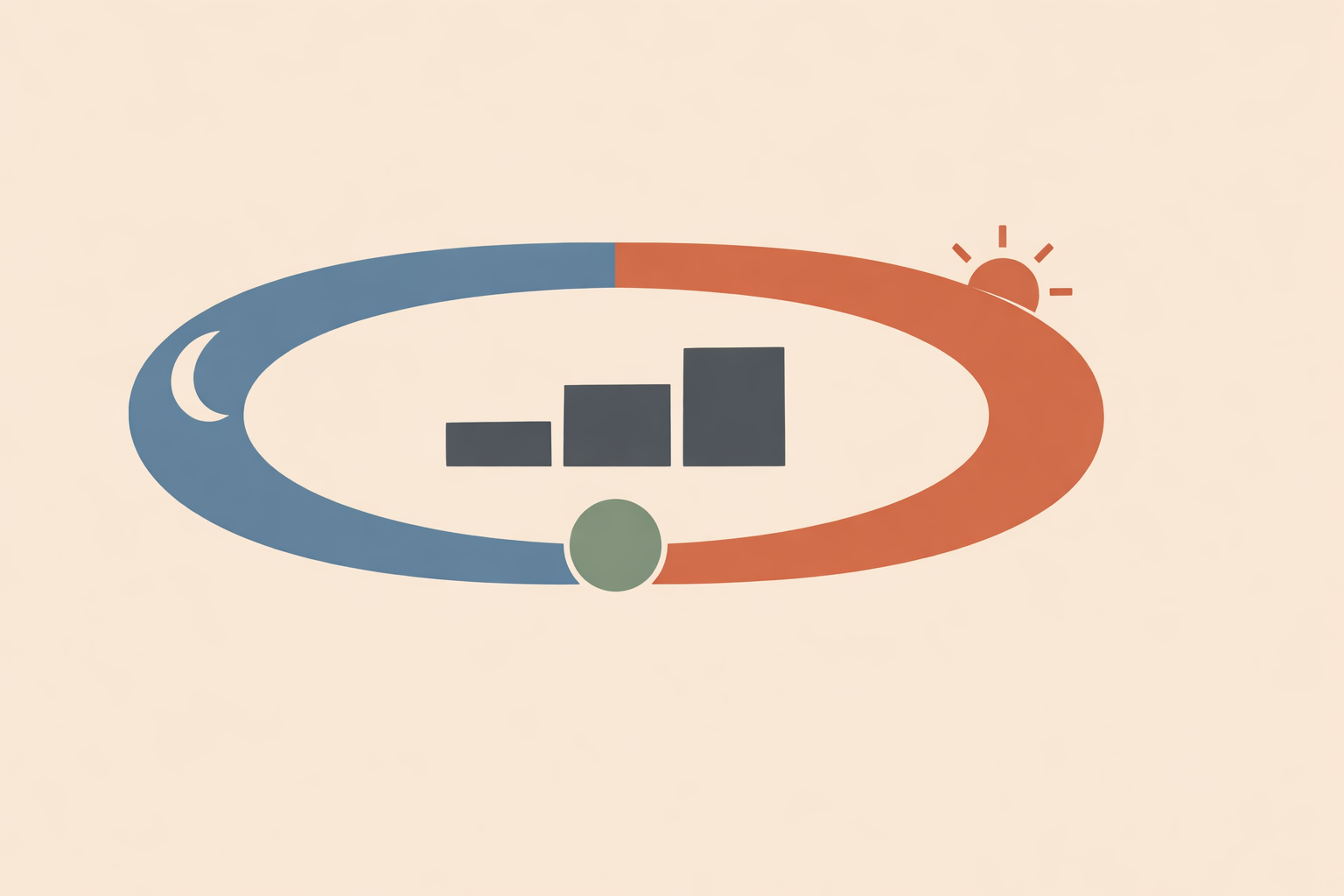
When sleep and anxiety tangle together, it helps to see the loop clearly: poor sleep raises stress sensitivity during the day, and that heightened activation then makes sleep harder again at night. Restricted sleep has been shown to increase next‑day reactivity, which can keep the cycle turning.
Insomnia also tends to “spill” into the day. Ongoing sleep disruption is linked with higher irritability and a general sense that everything takes more effort. Understandably, people compensate—extra caffeine, irregular sleep timing, long naps—and those quick fixes often perpetuate insomnia.
That’s why it’s rarely useful to treat “not sleeping” and “worry” as separate problems. Cognitive models of insomnia describe the same inner drivers you see in anxiety work: threat scanning, worry loops, and catastrophic beliefs about what a bad night will do to tomorrow.
From a holistic and traditional viewpoint, this day–night sensitivity is familiar terrain. Many cultures have long understood night as a threshold where unsettled emotion can intensify; anthropological work describes the night vulnerability that emerges when light and safety are limited. And for many people, sleep is shaped as much by environment as by mindset—shift work and economic pressure can reduce control over rest in very practical ways.
Once that bigger picture is on the table, the question becomes simple and humane: which map fits this person’s day–night pattern right now?
CBT, DBT and CBT‑I in plain language for the sleep–anxiety loop
CBT, DBT, and CBT‑I are related maps of the same landscape. They overlap, but each one emphasizes a different entry point: thoughts and behaviors (CBT), emotional intensity and regulation (DBT), or sleep‑specific patterns and cues (CBT‑I).
CBT is the broad, all‑terrain map. It helps people notice how thoughts, feelings, body responses, and actions influence each other, then shift the patterns that keep them stuck. It’s commonly described as a structured approach using practical strategies. Think of it like updating the “rules” you’ve been living by—especially the ones anxiety writes in permanent marker.
For anxiety, CBT is especially useful because it targets the thought‑fear loop directly. Guidance emphasises CBT helps people challenge thoughts that intensify anxiety, which often softens the body’s alarm response over time.
DBT comes from the same family, but it’s built for moments when insight isn’t accessible because the nervous system is running too hot. Its skill areas—mindfulness, emotion regulation, distress tolerance, and interpersonal effectiveness—support people who struggle to use coping tools when highly activated. DBT was designed to help people tolerate distress and steady emotional reactivity so skills become usable in real life, not just on a worksheet.
CBT‑I is CBT’s sleep‑specialist branch. It focuses on conditioned patterns that teach the mind and body to associate bed with wakefulness, frustration, or monitoring. Models highlight sleep‑maintaining factors like irregular schedules, too much time awake in bed, and “If I don’t sleep, tomorrow is ruined” thinking. CBT‑I uses tools like stimulus control and sleep restriction/compression to rebuild a stronger sleep rhythm.
It also helps to remember these aren’t sealed boxes. Contemporary authors note therapies have porous boundaries. Practically, that means you can choose a lead approach without giving up the others—you’re sequencing skills, not picking a single identity.
When insomnia leads: using CBT‑I as your anchor
When sleep disruption is clearly driving the daytime anxiety, CBT‑I is often the cleanest anchor. In these cases, improving sleep isn’t just a bonus—it’s the lever that can soften the whole system.
Sleep‑led cases often sound like: “I’m anxious because I’m not sleeping,” “Night feels like a test,” “I go to bed early to catch up,” “I stay in bed trying harder.” Here, insomnia is commonly maintained by irregular timing, too much wakeful time in bed, and catastrophic sleep beliefs.
CBT‑I interrupts those maintaining loops directly. Core tools include:
- Stimulus control: strengthening the bed‑sleep link and getting up when sleep isn’t happening, supporting faster sleep onset
- Sleep restriction/compression: temporarily reducing time in bed to build more consolidated sleep and better sleep efficiency
These steps are simple on paper, but they can feel uncomfortable at first—especially for someone who has been “chasing sleep” for a long time. Early CBT‑I changes can bring temporary difficulty before improvements settle in. Framing that discomfort as part of retraining (not failure) often reduces panic and drop‑off.
This is where DBT‑informed support fits beautifully. At 3 a.m., many people don’t need more analysis—they need an “emergency brake.” DBT distress‑tolerance practices are described as helping with rapid down‑regulation of physiological arousal, which can stop a tough night from escalating.
A grounded insomnia‑led pathway often looks like this:
- Anchor in CBT‑I: with a consistent wake time, stimulus control, and realistic tracking
- Add DBT‑style distress tolerance: for bedtime dread and middle‑of‑the‑night activation
- Use gentle cognitive work: to loosen catastrophic beliefs about sleep loss
- Normalize early discomfort: as part of rebuilding the sleep–wake association
CBT‑I is recommended as first‑line for chronic insomnia, and improvements in sleep can reduce daytime symptoms. In practice, once sleep steadies, many people notice their daytime anxiety feels less sharp—even before they’ve challenged every worry.
When anxiety leads: classic CBT, DBT-informed stabilization, or both
When daytime anxiety is the engine and insomnia follows, classic CBT or DBT‑informed stabilization usually needs to lead. The deciding factor is often capacity: can the person stay grounded enough to learn and apply skills consistently?
Anxiety‑led patterns often include constant “what if” thinking, fear of bodily sensations, spiralling after interactions, avoidance, and reassurance‑seeking. CBT offers structure here: map the cycle, identify distortions like catastrophizing, and gradually face avoided situations using restructuring and exposure.
Across anxiety presentations, CBT is associated with meaningful reductions in symptoms, which is why it so often serves as a dependable backbone when clients can reflect, track patterns, and experiment without becoming overwhelmed.
But some people tip into overwhelm quickly—swinging between agitation and shutdown, or leaning on coping behaviors that feel unsafe or deeply self‑defeating. For them, pushing straight into exposure can backfire. Exposure guidance notes that some clients benefit from preliminary stabilization before more intensive work.
DBT changes the pacing by building steadiness first. It’s designed for high reactivity and difficulty using coping skills while activated, aiming to enhance regulation so deeper CBT work becomes possible later. Put simply: lower the “temperature,” then do the harder learning.
Sequencing frameworks also emphasize that what matters is readiness to engage, not symptom severity alone. When activation keeps pulling someone into fight‑flight‑freeze, DBT‑informed stabilization is often the wisest first step; when they can stay within their window of tolerance, classic CBT can usually lead well.
Many clients end up using both: DBT skills to get resourced, then CBT to work directly with fear‑based beliefs and avoided situations.
Designing blended CBT‑I, CBT and DBT pathways
In real coaching and support work, blended pathways are often the most natural fit. The craft is in timing—bringing each tool in when the person can actually use it.
A practical blend often begins with stabilization. DBT‑informed grounding, mindfulness options, and distress tolerance give immediate support for overwhelm and improve follow‑through. Phase‑based models for complex presentations highlight the value of initial stabilization to support later, more demanding work.
Then the second phase becomes targeted:
- If nighttime struggle is central, introduce CBT‑I structure—consistent wake time, scheduling, and sleep principles anchored in stimulus control.
- If daytime fear loops are stronger, lead with CBT cognitive work and graded exposure, addressing worry and misappraisal while tracking sleep as a parallel outcome.
Integrated approaches increasingly combine CBT‑I with CBT and regulation strategies. That mirrors what experienced practitioners often discover over time: CBT for the anxiety mechanics, CBT‑I for sleep conditioning, and DBT skills as the bridge that keeps the whole plan usable under pressure.
The third phase is refinement and maintenance—consolidating rhythms, responding skillfully to setbacks, and strengthening boundaries. Here’s why that matters: at this point, repetition and realistic planning usually create more change than introducing brand‑new concepts.
A simple 8–10‑session blended journey might look like:
- Weeks 1–2: DBT‑informed grounding, mindfulness options, distress tolerance, plus sleep–wake tracking
- Weeks 3–5: CBT‑I structure or CBT worry work, depending on what’s leading
- Weeks 6–8: Cognitive restructuring, exposure/behavioral experiments, plus ongoing sleep‑consolidation support
- Weeks 9–10: Setback planning, boundaries, and personalized evening transition rituals
This lines up with common timelines: CBT‑I often runs 4–8 sessions, while anxiety‑focused CBT commonly extends longer. You can weave them into overlapping blocks that match capacity rather than forcing two separate “programmes.”
Digital tools can also support consistency. Online CBT programmes tend to show better adherence when guided, which matches what many practitioners see: a bit of human support often turns information into action.
Honouring culture and ancestry in CBT and DBT work
CBT and DBT land best when they’re woven into real life rather than laid over it. That includes cultural rhythms, ancestral rest practices, family structures, neurotype, and lived constraints.
Sleep is never just an individual choice. Perceived discrimination is linked with disrupted sleep and psychological strain, and many people are navigating limited privacy, unpredictable schedules, or ongoing uncertainty. In those contexts, “skills” must meet reality with respect.
This is also where traditional wisdom deserves genuine weight. Across cultures, evening rituals—herbal infusions, prayer, storytelling, bathing, oiling, dim light, gentle music, shared quiet, breath‑led settling—act as cues that teach the body to downshift. Modern sleep guidance similarly highlights pre‑bed rituals and dim light as supportive cues. Essentially, rhythm and repetition are a nervous‑system language that many traditions have spoken for centuries.
Equity considerations matter just as much. If someone is a shift worker, a caregiver, or living in a crowded home, the task is to adapt principles rather than judge constraints. Public‑health data link shift work and caregiving with shorter, poorer‑quality sleep—so “better, not perfect” is often the most ethical target.
For neurodivergent clients, flexibility may mean making structure more visible. Guidance for CBT in autism recommends structured sessions, written materials, and visual supports—an approach that can also strengthen DBT‑style skills and sleep plans. Co‑created checklists, visual evening sequences, and sensory‑friendly cues often turn good intentions into reliable routines.
For people with significant trauma histories, some inward‑focused practices can intensify distress. Trauma‑informed resources recommend externally oriented grounding and movement‑based options as safer starting points for some. Offering choice—eyes‑open practices, touch or sound anchors, gentle movement before stillness—can make the work accessible without pushing anyone past their edge.
Even outside the therapy room, structured transitions matter. Organisational research suggests transition rituals and peer support can reduce stress and support adaptation—ideas that translate naturally into evening wind‑down periods, family agreements around quiet time, or peer accountability for rest.
Done well, CBT and DBT don’t feel mechanical or imported. They become flexible frameworks that can sit respectfully alongside a person’s own lineage of rest, meaning, and resilience.
From framework to calendar: sequencing your next 8–12 weeks
Over an 8–12‑week window, the simplest plan is to choose what matches what’s leading now, then layer the rest in sequence rather than all at once.
A useful rule of thumb:
- Choose CBT‑I first when bedtime dread, long wakeful hours in bed, irregular sleep timing, and sleep‑related catastrophizing are central
- Choose classic CBT first when worry, avoidance, fear loops, and distorted thinking dominate the daytime picture
- Choose DBT‑informed skills first when activation is so high that structured cognitive tools can’t be used consistently
- Blend them for mixed patterns, but phase the work so stabilization supports deeper change
Because CBT‑I often runs 4–8 sessions and anxiety‑focused CBT often runs longer, a stepped approach can help: start with practical skills and structure, then step up intensity and integration only as needed.
To close, it’s worth holding a balanced stance: work within scope, keep the focus on education and skills-building, and bring in additional professional support when complexity or risk rises. And while modern research is useful, traditional knowledge—built from centuries of careful observation of rhythms, ritual, community, and rest—also belongs in the room. When you treat these approaches as complementary crafts, what grows over time is discernment: sensing what needs to come first, what can wait, and how to support steady change without force.
Master CBT sequencing skills
Apply these day–night sequencing choices with more confidence in the Cognitive Behavioral Therapy (CBT) Course.
Explore the CBT Course →