Practitioners rarely struggle because they lack crystal techniques. More often, the challenge is staying consistent when real life is moving. A client arrives, the clock is ticking, and the original plan melts into a loose mix of moonlight tips, salt cautions, and half-remembered steps. Between sessions, stones drift from tools to decor. What helps most is not more options, but a reliable container you can return to every time.
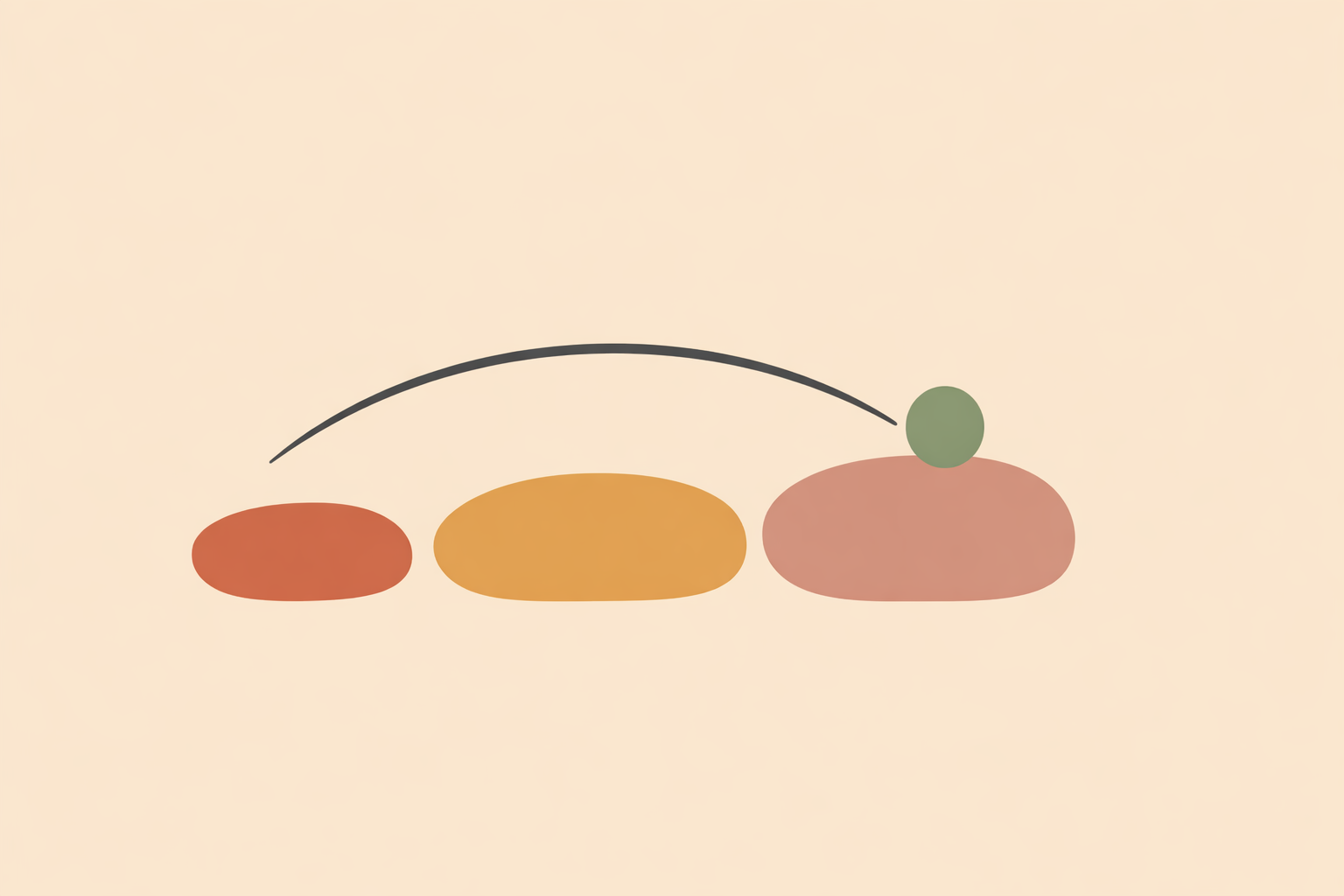
A compact rhythm—cleanse → reset → charge—creates that container. It turns scattered ideas into a repeatable two-to-five-minute arc you can use in sessions, groups, online spaces, or personal reflection. In practice, it supports three steady outcomes: a brief, sensible clearing step, a quick state shift that signals “now we begin,” and a grounded intention that carries forward.
Key Takeaway: A simple, repeatable three-round rhythm—cleanse, reset, then charge—makes crystal work consistent and portable, even when sessions are busy. By keeping each round brief and intentional, you create clear boundaries, arrive with presence, and anchor a livable intention you can return to daily.
What “cleanse → reset → charge” means in modern lithotherapy
In modern lithotherapy, this three-part arc blends traditional energetic language with practical ritual design. It gives the work a simple shape without stripping away its depth.
Cleanse is clearing—sometimes physical (wiping dust or residue), sometimes symbolic (releasing the tone of a previous session). Either way, it signals that what came before is complete.
Reset is the threshold. It’s the moment ordinary activity becomes intentional presence. Think of it like stepping over a doorway: you’re still you, in the same room, but your attention has changed. Breath, sound, touch, and light can all support this shift.
Charge is commitment. It anchors a clear intention into the stone, the moment, and your own focus. Some traditional educators describe stones as carrying subtle vibrations shaped by their structure. Mainstream perspectives often describe benefits through expectation, meaning, and ritual. Either way, the practical takeaway is the same: when attention, symbolism, and action align, the ritual becomes easier to feel—and easier to repeat.
Western research on lithotherapy remains limited, but traditional use over centuries matters: people have long used stones as anchors for reflection, focus, and intentional living. In that spirit, the three rounds stay straightforward—cleanse to clear, reset to arrive, charge to commit.
Round 1: Cleanse
Your cleansing step should be brief, safe, and easy to repeat. A two-minute practice you actually do is usually more valuable than an elaborate method you rarely reach for.
It helps to think in two layers:
- Physical clearing: dust, oils, or surface residue
- Symbolic clearing: letting go of what you don’t want to carry into the next moment
A quick water rinse works for some stones, but not for all. Selenite and halite can dissolve or become damaged with water exposure, so always check the stone before rinsing. In everyday practice, a soft cloth or sound-based option is often the simplest and safest default.
Smoke can be meaningful in some lineages, but it isn’t always practical—or welcome—in shared spaces. It may also be unsuitable indoors, since smoke and scent can irritate indoor air. When you need something portable, scent-free, and respectful of mixed settings, sound cleansing is an easy fit.
A simple 2-minute cleanse
- Choose one method: soft cloth, quick rinse if appropriate, or a bell/chime
- Use one sentence: “I release what is not needed for today’s work.”
- End with one exhale or one clear sound to mark completion
That’s enough. Cleansing isn’t about perfection—it’s about creating a clean opening.
Round 2: Reset
Reset turns cleansing into a true threshold. It tells your body and attention: we’ve shifted from “doing” into “being here.”
This round can be beautifully simple—one tone, one breath pattern, or a brief pause near natural light. What this means is you’re creating a consistent cue that marks the start of intentional space.
Sound works especially well because it’s immediate. One bell, one hum, or one chime becomes a reliable signal. Over time, the repetition does part of the work for you.
Light can add symbolism too. Traditional guidance often links sunlight with active, outward-moving intentions and moonlight with reflective or inward-focused intentions. If you use sunlight, keep it brief: strong sun can fade some crystals or make them uncomfortably warm.
Breath and touch complete the reset. Holding the stone while slowing the breath helps many people feel the moment “land.” It’s not a performance—it’s arrival.
A 60-second reset
- Hold the stone and inhale gently
- Exhale a little longer than you inhaled
- Ring one bell, hum one note, or pause in silence
- Let yourself feel, “I am here now”
Small rituals often serve best because they’re easy to remember—and easy to keep.
Round 3: Charge
Charging is where intention becomes specific. Rather than vaguely “energizing” a stone, you name what you’re inviting forward and give it a place to live in your attention.
Most charging practices center on contact and focus: hold the crystal, settle your mind, and set an intention with words, visualization, or both. Many crystal guides describe setting intention as the core of charging.
Traditional guidance also often pairs method with mood. Some guides associate sunlight intentions with active goals and moonlight with reflective or emotional ones. Whether you treat that as literal or symbolic, it can make your ritual feel more coherent.
Charging tends to feel strongest when the intention is grounded and livable. Present-tense, values-based phrases usually hold steadier than dramatic declarations.
A 3-step charging script
- Hold the stone near the heart, belly, or in both hands
- Say one intention in clear present-tense language
- Picture one moment today in which you embody it
Examples
- “I move through today with steady clarity.”
- “I stay kind and well-boundaried.”
- “I give full attention to what matters most.”
Some practitioners also pair stones when the qualities feel complementary. In traditional crystal practice, grounding and protection stones are often paired to strengthen focus and refine the “theme” of the ritual—especially when both stones support the same intention.
How to adapt the three rounds in real practice
The strength of this rhythm is its flexibility. It can support one-to-one work, online spaces, group settings, or a quiet personal pause—without becoming heavy or theatrical.
For shared or scent-free spaces
- Favor cloth, breath, or sound over smoke
- Use plain, inclusive language
- Keep the sequence brief and clearly optional
For online sessions
- Hold a stone for three breaths at the start and end
- Use one visible cue, such as placing the stone down intentionally
- Keep it simple enough to feel natural on camera
For groups
- Offer a shared rhythm rather than a rigid script
- Invite one-sentence intentions, always as a choice
- Leave space for silent participation
For daily life
- Carry a stone in a pocket or wear one as jewelry
- Use touch as your reset cue
- Reconnect with your intention in one breath
Used this way, crystals become everyday anchors rather than occasional ceremony. They support continuity—helping intention travel with you between moments of practice.
Evidence, tradition, and common myths
People often ask whether crystal work “really works.” A grounded answer can respect both long tradition and modern uncertainty—without dismissing what practitioners see again and again: ritual can shape attention, and attention shapes choices.
Within conventional consumer-health frameworks, lithotherapy is often described as pseudoscience. And yet, crystals have been part of human adornment and ritual for thousands of years. For many practitioners, their value is not about making grand promises—it’s about supporting reflection, symbolism, focus, and intentional action.
It’s also fair to note that some benefit may arise through expectation, belief, and meaning. Put simply: even when something works through ritual, it can still work. A well-held practice can help someone pause, clarify what matters, and follow through with more steadiness.
A few myths worth softening
- “You must cleanse daily.” Not necessarily. Many people cleanse when they first receive a stone, after intense use, or whenever the connection feels dull.
- “If someone else touches your crystal, it is ruined.” Usually not. A quick cleanse and recharge is often enough to re-center your relationship with it.
- “More elaborate rituals are always stronger.” In real practice, shorter rituals are often more sustainable—and that sustainability is a kind of strength.
A respectful stance tends to be the strongest one: honor cultural roots, avoid borrowed ritual language you cannot properly hold, stay transparent about what is known and what is not, and focus on the quality of attention you bring.
Build your own three-round ritual
Start small. Draft your version of each round and keep it simple enough to repeat for seven days—long enough to feel what consistency changes.
- Cleanse: cloth, breath, or sound
- Reset: one tone, one breath pattern, one pause
- Charge: one clear intention for the day
Even brief rituals can help people prepare mentally and reconnect with focus; research on ritual and performance suggests that brief rituals improve focus when repeated consistently. In lithotherapy practice, the same principle applies: small, repeatable actions often carry further than occasional intensity.
Over time, the rhythm becomes familiar enough to travel with you. It can open a session, close a reflective moment, or act as a quiet anchor during everyday transitions.
Go Deeper with Lithotherapy
Build a consistent cleanse-reset-charge practice in the Lithotherapy Certification.
Explore Lithotherapy Certification →