Most creative arts practitioners don’t have a product problem. They have a pathway problem.
You might already offer generous free prompts, occasional workshops, and a full 1:1 calendar that quietly consumes the week. But when the path between those offers is fuzzy, people drift. A newcomer may enjoy a prompt and then disappear because there’s no obvious next step. Others hesitate to join spaces that feel too intimate too early. Online, unclear consent can slow trust before someone even begins.
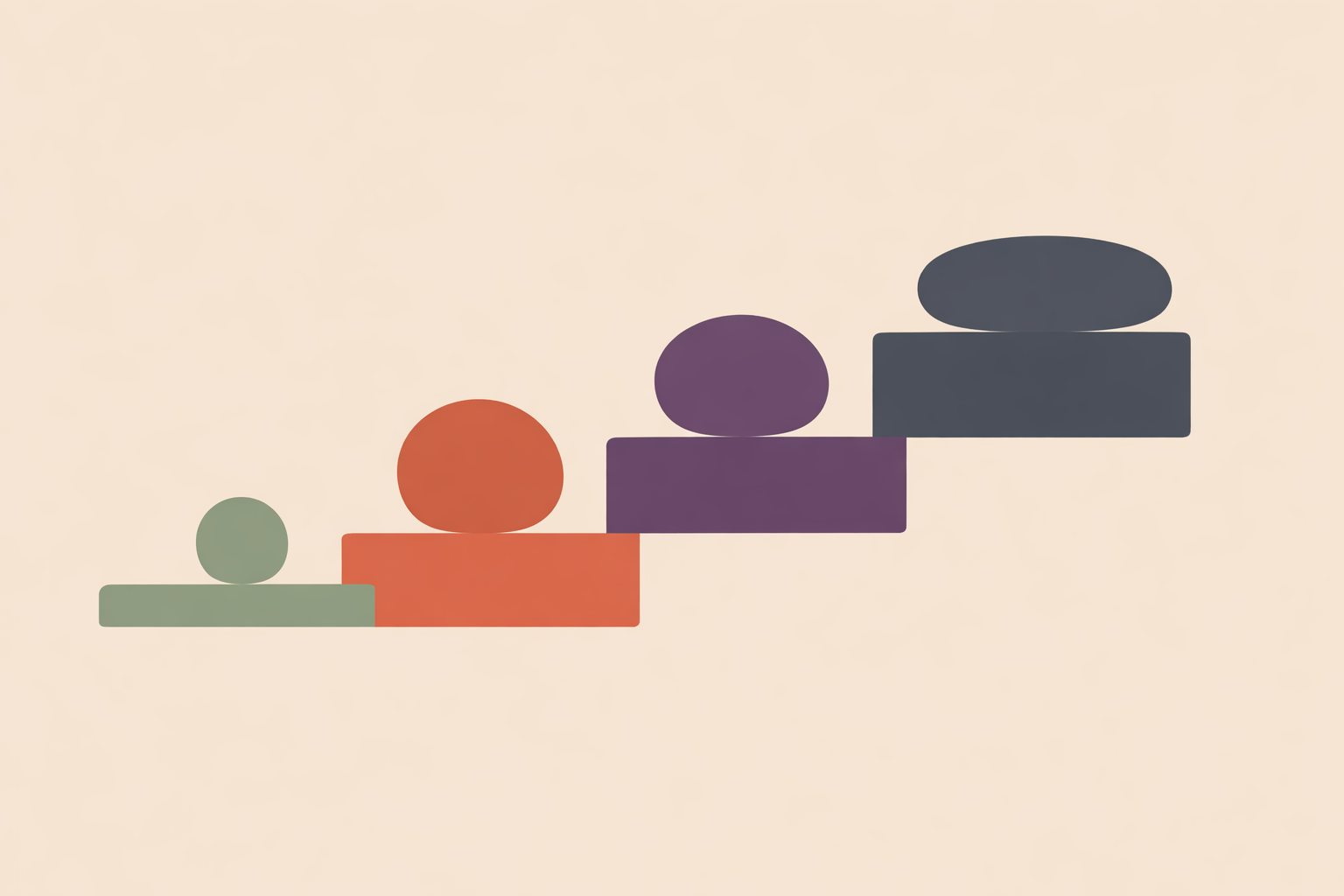
A better model is a simple, ethical offer ladder: creative experiences that begin lightly, build trust gradually, and give people more than one way to engage. The best ladders aren’t complicated—they rely on predictable arcs, clear boundaries, and consent-forward design so people know where they are, what’s expected, and how they can continue if it feels like a fit.
Key Takeaway: Build an ethical offer ladder that starts with low-pressure creative invitations and gradually increases support and structure. When each step has clear boundaries, consent, and a predictable rhythm, people can engage at their pace and confidently choose the next level that fits.
Offer 1: Micro Creative Invitations
Begin with tiny, low-commitment creative moments. This is often the easiest doorway for adults who are curious, but unsure.
Micro-offers reduce pressure, invite play, and introduce your approach without asking for a big leap. Often, 5–15 minutes is enough to shift the “weather” of a day—think a brief color check-in, a one-song collage, or a two-minute line drawing.
What makes these work is the container. Clear beginnings and endings help people settle, and directive prompts can ease performance nerves for anyone worried about “doing it right.”
“The ability to be creative and engage in any type of art is an important aspect in reducing stress and increasing well-being… one of the most cost effective, non-invasive… techniques.”
You don’t need grand gestures. You need a door people are actually willing to walk through—and a gentle sign that points to the next step.
Good micro-offers include:
- 1–2 page PDFs such as “Two-Minute Color Check-In” or “Five Lines of Gratitude”
- Short audio practices: three breaths, three colors, one word
- Seven-day doodle invitations with a daily 90-second demo
- Live 15-minute studio drops with a clear opening and closing
Offer 2: Short Themed Group Series
Once people respond to your smaller invitations, invite them into a short, contained series. A 3- to 6-session arc is often enough to build trust, rhythm, and creative confidence.
These series feel manageable because people can see the beginning and the end. In group settings, clear boundaries and a predictable structure help participants feel more settled and more willing to engage honestly.
A simple, repeatable session arc can do a lot of heavy lifting: opening, making, reflection, closing. In expressive arts spaces, predictable structure supports a steadier sense of safety and makes return more likely.
Early themes tend to land best when they’re present-focused and resourcing-oriented—ideal when therapeutic art activities are planned to feel steady and manageable—“Mapping Calm,” “Colors of Support,” “My Wintering Kit.” Once the group has found its feet, deeper inquiry can follow naturally.
Group size matters too. 6–12 participants is often a strong range: enough shared energy, with room for belonging and attention.
And don’t underestimate timeless themes. Journeys, seasons, thresholds, and rites of passage are enduring human patterns. Held with cultural respect and without forcing a single “right” meaning, they give people a sturdy container to discover their own interpretations.
As Cathy Malchiodi reminds us, expressive arts can support the integration of many facets of being.
A short themed series gives that integration a clear, time-bound home.
Offer 3: Self-Paced Creative Journeys
Not everyone can meet live. Some people need privacy, spacious timing, or the ability to return to material in their own rhythm. That’s where self-paced creative journeys shine.
They extend your work beyond a single session and support people between live touchpoints. Asynchronous materials can widen access for busy adults, and blended formats (self-paced with optional live support) often serve people better than one format alone.
To keep trust strong, be plain about scope: your materials support reflection, personal growth, and creative exploration, not individualized in-depth support. Scope limits help people understand what the space is—and what it isn’t.
Online, clarity also means transparency about recording visibility and how reflections, images, or shared artwork are handled. When people know what happens to their material, they can participate more freely.
As community educators often say, “Unlike formal art therapy, therapeutic art-making focuses on the creative process as a form of stress relief and personal enjoyment.”
A simple self-paced path might include:
- 6–10 core prompts gathered into a workbook or short course
- 10-minute demo videos
- Optional monthly live Q&A or reflection circle
- Reflection sheets and a gentle “If this feels big…” support note
- A completion ritual such as a letter to self, mini gallery, or closing ceremony
Offer 4: Ongoing Open Circles
An open, recurring circle can become the heartbeat of a practice: a welcoming place to return, without the pressure of a big commitment.
These circles are at their best when they’re simple and easy to re-enter. The strength isn’t intensity—it’s continuity. Think of it like a weekly hearth: dependable warmth, not a dramatic bonfire.
Safety is something you design, not something you hope for. Name norms clearly: confidentiality, optional sharing, respectful listening, cultural humility, and permission to pass. In group work, silent participation can increase perceived safety, especially for shy or anxious participants.
A clear shape helps too: start together, make together, reflect together, close together. Even in a drop-in format, a familiar rhythm helps people settle quickly.
“Cultures all over the world consider artistic expression an important aspect of the healing process… paintings, storytelling, dances, yoga, and chants as healing rituals.”
Let your circle be a humble contemporary expression of that wider human inheritance—grounded, respectful, and intentionally free from appropriation.
Offer 5: Small-Group Deep Dives
When some participants are ready for a stronger container, offer a closed cohort with a clear start, a clear end, and clear agreements. This is where focused change often becomes possible.
Closed cohorts tend to build stronger bonds than open formats because the group grows together. Membership stays consistent, trust has somewhere to accumulate, and reflection can deepen because the container is stable.
Publish the arc before enrollment: the theme, pacing, weekly rhythm, and the kind of participation expected. That way, adults can make an informed choice rather than discovering the tone too late.
Use written agreements to steady the space—confidentiality, voluntary sharing, respectful feedback, attendance expectations, and the option to pause. It’s not bureaucratic; it’s how you make the work feel mature and reliable.
And keep next-step support normalized. Referral beyond scope is part of responsible practice; when someone needs a different kind of help, that conversation can be calm and ordinary.
Lewis Mehl‑Madrona puts it beautifully: “The great power of the arts is to activate, renovate, and transform… the arts… can thaw what trauma and numbness have frozen.”
To make a deep-dive cohort strong:
- Share a session map before enrollment
- Keep the membership consistent
- Name scope limits and next-step pathways in writing
- Build in integration weeks, not just emotionally charged weeks
- Use themes that hold depth without forcing disclosure
Offer 6: 1:1 Expressive Arts Coaching
1:1 work can be profoundly supportive, but it’s rarely sustainable as the only pillar of a practice. The goal is to make it clear, repeatable, and well-bounded.
A simple five-phase flow keeps things steady: opening, exploration, meaning-making, integration, closing. In one-to-one helping relationships, consistent phases support predictability, so the person understands where they are in the process—and you protect your own energy, too.
Language matters. Non-clinical role language (coach, facilitator, practitioner, guide) communicates your scope more accurately than titles that imply something else.
Put agreements in writing. Written agreements around scheduling, cancellations, messaging, and boundaries reduce confusion and create a steadier container for the work. Reusable intake, consent, and reflection templates also keep delivery consistent and easier to maintain.
A simple session script:
- Open with grounding and intention
- Invite 10–20 minutes of making
- Explore meaning with gentle questions
- Harvest one practical next step
- Close with breath, gratitude, or a small ritual
Afterward, document key insights, share any between-session prompt, and confirm the next check-in.
Offer 7: Membership Studio
Once your pathway is established, a membership studio can hold the whole ecosystem together. It becomes a long-term creative home for your community—and a steadier base for you.
This is where your work stops feeling like scattered offers and starts acting like a living practice. People may join for one circle, stay for a seasonal journey, return for a cohort, and remain connected through community rhythm.
The strongest studios blend continuity with choice: ongoing circles, a resource library, seasonal themes, optional deeper experiences, and multiple ways to engage throughout the year.
Community design is part of the craft. Clear guidelines around inclusion, consent, and respectful participation support healthier spaces, and explicit privacy practices help members feel safe enough to share honestly online.
As Shaun McNiff reminds us, “The empowering nature of art… does not seek cures; it accepts and ennobles.”
That spirit belongs at the center of a membership studio: steady creative companionship, not urgency or pressure.
A studio rhythm might include:
- Monthly live circles
- A library of self-paced journeys and mini-prompts
- Quarterly deep-dive cohorts
- Guest sessions that honor diverse traditions with care and consent
- Simple offboarding and re-entry rituals for pauses and returns
Build the Ladder, Then Let It Breathe
Your offer ladder doesn’t need to be big to be effective. It needs to be coherent.
Start small and keep the steps obvious. A micro invitation can lead into a short themed series. That series can point toward a self-paced journey, an open circle, or a deeper cohort. 1:1 work can sit alongside the ladder without carrying the whole practice, and a membership space can eventually weave the threads together.
What makes the system sustainable isn’t clever marketing. It’s thoughtful design: clear scope, clear consent, clear pathways, and a rhythm people can count on.
Price the whole experience, not only the live minutes. Value the planning, facilitation, materials, follow-up, and community care that make your work what it is. Keep your ethical edges visible with respectful language, written boundaries, inclusion-minded facilitation, and steady next-step pathways when someone needs support beyond your role.
Build Ethical Arts Pathways
Therapeutic Arts Certification helps you design clear, consent-forward creative offers with confident scope and structure.
Explore Therapeutic Arts Certification →