Sleep support often starts strong, then fades when real life gets busy. Many clients come in with a drawer of oils and a scattered routine—good intentions, but not enough structure to hold through travel, stress, or schedule changes. What usually makes the difference isn’t another “sleep trick,” but a repeatable container that turns aroma into a dependable bedtime cue—clear, safe, and easy to stick with.
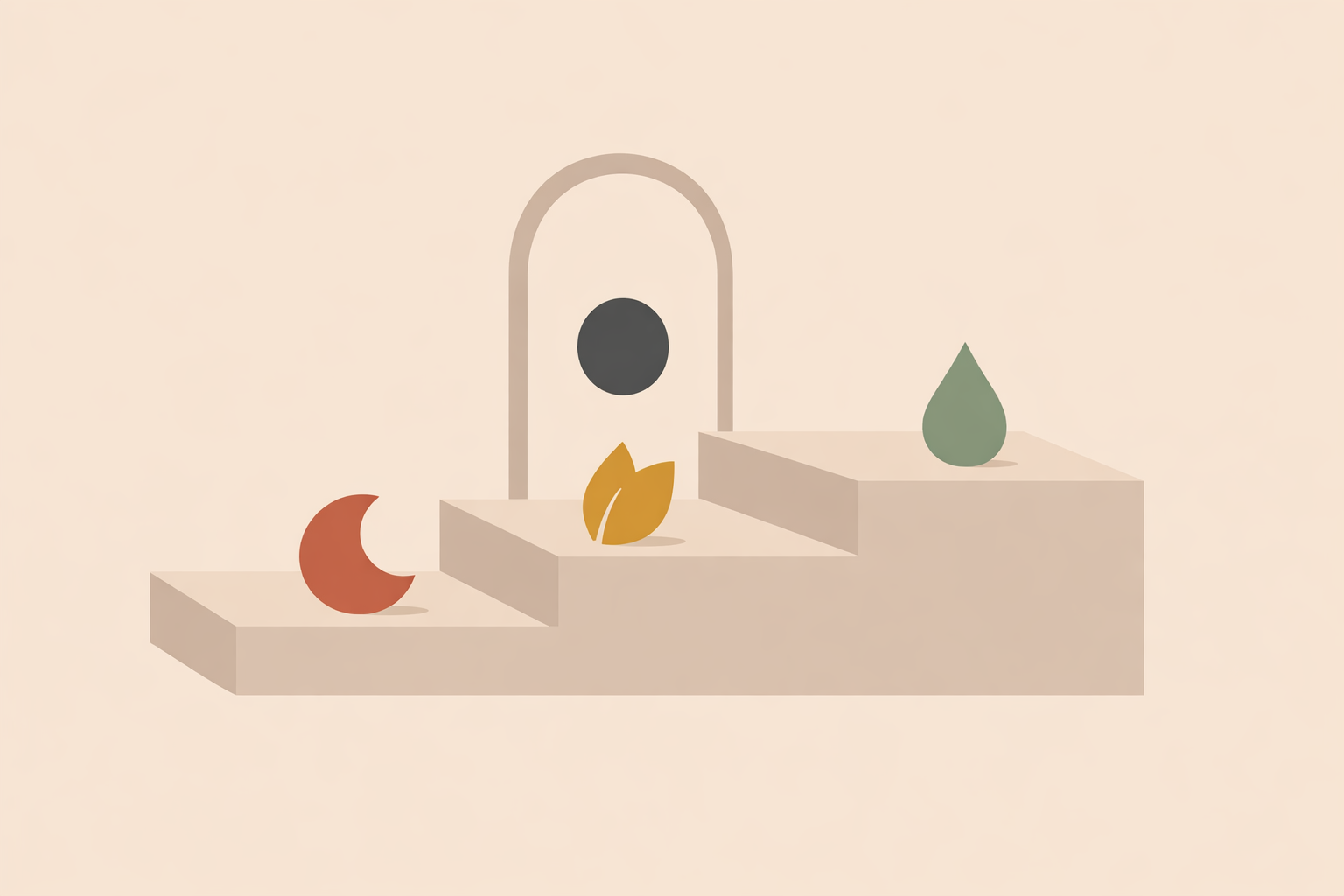
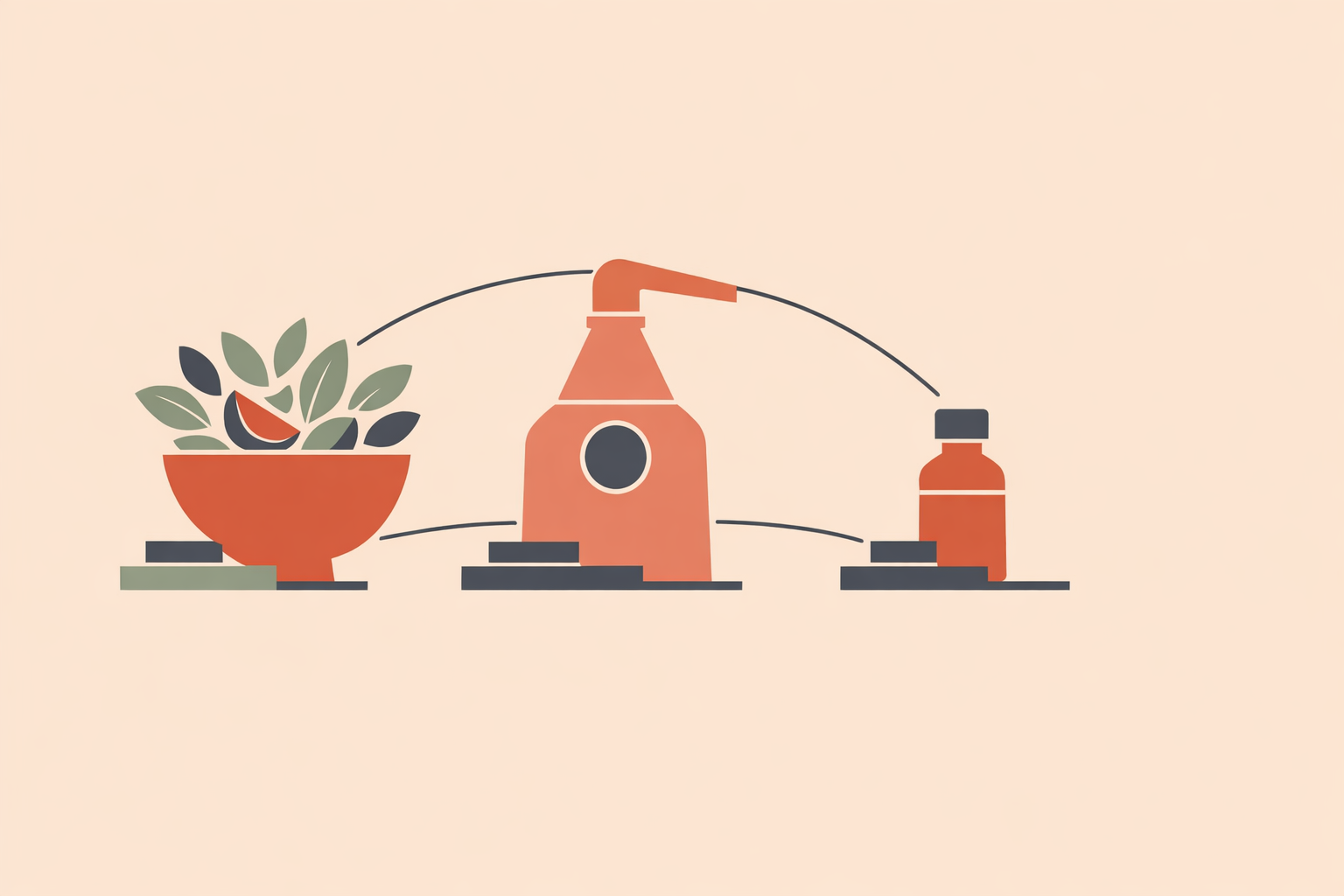
A simple three-week aromatherapy plan works well because it treats scent as a habit anchor. You pair one aroma with the same short wind-down every night, then add warmth, touch, breath, and gentle herbs. The routine stays consistent while the details become personal—so progress can build instead of resetting every time life shifts.
Key Takeaway: A three-week plan works best when you keep one consistent scent and wind-down cue, then layer body-based supports and personalize without changing the structure. This turns aromatherapy into a reliable bedtime signal you can safely repeat through stress, travel, and schedule shifts.
Before You Blend: Role, Boundaries, and Safe Sleep Support
Clarify your scope as a sleep‑support practitioner
Clear boundaries protect the client and the integrity of your work. Essential oils can strongly support relaxation, but sleep is also shaped by stress load, routines, environment, and—at times—outside support that’s beyond a coach’s scope.
Consider establishing these gentle boundaries upfront:
- Support, not solve: Position aromatherapy as a way to create steadier evenings and calmer nights—not as a standalone answer to every sleep challenge.
- Collaborate wisely: If a client shares ongoing or intense concerns, encourage appropriate professional support alongside your work.
- Client‑led customization: Invite feedback, respect cultural roots, and adapt rituals to what feels safe, accessible, and meaningful.
You might say: “My role is to help you build a soothing night rhythm using aroma, breath, warmth, and touch. We’ll go step by step, adjust as we go, and make sure this fits your life.”
Simple safety principles for nightly use
Because essential oils are concentrated, topical application should be diluted in a carrier such as jojoba or grapeseed. For nightly use on wrists, neck, or chest, many relaxation-focused recommendations cluster around around 1%—gentle and practical for regular use.
For diffusion, keep it light and keep air moving. Broad reviews emphasize modest use and good ventilation; in day-to-day practice, “too much” can be overstimulating or leave someone feeling off the next day.
Good work also comes from good training. NAHA outlines tiered training that includes safety, dilution, and client communication. Naturalistico’s certification materials similarly frame oils as tools for relaxation, nervous-system balance, and everyday well-being—steady, respectful, and well within a coaching and education lane.
With those foundations in place, Week 1 can stay beautifully simple.
Week 1: Build a Simple Scent–Sleep Anchor
Choose your base oils and delivery methods
Week 1 is about reliability, not variety. Choose one primary scent and one delivery method, then repeat it at the same time each night.
Lavender is classic for a reason: many people report winding down more easily with it, and it’s widely available. Pick one option:
- Diffuser: Use a modest number of drops and follow your diffuser’s guidance. Start 20–30 minutes before bed.
- Roll‑on at 1%: Apply to wrists and collarbones, then take a few slow inhalations.
- Pillow mist: A light spray can make bedding feel like a familiar cue and may enhance sleep quality as part of a steady routine.
Many guides recommend starting with one straightforward lavender practice—like diffusing lavender or a single diluted wrist application—because simplicity is what makes it repeatable. Research in high-stress settings also found lavender inhalation improved sleep and eased anxiety, which matches longstanding traditional use.
Think of scent as a fast track to the emotional brain: aromatic signals connect closely with the limbic system, where stress responses and mood are shaped. That’s one reason the same scent at the same time can become a powerful bedtime marker.
Design a realistic 10‑minute wind‑down
Keep the wind-down short enough that clients will do it even on imperfect nights. For example:
- Begin the aroma practice about 30 minutes before bed.
- Dim lights and place the phone in another room.
- Two minutes of slow nasal breathing, with exhales slightly longer than inhales.
- One gentle stretch (neck rolls, child’s pose), then into bed.
Education-focused guidance often emphasizes that Week 1 should keep simple: one scent, one method, one breath cue. The message to the nervous system stays clean and consistent: “It’s time to rest.”
Week 2: Add Body Care, Breath, and Herbal Support
Engage the body with bath and self‑massage
Week 2 deepens the ritual by bringing in the body. Warmth and touch make the wind-down feel lived-in and nourishing, so relaxation isn’t only mental—it’s physical. This is the heart of multi‑sensory practice.
Bath practice: Mix oils into an emulsifier (such as milk or unscented liquid soap) before adding to water, rather than putting undiluted oils directly into the tub. Many routines point to a warm bath as a dependable bridge into the night.
Self‑massage (abhyanga‑inspired): After bathing, apply lightly scented body oil with slow strokes—feet to calves, hands to forearms, then a gentle circle over the heart. Some sleep-focused routines recommend following the bath with a slow moisturizing ritual so touch and scent reinforce each other.
Add a breath cue—four counts in, six counts out—to strengthen the downshift. Reviews note that calming oils can increase parasympathetic activity; warmth plus longer exhales can make that shift feel even more obvious in the body.
Pair caffeine‑free herbs with evening aromatics
Many traditions pair evening aromatics with gentle, caffeine-free herbs—lavender and chamomile being a familiar duo. Put simply, the infusion supports calm from the inside while aroma and touch support calm on the outside. Plenty of practical routines still recommend a simple lavender chamomile drink.
For best effect, keep the cues close together: sip after bathing and oiling, a rhythm echoed in “evening sequence” guidance like after aromatherapy timelines.
By the end of Week 2, many clients start yawning mid-ritual. That’s useful feedback: the sequence is becoming a strong cue—perfect timing for personalization.
Week 3: Personalize and Optimize Your Sleep Blends
Match oils and blends to real sleep patterns
Week 3 keeps the rhythm, but adapts the blend and timing to the client’s real patterns. This is where structure becomes genuinely personal—without turning into chaos.
If settling takes too long: Keep lavender as the anchor, then add a bright top note like sweet orange or bergamot. One review found bitter orange had the strongest effect among several oils for easing anxiety, and broader discussions often highlight sweet orange alongside lavender as a well-studied option.
If early‑morning waking is common: Keep the evening blend gentle and consider using a diffuser timer so aroma tapers more gradually. For some clients, a longer “scent tail” helps the nervous system stay settled deeper into the night.
If evening stress spikes: Add a consistent 10-minute breathing practice before bed. In a controlled setting, bergamot sprays increased heart rate variability and reduced markers like heart rate and blood pressure—signals often linked with a calmer, more parasympathetic state.
The through-line is consistent: many calming oils appear to support parasympathetic responses. That gives you freedom to honor scent preference and cultural familiarity while still aiming for the same calming direction.
Progress often builds in steps: early ease, then fewer disruptions as the scent becomes familiar—similar to reports of fewer awakenings after a few weeks of steady use. Encourage brief notes in a sleep log so you can adjust timing, drop counts, and breath length based on lived experience.
- Simple blend ratios: 3 parts lavender, 1 part sweet orange (or bergamot). Or 3 parts lavender, 1 part Roman chamomile.
- Testing rhythm: Keep a new blend stable for several nights before changing it.
- Checkpoints: How quickly does the body soften? Any night waking? How do mornings feel?
Turn Your 3‑Week Sleep Plan into a Signature Offer
Shape 1:1 programs and group journeys
Once you can deliver the three-week structure smoothly, it becomes easy to offer it in a way that’s clear, ethical, and genuinely supportive. The container stays the same; the client experience becomes more consistent (and easier to complete).
1:1 series (three sessions over three weeks)
- Session 1 (Week 1): Goals, safety, and a baseline ritual. Sample aromas; choose one oil and one method. Provide a written plan and a short breathing audio.
- Session 2 (Week 2): Debrief, then add bath and self-massage plus a caffeine-free herbal pairing. Refine timing and environment.
- Session 3 (Week 3): Personalize blends, troubleshoot patterns (settling time, night waking, morning energy), and map a simple maintenance plan.
Small‑group journey (3–4 weekly circles)
- Blend short teaching with guided practice and Q&A. Provide take-home cards for diffuser timing, bath safety, and breath.
- Use a shared progress board where participants celebrate small wins and exchange respectful tips across traditions.
Professional footing
- Build from established education norms—NAHA outlines tiered training—and keep refining your skills over time.
- Use Naturalistico’s certification-level study and tools to create consistent class outlines and client handouts.
- Design sessions people enjoy and finish—Naturalistico’s guide on sleep classes shows how guided ritual plus education can land better than lecture-heavy formats.
- Start with a focused mini-program (three or four touchpoints) rather than open-ended support.
- Model clear, visual instructions—simple step‑by‑step rituals translate well into client cards and short audios.
Demand is already rising—market reporting notes growing interest in aroma-based sleep tools and perceived improvements in sleep quality. Your role is to guide that interest into grounded, culturally respectful routines people can actually keep.
Conclusion – Honouring Tradition and Data in Your 3‑Week Sleep Plan
When ancestral sleep wisdom is paired with practical modern insight, three weeks can meaningfully change how bedtime feels. Traditional practitioners have long trusted how scent settles the spirit; modern physiology helps explain why inhaled aromas connect closely with the limbic system, where emotion and stress responses are shaped. It’s a strong meeting of worlds.
The method stays simple: Week 1 anchors one scent and one breath cue; Week 2 adds warmth, touch, and caffeine-free herbs; Week 3 personalizes blends and timing. Aromatherapy can ease anxiety and support deeper rest—while good boundaries ensure you also recognize when someone may benefit from additional professional support alongside your work.
Keep evolving as you go. Naturalistico emphasizes community, cultural respect, and continuing development so your work grows beyond any single protocol.
Master Aromatherapy Certification Skills
Deepen safe, structured client support with Naturalistico’s Aromatherapy Certification.
Explore Aromatherapy Certification →