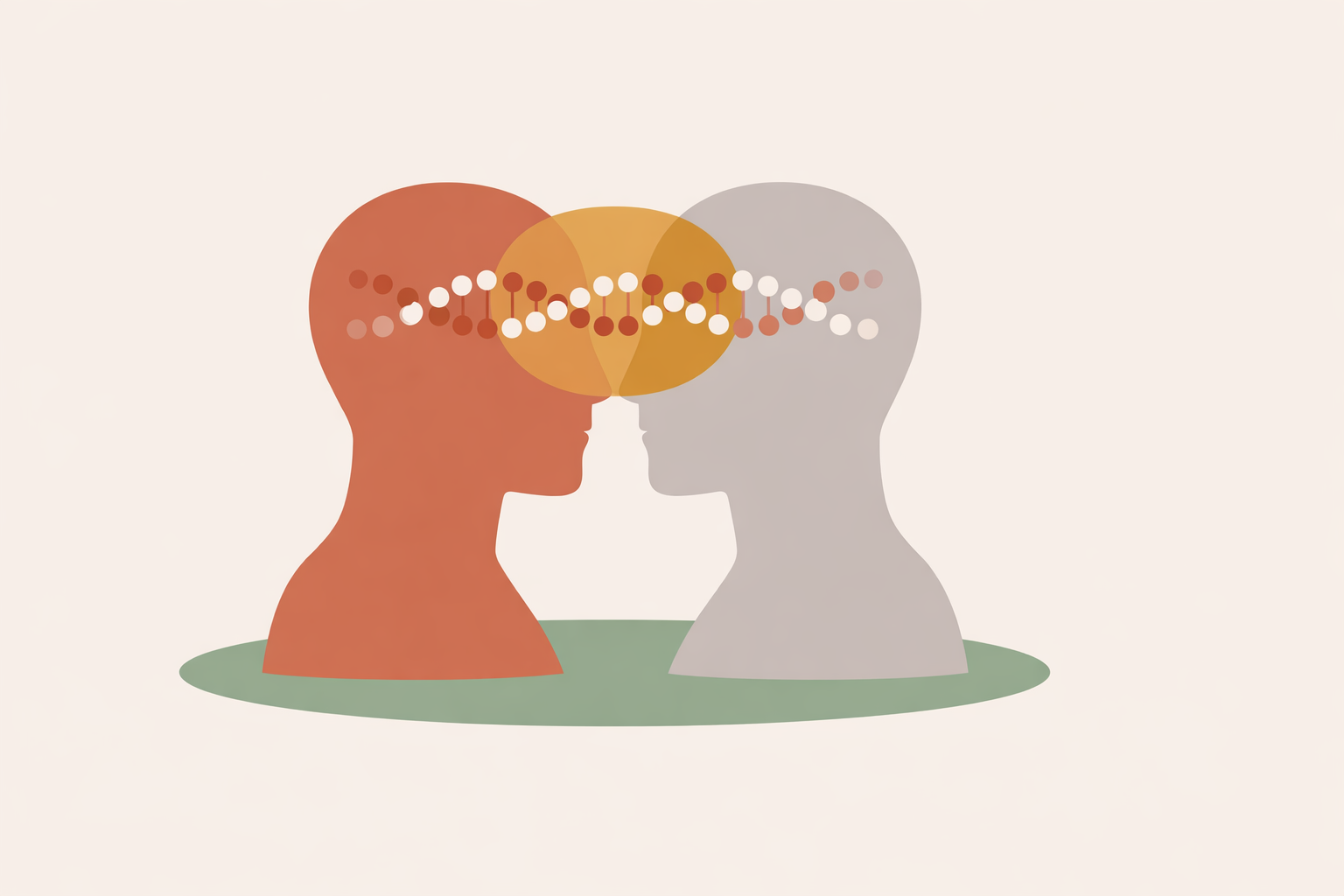
DNA-based nutrition coaching can be deeply supportive—and it also asks for extra care. The way you speak about genes, privacy, and possibility will shape whether clients feel empowered or exposed.
When it’s done well, this work blends personalized insight with clear consent, firm boundaries, and language that protects culture and choice. Personalized nutrition uses individual characteristics—including genetic profiles—to tailor guidance, and ethical frameworks describe both the promise of personalized nutrition and the guardrails that keep it respectful.
Because genetic information is permanent and shared across family lines, it deserves special handling. It’s uniquely sensitive, so the goal is calm clarity—not hype, and never pressure.
“Choosing what you eat is the most consequential act for your health and well-being,” Mark Hyman reflects—a line many of us in ancestral and holistic circles know by heart.
That’s exactly why transparency belongs in every sentence when DNA is part of the conversation.
Key Takeaway: DNA-informed nutrition works best when coaches treat genetic data as one input—not destiny—grounded in explicit consent, strong privacy boundaries, and culturally respectful language. When you frame results as tendencies to test through small experiments, clients stay empowered, protected, and anchored in their own values and foodways.
Why DNA-based nutrition feels powerful—and precarious—for new coaches
DNA can make nutrition feel precise, personal, and motivating. It can also create pressure and unrealistic expectations—especially when clients bring in direct-to-consumer reports that weren’t designed for nuanced, human-centered conversations.
The allure of hyper-personalization. Genetic insights are often framed as a way to explain why two people can eat the same way and feel completely different. Scholars describe this vision of personalized nutrition while also noting that many gene–diet connections are still developing. Used wisely, it can feel like permission to stop forcing a “one-size-fits-all” plan and start listening to the person in front of you.
The ethical and emotional landmines. Overselling certainty—or skipping consent—can backfire fast. Reviews highlight regulatory gaps in direct-to-consumer services, and ethicists emphasize that DNA cannot be changed and may reveal information about relatives. Without good framing, risk language can feed anxiety and fatalism.
At the same time, traditional practice has always taught that daily choices matter—and modern science echoes that people can influence gene responsiveness over time.
As Catherine Shanahan puts it, “Just about everything we eat, think, breathe, or do can… touch the gene and affect its performance,” a view that resonates with ancestral teachings about food, stress, and community shaping how we express our inheritance.
Expectation-setting script.
- “Your DNA offers one lens, not the whole landscape. We’ll use it alongside your goals, routines, stress levels, and the food traditions you care about.”
- “These reports highlight tendencies, not destiny. We’ll turn insights into gentle experiments, then let your lived experience lead.”
- “I don’t promise ‘eat exactly for your genes.’ I promise clarity, consent, and stepwise changes we can evaluate together.”
Beginning with consent: opening the DNA conversation safely
Consent isn’t a checkbox—it’s a relationship. Before you discuss a single gene, create a steady frame: choices, limits, privacy, and how you’ll work with the information together.
Translating research-grade consent into everyday coaching. Ethics guidance lays out elements you can translate into plain language—competence, disclosure, understanding, voluntariness, and explicit agreement. The same standards described for nutrition genetics informed consent can be adapted to coaching work with care.
To make understanding real (not assumed), use the teach-back method. Keep materials easy to scan with clear formatting, treat consent as an ongoing conversation, and name the right to withdraw without penalty. Because genetics can affect families, it’s also wise to be explicit about genetic privacy and potential ripple effects.
First-session consent script.
- “Here’s what DNA-based nutrition means in this practice: we’ll look at patterns that might influence how you respond to certain foods or routines. This is optional, and you can pause or stop anytime.”
- “Your report is yours. I’ll only view or store it with your permission, and I’ll explain exactly how it’s protected. You can request deletion at any time.”
- “Results show tendencies, not certainties. We’ll pair them with your lived experience and your cultural foodways to shape next steps.”
- “To make sure I’ve been clear, could you share back in your own words how you understand what we’ll do with your DNA information and your options?”
Consent one-pager checklist you can email.
- Purpose: how DNA insights will be used in coaching
- Limits: what DNA cannot tell us
- Privacy: storage, access, sharing, deletion
- Choice: voluntary now and always
- Time: invitation to consider and ask questions
Talking about genes without creating fear or fatalism
Genes land best when they’re framed as invitations, not verdicts. Your language can move a client from “fixed destiny” to “flexible responsiveness,” keeping agency front and center while still respecting the weight of the information.
Shifting from fixed destiny to flexible responsiveness. Food and well-being are shaped by many interacting threads—genes, meals, microbes, stress, environment, and culture. Reviews caution that overemphasizing genetic risk can trigger fatalism. A better approach is using DNA as one input in a broader holistic assessment.
Here’s why that matters: daily choices can influence gene expression—how strongly certain genes are “turned up or down.” Traditional foodways have always carried this kind of wisdom in practical form: how we gather, prepare, and share food (and how we rest, move, and regulate stress) can support a more harmonious expression of inheritance over time.
Strength-based reframing scripts.
- “This variant doesn’t decide your future; it tells us where your body appreciates extra support.”
- “Think of your genes as a library of tendencies. Together we’ll choose which ‘books’ you pull off the shelf more often.”
- “Let’s match this insight with your routines and stress patterns, then test small changes and watch what shifts.”
Clients often bring generational stories to these moments. As one person reflected, “The gene is in every member of my family, but whether it will be provoked depends on us… we should be careful regarding food and be moderate,” a reminder that lineage knowledge belongs in the room alongside lab findings.
Weaving DNA insights with lineage, ancestry, and traditional foodways
DNA becomes most useful when it’s rooted in culture. When you connect insights to ancestral diets, traditional practices, and family stories, reports stop feeling clinical and start becoming a respectful plan the client can actually live with.
Honoring cultural wisdom alongside lab reports. Thoughtful guidance encourages nutrigenetic work to move beyond isolated nutrients and toward meals, recipes, and the meanings of food in real life—emotional, ethical, and sensory. That’s the heart of ancestral nutrition meeting modern data. It also aligns with the long-standing traditional emphasis on variety and seasonal whole foods—an idea echoed in research on the value of plant foods and dietary diversity.
Epigenetic stories also mirror what elders have long observed: what nourishes one generation can echo into the next. Research suggests maternal nutrition can shape descendants and that certain dietary inputs can influence traits across generations. Put simply, family foodways aren’t only tradition—they’re lived information.
Ethically, personalization should never mean imposing an idealized diet that ignores culture, beliefs, or access. The goal is to reduce inequities tied to fair access, while respecting the value of traditional systems as practical, time-tested frameworks clients may already trust.
Culturally sensitive scripting you can use.
- “Before we look at any report, tell me about the foods you grew up with—the ones that feel like home. Those are part of our data.”
- “This variant suggests you might thrive with more fermented foods. Are there fermented dishes in your family or community we could center?”
- “Access matters. Let’s design options that fit your budget, time, and what’s available locally—no perfection required.”
- “If there are spiritual or ceremonial foods you want to preserve, we’ll make room for them. Our goal is alignment, not erasure.”
Scripts for privacy, data stewardship, and firm boundaries around DNA reports
Trust lives in the details. Be clear about what you do—and do not—do with genetic data, from storage to sharing to deletion. Calm specificity here helps clients relax.
Explaining what you do—and do not—do with genetic data. Genetic information can’t be “reset,” and it can overlap with family members. That reality calls for heightened care. Reviews also point to practical safeguards such as access controls and secure transmission, plus clear retention and deletion plans.
Ethical guidance encourages teams to keep data only as long as necessary and to erase or anonymize what’s no longer needed. Practical standards recommend policies aligned with security principles, transparency about where data is stored, and documented retention periods so you can explain your process consistently.
Boundary-setting script (say this early and repeat as needed).
- “You decide whether to share your DNA report. If you choose to, I store it in [describe encrypted platform or local process]. Only I can access it, and I never share without your written permission.”
- “I keep your report for [X months] to support our work. You can request deletion or a copy at any time, and I’ll confirm in writing when it’s removed.”
- “I don’t upload or send your report to insurers, employers, or anyone outside our work together. If you want to share it elsewhere, I can explain the pros and cons.”
- “My role is coaching and education. I won’t make claims beyond the scope of nutrition support, and I’ll always explain the limits of what genetic data can tell us.”
Bringing it together: inclusive language and next steps for DNA-based scripts
Inclusive, non-pathologizing language turns good ethics into everyday practice. Close DNA conversations with grounded hope and clear next steps so clients leave feeling respected, steady, and motivated.
Choosing inclusive, non-pathologizing language. Genetics and inclusion specialists note that some common terms subtly position certain bodies as “less than normal.” More precise wording is both more accurate and more respectful. Guidance encourages inclusive language and suggests person-first phrasing, such as “a person with a genetic variation,” while using gender-neutral language unless a specific identity is directly relevant.
Even seasoned professionals can feel unsure about how to talk about difference well, and research notes uncertainty around cultural difference. Education frameworks offer practical strategies that fit any coaching style: ask for pronouns, avoid unnecessary references to race, and translate technical terms into everyday meaning.
Inclusive language quick swaps.
- Swap “bad gene” for “a variant that may increase your need for [nutrient or strategy].”
- Swap “you’re high-risk” for “this pattern suggests an area where extra care could help.”
- Swap “normal vs. abnormal” for “more common vs. less common.”
- Swap “compliance” for “fit,” “comfort,” or “what’s workable right now.”
Closing DNA conversations with grounded hope. Strong practice weaves together transparency, real privacy safeguards, and a commitment to reducing disparities in access to personalized approaches. Trust doesn’t come from perfect certainty—it comes from steady communication and trust building that keeps people informed and in charge.
Five-minute wrap-up script for any DNA-focused session.
- Reflect: “Here’s what I heard matters to you today: [summarize goals, cultural foods, constraints].”
- Reframe: “Your DNA suggests tendencies in [X, Y]; these are levers we can choose to use.”
- Reduce: “Let’s pick one gentle experiment for the next two weeks that fits your life.”
- Respect: “How does this plan feel—culturally, practically, emotionally? What would make it feel more like you?”
- Reassure: “Your data is your choice. I’ll store it as we discussed; you can ask for changes anytime.”
- Revisit: “We’ll review what worked and what didn’t, then adjust based on your experience.”
To close, a grounded reminder: DNA-informed work can be empowering, but only when consent is real, boundaries are firm, and culture is treated as essential context—not decoration. Keep language possibility-focused, protect privacy with simple, repeatable systems, and let the client’s lived experience guide the pace.
At Naturalistico, we hold a simple north star: honor lineage, respect autonomy, and let care guide the technology. DNA-based nutrition can be a powerful ally in that work—when our words keep people safe, seen, and sovereign.
Master Genomics Nutrition Coaching
Deepen your consent-first, culturally rooted approach with the Functional Genomics & Nutrition Coach.
Explore Functional Genomics & Nutrition Coach →