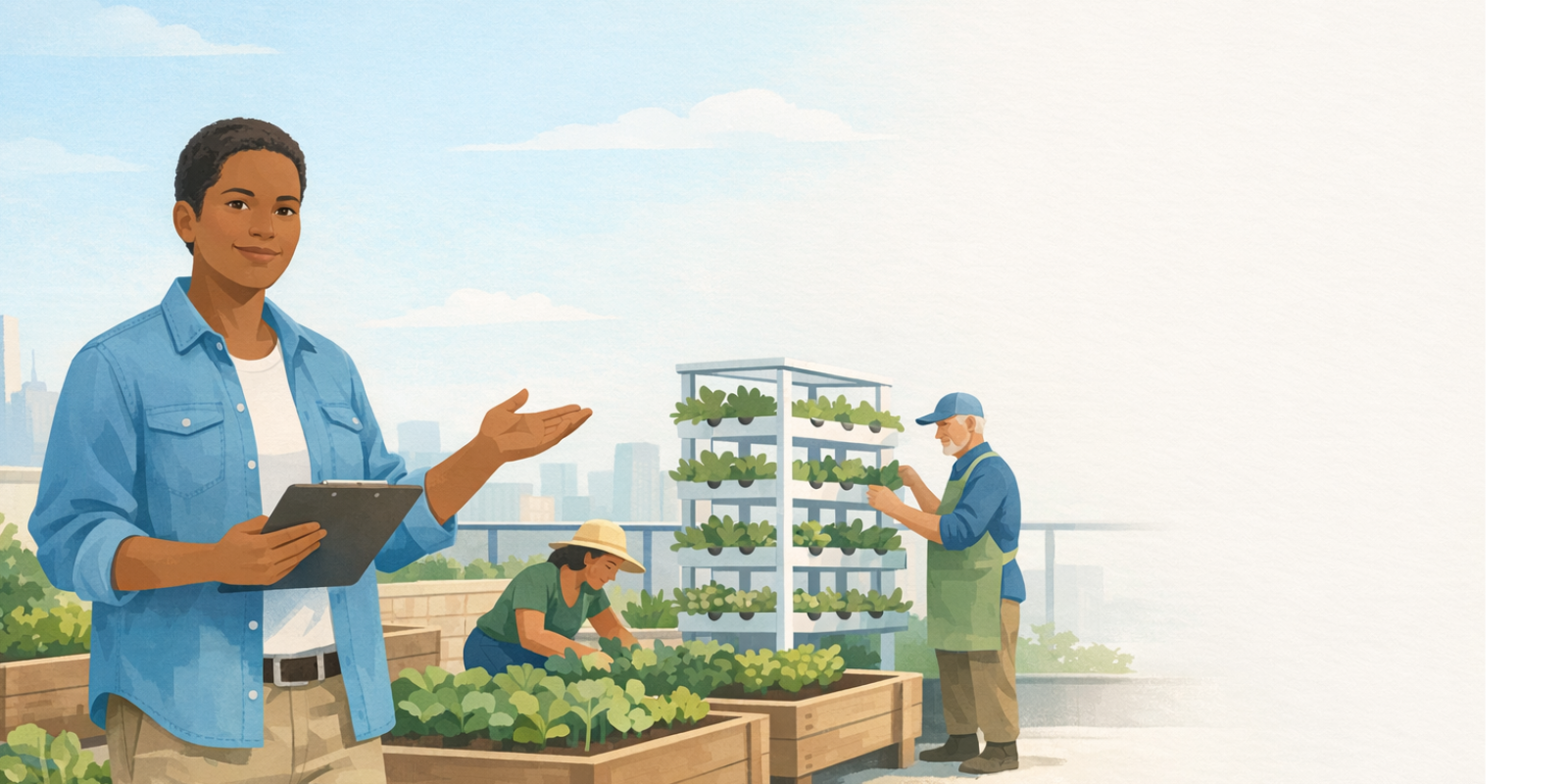
Turning a weekend plot into paid work is no longer a far-off dream. In 2026, it’s a practical next step—especially as cities invest in food systems that blend culture, technology, and community well-being.
Global agencies describe a clear growth spurt in urban agriculture, with particular momentum in space-efficient approaches like hydroponics and vertical growing. At the same time, agriculture career coverage points to expanding job opportunities that reward practical systems thinking and sustainability—often the exact skills community growers build without even naming them. In the U.S., dedicated urban programs increasingly recognize small-scale city growers, offering technical and financial support suited to rooftops, lots, and micro-farms.
For practitioners who value ancestral foodways, this moment feels like a return to what community growing has always been: cultural memory, mutual aid, and neighborhood resilience—now gaining professional language and real infrastructure. The work doesn’t need to change who it serves; it simply needs to be translated into the terms employers, partners, and funders understand.
Key Takeaway: You can turn community gardening into paid urban agriculture by naming your leadership, documenting outcomes, and building reliable production systems—then matching those proven skills to real roles in operations, education, or tech-enabled growing. With targeted learning and partnerships, your volunteer work becomes an employable portfolio.
Step 1: Reframe Your Volunteer Work as Urban Agriculture Leadership
“Helping out” is often leadership in disguise. If you organize workdays, steward shared beds, welcome newcomers, or keep seed stories alive, you’re already doing the work many paid roles require—just without the title.
Many people enter agriculture informally and discover that scheduling, record-keeping, and team coordination translate directly into paid work. Essentially, your group texts, sign-up sheets, and well-labeled seed bins are operational skills—reliability made visible.
There’s also the human side, which is often the real engine of urban growing. Community gardens support intergenerational exchange and nurture belonging through shared work—especially for communities that have been pushed to the margins.
As researcher Raychel Santo observes, “Some of the biggest benefits are from the socio-cultural side... How do you quantify improved community, diversity, and cooperation and intergenerational knowledge exchange?”
You can find that quote in context under urban agriculture benefit. It lands because it mirrors what experienced garden leaders witness weekly: food is the doorway, but connection is the structure that keeps people coming back.
Many urban projects now explicitly center access to fresh foods, making community garden leaders essential to neighborhood well-being. When you name seed saving, composting, and collective harvests as leadership—rather than “extras”—you give the work its rightful dignity and give yourself a credible foundation for paid roles.
From “Helping Out” to Holding a Vision
- Rename your role: “Volunteer coordinator,” “plot captain,” or “community grower lead.”
- Keep simple logs: hours, harvest weights, distribution notes, and workshop attendance.
- Document cultural work: seed exchanges, recipe circles, elder interviews, and language inclusion.
- State outcomes: community safety, youth engagement, and mutual aid connections—not just yields.
Step 2: Root Into Place — Reading Land, Soil, and City Systems
Paid responsibility starts with place-based literacy: knowing your site’s story, its soil and water realities, and the city systems that shape what’s possible.
Before you scale up, map what you’re working with. Urban agriculture guidance recommends assessing site conditions—historic land use, water access, and contamination risk—especially near brownfields. It also emphasizes confirming zoning rules and land-use agreements before moving into sales or formal programming. Think of it like learning two languages at once: the land’s language (season, water, wind, soil) and the city’s language (policy, permissions, partnerships).
In dense neighborhoods, good infrastructure reduces headaches. Many practitioners lean on raised beds, containers, and imported soil blends when ground soil is uncertain. Educators also describe basic safety practices—like mulched paths, reliable hand-washing, and avoiding root crops in suspect soil—as everyday standards that protect the joy of growing rather than replacing it with worry.
And while containers can be a smart starting point, long-term strength comes from rebuilding soil life. Composting, vermicomposting, and returning organic matter to the system are traditional cycles of care that steadily restore fertility—even in tight urban footprints. Garden participation can strengthen local resilience by reconnecting people to ecological rhythms, and over time these practices also reduce dependence on outside inputs.
Urban Soils, Safety, and Raised-Bed Wisdom
- Trace the site’s past: ask neighbors, check archives, and walk it after rain to see where water rests.
- Test strategically: focus on beds where food is grown; use containers or raised beds as needed.
- Set agreements: document land access, water use, storage, and shared responsibilities.
- Build soil life: integrate compost, mulch deeply, and plant cover crops where possible.
Step 3: Grow Beyond a Plot — Build Production Skills Employers Value
Paid roles often go to growers who can deliver consistency. What you already do—planting, watering, troubleshooting—can be shaped into systems that hold up across a season and across a team.
Across thriving projects, educators point to similar core skills: crop planning, irrigation design, integrated pest management, and post-harvest handling. Land-grant overviews also highlight practical tools like labor planning and production systems that help bridge the gap from “enthusiastic gardener” to reliable operator.
Cities are also becoming testing grounds for new growing models. Global agencies note increased investment in controlled environments because they can produce high yields in small footprints. Market analysis similarly points to growth in the urban farming market, driven by hydroponics, vertical systems, and demand for local produce.
One of the quickest ways to improve reliability is season extension—simple structures that protect crops and widen your harvest window. Education resources underline how season extension can strengthen both learning and earning potential for small urban sites.
From Garden Tasks to Crop Planning and Season Strategy
- Translate chores into roles: watering → irrigation lead; pest scouting → IPM coordinator; wash/pack → post-harvest lead.
- Build a simple crop plan: choose 8–12 reliable crops, stagger plantings, and map succession dates.
- Design water wisely: group crops by water needs, add timers, and log usage to spot leaks or inefficiencies.
- Balance pests with ecology: diversify plantings, use physical barriers, and track thresholds before acting.
- Extend seasons: trial low tunnels on 2–3 beds; document yield gains and labor impacts.
Step 4: Lead People and Projects for Community Food Justice
In most paid urban agriculture roles, people skills are as important as growing skills. Coordinators hold a shared vision, create welcoming systems, and keep projects steady through the realities of city life.
Many training pathways pair production skills with community-facing capacity: community engagement, zoning basics, and equity-centered project design. Program evaluations also show participants building confidence and networks alongside planning skills—exactly what coordinator work demands when partnerships and trust matter.
Gardens are cultural spaces, not just production spaces. Many organizations describe them as hubs of cultural expression where foodways, mutual aid, and identity are practiced in real time. Participation can also support psychological well-being and resilience by strengthening social ties and shared purpose—one reason these projects endure even when budgets are tight.
As projects grow, roles often include volunteer coordination, public education, and partnership-building. Many successful initiatives also rely on inclusive leadership—the ability to articulate mission clearly and create shared ownership with neighbors, funders, and local agencies.
From Plot Captain to Program Coordinator
- Write a one-page mission grounded in culture, access, and ecological care—share it at every meeting.
- Create welcoming systems: multilingual signage, childcare during workdays, and shared harvest norms.
- Measure what matters: track community events, seed exchanges, and distribution equity alongside yields.
- Build partnerships: libraries (seed libraries), schools (youth gardens), and mutual-aid groups (produce shares).
Step 5: Map Paid Urban Agriculture Roles and Income Streams
Once your skills are visible, it becomes easier to match them to real job titles. In 2026, paid opportunities span hands-on production, operations and coordination, education and programming, and tech-enabled growing.
Analysts of the changing job market highlight the need for clearer value and stronger execution, especially in operations. They also note how an operations manager can move into a logistics role with modest upskilling—good news if you’ve already been managing tools, harvest flow, and distribution informally.
There’s also rising demand for bridge roles that connect day-to-day growing with climate-responsive practice and data-informed decisions. This aligns with broader shifts toward specialized roles blending management, technical skill, and business awareness.
Within cities, growth in commercial ventures—especially controlled-environment operations—creates openings for technicians, managers, and educators. And the experience you already have coordinating people, tracking production, and communicating with stakeholders translates into roles across the food system. Opportunities are also expanding along the value chain, from local aggregation and distribution to education, policy, and consulting connected to resilient food systems.
From Garden Leader to Operations, Education, and Tech-Forward Roles
- Production and operations
- Urban farm coordinator, wash/pack lead, CSA manager, procurement and distribution assistant.
- Education and community programming
- Garden-based learning instructor, youth farm mentor, community workshop facilitator, seed library steward.
- Tech-enabled and data-informed
- Hydroponics technician, CEA assistant manager, irrigation and sensor lead, sustainability data coordinator.
- Ecosystem roles
- Food hub assistant, aggregation site coordinator, farmers’ market logistics, neighborhood compost lead.
Step 6: Choose Learning Pathways for 2026 and Beyond
The fastest transitions happen when volunteering becomes an intentional apprenticeship: targeted study, mentorship, and steady practice time—grounded in both evidence and tradition.
Programs designed for urban growers show real momentum. One evaluation documented gains in planning knowledge alongside increased confidence and resource awareness—exactly what helps people step into more formal roles. Short online modules can build job-ready skill quickly when paired with real plot time, and land-grant educators continue to emphasize practical tools that support both viability and community impact.
At the same time, protect space for ancestral learning: seed saving with elders, place-honoring practices, and kitchen collaborations that keep recipes alive. Traditional knowledge is not a “nice add-on”—it’s field-tested wisdom for resilience and continuity. Modern research can sharpen timing and systems. Together, they help you grow into a practitioner who can bridge neighborhoods and technologies without losing the heart of the work.
Design a Learning Plan That Honors Both Research and Tradition
- Clarify your target role: operations, education, or tech-enabled production. Choose 2–3 core skills to deepen.
- Layer learning: one short module + one mentorship + one weekly practice block for 8–12 weeks.
- Anchor tradition: commit to a monthly seed exchange, recipe circle, or elder interview and archive what you learn.
- Show evidence: build a small portfolio—crop plans, harvest logs, photos of systems you designed, and community outcomes.
Your 2026 Roadmap From Garden Leader to Paid Urban Agriculture
This path becomes simpler when you weave a few steady threads: name your leadership, read your place well, build production reliability, lead people with care, and choose learning that matches your direction.
Move steadily, not frantically. Many resources recommend starting small, using technical support, and scaling as trust and partnerships deepen. Program evaluations also suggest peer cohorts can help convert new skills into durable practice. And globally, urban agriculture continues in a sustained growth phase, increasingly becoming part of how cities feed themselves.
A strong next step can be small and decisive: write a one-page role vision, pick one production skill to deepen, and schedule one conversation with a mentor or hiring manager. Keep your hands in the soil and your plan alive on paper, and the move from community contribution to professional work becomes a natural evolution.
If you’re ready to formalize your skills and build a portfolio that speaks to employers, a focused program can help you move faster and with more confidence. The Urban Agriculture Certification at Naturalistico is designed for practitioners who want practical tools, community-oriented design, and support for real-world projects.
Ready to Go Deeper?
Take the next step with a Naturalistico certification — designed for practitioners ready to deepen their expertise.
Explore the Course →