Most nutrition coaches eventually meet the same puzzle: a client points to a GI chart, their CGM trace, and last night’s dinner—and the numbers don’t behave. Oatmeal can spike for some people but barely register for others. A “low-GI” food can hit harder in a large portion, while a “high-GI” fruit may land gently when it’s part of a full meal. That’s exactly why GI and GL shine as coaching signposts, not as strict rules.
Key Takeaway: GI describes how fast blood glucose tends to rise, while GL captures the real-world “dose” from an actual serving. Coaching works best when you use both to guide portions, pairings, processing, and timing—then validate the client’s own responses instead of forcing meals to match a chart.
GI vs GL: the simplest way to explain it
The most client-friendly explanation is also the truest: GI is the speed; GL is the total impact.
GI describes how quickly a carbohydrate-containing food tends to raise blood glucose. GL estimates real-world effect by factoring in serving size, using GI × carbohydrate grams.
That’s why two foods with the same GI can feel totally different in day-to-day eating. GI doesn’t reflect portion size; GL does.
Two quick analogies that usually click:
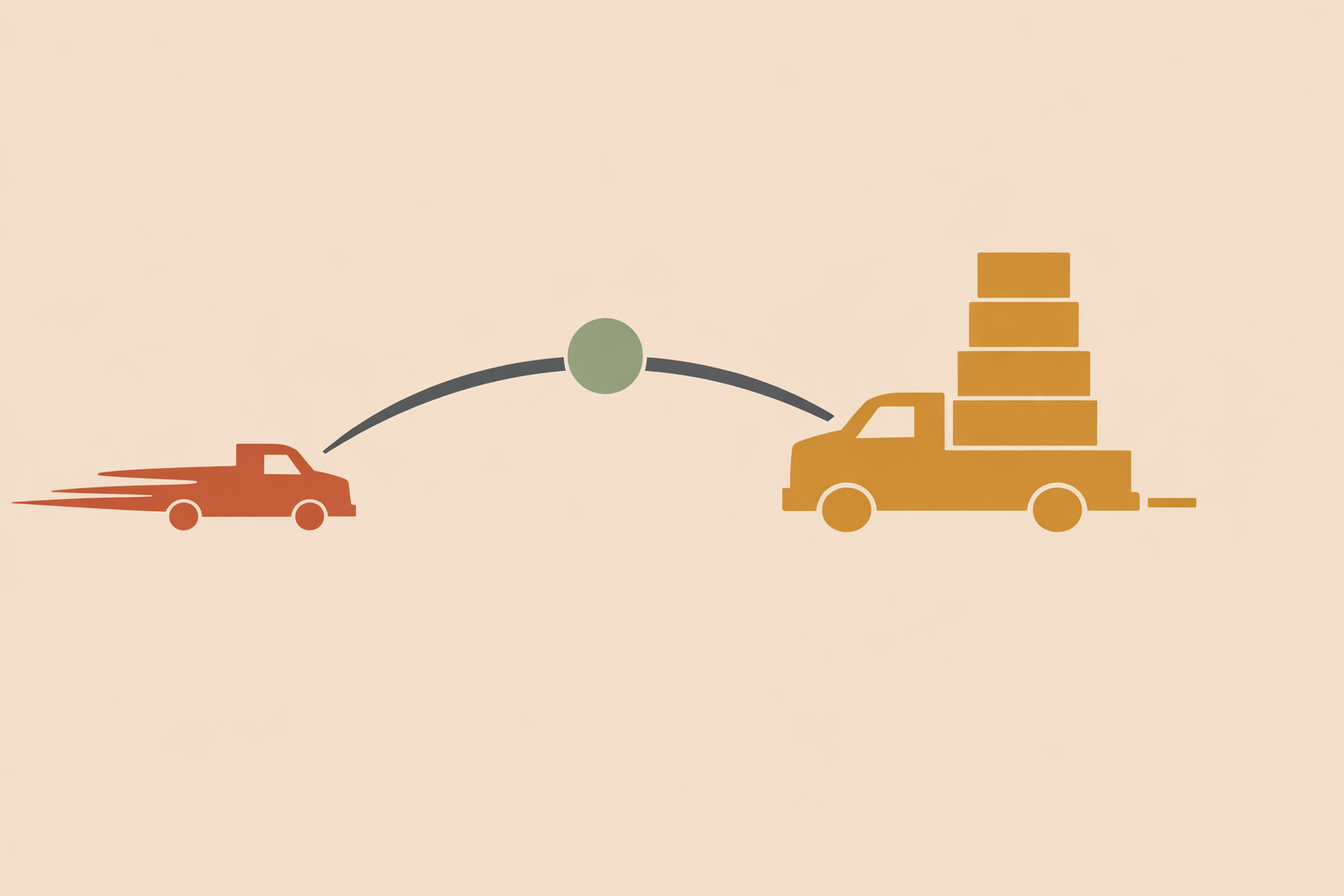
- Speedometer vs. cargo. GI is how fast the truck is going; GL is how much it’s carrying.
- Match vs. campfire. GI is the spark; GL is the size of the woodpile.
Once clients get this, they often relax. Instead of fearing a number, they start looking at the whole plate—and that’s where coaching becomes empowering.
What actually changes the post-meal response
Clients usually notice post-meal differences as energy, focus, hunger, or that “sleepy dip.” And in practice, the biggest levers aren’t the GI label—it’s portion, processing, pairing, and timing working together.
Food form matters. More processed carbs—especially finely milled or liquid forms—tend to create higher peaks that arrive sooner than less-processed versions.
Meal composition matters too. Pairing carbs with protein and fat can slow gastric emptying, and those additions can reduce postprandial glucose compared with eating carbohydrate on its own.
That’s the logic behind a classic coaching phrase: no naked starch. Think of it like giving the starch some “anchors.” Pair porridge with seeds or yogurt. Pair fruit with nuts. Pair rice with beans, greens, tofu, eggs, fish, or another grounding option that fits the client’s preferences.
In mixed meals, even higher-GI foods can show reduced excursions compared with when they’re eaten alone—one more reason plates matter more than lists.
Why GI alone can mislead clients
GI is useful information, but it can easily turn into rigid thinking. Clients start “chart-checking” instead of meal-building, and they may cut out foods they enjoy while still feeling confused by real-world results.
A common example is a “healthy” low-GI food eaten in a big serving. Because GL reflects the total impact, it explains why a generous bowl can feel very different from a modest one.
Oatmeal is another classic. Some people thrive on it; others notice hunger returning quickly or energy dipping. Often, the difference is processing, portion, and pairing—instant oats can act faster, while less-processed oats with seeds, nuts, or yogurt often feel steadier.
When clients feel stuck, the most helpful move is usually to stop debating whether a food is “allowed” and start adjusting the plate with simple, food-first experiments:
- Reduce the starch portion slightly.
- Add protein, fat, or fiber.
- Choose a less-processed form.
- Notice timing, stress, sleep, and movement around the meal.
That’s how flexibility returns—and fear tends to fade.
Traditional foodways already teach much of this
Many ancestral food patterns naturally follow a low-to-moderate glycemic load approach without ever naming GI or GL. They often emphasize intact grains, legumes, roots, vegetables, and—most importantly—mixed dishes rather than isolated starches.
Historically, many cuisines have favored cereals, legumes, and vegetables alongside balanced combinations and fewer refined foods. In modern terms, many of these patterns are naturally low GL because whole ingredients and shared plates tend to slow and steady the overall impact.
For coaching, this is powerful. GI and GL become modern language for timeless principles: eat foods close to their original form, combine them wisely, build meals with substance and texture, and let satisfaction guide rhythm.
It’s also a more respectful approach—one that supports cultural foodways rather than replacing them with a chart detached from identity, family, and routine.
“I now feel stronger, leaner, healthier, and happier.”
Used this way, GI and GL can help clients stay connected to tradition while still learning how to shape steadier energy.
Food preparation techniques that can soften the glucose wave
Sometimes the smallest kitchen choices make the biggest difference in how a meal “lands.”
For example, cooking, cooling, and reheating grains or tubers can increase resistant starch. In everyday terms, that often means a gentler curve, and resistant starch has been linked to reduced postprandial glycemia.
Texture matters too. Al dente pasta and coarser grains often behave differently than very soft or finely milled versions.
Here’s why that matters: these tweaks preserve familiar meals. Clients don’t need a whole new cuisine—often they just need a gentler format of the foods they already love.
Coach the whole pattern, not just single foods
Single foods matter, but patterns matter more. Research on broader eating styles shows stronger associations with metabolic health than focusing on isolated foods or nutrients.
That matches what experienced practitioners see: clients tend to do best when meals are consistent, satisfying, and balanced—not when they’re trying to “win” against one number on a list.
So instead of asking, “Is this food low GI?” try:
- What portion makes sense here?
- What is it paired with?
- How processed is it?
- How does this person usually feel after it?
- Does this fit their culture, budget, and routine?
That’s where GI and GL become freeing tools rather than restrictive rules.
Simple coaching scripts and experiments clients can actually use
The teaching that sticks is usually the teaching clients can repeat—and test—without overthinking.
Helpful scripts:
- “GI is speed, GL is total impact.”
- “No naked starch.”
- “Keep the food, change the context.”
- “Test, don’t guess.”
Simple experiments:
- Breakfast pairing: Compare fruit alone with fruit plus yogurt and nuts.
- Processing check: Compare instant oats with less-processed oats.
- Leftovers test: Compare fresh rice or potatoes with cooled and reheated versions.
- Movement micro-dose: Try 10–15 minutes of light walking after dinner.
- Hydration check: Try 500 mL of water before a starch-heavy meal and notice fullness cues and pace.
Then debrief with curiosity: energy, hunger, mood, focus, satisfaction. Put simply, the body’s lived feedback often teaches faster than any chart.
“My biggest learning was even at my unhealthiest, I wasn’t eating enough.”
That reflection is important. Steadier eating isn’t only about avoiding spikes—it’s also about building meals that feel nourishing, grounding, and realistic to maintain.
Closing perspective
GI and GL are signposts, not commandments. GI speaks to speed. GL points to real-world impact. But neither replaces observation, context, or the deep wisdom embedded in traditional ways of building meals.
Practitioners can use these tools without being ruled by them—helping clients see why one bowl of oats feels different from another, why mixed meals often work better than isolated starches, and why traditional plates so often support steadier energy without needing nutrition jargon.
To keep it balanced: glucose responses are highly individual, and tools like CGMs can add useful feedback—but they can also create noise or fixation for some clients. The most sustainable approach is usually the simplest one: use GI/GL to guide choices, then prioritize portions, pairings, food form, and a supportive routine, much like personalized nutrition coaching does in practice.
Master GI/GL coaching skills
Apply GI/GL insights with confidence in the Nutrition Coach Certification, using client-centered meal coaching strategies.
Explore Nutrition Coach Certification →