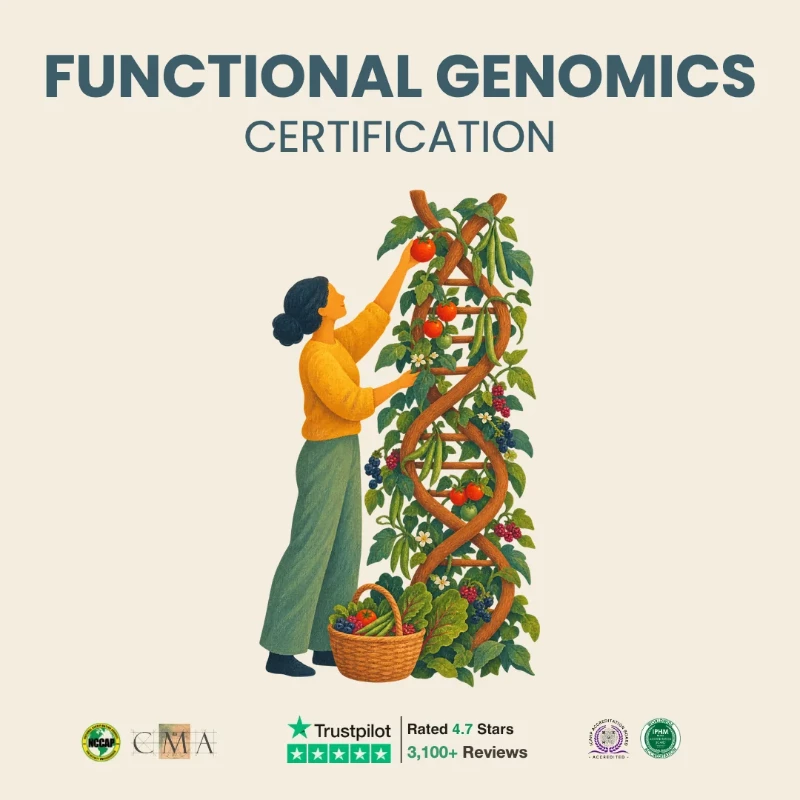
More and more clients arrive to nutrition coaching sessions holding DNA reports—and real, practical questions. “Is this why coffee makes me jittery?” “Is dairy the issue, or just milk?” “Do I really need a methylated supplement?” In that moment, it’s easy for a session to get pulled into SNP acronyms and a kind of certainty nobody can truly promise.
There are also valid concerns around privacy, scope creep, and the supplement-heavy hype that often follows genetics. What’s needed is a calm, food-first way to welcome the data without letting it take over.
The most grounded frame is simple: genomics can be helpful when it’s treated as tendencies—not destiny—held inside culture, lived experience, and the basics. Used with consent and clear boundaries, DNA insights can gently fine-tune choices around caffeine, dairy, folate-related pathways, and fats. Daily rhythms, symptoms, and preferences still lead; genetics simply adds a little extra map detail.
Key Takeaway: Use genomics as a consent-based, food-first lens: treat variants as tendencies, translate them into plain language, and test only a few small experiments that match symptoms and culture. DNA should refine the basics (meals, sleep, movement, stress), not drive fear, restriction, or supplement-heavy plans.
Reframing Genomics Through an Integrative and Ancestral Lens
The healthiest way to use genomics is to see genes as tendencies, not destiny. Integrative work has always relied on context—ancestral foodways, routine, identity, and personal experience—because that’s where change becomes sustainable.
Whole-person support doesn’t chase one isolated data point. It looks at food, rest, movement, stress, relationships, and rhythm as a connected system. Genomics can strengthen that approach, as long as it stays inside it.
Seen this way, nutrigenomics isn’t a rejection of traditional practice; it’s a modern companion to something practitioners have known for centuries: different bodies thrive with different emphases. Nutrient-gene interactions offer one more way to personalize support while staying anchored in common sense and real food.
This is exactly where ancestral wisdom shines. Traditional cuisines formed through land, season, work, preservation, and community memory. A genomics-informed coach doesn’t “optimize” someone out of their heritage; they adapt within it, keeping cultural foodways intact wherever possible.
Modern epigenetics also supports a familiar traditional truth: the body is responsive and dynamic. gene expression can shift across the lifespan in response to nutrition, movement, sleep, and stress. Think of it like a set of dials, not a single on/off switch—daily habits help set the direction.
Along similar lines, lifestyle patterns can influence biological aging. So even if someone carries a tendency, it simply highlights where steady support may matter most.
“Every gene represents a job that need be done in the body.”
That language is reassuring. Instead of “What’s wrong with me?” the conversation becomes, “Where might my body appreciate extra support?”
One practitioner describes this work simply as “personalized nutrition.” Not in a flashy sense, but in the very human sense of matching food and routine to the person in front of you.
Once genomics is held within context and culture, ethical boundaries become clearer—and easier to maintain.
Ethics, Scope, and Consent for DNA in Coaching
DNA work in coaching stays ethical when it is educational, consent-based, and clearly bounded. The integrity of this work rests on calm language, clear expectations, and a steady commitment to supportive coaching rather than overreach.
Start with the core boundary: genomic information is best offered as educational support, not as a definitive answer. It can clarify tendencies in areas like caffeine handling, lactose tolerance, or nutrient pathways—without turning into prediction or certainty.
That boundary should be set before you open a report. Naturalistico emphasizes explicit consent: agree on what you will review, what you will ignore, how it will be used, and which questions sit outside your role. This keeps the session safe, focused, and respectful.
Privacy needs equal clarity. Genomic data is highly personal, which is why safe storage and transparent retention practices matter. Clients deserve to know who can access their data, how long it’s kept, and that nothing identifiable is shared without permission.
Then there’s language. Ethical practice avoids fear and fatalism, especially because lifestyle influences still shape how tendencies show up. “You may respond better to this adjustment” keeps the client empowered; “your genes mean you must” does not.
Clear language also protects against hype. Public guidance on nutrition misinformation warns about practitioners who overstate results or build aggressive supplement stacks around isolated SNPs. In a strong practice, genomics should simplify decisions and personalize gently—not escalate complexity.
Finally, it’s wise to respect the technical depth involved. A Naturalistico reviewer put it plainly: “You need to already have a pretty good handle on human anatomy...” Genomics rewards discipline and good boundaries.
With those guardrails in place, DNA becomes a helpful background layer. The next question is how to bring it into a session without losing momentum—or the human story.
Inside a Genomics‑Informed Session: From Intake to Experiment Design
A genomics-informed session works best when DNA enters as background context, not center stage. The flow stays simple: confirm consent, scan for patterns, translate into plain language, connect to lived experience, and design small experiments that fit real life.
Begin by asking whether the client has genomic information and genuinely wants it included. If yes, confirm informed use and set expectations: you’ll focus on nutrition- and lifestyle-relevant tendencies rather than trying to interpret everything.
To keep things manageable, many coaches ask for only relevant sections rather than full raw data. Essentially, you’re looking for usable signals, not drowning in detail.
Review with a wide-angle lens. Instead of obsessing over individual SNPs, look for repeating themes: markers pointing toward slower caffeine clearance, lower omega‑3 conversion, or lactose challenges. Pattern thinking keeps the session practical.
In the session, translate everything into normal language. For instance, a variant might suggest the body may clear caffeine more slowly. That’s a client-friendly way to explain it—and it invites a simple experiment.
Then connect the tendency to lived experience: does it match their sleep pattern, tension, digestion, or energy swings? This is where DNA stops being abstract and becomes genuinely supportive.
Importantly, keep the foundation first. Many clients benefit most when DNA fine-tuning happens after foundational routines are steadier—regular meals, hydration, basic movement, and consistent sleep. Fine-tuning works best on a stable base.
From there, choose one or two experiments that are specific but gentle: adjusting coffee timing, increasing leafy greens, shifting fat sources, or trying cultured dairy instead of milk. The goal is learning, not perfection.
One genomics educator captures the spirit well: “It guides the process ... because you can really know like all right, we better support this area.”
Support is the key word. Once this rhythm is established, a few common patterns show up again and again—and they’re the easiest to translate into food-first practice.
Turning Common Gene Patterns into Food‑First Experiments
The most useful genomics work starts with familiar patterns clients can feel in everyday life. Rather than chasing exotic SNPs, focus on a handful of repeat players—caffeine, lactose, omega‑3 handling, and folate-related pathways—and turn them into simple, culturally respectful experiments.
Caffeine is often the cleanest place to start because feedback is fast. Caffeine responses can be acute, so clients quickly learn whether dose and timing matter for them. This isn’t “coffee is bad”—it’s “coffee might need a different rhythm for your body.”
When likely slower metabolizers reduce intake or avoid afternoon coffee, sleep-focused guidance suggests easier sleep and fewer wired-but-tired sensations can follow. Small change, clear signal.
Lactose is another practical entry point. Differences in dairy tolerance are partly linked to lactase-related genetics, which helps explain why dairy advice can feel contradictory across families and cultures.
The best approach is usually nuance, not removal. Many people do well experimenting with lactose-free dairy, fermented dairy, or smaller portions while watching digestion and comfort. That preserves food culture while still honoring the body’s feedback.
Omega‑3 pathways tend to be subtler but important. Variants in FADS1/FADS2 are associated with lower conversion of ALA (from flax or walnuts) into EPA and DHA. For some clients, that means plant omega‑3 sources may not deliver the support they expected on their own.
A simple experiment might be adding more fatty fish where culturally appropriate, or using algae-derived EPA/DHA when needed. People with these patterns may show stronger response to direct EPA/DHA intake—often a more targeted adjustment than a generic “eat healthy fats.”
Folate-related pathways (including MTHFR) are commonly overdramatized. A steadier interpretation is that certain variants may contribute to higher homocysteine when folate and related B vitamins are low—so the first move is food quality, not panic.
Bring it back to the table: leafy greens, legumes, varied whole foods, and broad B-vitamin sufficiency. This aligns naturally with many traditional diets and keeps genomics from turning into supplement-first thinking.
As one educator puts it, “We use these genes to sort of map out what the ideal macronutrient structure looks at person by person.”
In practice, the strongest wins often come from matching genetic tendencies to symptom clusters—sleep, digestion, energy—rather than trying to “act on” every SNP. That’s also where clients feel the difference most clearly.
Because these tools are fascinating, the main skill becomes knowing how to use just enough—so the work stays grounded and sustainable.
Keeping Clients Grounded: Avoiding Genetic Hype, Restriction, and Burnout
Genomics helps most when it simplifies decisions, not when it creates fear or endless optimization. If a client leaves feeling restricted, confused, or pressured to “fix” every SNP, it’s time to re-center.
Start with scale. Most common SNPs have relatively small effects on their own, while everyday patterns often matter more. Here’s why that matters: genomics should refine the plan, not dominate it.
Without that perspective, clients may make unnecessary dietary restrictions, like cutting whole food groups “just in case.” When you see that, slow down and return to observable feedback and gentle experiments.
Supplements can become another detour. Some people experience anxiety or headaches with higher-dose methyl-donor supplements, especially when started abruptly. The coaching skill here is pacing: simpler and steadier often supports the client better than escalating doses.
It also helps to name what genomics does not justify. There is no good basis for using GST, CYP, or methylation markers to push extreme detoxes, harsh fasting regimens, or heavy stacks of products. Traditional practice tends to favor consistency over drama for a reason: it’s what people can maintain.
DNA information can also shape mindset. Education suggests clear language and a basics-first focus can reduce genetic determinism, helping clients feel more capable rather than “stuck.” Essentially, the tone you set determines whether DNA becomes empowering or overwhelming.
A few steady questions can keep sessions on track:
- Is this genetic insight changing a real behavior, or just adding mental noise?
- Does the experiment fit the client’s culture, budget, and daily routine?
- Are we reducing overwhelm, or creating more of it?
- Would this recommendation still make sense if we did not know the SNP?
And remember: technical depth isn’t the enemy. As Naturalistico reviewers note, the content can be really technical with “a lot of gene-level detail.” The real risk is losing the human thread—forgetting the client’s lived experience while chasing perfect interpretation.
When questions move beyond supportive lifestyle work, it’s important to hold boundaries, decline questionable interpretations, and refer out as needed. When in doubt, return to what has always worked: food quality, rhythm, rest, movement, and sustainable experimentation.
Conclusion: Weaving Genomics into Integrative Nutrition Sessions
Genomics can be a powerful addition to integrative nutrition sessions when it is used as one lens among many. At its best, it explains why people respond differently to food and routine, while leaving plenty of room for ancestral wisdom, lived experience, and the steady influence of daily habits.
That’s the heart of the work: DNA doesn’t replace good coaching—it sharpens it. It can help fine-tune choices around energy stability, digestion, caffeine, and nutrient support while still honoring the whole person. Or, as Naturalistico puts it, use genomics as a light-touch lens.
For practitioners who want to deepen their skill set, education matters. Professional guidance notes genomics education is important for those integrating genetic information responsibly, and learners often report greater confidence applying it in practice.
So as DNA reports show up more often, there’s no need to treat genomics as either a miracle tool or a threat to tradition. Used with consent, good boundaries, and cultural respect, it becomes what it should be: one more way to help people understand themselves clearly and make supportive choices they can actually keep.
Master Genomics in Coaching
Apply this food-first framework with clearer boundaries in Functional Genomics & Nutrition Coach.
Explore Functional Genomics →