Clients often want shifts they can feel quickly: a calmer baseline before a meeting, steadier focus for deep work, or an easier transition into sleep. Breathwork and mindfulness can help, but they do not always give the mind an immediate anchor. Scent often does. Used well, aromatherapy is more than atmosphere—it is a practical sensory cue that can support calm, attention, and rest.
Traditional scent rituals have long been used to mark transitions, settle the inner world, and create a sense of orientation. Modern research helps explain why: aromatherapy works emotion-memory circuits, which is why a familiar aroma can sometimes shift the felt state of a moment so quickly. What this means is simple: choose one clear intention, pair it with a consistent aroma, and repeat a short ritual until the association feels dependable.
Key Takeaway: Aromatherapy works best as a consistent sensory cue: pair one clear intention (calm, focus, or sleep) with one familiar scent and repeat a short ritual. Over time, that stable pairing can become a dependable anchor that helps the body-mind shift state more quickly.
How scent reaches emotion and memory pathways
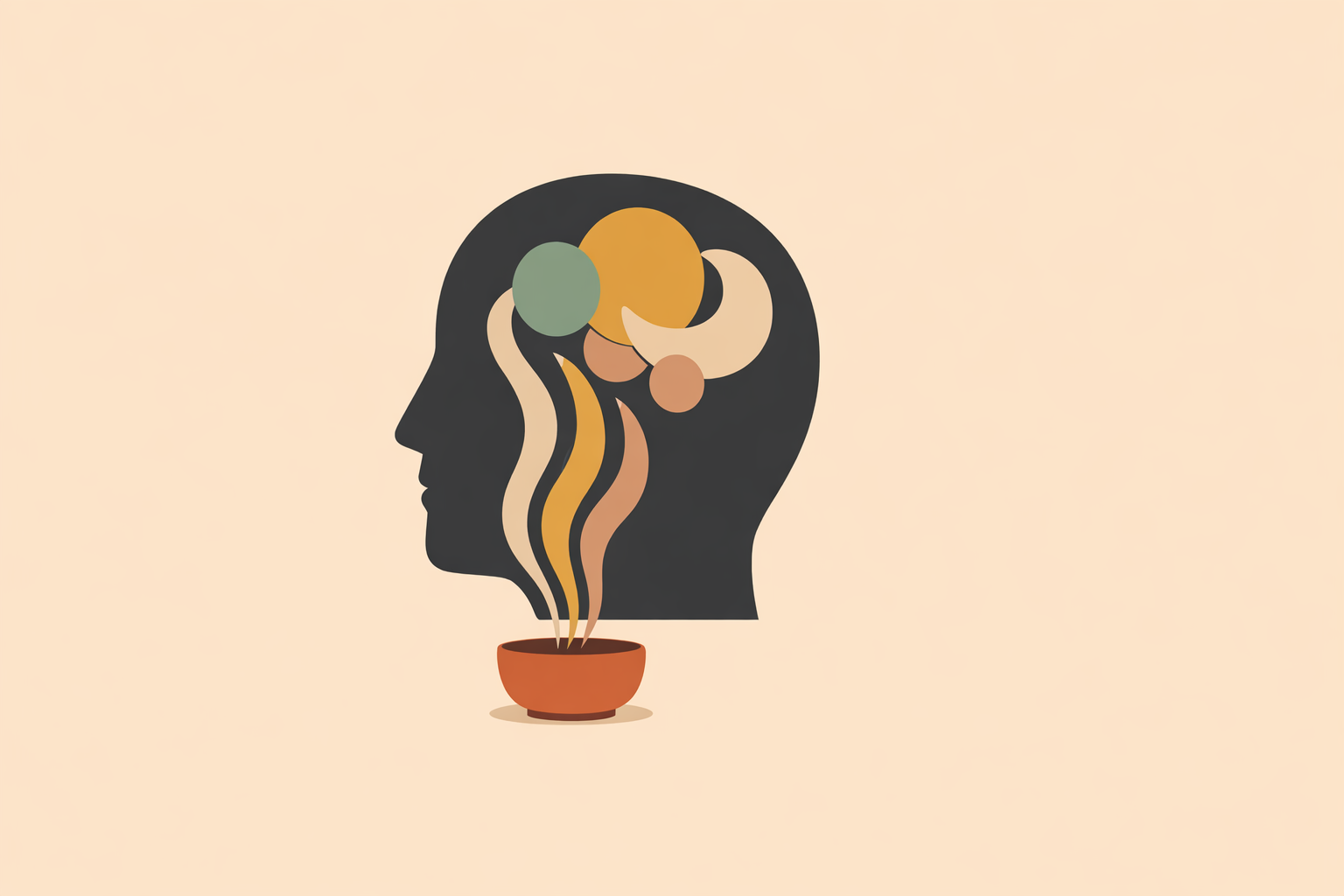
With one inhale, aromatic molecules begin a fast interaction with the brain that can influence mood, memory, and stress responses by interacting emotionally.
Signals travel to the olfactory bulb and then onward to regions involved in learning, feeling, and recall. Smell takes a direct route compared with many other senses, which helps explain why scent can feel so immediate.
Those signals also project to areas including the amygdala and hippocampus, which is why an aroma can trigger mood or bring up vivid memory before the mind has even named what it’s smelling.
For practitioners, this is the real power: scent is associative. Used consistently, an aroma becomes part of a learning loop—this scent means exhale, this scent means work, this scent means night.
What aromatherapy can realistically support
In real-world coaching and well-being routines, three outcomes tend to be the most workable: emotional steadiness, task-specific focus, and sleep preparation. Clients also find these goals intuitive, which makes consistency easier.
Calming aromas such as lavender or bergamot are often chosen when the intention is to feel more settled. Stimulating scents such as peppermint and rosemary are more commonly paired with mentally demanding tasks. Softer evening aromas are often used to support a smoother wind-down.
Research reviews reflect this overall pattern across stress, cognition, and sleep. In practice, the aroma and the ritual work together: the scent provides the cue, and the repeated routine teaches the body-mind what that cue means.
Aromatherapy for calm and emotional steadiness
When the goal is calm, the most reliable approach is usually uncomplicated: one familiar scent, low intensity, slow breathing, and repetition.
Lavender and bergamot are common choices when someone feels scattered, emotionally charged, or mentally overactive. The aim is not to flatten feeling, but to create enough space for steadiness to return, especially in simple stress-relief sessions.
Calming pre-bed aroma routines can improve sleep, and the same gentler choices can be useful earlier in the day when the inner pace needs to soften. There is also some indication that inhaled linalool may support calming systems, which matches the relaxed-but-present quality many people report.
“therapeutic window”
That phrase is worth remembering: more scent is not necessarily more effective. A soft, breathable aroma is usually more helpful than a strong one that takes over the room.
Client-facing script:
- Choose one calm scent, such as lavender, bergamot, or a gentle blend you genuinely enjoy.
- Diffuse lightly for 20–30 minutes, or place one drop on a tissue and waft it gently.
- Sit upright and soften the jaw, shoulders, and belly.
- Inhale through the nose for 4 counts and exhale slowly for 6–8 counts.
- Repeat for 10 breaths.
- At the end, rate your steadiness from 0 to 10 and note any shift.
Helpful uses:
- before meetings
- after difficult conversations
- during transitions between work and home
- whenever the inner pace feels too fast
Aromatherapy for focus and study
For focus, aromatherapy tends to work best as a “situational cue,” not as an all-day background scent. Think of it like a bookmark for attention: you open it when it’s time to work, and you close it when you’re done.
Peppermint and rosemary can reduce fatigue and are linked with modest support for accuracy or working memory during demanding tasks. These effects also appear more context-dependent than general, so pairing the aroma specifically with reading, writing, revision, or problem-solving usually gives the cleanest results.
This is where traditional-style ritual shines. Use one aroma only for focused work, then bring that same scent back during review. Over time, the mind gets faster at returning to the state it has learned to associate with that aroma.
Client-facing script:
- Select one “study scent,” such as peppermint or rosemary.
- Use only this aroma during deep work so the association stays clear.
- Before each session, take 2–3 light inhales from a tissue or personal inhaler.
- Silently name the intention: “On task.”
- Work for 45–90 minutes.
- When attention fades, take one brief inhale and return to the task.
- At the end, write down three points you want to remember.
- During later review, use the same aroma again.
Refinements:
- If the scent feels too sharp, reduce the intensity rather than abandoning the ritual.
- Track alertness at the start and 20 minutes in.
- Keep the cue personal in shared spaces by using a tissue or inhaler rather than filling a room.
Aromatherapy for sleep and evening rituals
Night-time aromatherapy works best when it becomes part of a larger rhythm of downshifting. It is not only about the oil; it is about the signal you repeat night after night.
Low lighting, reduced stimulation, a familiar aroma, and a short, consistent sequence help the body-mind recognize that the day is ending. Over time, the routine itself becomes a gentle “threshold” into rest.
Night-time scent routines may also support processing during sleep. Here’s why that matters: evening aromatherapy can feel like both restfulness and a sense of overnight integration.
Client-facing script:
- Choose 1–3 calming evening scents, such as lavender, Roman chamomile, or sweet orange.
- About an hour before bed, dim the lights and begin a low, gentle diffusion.
- Keep the aroma soft—you should notice it, not feel surrounded by it.
- Create a 10-minute wind-down: light stretching, journaling, quiet reading, or simple breath awareness.
- When getting into bed, take three light inhales from a tissue by the bedside.
- Set the tissue aside and let the routine end there.
Refinements:
- Track your wind-down start time and how refreshed you feel in the morning.
- If a scent starts to fade into the background, rotating to another calming aroma for a few days can refresh the cue.
- Keep intensity low; evening support is usually better when it feels subtle.
Good practice, clear expectations, and safety
Aromatherapy is strongest when it is used clearly and with restraint. The goal is steady support, not overstatement—and not overwhelming the senses.
A few principles help:
- Start low and adjust slowly.
- Choose aromas that are pleasant and personally acceptable to the client.
- Use one scent per intention whenever possible.
- Let consistency do the work rather than intensity.
- Keep spaces ventilated and avoid direct contact with eyes and other sensitive areas.
- Be mindful in homes or settings with children, pets, or scent-sensitive individuals.
It also helps to stay culturally respectful. Traditional scent use comes from many lineages and contexts. Borrow carefully, avoid flattening those traditions into trends, and keep the focus on grounded, ethical practice.
As one education group puts it, “rigorous research evidence is the way forward” for the field.
Conclusion
Aromatherapy becomes most useful when it is approached as a simple, intentional practice rather than a decorative extra. A well-chosen scent can support a shift toward calm, mark the beginning of focused work, or soften the threshold into sleep. With repetition, these pairings often become reliable anchors for everyday well-being.
Traditional knowledge already understands much of this through lived experience: scent shapes state, and repetition deepens the effect. Modern research adds helpful language for the pathways involved, but the heart of the practice remains the same—choose thoughtfully, use gently, repeat consistently, and track what the person in front of you actually responds to.
Train in Aromatherapy Certification
Deepen your scent-based rituals with evidence-informed practice in Naturalistico’s Aromatherapy Certification.
Explore Aromatherapy Certification →