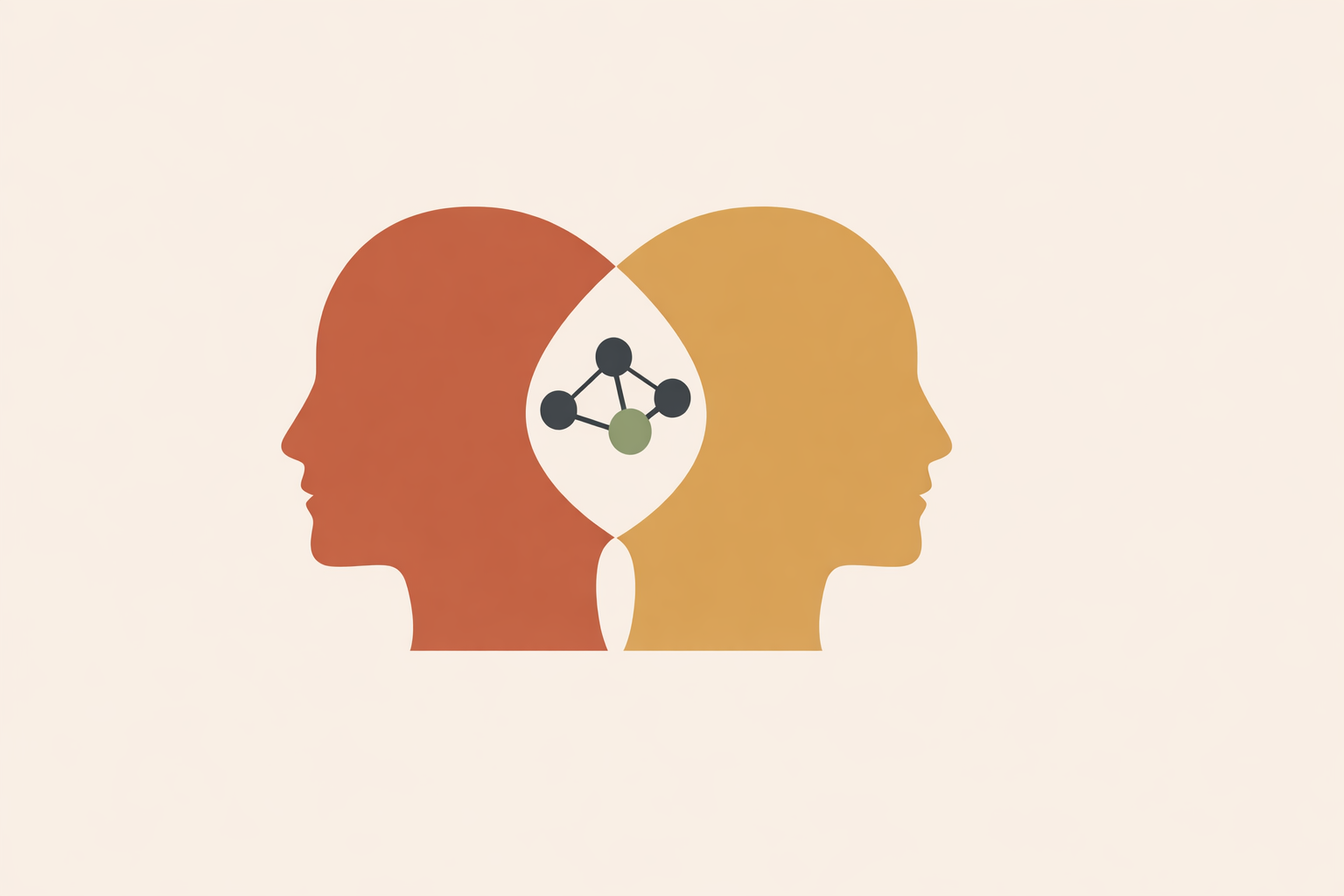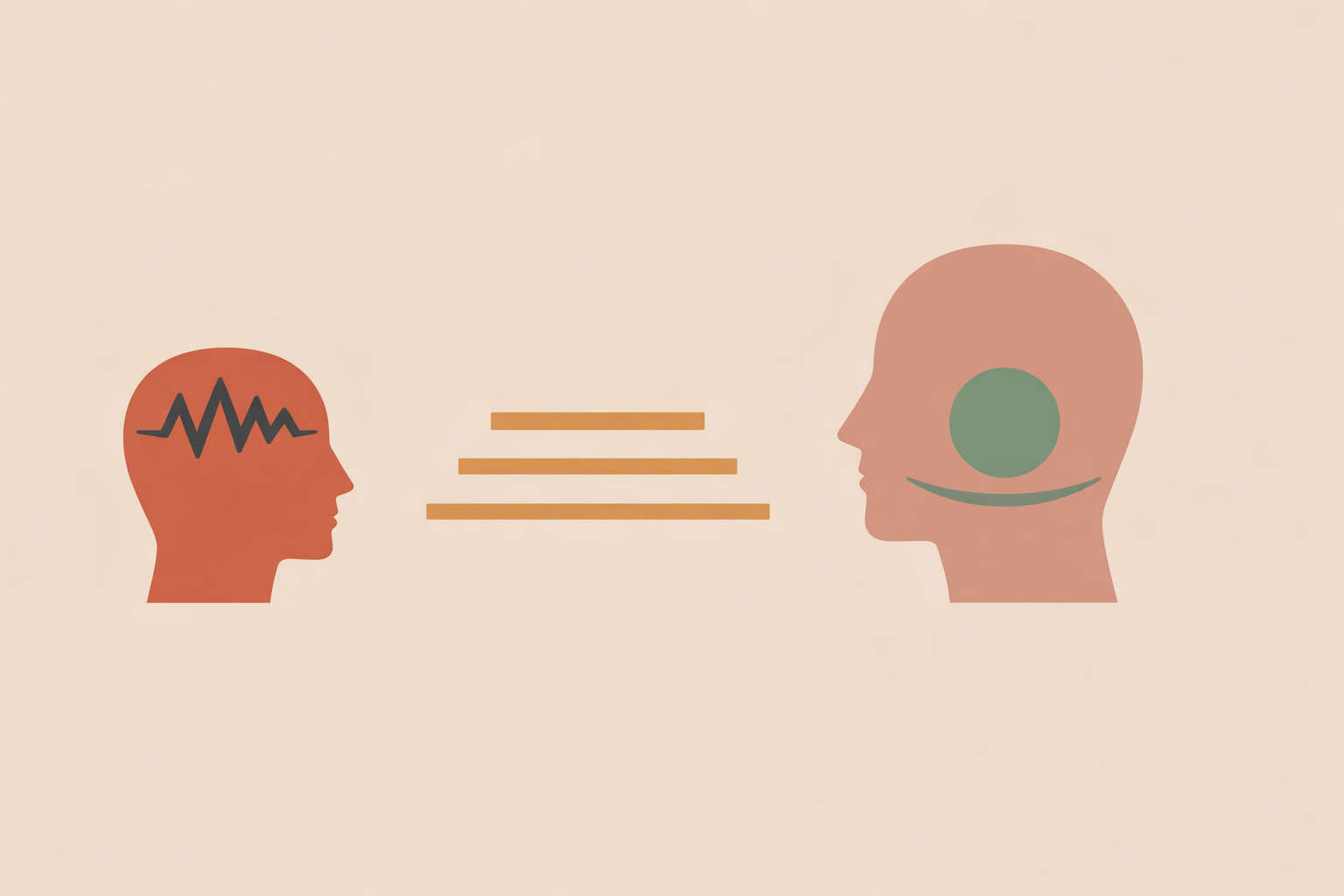
Every practitioner recognizes the moment a client’s system reacts before language catches up: a voice tightens, shoulders rise, the story narrows. You can almost hear the “I have to” logic forming; you can see the clench or the shutdown. Reframe too early and it bounces off; offer a tool too late and the reflex has already won. What reliably changes outcomes is a trained beat of space—available even under pressure—for both you and the client.
Meditation supports emotional regulation in a very practical way: it trains the pause between trigger and action. Over time it strengthens three capacities that translate directly into better choices—attentional control, body awareness, and decentering—while also settling the whole system. When clients (and practitioners) can witness the first surge without obeying it, more value-aligned options become possible.
Key Takeaway: Meditation trains a usable pause between trigger and action, so clients can notice early body cues, name what’s happening, and choose value-aligned responses. By strengthening attention, body awareness, and decentering—and adapting for rumination, trauma histories, or neurodivergence—reactivity becomes workable in real moments.
From reacting to responding in real sessions
Responding is a nervous-system skill, not a personality type. The aim is simple: help clients feel the first wave, slow it down, and choose what aligns with their values.
In-session, the shift is often visible. Breathing steadies. Hands unclench. A client says, “Anger is here,” and that naming cools the ember just enough to see options. Practices that gently track sensations, thoughts, and urges can create a pause between trigger and action—the hinge where reacting becomes responding.
Think of it like adding a small delay to an automatic system: the stimulus still arrives, but it no longer forces an immediate output. Some mindfulness-based commentaries describe increases in response latency, meaning there’s simply more time between what happens and what the person does next. That extra beat is where values can speak.
One of the most practical in-the-moment supports is gentle labeling—“sadness,” “tightness,” “urge to fix.” Learning to label experiences often reduces urgency and brings perspective back online. Many clients also experience this as the body settling, as mindfulness tends to calm the nervous system and widen the sense of choice.
Traditional teachers have said this for generations in plain language: meditation applies the brakes to the mind. Slow enough to steer—this is responding.
How meditation reshapes emotional regulation: ancestral wisdom and modern research
Traditional lineages developed meditation to transform our relationship with thought, sensation, and action. Modern research is now describing, in its own language, what those traditions have long trained: steadiness, clarity, and a kinder kind of control.
Ancestral roots of non-reactive awareness
Across cultures, elders taught practices that cultivate steadiness, non-judgment, and compassion—qualities that naturally moderate emotional storms. Many teachings describe meditation as training non-reactive awareness: the ability to feel fully without being driven by fear, urgency, or old scripts. Essentially, it widens the container so emotion can move through without taking the steering wheel.
Jon Kabat-Zinn captures the respect many practitioners hold for this inheritance, describing meditation as an intrapsychic technology refined over millennia—carefully shaped, human-tested, and meant to be lived.
What current research is showing
Contemporary findings often echo those older maps. The APA summarizes that mindfulness practices can alter brain regions linked with attention and emotion regulation. Mainstream health overviews also describe benefits like new perspectives on challenges, increased self-awareness, and more patience—exactly the capacities that support better choices in relationships, work, and self-guidance.
On the more repetitive, sticky side of emotion, reviews suggest mindfulness can reduce rumination and perceived stress. Newer work has also linked meditation with changes in deep brain areas involved in memory and emotional regulation—another way of saying what contemplatives have observed for a long time: practice changes how we meet life.
What this means is simple: ancestral insight and modern instruments are often describing the same terrain from different angles. A skilled practitioner can honor tradition while using research as an additional lens.
Three core skills meditation builds so clients can respond, not react
Most clients don’t need more theory—they need trainable inner skills. Meditation reliably strengthens three that support steadier choices: attention, body awareness, and decentering.
1) Attention: choosing where the mind rests
Attention is the steering wheel. When clients can place awareness on breath, sound, or sensation—and return when they drift—they’re less likely to be yanked around by every thought. Mindfulness research is associated with lower cortisol and quieter stress pathways, which many clients experience as, “I can think again.” Even 10–20 minutes of focused practice can soften the charge of a heated moment, which is why brief, guided pauses work so well in-session.
2) Body awareness: reading the dashboard
Emotions often broadcast through the body before the story arrives. Body scans and breath awareness help clients read early signals—tight throat, hot cheeks, buzzing scalp—so they can intervene sooner. Overviews connect body-scan practice with emotional steadiness and better cognitive functioning: the practical bones of regulation.
3) Decentering: thoughts are events, not commands
Decentering is the skill of recognizing “I’m failing” as a mental event, not a fact. It’s considered a key mechanism in mindfulness work, alongside attention regulation and perspective-taking. Syntheses often link decentering with less rumination and softer reactivity—because the mind no longer has to obey every headline it prints.
Or, as one teacher puts it, meditation is where we build the mental muscles of calm and insight. The point isn’t perfect stillness—it’s more skillful movement through real life.
Working with blocks: rumination, trauma histories, and neurodivergent minds
When meditation doesn’t land, it’s usually a fit issue—not a client failure. Rumination, trauma imprints, and neurodivergent attention simply call for different entry points.
When the mind won’t stop
High rumination can make early practice feel impossible: attention slips, frustration rises, and clients decide they “can’t meditate.” Some analyses suggest high rumination can blunt early gains in trait mindfulness, which helps explain why people drop off. The move here is not force—it’s accessibility.
Micro-practices can be the bridge: five breaths with a hand on the heart; a 90-second scan from jaw to feet; noting three sounds. As decentering and self-compassion strengthen, rumination often loosens, and longer practice becomes less intimidating.
Adapting for trauma and neurodivergence
For trauma histories, turning inward can feel like stepping into a place that doesn’t feel safe. Somatic-first approaches—orienting to the room, gentle movement, breath paced to comfort—are associated with increased parasympathetic activity and reduced threat anticipation in people shaped by early stress. Over time, mindfulness can also buffer adversity by offering new ways to meet activation without drowning in it.
For neurodivergent minds, “sit still and follow the breath” may be a mismatch. Many practitioners find more success with sensory-rich options like walking meditation, mindful fidgeting, or brief check-ins across the day. Mindfulness can be on-the-go, not limited to a cushion.
And whatever the adaptation: kindness first. As Pema Chödrön reminds us, practice is to befriend ourselves, not to perform meditation “correctly.”
Designing a meditation journey that helps clients respond, not react
Good design turns principles into lived change. Start small, build consistency, and layer skills so clients feel real progress—fast enough to stay engaged, steady enough to last.
From single practices to structured pathways
In a single session, it may be as simple as grounding with breath, practicing a two-minute “name it to tame it,” and closing with a values-based intention. These compact tools are linked with faster recovery from emotional spikes—especially useful when time and capacity are limited.
Across a series, you’re building a curriculum. The 8-week MBSR structure demonstrates why sequencing works: body scans, mindful movement, and breath-based practice reinforce one another, creating steady skill-building week by week. And you don’t always need long timelines to begin—brief protocols showing decreased intensity after a few short sessions highlight how quickly momentum can build with clear structure.
Over the long arc, repetition becomes a quiet superpower. Reviews note that ongoing mindfulness practice improves attention and stabilizes present-moment awareness—the foundation clients draw on when a real trigger hits. Sharon Salzberg’s framing is timeless: practice is a microcosm; what you rehearse in stillness becomes available in motion.
- Single session: 3–5 minutes grounding + 2 minutes label-and-breathe + 1 minute values intention
- 4–6 sessions: a skill cycle—breath steadiness, body scan, decentering phrases, mindful movement, real-life trigger practice, integration
- Ongoing: weekly touchpoints + daily 5–12 minutes + monthly reflection on what’s shifting
The throughline is simplification: loosening urgency, releasing recycled stories, and meeting what’s here without immediately trying to control it. As one teacher puts it, meditation is letting go of inner scripts so the present moment can be met more cleanly.
Bringing meditation into your practice—and your own life
Your presence is one of the strongest supports you bring. When your own steadiness is well-trained, your timing improves, your space feels safer, and your guidance lands with less effort.
Why your practice matters as much as your tools
Clients learn as much from your regulation as from your words. Keep exploring your own habitual reactions—the sensations, thoughts, and impulses that flare—so you can model “choice over reflex” in a grounded way. Many overviews connect mindfulness with greater self-awareness and presence, which often shows up as clearer boundaries, better pacing, and more warmth.
Skilled facilitation is felt in the details: slower speech when the room heats up, a steadier breath, and a comfort with silence that doesn’t rush the client away from what’s true. Guidance on mindful communication emphasizes how the ability to stay present shapes outcomes.
Research on helping relationships points in the same direction. Clients’ ratings of a guide’s presence are closely tied to perceived change and relationship quality, and broader findings identify the relationship as a key predictors of outcomes. Many practitioners describe clients “borrowing” steadiness until they can access it themselves—an everyday description of co-regulation that fits both lived experience and relational theory.
This is also where training and community can sharpen the work. Naturalistico’s Meditation Coach Certification is designed for practitioners who want personal depth and practical tools—curriculum that strengthens your inner practice, modern UX that supports real client work, and a community rooted in integrity, cultural respect, and ongoing evolution. It’s not about collecting techniques; it’s about embodying them responsibly.
Keep your own practice simple and honest. As Annamalai Swami points out, when we stop claiming each thought as “me,” we discover we are the consciousness in which thoughts come and go. And as Kathleen McDonald reminds us, meditation is being totally honest with ourselves. That honesty is where steady change begins.
Conclusion: weaving meditation for emotional regulation into your work
Meditation for emotional regulation offers a deeply practical gift: the lived ability to pause, sense clearly, and choose responses aligned with values. Traditional lineages mapped this territory with care; modern research often affirms what experienced practitioners have long observed.
Mainstream overviews describe how meditation builds the ingredients of responsiveness, including skills to manage stress, self-awareness, patience, and perspective. Psychological associations also summarize evidence that mindfulness can reduce worry and knee-jerk reactivity, while broader reviews link practice with balanced mood and less rumination—exactly the capacities clients want when life gets loud.
To keep the work effective, let it be well-designed: small practices clients can actually repeat, a pathway that layers skills, and a steady dose of compassion. And in the background, hold a few simple cautions: go gently with trauma histories, adapt for neurodivergent attention styles, and encourage clients to seek appropriate professional support when needs are beyond the scope of coaching.
Above all, remember the spirit underneath the skills. As Pema Chödrön says, meditation is befriending who we already are. From that friendship, responding becomes more natural—and reactivity loosens its grip.
Train Clients to Pause
Deepen these regulation skills with Naturalistico’s Meditation Coach Certification.
Explore Meditation Coach Certification →