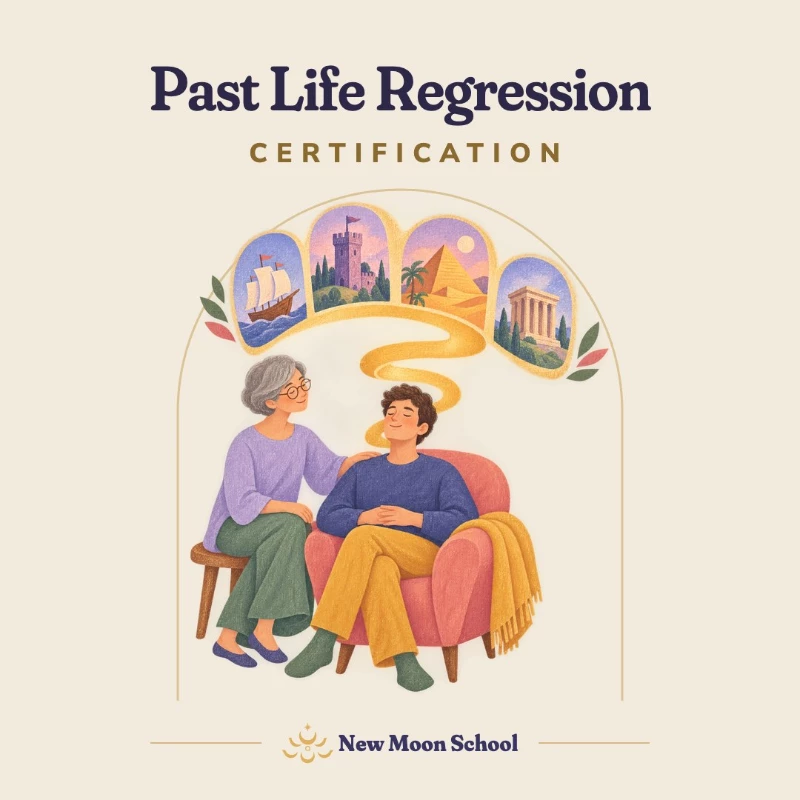
Most practitioners eventually meet the same impasse: a client’s pattern keeps looping despite good mindset work, journaling, and parts-informed coaching. The emotional charge feels older than the biography—fear with no clear origin, relationship pain that survives every reframe, a body-memory response that outlasts every plan. When “more technique” stops helping, meaning often becomes the lever that restores movement.
Past-life remembering can be a client-led way through that plateau. With clean consent and solid integration, regression offers a story clients can work with—one that softens shame, widens choice, and translates insight into concrete behaviors. It doesn’t require anyone to adopt a fixed belief; it invites personally resonant imagery clients can test in the present, then turn into real-world experiments.
Key Takeaway: When patterns feel “older than biography,” past-life remembering can provide a client-led, meaning-based frame that restores choice without enforcing belief. The real value comes from careful facilitation and integration—using the client’s language, grounding, and follow-up experiments—so imagery becomes measurable changes in behavior, relationships, and symptoms.
Why practitioners turn to past-life regression for client growth
Past-life work is often chosen for one simple reason: it helps when a client’s repeating pattern won’t budge with familiar tools. The aim isn’t to convince anyone of a worldview—it’s to offer a meaningful story, emotional release, and a practical next step, without shame.
When journaling and parts work have already brought insight, guided trance can open a deeper layer of meaning that the client can actually feel. Academic overviews describe past-life regression as guided hypnosis that accesses inner imagery many people experience as memory, blending reincarnation perspectives with modern change work.
In practice, clients tend to seek this when they feel stalked by long-standing fear, recurring relationship pain, or a vague unease they can’t “think” their way out of. Reviews of case reports note lasting improvements in emotional balance and psychosomatic concerns after sessions.
Practitioners who value tradition don’t need to prove a cosmology to use this tool responsibly. As James Pandarakalam suggests, a reincarnation perspective can offer insight into personality and behavior that other frameworks may not easily explain. What matters most is what the client discovers—and how that discovery restores choice in the present.
When familiar tools no longer explain client patterns
You can often feel the turning point: the client’s story suddenly seems “older” than their life history—fear without an origin, shame without a cause, grief that doesn’t match any known event. One accessible description captures this as feeling “older than biography”, and that recognition alone can open a new, gentler path forward.
Seeing recurring patterns through a past-life lens
When a pattern feels older than this lifetime, a past-life frame can give it context—and context often creates compassion. Instead of “What’s wrong with me?” the question becomes “What is this pattern trying to protect, teach, or complete?”
What often shifts first is the narrative: persistent anxieties and emotional blocks can start making sense when clients link them to traumatic events perceived as occurring in other lifetimes or timelines. Put simply, coherence helps the system settle. Many clients experience this as a chance to recalibrate fear responses—not by forcing positivity, but by finally understanding the alarm.
Relationships are a common doorway. Regression can illuminate repeating relationship themes—betrayal, abandonment, power struggles—so clients can recognize the pattern sooner and stop reenacting it. For some, reframing “bad luck” as a longer learning arc helps them guide fulfilment in everyday choices.
This lens also tends to soften self-judgment. Many clients report more compassion toward themselves when the pattern becomes a story with roots, rather than a personal defect. Importantly, this can work even for clients who don’t hold a belief in reincarnation; the value is in meaning and integration.
Some practitioners also take encouragement from reports of children’s spontaneous memories: overviews describe phobias matching those modes of death in cases where children reportedly recalled violent endings. Adults don’t need external verification to benefit, but these accounts highlight how deep—and specific—an imprint can feel.
As one teacher put it, “All the records of your past lives are contained within your own mind.” Whether a client treats that as literal memory or rich inner symbolism, the practical effect can be the same: a coherent story that gives them back authorship.
How past-life recall supports real change in practice
Past-life work becomes genuinely useful when it moves beyond an interesting session and turns into lived change. The foundation is client-led discovery: the client’s language, the client’s meaning, the client’s choices.
Mechanically, sessions are straightforward: guide a focused state, invite sensory-rich exploration, and let the client’s descriptions lead. Academic surveys describe regression as trance-based access to subconscious memories or vivid inner imagery. Pandarakalam describes regression as a distinct approach that moves through remembered time with an emphasis on felt sense rather than analysis.
Strong work here respects sovereignty. Helpful descriptions emphasize sessions that are self-guided and client-enriched, with the practitioner holding steady space and asking clean, non-leading questions. Many reported cases also note that trance depth supports recall, often bringing more detail the client can work with.
Here’s why that matters: story is a behavior-change engine. Case summaries suggest regression can support clearer goals when a client adopts a meaningful identity and then lives it forward. With follow-up coaching, it can supercharge motivation by turning insight into action.
A simple structure helps sessions reliably land in real life:
- Before: Clarify the focus pattern, set intentions, and agree on a grounding plan.
- During: Invite imagery, emotions, and body sensations; reflect language back verbatim; avoid inserting meanings.
- After: Distill 1–3 lessons and 1–3 behavioral experiments for the week that enact the new identity.
Easing fear, phobias, and body memory with past-life stories
Many clients come to regression because of fear that doesn’t respond to reasoning. Past-life narratives can make unnamed alarm feel knowable, and what’s knowable can often be worked with—moving a client from reflex into choice.
Practitioners commonly use regression for recurring dynamics, phobias, and “somatic loops” (body-memory patterns). Case-based discussions suggest it may reveal root causes of phobias, anxiety, or long-held emotional pain, especially where clients feel current-life explanations don’t fully fit.
Across many accounts, clients connect specific phobias—water, heights, enclosed spaces—to scenes uncovered in regression, and processing that imagery may reduce specific phobias. Essentially, the goal isn’t to prove a timeline; it’s to give the nervous system a coherent reason for its alarm so it can finally stand down.
This “meaning-making” effect shows up in survey findings too: clients often link symptoms to perceived traumatic events, and many report that understanding the message of a symptom helps them make better choices in daily life.
Some also pursue regression for the body itself—chronic pain or persistent sensations when other approaches haven’t helped. Reported outcomes tend to be stronger when sessions focus on specific symptoms rather than broad intentions.
Survey-based reports describe people letting go of chronic lifelong symptoms such as phobias and recurrent nightmares after working through past-life material. Some guides explain the change as deep emotional processing: what was wordless and unconscious becomes felt, witnessed, and integrated.
A simple structure can help that shift land:
- Name the loop: “When you sense X, your body does Y.”
- Witness the origin: Invite the first moment the pattern appears—this life or another—then feel it fully with resourcing.
- Re-script the body: Pair breath, touch, or gentle movement with a new belief that fits the client’s story.
- Rehearse choice: Practice one small real-life moment where the new response is enacted this week.
Past-life gifts, purpose, and spiritual development
Regression isn’t only about easing distress. It can also help clients remember strengths, clarify direction, and feel a steadier connection to their own path—like finding an old map you didn’t know you still carried.
Many clients rediscover strengths and skills they can develop now: affinities for crafts, leadership, or the helping arts that suddenly feel familiar and reachable. Traditional perspectives often see “talent” as the fruit of long practice; regression can help clients relate to their abilities as earned and cultivated, not random.
This recognition often brings priorities into focus. Past-life work can leave clients with renewed meaning around values, boundaries, and what they’re ready to commit to. The most grounded sessions keep that spiritual dimension practical: insight becomes choices, schedules, conversations, and habits.
Some people also report a wider context for loss, including that they grieve less profoundly after regression experiences. Others feel re-inspired toward daily disciplines—meditation, chanting, service—that support continuity and meaning.
To anchor purpose after a session, questions like these help:
- Which strength from the story wants practice this month?
- What boundary honors the lesson you reclaimed?
- Where can you create a simple ritual that reminds you of this longer arc?
Ethical, grounded past-life practice
Integrity is the container that makes this work supportive and effective. Lead with consent, humility, and outcomes—not belief.
Start with autonomy: invite clients to explore their own imagery and meanings, and avoid imposing interpretations. Responsible guides emphasize client empowerment—the practitioner facilitates; the client discovers.
Next, name the terrain. Regression can surface intense emotion, so agreements for resourcing and integration matter. Many practitioners highlight informed consent and emotional safety as foundational.
Finally, be honest about evidence while staying rooted in lived results. Some ethics writers describe regression as not evidence-based in a conventional biomedical sense, and hypnosis scholars note that verification attempts have largely not confirmed literal past-life memories. At the same time, case-based accounts report meaningful changes when clients integrate insights into daily life, including decreases in anxiety, psychosomatic distress, and unresolved grief.
A traditional practitioner can hold both truths without flinching: this work may not satisfy every conventional standard of proof, and it can still be deeply useful when it’s client-led, well-held, and followed by real-world integration. The question remains practical: does it support steadier well-being, wiser choices, and kinder relationships?
Regression tends to work best as one thread in a woven approach—paired with grounding skills, values-based action, and supportive community. Reports suggest greater improvements when spiritual exploration is integrated thoughtfully with evidence-informed practices.
Survey data from regression settings also indicate improvements in physical and emotional symptoms for many people who felt stuck after other avenues. Still, outcomes vary, and the most grounded stance is to treat regression as a mixed-evidence modality that can be powerful for some clients and simply not a fit for others.
Practical ethical checklist for sessions:
- Consent: Clarify goals, possibilities, and grounding plans; obtain explicit yes.
- Non-imposition: Offer past-life framing as optional; hold multiple worldviews with respect.
- Safety: Build resourcing first; agree on stop signals and aftercare.
- Integration: Convert insights into 1–3 concrete actions; schedule follow-up.
- Collaboration: Encourage clients to keep supportive allies (coaches, elders, trusted mentors) in the loop.
- Outcomes: Track agreed markers for 4–8 weeks (e.g., fear intensity, conflict frequency, self-compassion) and adjust based on real-world feedback.
Conclusion: integrating past-life remembering into holistic client work
Practitioners turn to past-life remembering for the same reason elders have always turned to story: it restores meaning where logic alone can’t reach. When a client’s pattern feels older than their biography, regression offers a frame that honors tradition, welcomes emotion, and reopens the door to change.
Kept simple, the process is clear: invite deep relaxation, let the client’s imagery lead, and translate lessons into action. Reports describe benefits when insights are integrated into daily choices, and some participants say regression helped them resolve issues quickly and effortlessly compared with prior attempts.
Clients don’t need a practitioner to prove a cosmology; they need a steady guide who can hold the story with respect, avoid imposing meaning, and keep outcomes real. Used with care, past-life remembering becomes one more wise tool—rooted in tradition, responsive to the present, and devoted to genuine growth.
Explore Past Life Regression
Deepen your client-led regression skills with Past Life Regression, turning meaning-making into grounded integration and measurable outcomes.
Explore Past Life Regression →