In wet regions, even practitioners who love straw bale can hesitate. Months of rain, wind-driven storms, and saturated soils can turn a clean drawing into a messy site—puddles at the base, crews rushing to stack bales before the roof is on, and “small” details getting value-engineered away. Inspectors worry about mold and vapor traps; clients wonder what happens after the third winter when the wind shifts. When moisture is ignored, straw bale can end up with vulnerable assemblies—and an unfair reputation.
The more reliable framing is simple: build by thinking like water. A drainage-first, vapor-open approach—elevate, deflect, and drain, while letting walls breathe—turns straw bale from fragile to resilient in rainy climates. With the base, roof geometry, plasters, and openings tuned to move liquid water out and let vapor escape, field monitoring suggests bale buildings can perform reliably in real weather and stay within safe moisture ranges.
Start by watching the site during actual storms. Then translate what you see into lifted walls, disciplined roof and plaster choices, and clean, inspectable details around openings and services. Finish with stewardship: small, regular tasks that keep the whole system forgiving—so straw bale stays a confident choice in wet climates.
Key Takeaway: Straw bale holds up in wet climates when you design for water movement: lift walls above splashback, shed rain with generous roofs and detailing, and keep assemblies vapor-open so walls can dry. Prioritize disciplined sequencing, careful openings and penetrations, and simple seasonal maintenance to prevent small wetting events from becoming long-term moisture problems.
Reading your land in wet climates: tracing water before you touch a bale
Before you sketch a wall or price a bale, go outside in real weather. Let the land show you where water wants to travel, where wind pushes rain sideways, and which routes can carry moisture safely away.
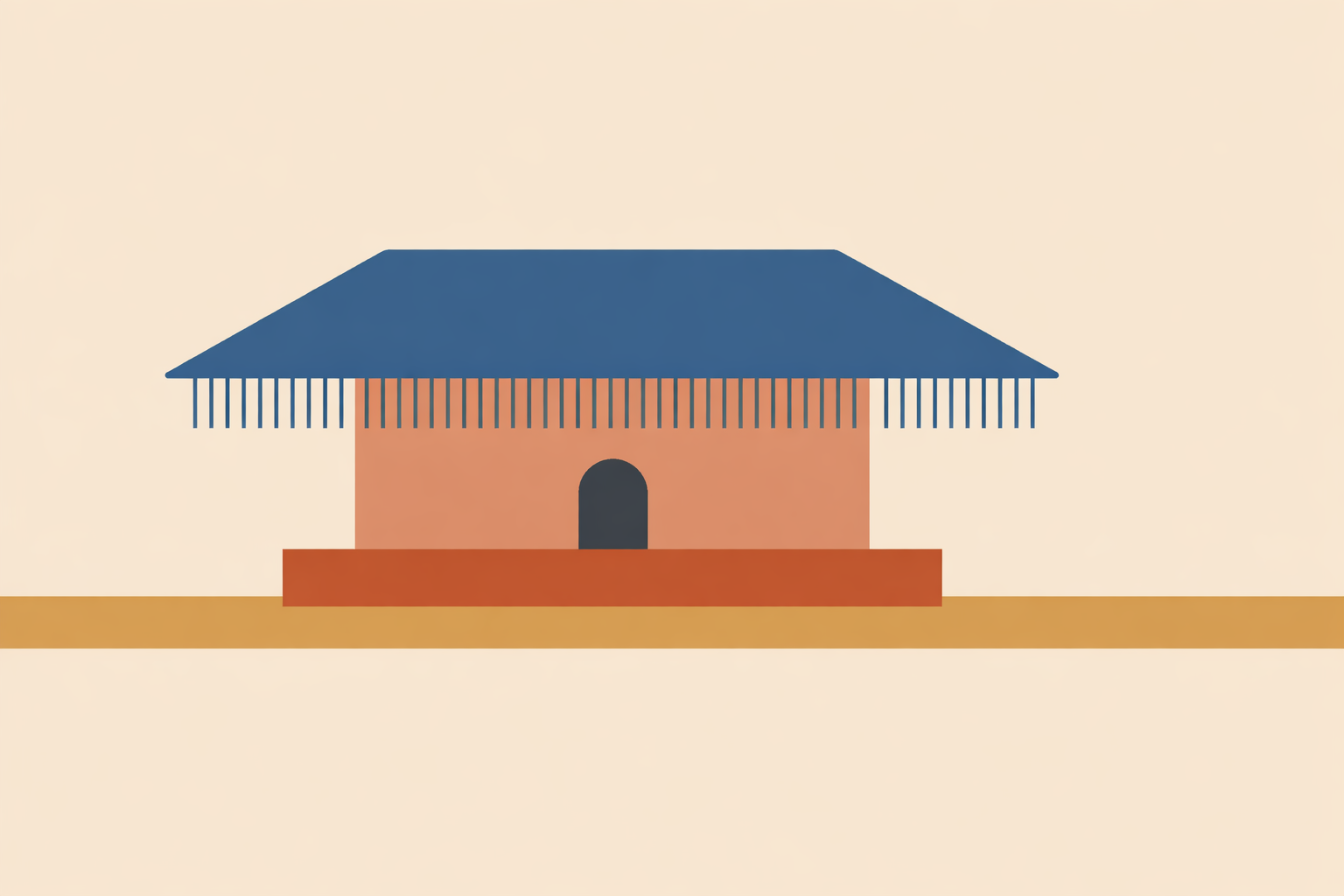
Following rain, wind, and slope like an elder builder. Watch a few storms. Notice where puddles form first, where dampness lingers last, and where runoff cuts channels. In wet climates, wind-driven rain can be as important as vertical rain, so identify the most exposed wall faces early. Then design protection into the shape: experienced builders often favor generous overhangs—around 2 feet on an 8-foot wall—so most storms never reach the plaster.
Site reading can also support comfort and energy sense. Thick walls can stay dry and still welcome winter sun when orientation, slope, and storm paths are considered together—an approach often used in mixed-climate designs.
Form plays a role too. Curves and rounded plans can soften wind pressure and encourage water to move around the building rather than catch on corners—something many builders demonstrate in circular layouts.
There’s a values layer here as well. Natural building asks you to listen first, then respond with care—often using local materials and producing far less emissions. Many builders describe it as a blend of hands-on experiment and artistry. When water becomes your teacher, the finished space tends to feel grounded—because it’s shaped by what the place actually does.
Lifting the walls: foundations and toe-ups that keep bales out of the splash zone
Once you’ve traced water’s routes, the next mission is to create a dry island. A well-detailed base—foundation, plinth, and toe-up—keeps bales well above splashback and breaks capillary pathways that can wick moisture upward.
From grade line to bale line: creating a dry island for your walls. Think in three protections. First, direct surface water away with grading and drainage so flows keep moving downhill and off-site. Second, lift the first course: placing bales 18–24 inches above final grade is a time-tested wet-climate move.
Third, detail the toe-up for real-life accidents. Many builders add another 3 inches above the foundation using a wood curb or compression box as a buffer from incidental leaks or cleaning water. Through it all, keep bales away from soil; they should never be in direct contact with earth.
Moisture-wise building also means avoiding details that invite condensation or uneven temperatures in the base. Some practitioners avoid metal rebar pins and skip gravel bases that can create thermal bridging without delivering meaningful insulation.
Sequencing matters just as much as materials. Many seasoned crews won’t set bales until roof structure, curb, top plates, and openings are ready—so straw isn’t exposed before any bales belong on site. And as Ianto Evans has reflected from decades of hands-on work, what you live with over time teaches you how early choices shape dryness and durability over decades.
Lift the walls, break wicking paths, and build the hat first. That single discipline removes a large share of long-term moisture risk.
Keeping straw dry and breathable: plasters, overhangs, and vapor-smart walls
Straw bale walls thrive when liquid water is kept out and water vapor can move through. Think of it like a wool coat: it can handle changing conditions when it’s protected from soaking and allowed to dry.
Clay and lime skins that shed rain but let walls breathe. In wet regions, the difference matters: water from rain or leaks must be excluded, while water vapor should be able to migrate without getting trapped. That’s why natural builders often choose breathable finishes like clay and lime, and avoid cement stuccos that can hold moisture where you least want it.
Traditional practice has long favored these plasters, and modern material understanding helps explain why. Clay is hygroscopic—it can absorb moisture when the air is humid and release it as conditions dry, supporting steadier indoor humidity. Testing has shown clay plasters can reduce humidity compared with non-clay surfaces. Lime brings different strengths: a naturally high pH that discourages surface biological growth while staying vapor-open. Research on lime-based renders notes this environment can limit microbes on the surface, supporting durability.
Above, the roof is your first line of weathering. Deep overhangs, clean drip edges, and well-placed gutters quietly do constant work—especially when they’re sized for the wind and rain patterns you mapped during site reading.
“With thoughtful design, local materials, and right-sized spaces, we can build long-lasting, nontoxic places to live and work that actually help in the wider climate effort and support daily wellbeing.” living well
Breathable skins and a water-wise roof are the practical path to that promise.
Detailing windows, doors, and plumbing so your bales stay protected
Most moisture trouble begins where the shell is interrupted—around openings and penetrations—not in the broad field of the wall. Detail these areas with redundancy so water has nowhere to settle and no easy route inward.
Designing openings and services so water has nowhere to hide. Treat every horizontal surface as a slope. Window sills should pitch outward, extend beyond the plaster, and include a drip kerf. Add a sloped sill pan so any incidental water is directed to the exterior. Then pair overhangs with careful window flashing, and consider small eyebrow roofs where exposure is high.
Next, protect the weak points with layers that still allow drying. Many builders use redundant barriers in water-collecting zones. Where timber frames meet bales, it’s common to wrap wood in a breathable membrane, then use burlap and lath for plaster key—often avoiding metal lath that can rust and weaken bonding over time.
Keep plumbing straightforward and accessible. Supply and waste lines are best kept in interior chases or service walls rather than buried in straw—so any future work is simple and disruption stays minimal. And wherever possible, preserve the elegant simplicity of a traditional bale wall—plaster, bales, plaster—without plastic sheeting that can block vapor movement.
“The most effective way to learn to build is by doing it—under the proper conditions and with experienced guidance.” learn by doing
In wet climates, “proper conditions” often means calm sequencing, protected materials, and details you can inspect with confidence.
Tending a living straw bale building in a wet climate
A straw bale studio behaves like a living system: care is usually light, but it’s consistent. The aim is to keep water pathways obvious and functioning, refresh sacrificial finishes, and respond early to small signals.
Catching early moisture signs and teaching your clients what to watch for. Seasonal walkarounds go a long way. Watch for soft spots, discoloration, base spalling, or changes in grade that redirect water toward the walls. Small interventions—regrading, extending an eave, adding a splash plinth, refreshing limewash—often keep things on track with light maintenance.
It also helps to understand straw’s working range without becoming number-obsessed. Technical guidance notes straw’s moisture tolerance is around 20% by weight before decay risk rises. What this means is: a well-built wall can buffer damp spells and then dry back out—especially with plasters that continue to buffer humidity over the building’s life. Monitoring of occupied bale buildings has also shown walls can stabilise humidity and support comfortable temperatures with modest heating inputs.
Plan finish upkeep as a normal rhythm, not a defect. Limewash is intentionally sacrificial and typically needs refreshing every few seasons. By contrast, compatible mineral silicate paints can last much longer while staying vapor-open. Many practitioners also notice gentle humidity modulation in bale-and-plaster rooms—a quiet comfort during long wet seasons.
- Quarterly: Clear gutters, check downspouts and splash blocks, sweep debris away from plinths, and regrade any low spots near the base.
- Biannually: Inspect flashing lines at windows and doors, touch up hairline plaster cracks, and refresh limewash before the wet season.
- After major storms: Walk the perimeter, check beneath sills and along the toe-up for standing water, and confirm drains are flowing.
- Annually: Invite a trusted natural builder to walk the site with you, compare notes, and choose a short list of iterative improvements.
Share this stewardship mindset with everyone who uses the space. When visitors step into a straw bale studio, a quick tour of the “hat and boots,” the breathable walls, and the simple upkeep rituals helps the whole community learn how to live well with water.
Conclusion: weaving drainage-first straw bale into your wet-climate practice
In rainy regions, straw bale becomes dependable when you design as if water is always present—and always moving. Read the land first. Lift the walls above splashback, give the building a generous roof, and choose plasters that shed rain while letting vapor pass. Detail openings and penetrations with care, and keep services accessible so future changes don’t become wall surgery.
That’s the essence of a drainage-first straw bale studio: dry where it needs to be, breathable where it should be, and comfortable through long seasons. For practitioners who value traditional building wisdom alongside modern observation, it’s not just a construction strategy—it’s a way of working that respects place, materials, and time.
If you’re applying this to your own design, begin with a rainy-day site walk. Mark where water gathers, where wind pushes rain, and where runoff wants to go. Sketch three ways to move that water past the building before you commit to wall details. From there, decisions tend to simplify—and the project starts to feel quietly inevitable.
Build Better with Natural Building
Apply drainage-first, vapor-open detailing with confidence in the Natural Building Course.
Explore the Course →