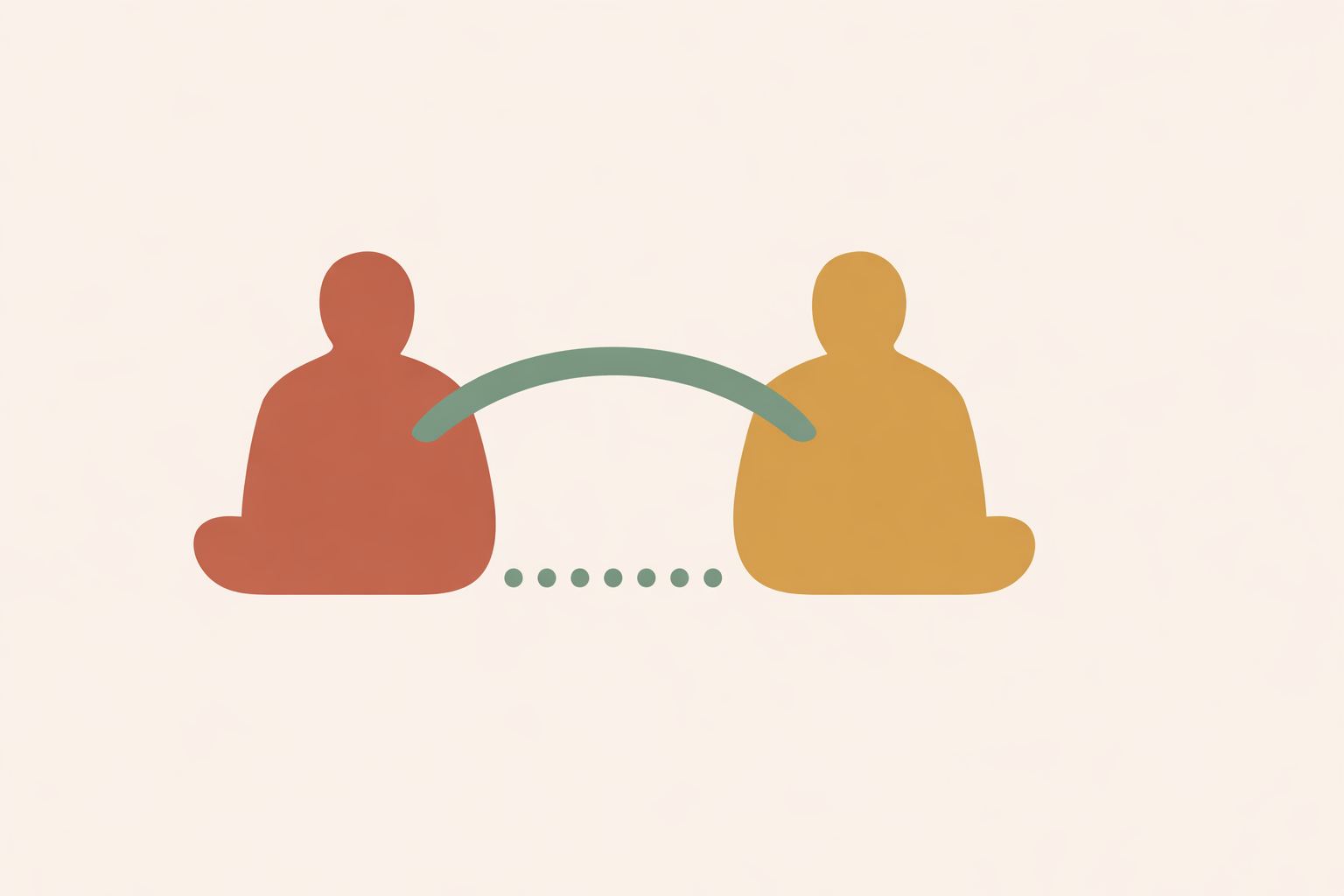
When practitioners support older adults, they often see strong longevity plans stall for a reason no tracker can capture: the person feels alone. Energy may improve and movement practices may become steadier, yet the day can still feel empty—or crowded, but unseen. Usually, it’s not a lack of “touchpoints.” It’s the felt gap between the connection someone wants and the contact they actually experience. When that gap is treated as secondary, progress stays fragile. When it’s brought to the center, coaching becomes more humane—and more effective.
Key Takeaway: Loneliness is a central longevity factor because it reflects the felt gap between desired and actual connection, not just contact frequency. The most effective support starts by mapping roots and barriers, then builds right-sized, repeatable connection through predictable rhythms, low-tech initiation tools, meaningful roles, and simple environments that reduce friction.
Why loneliness belongs at the heart of longevity coaching
Longevity is not only about routines and physical capacity. It’s also about whether daily life feels connected enough to be worth sustaining. For older adults, connection shapes energy, everyday function, and quality of life—so loneliness belongs in the main plan, not at the margins.
Loneliness is subjective. Someone can live alone and feel content, or live in a busy home and feel profoundly disconnected. In coaching terms, the focus is the felt gap between desired and actual connection—not just the number of calls, visitors, or groups. Social isolation is the objective lack of contact; loneliness is the experience of not feeling met within the contact that exists.
The scale is real: widespread loneliness in older adulthood is closely linked with lower well-being and reduced everyday functioning. And it often grows through ordinary transitions—retirement, bereavement, relocation, or changes in mobility—that quietly shrink a social world over time.
Traditional communities have long understood something modern life often forgets: elders thrive when they’re woven into daily roles. Many cultures held elders as storytellers, keepers of memory, and organizers of continuity. We can’t copy those structures wholesale, but we can borrow the logic—make reciprocity normal, roles visible, and gathering predictable.
“From a systems point of view, adding years to life without adding life to years is a failure,” adds life Dr. John Beard.
“By 2030… people aged 60 and older will outnumber children under 10,” notes Dr. Linda P. Fried.
Building connection capacity isn’t a side project. It’s part of aging well.
Understanding the roots of loneliness before reaching for tools
Before adding groups, calls, or apps, it helps to understand the terrain. Loneliness has roots, and those roots deserve respect.
Often, the story includes life transitions that rearranged the day. It may also include sensory changes, because hearing and vision changes can make group socializing tiring. In real life, barriers may also include fatigue, transport, finances, language, grief, and uncertainty around technology.
Many older adults hesitate to initiate because of fear of burdening others. Others hold back due to embarrassment around hearing or memory shifts. Shame tightens the knot; permission and normalization loosen it.
Early conversations set the tone. Normalize the experience: loneliness is common, and it’s not a personal failure. Then map supports from the inside out—comfort with initiating, familiar neighbors, family rhythms, nearby community spaces, and existing routines that could become anchors.
Traditional societies also tended to hold a shared responsibility to check in on others, especially elders. The modern version may be simpler, but the principle stays strong: predictable touchpoints, nearby spaces, and meaningful roles.
As Dr. Gabrielle Lyon puts it, “One of the biggest mistakes… is ‘programming for the 30-year-old they used to be.’ Longevity coaching starts when we coach the physiology in front of us,” a reminder to meet today’s capacity, not yesterday’s identity (coach the physiology).
Coaching right-sized connection with small, repeatable steps
Once the roots are clearer, the next step isn’t intensity—it’s precision. The most sustainable plans start small enough to succeed.
Many practitioners teach right-sized connection: contact that matches today’s energy, confidence, and rhythm. Instead of “join three groups,” choose one repeatable action—a single call after breakfast, a five-minute porch chat, a short walk with a neighbor, or one message every Friday. Over time, these kinds of weekly strategies, along with repeating micro-steps, tend to build more connection than occasional big pushes.
Predictability matters as much as size. Predictable contact creates a steady baseline—a felt floor that makes the week easier to live inside.
Think of it like tending a small garden: regular watering beats rare floods. Many traditional communities relied on small daily acts of recognition—greetings, passing visits, shared preparation. We’re not inventing something new; we’re restoring rhythm.
And, as Dr. Wendy Wood reminds us, “We underestimate how much behavior is driven by environment, not willpower.”
- Choose one micro-step: after-breakfast call on Tuesdays, one voice note on Fridays, one short library visit, one greeting during a daily walk.
- Keep the action modest: five to fifteen minutes is often enough at first.
- Track completion simply: one tick on a calendar is enough.
Low-tech tools that make connection easier to start
Low-tech often works best. Phone calls, paper calendars, visible prompts, and simple scripts reduce hesitation and make contact easier to initiate.
Initiation is frequently the hardest part. Environmental cues and simple planning can reduce friction and help someone begin. One of the most practical supports is a small “Who, When, How” card.
- Who: write three names or places.
- When: tie contact to a familiar routine.
- How: choose one channel—call, text, voice note, doorstep hello.
Scripts melt awkwardness. Keep them warm, brief, and repeatable.
- “Hi, I’m making my Wednesday calls. How’s your week?”
- “Are you up for a 10-minute walk tomorrow after breakfast?”
- “Thinking of you—no reply needed if you’re busy.”
For many older adults, the phone still carries the day. Apps can feel heavy; a call feels familiar. Paper calendars do more than schedule—they make progress visible, and visible tracking often builds confidence and clarifies the next step.
Buddy systems can help too, especially when they’re specific. “Tuesday at 3?” works better than “sometime soon.” One person, one time, one channel.
Activity-based and culturally rooted ways to build belonging
Many older adults connect more easily by doing something together than by sitting down to “socialize.” Shared activity lowers pressure, and conversation can arise naturally.
Activity-based connection often feels safer at first: gardening, cooking, music, crafts, puzzles, devotional singing, short walks, or helping prepare a shared space. Essentially, it’s side-by-side belonging.
Purpose matters, too. Older adults who step into purposeful roles often regain connection quickly. The role doesn’t need to be big: greeter, tea steward, herb tender, song chooser, story collector, table setter.
Here’s why that matters: reciprocity supports dignity. Most elders don’t only want to receive—they want to contribute, offer, remember, teach, and be useful.
Draw on the culture that formed the client. Shared meals, storytelling, seasonal observances, songs, language, and craft traditions can hold identity in later life. Invite these respectfully, never impose them, and avoid borrowing traditions in a superficial way.
Respectful, two-way intergenerational contact can be especially powerful when it’s genuinely mutual. Skills can move both ways: recipes for tech help, stories for practical assistance, language for company, craft for companionship.
As one lead educator observed, the real shift comes when professionals “stop chasing quick transformations and start thinking in decades.” Programming changes when the aim is a 90-year-old still doing what they love—steady, human scale, and rooted in community.
- Role ideas: weekly greeter, tea steward, seed starter, music sharer, memory-keeper.
- Group ideas: garden round, song circle, market walk, bilingual chat table, craft hour with younger families.
Designing environments that make connection more likely
Good connection plans don’t rely on motivation alone. They use environment, routine, and proximity to make contact easier.
First, anchor social contact to what already happens. A call after tea. A library stop after the Tuesday walk. A message after watering plants. Anchoring to routines improves follow-through because less has to be decided in the moment.
Second, use visible cues. Numbers on the fridge, reminders by the kettle, a printed list of nearby events by the door, or a note in a handbag can all make initiation lighter.
Third, favor what is near and familiar. Neighborhood hubs—parks, libraries, faith or cultural spaces, small markets—support repeat engagement because they reduce travel burden and increase recognition. In a modern way, they can echo the steadiness once offered by village squares.
- Connection stacking ideas: water plants and send a photo to a friend; morning tea and call a cousin; evening dog walk and greet one neighbor; Sunday meal prep and share one portion.
Using digital connection without overwhelm
Digital tools can extend human contact, but they shouldn’t replace it. Keep it simple, and add technology only when it genuinely reduces friction.
Digital inclusion matters more each year because family communication and community organizing often happen online. Still, accessibility comes first: large buttons, clear audio, few steps, familiar contacts.
For homebound or distant older adults, video calls and moderated groups can be supportive when they’re welcoming, easy to join, and not overstimulating. Often, plain phone calls and simple text messages remain the best first layer.
Basic safety belongs in the plan as well. Older adults face meaningful fraud risks online, so keep guidance practical: avoid unknown links, stick to known contacts, and use a simple “if unsure, don’t click” rule.
What about AI companions? Some people may feel comforted in the short term. But if someone begins to rely on them heavily, real-world closeness can start to feel further away by comparison. Used carefully, they may serve as a bridge; used uncritically, they can become a substitute for the human contact the plan is meant to strengthen.
For clients who enjoy devices, wearables can offer prompts and feedback. As Dr. Matthew Walker notes, “Wearables have changed the game” by giving real-time feedback. If a device adds stress or noise, paper and phone are often the wiser path.
- Digital starter kit: one-tap favorite contacts, large icons, one bookmarked group link, and one clear safety rule.
A simple weekly coaching loop for loneliness in older adults
Keep the plan gentle: one week, one or two actions, then a straightforward review and adjustment.
A practical loop looks like this: notice the feeling, map the barriers, choose one support, test it for a week, then refine. Consistency builds stronger connection than infrequent grand gestures. Over time, those calendar ticks start to tell a different story.
- Week 1 example: Tuesday 10-minute call after breakfast; Friday 15-minute library visit after a walk.
- Support tool: “Who, When, How” card on the fridge.
- Track: one tick after each action.
- Review: What felt easiest? What snagged—time, transport, confidence, noise, timing?
- Refine: adjust the plan, not the person.
As Dr. Mark Hyman puts it, coaches help translate science into experiments that leave the journal and enter the kitchen table.
That’s the craft here too: taking a long-horizon vision of healthy aging and turning it into contact that can actually happen this week, often through a few simple longevity metrics that make progress easier to notice.
Conclusion
Loneliness in later life isn’t a character flaw. More often, it’s the echo of transition, loss, shifting energy, and a culture that no longer makes belonging automatic. When the response is right-sized connection, simple initiation supports, activity-based belonging, and connection-friendly environments, older adults can regain something precious: steady, nourishing contact that makes life feel livable again.
Hold the work lightly and ethically. Respect cultural roots without flattening or appropriating them, and keep digital safety in view. Measure success in grounded ways: a calmer week, a few reliable touchpoints, a familiar face, a role that matters, and the quiet satisfaction of being remembered—and needed.
Train in Longevity Coach Certification
Apply these connection-building strategies with confidence through the Longevity Coach Certification.
Explore Longevity Coach Certification →