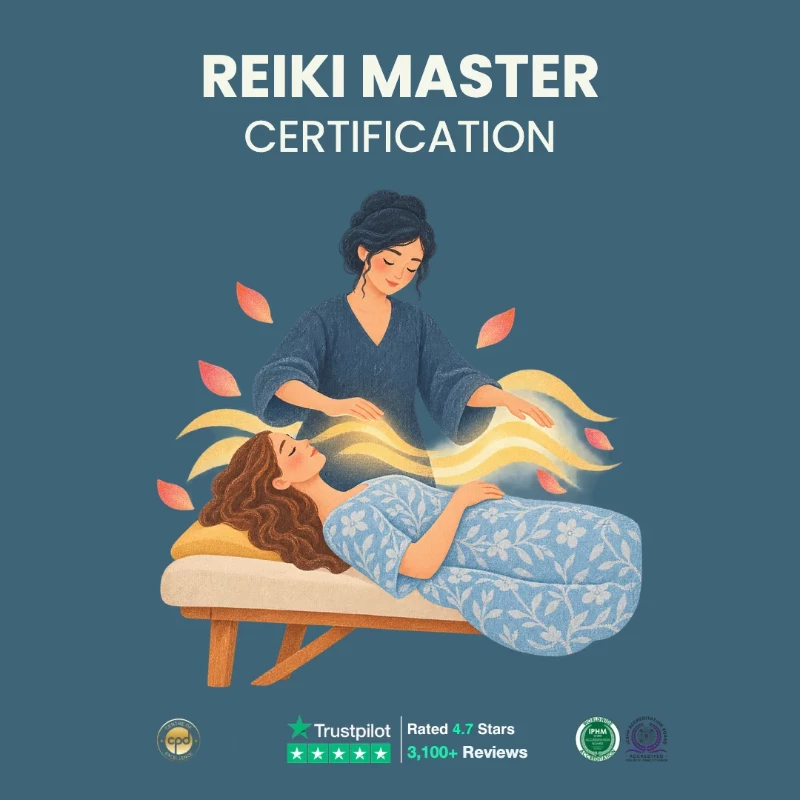
Practitioners rarely step toward Master training because they want more “hand positions.” They consider it when sessions become more nuanced, group requests start coming in, and the work shifts from technique to holding a dependable container. Expectations rise: consent must be explicit, boundaries consistent, language non-impositional, and lineage questions answered with clarity rather than dogma.
The real shift isn’t bigger technique; it’s maturing from doing Reiki to being Reiki. Mastery becomes embodied precepts, lineage clarity, and confident facilitation—so you can support one-to-one sessions and group fields with simplicity, humility, and rigor. Daily self-practice deepens everything, and the rest—levels, transmission, ethics, and sustainable offerings—starts to fall into place.
The journey begins on the inside with precepts and practice, then widens into skills and structures that keep Master-level work ethical, inclusive, and durable. From there, it becomes much easier to choose training that respects lineage, prepare for attunement, and bring your mastery into the world with ease.
Key Takeaway: Reiki Mastery is the shift from technique to dependable space-holding: daily self-practice and precepts, clear lineage, explicit consent, and ethical facilitation for 1:1 and groups. When these foundations are steady, you can integrate research with tradition, choose rigorous training, and bring offerings into the world sustainably.
Laying the Inner Foundation: Precepts and Daily Reiki Self‑Practice
Reliable Mastery starts with a simple daily anchor. Without consistent self-practice, “advanced” work can quietly turn into performance rather than presence.
Usui’s heart of the system remains refreshingly clear: the five precepts—do not anger, do not worry, be grateful, work diligently, be kind to others. Recited daily, they’re less a rulebook and more a rhythm that brings you back to what matters. Stiene points to this inner cultivation directly: “The most important thing within the system of Reiki is to purify your mind.”
Teachers across lineages keep returning to the same message: practice is what ripens the work.
“No matter what your lineage is, practice! Just practice, practice, practice. That’s gonna take you places,”
as Robert N. Fueston reminds us.
“If you want to learn Reiki, then the more you practice, the better it is!”
Frank Arjava Petter echoes the same devotion.
Modern research is also beginning to describe what traditional practitioners have long observed: regular Reiki-style practice tends to settle the system. Studies have associated these practices with parasympathetic responses—the “rest and restore” side of the nervous system—along with improved well‑being scores in structured settings.
Put simply: don’t rush past the basics. When your inner steadiness grows, people feel it. Your listening gets cleaner, your presence gets quieter, and technique stops needing to be “impressive” to be effective.
Understanding the Reiki Path: Levels, Lineage, and What “Master” Really Means
Clarity about levels and lineage keeps your path clean and respectful. “Master” (Shinpiden) isn’t a finish line—it’s a responsibility to embody and transmit with integrity.
Traditional accounts describe Mikao Usui articulating the system after a 21-day spiritual retreat on Mount Kurama in 1922, rooted in Japanese sensibilities and a Buddhist-influenced simplicity. Historical descriptions emphasize direct experience and the precepts over unnecessary complexity, an orientation reflected in traditional teachings.
From there, the work spread through figures such as Chujiro Hayashi and Hawayo Takata, with Takata attuning 22 Masters before 1980 and shaping many Western lineages. While branches vary, many follow a familiar progression: Level 1 for self-practice and close-contact sessions, Level 2 for symbols and non-local work, and Master level for attunement transmission, mentoring, and advanced ethical facilitation—an approach echoed in contemporary standards.
At Master level, the essentials are inner steadiness, clear ethics, and the ability to offer reiju (attunements) and mentoring without ego. Stiene puts the emphasis where it belongs:
“The system of Reiki is not about how much energy we can feel or channel, but about how open and compassionate our mind is,”
a theme repeated in his public quotes. Mastery is lived, not performed.
Learning to Hold Advanced Space: From One‑to‑One Sessions to Group Fields
What distinguishes a Master is the ability to hold a clear, inclusive container—whether for one person or a whole group. This is a skill set: grounded presence, consistent boundaries, and facilitation that protects autonomy.
In real terms, advanced space-holding often looks surprisingly simple. You stay neutral and compassionate, you don’t impose interpretations, and you let each person’s pace lead. Many lineages use traditional methods like Kenyoku ho and Hatsurei ho to reinforce this—grounding and purification practices rooted in classical practices that help you remain centered.
Ethics are the backbone: clear consent, confidentiality, inclusivity, and a defined scope are non-negotiable, and they’re reinforced across professional guidelines. In group spaces, trauma-aware choices matter—opt-in touch, flexible positioning, and language that respects diverse identities and lived histories—principles reflected in recent holistic guidance.
Research also supports what many practitioners notice in the room: Reiki is often linked with deep relaxation. Reviews of multiple studies suggest Reiki can be better than placebo for activating parasympathetic patterns associated with rest and restoration—conditions where insight, creativity, and emotional settling often emerge naturally.
Practical anchors for your sessions and circles
- Before: Simple grounding (e.g., Kenyoku ho); clear intention; re-state consent and options.
- During: Slow pacing; non-impositional language; periodic check-ins; flexible boundaries around touch and positioning.
- After: Gentle integration prompts; time to rest; simple self-care suggestions; optional journaling or sharing.
Integrating Evidence and Ancestral Wisdom in Your Reiki Master Practice
You don’t have to choose between tradition and research. You can speak from lived experience, honor what’s been observed for generations, and reference studies where they exist—without stretching claims beyond what’s appropriate.
The research base is growing. A synthesis of controlled studies concluded that Reiki shows support beyond placebo, especially around anxiety, mood, self-esteem, and quality of life. The Center for Reiki Research catalogs over 140 papers, with repeated themes around relaxation and reduced distress. A recent meta‑analysis also reported meaningful gains in quality of life, particularly when sessions were about an hour and offered in a series.
Traditional practitioners have long described nervous-system settling and subtle “field” changes in plain language. Interestingly, experimental work around meditative and energy practices is now documenting related electromagnetic shifts alongside nervous-system changes during practice—another example of modern tools catching up to older observations.
When speaking with clients or groups, keep your language grounded and consent-led:
- “Many people notice deep relaxation and a softer mind—experiences consistent with published research on stress and mood.”
- “We’ll focus on your own inner awareness; I’ll avoid interpretations and support your self-led process.”
- “I can share studies on Reiki and relaxation if helpful, and I’ll always stay within my agreed scope.”
Then return to the root: practice. As Stiene reminds us,
“When we have 100% faith in our own personal practice then it doesn’t matter what others say about it.”
Evidence can support the conversation; embodiment is what people actually feel.
Designing Your Reiki Master Training Journey and Preparing for Attunement
Choose a path that respects lineage, centers ethics, and supports real client work. The aim is depth and durability—not speed.
Many serious Master trainings ask for time and integration after Level 2, often including reflective journals, supervised sessions, and mentorship. Programs may include substantial study hours, robust ethics, and guidance on building sustainable offerings. This kind of structure helps keep the work clean, consistent, and supportive for the communities you’ll serve.
Master-level attunement (reiju) is typically shared in a held ceremonial container across several days. It may include meditative practices, integration time, and the Master symbol, often taught as Dai Ko Myo. Many modern programs also use a hybrid approach—online teaching paired with live verification or in-person attunement—to balance access with depth. There’s even early exploration of VR‑assisted formats for parts of relaxation training, though lineage-aware teachers tend to move thoughtfully here.
What to look for in lineage‑respecting Master training
- Clear lineage overview and cultural context to avoid appropriation, with transparent history of symbols and practices.
- Robust ethics and scope-of-practice modules, including consent, confidentiality, and referral pathways to other professionals when needed.
- Mentored practicum: real sessions, observed facilitation, feedback loops, and group facilitation labs.
- Integration of self-practice, precepts, and meditation—daily discipline over “collecting techniques.”
- Community support: peer circles, ongoing supervision, and pathways for continued development beyond certification.
Pre‑attunement checklist
- Stabilize daily self-practice (for example, 30–45 minutes), including breath, precepts, and stillness.
- Simplify your life-load where possible; protect rest, hydration, and quiet time.
- Write a short intention: how will you use your mastery to serve, and how will you stay a student?
Bringing Your Reiki Mastery into the World with Ease and Integrity
Mastery comes alive in community. Focus on sustainable practice, relationship-led offerings, and inclusive circles that support your ecosystem as much as your schedule.
Depth of relationship is often the real multiplier. From a wider coaching lens, approaches that include energy awareness alongside mindset work have been associated with improved engagement and satisfaction. One report on Core Energy Coaching, for example, noted increases in life satisfaction when clients worked directly with their energetic state. While not Reiki-specific, it offers a useful parallel for how energy-aware practice can enrich holistic coaching outcomes.
On the practical side, ethical marketing matters. Many advanced programs now teach simple, accurate messaging—centering relaxation, clarity, and quality-of-life shifts in ways that align with professional norms. Sustainability belongs here too: virtual sessions can reduce travel while maintaining connection, and broader research suggests online meetings can be comparable in impact to in-person formats for many people, even while embodied gatherings remain uniquely valuable.
Inclusivity also deserves active planning. Many communities are reflecting more deeply on diversity and access in coaching and related fields, and Reiki circles can contribute through accessible venues, sliding scales, and culturally sensitive language.
As Colleen Benelli says,
“Reiki literally wakes up our divine essence so we can see our spirit behind the veils,”
a vision she shares in her public quote. Bring that spirit forward with practical structure and kind boundaries.
Your first 90 days as a Reiki Master — simple plan
- Month 1: Offer a series of pro-bono or sliding-scale sessions; refine your consent and intake forms; journal patterns you notice in yourself and your clients.
- Month 2: Host a small online circle (around 60 minutes) with clear agreements and a gentle integration sequence.
- Month 3: Invite feedback; write 2–3 anonymized case reflections; explore referral partnerships with local or online well‑being professionals.
Conclusion: Your Next Step as a Reiki Master Space‑Holder
Mastery weaves three strands: steady inner practice, clear lineage and skills, and real-world facilitation that honors autonomy, culture, and consent. When these come together, advanced space-holding feels natural—less like “doing more,” more like meeting people where they are with calm confidence.
From here, choose a lineage-aware path, protect your daily practice, and build simple structures around your work. Keep your language precise and your scope clear; risk‑mitigation guidance from related helping professions can offer useful models for boundaries and referrals, while you stay firmly within a holistic coaching frame. The field is also evolving through thoughtful hybrid models that balance accessibility with the irreplaceable value of in-person connection.
Above all, keep your feet on the ground and your heart in the practice. As Robert N. Fueston reminds us,
“Just practice, practice.”
Everything else—skill, presence, and the confidence to hold advanced space—grows from there.
Explore Reiki Master Certification
Deepen your space-holding, ethics, and lineage clarity with Naturalistico’s Reiki Master Certification.
Explore Reiki Master →