Sleep coaches often recognize the same arc: a client starts with real energy, tracks for a week or two, and then the routine gradually loosens. Bedtime drifts, morning light gets skipped, and the tracker starts to feel optional.
Usually, it isn’t a lack of care. It’s that the plan asks for too many daily decisions, leans too hard on motivation, and doesn’t offer enough support when life gets messy.
What tends to last is a lighter structure. A good accountability system turns one clear sleep goal into a few repeatable behaviors, makes them easy to notice, and keeps review gentle enough that clients stay engaged through ordinary disruption. It measures what a person can actually do, not just the outcome they hope for.
Key Takeaway: Durable sleep coaching comes from a light accountability system focused on controllable inputs, not perfect nights. Anchor one clear goal to 1–3 repeatable behaviors, track them with minimal friction, and use supportive check-ins that treat setbacks as information so clients can adapt through real-life disruption.
Step 1: Choose one clear sleep goal and 1–3 anchor behaviors
Start with one concrete goal, then support it with no more than three anchor behaviors. When the goal is clear, everything else can organize around it; when it’s vague, the system becomes vague too.
“Sleep better” rarely gives enough direction. A stronger goal connects sleep support to a lived outcome the client genuinely cares about—steadier mornings, more patience with family, more presence in the evening, or less friction during the day. That values link is often what keeps a habit alive when motivation dips.
Next, choose behaviors the client can control. These anchors tend to do the most work:
- Wake-time regularity: Keeping wake time within a reasonably consistent window can support a stable clock. For many clients, this is more workable than chasing a perfect bedtime.
- Morning light exposure: Light is the body’s primary time cue, which makes morning daylight one of the simplest circadian anchors.
- Caffeine timing: A personal cutoff earlier in the day can make evenings easier to settle into. General guidance often suggests avoiding caffeine after lunch if it disrupts rest.
These anchors also echo older rhythms of living. Across many cultures, dawn and dusk were naturally marked with prayer, quiet chores, stories, bathing, tea, and shared meals. Those rituals aren’t decorative—they help a household (and a nervous system) recognize transition.
The most useful systems emphasize inputs over outcomes. Tracking wake-time consistency, light exposure, or caffeine timing is often steadier than judging each night as “good” or “bad.” As we often remind coaches, “The most useful long-term metric may be consistency of routine, not perfect nightly outcomes.”
Step 2: Turn anchor behaviors into small habit loops
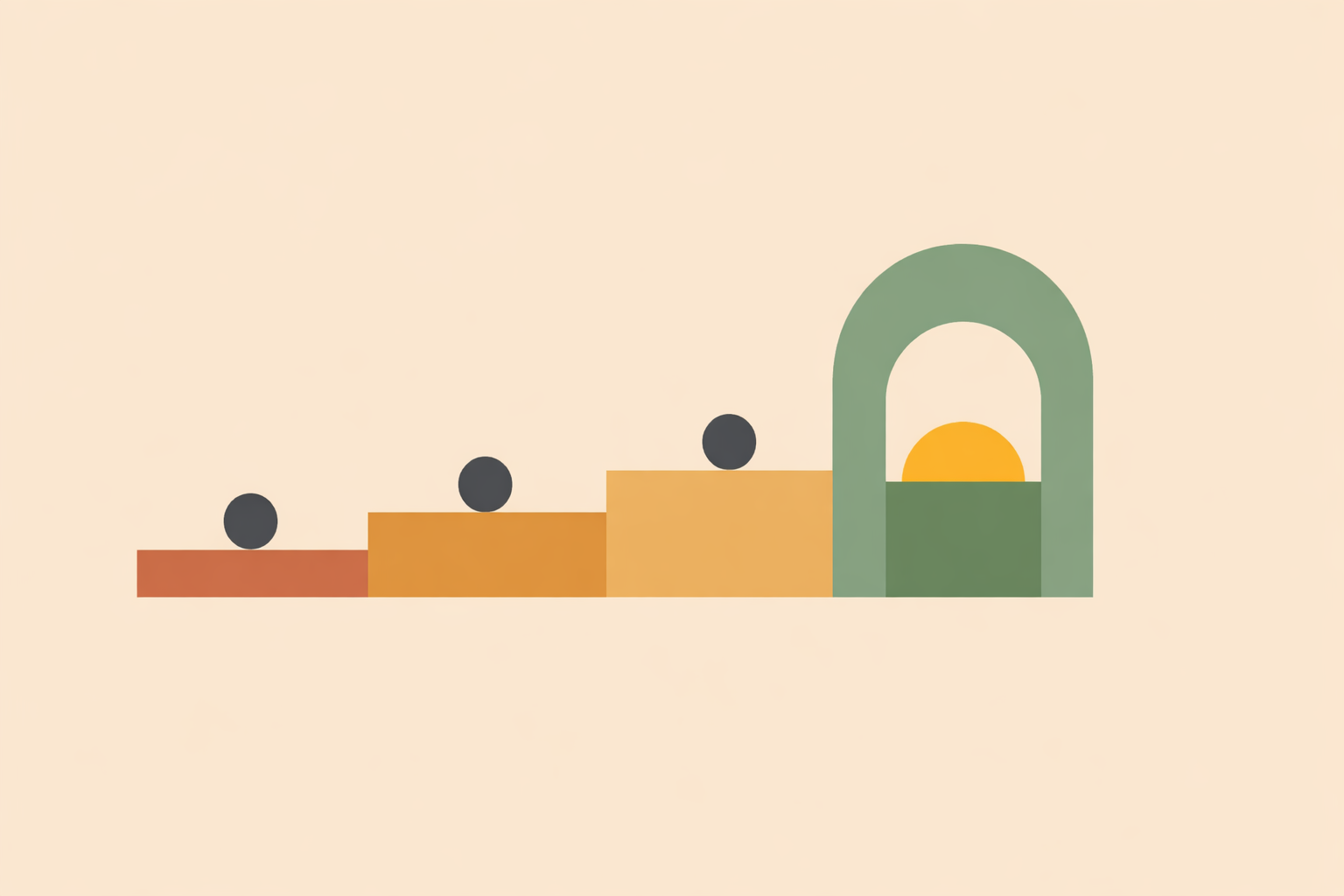
Once the anchors are chosen, make them easy to repeat. If a behavior requires fresh willpower every day, it won’t hold reliably. If it’s attached to a familiar cue, it becomes more automatic—like a path that gets smoother each time you walk it.
A simple habit loop has three parts:
- Cue: something that already happens (an alarm, finishing breakfast, tidying the kitchen)
- Action: one specific behavior (step outside for light, dim the room, start an evening tea)
- Reward: a small sense of completion, comfort, or calm
Micro-commitments work especially well. Instead of a “perfect morning routine,” ask for two minutes outside. Instead of a long wind-down, choose one reliable cue that signals the evening is closing. A steady start is often the sustainable start—start small.
It also helps to define what “counts” on a hard day. A “good enough” version protects the plan from all-or-nothing collapse. Sleep guidance increasingly emphasizes realistic expectations and self-kindness for exactly this reason.
Many practitioners share some version of: perfection is fragile; steadiness is strong. As our team phrases it, “All-or-nothing perfectionism is a common threat to adherence; accountability should normalize partial wins and recovery after missed days.”
Traditional evening rituals fit beautifully into this design. A warm bath, a short prayer, gentle reading, herbal tea, or family storytelling can become dependable cues that the day is ending. Modern guidance also recognizes that relaxing rituals help signal it’s time to wind down.
Step 3: Build tracking clients will actually keep using
Tracking should be simple enough to survive real life. If it feels like homework, even motivated clients tend to abandon it.
The goal isn’t endless data—it’s pattern visibility. A light daily log paired with a brief weekly review is usually plenty.
Useful tracking often includes:
- 3–5 checkboxes tied to the anchor behaviors
- one short note or rating for lived experience (for example, “evening ease” or “morning steadiness”)
- a visible weekly tally or simple visual pattern
Where appropriate, a sleep diary can help clients notice links between choices and rest. The key is keeping the format light—one screen, one page, or one index card is often enough.
Some clients prefer paper because it feels grounding; others prefer a phone note because it’s always nearby. Either can work. The real test is consistency, and simpler tools are more likely to stay in use.
A practical rule holds: if tracking takes too long, reduce it. As we often teach, “Overcomplicated tracking is a major failure point; if logging takes too long, clients stop doing it.”
Step 4: Use check-ins that feel supportive, not intrusive
Accountability works best when clients feel accompanied rather than watched. A steady, humane rhythm is usually more sustainable than constant prompts or intense review.
For many people, a brief daily log plus a weekly review conversation is enough to keep momentum without adding strain. The review doesn’t need to be long—it just needs to answer a few helpful questions:
- What went well this week?
- What made follow-through harder?
- What should stay the same?
- What small adjustment would help next week?
This builds skill because it’s about reflection and problem-solving, not pass-fail judgment. Over time, clients start noticing what supports them, where friction shows up, and how to recover faster after a bumpy patch.
Language makes a difference. Specific, non-judgmental feedback strengthens follow-through more than vague praise or heavy criticism. “You kept morning light three days during a chaotic week—what made those three possible?” invites learning. “You only managed three days” invites shame.
As we teach in our safety guide, “The language of accountability should emphasize support, clarity, and choice instead of pressure.”
If a client wants reminders, keep them modest. If they want an accountability partner or small peer circle, agree clearly on boundaries and contact style. Choice lowers friction and keeps the process respectful.
Step 5: Plan for setbacks, irregular schedules, and changing seasons of life
The strongest sleep plans expect disruption from the start. Travel, school terms, social evenings, weather shifts, family demands, and unpredictable work patterns all influence follow-through. A good system doesn’t pretend life will stay tidy.
Barrier planning keeps the plan intact when conditions change. Decide in advance how the client will respond to common obstacles:
- If the night runs late, keep the morning anchor as steady as possible.
- If the weather is poor, use the brightest available light and get outside later.
- If the schedule is packed, do the minimum version of the evening ritual.
- If travel disrupts rhythm, return first to light, wake timing, and caffeine boundaries.
Setbacks also benefit from a reset ritual. After an off-plan weekend or a rough night, returning to a few grounding anchors—morning daylight, gentle movement, consistent waking, and a familiar evening cue—can restore orientation without punishment.
For irregular schedules or shift-based work, forcing a rigid bedtime is often unrealistic. It’s usually more sustainable to protect one stable timing point and build around it. Essentially, stability in one place gives the whole system something to organize around.
Normalize this openly. Clients do better when they understand setbacks are expected and recovery is part of the process. As we say to clients, “A well-designed system treats setbacks as data, not verdicts.”
Step 6: Evolve the system over time and hand over ownership
No accountability system should stay coach-heavy forever. Over time, keep what helps, simplify what creates drag, and support the client in carrying more of the rhythm themselves.
Review the system every few weeks and decide what to maintain, reduce, or gently expand. In practice, “stability first, optimization later” is often the wisest sequence. General guidance also emphasizes consistent habits as the foundation before layering on refinements.
Simple metrics are usually enough: wake-window consistency, morning light frequency, caffeine cutoff success, and one lived-experience rating compared to the client’s own baseline. Think of it like a compass—just enough information to keep direction, not so much that it becomes noise.
As habits steady, help the client move from “This is an experiment” to “This is how I care for my evenings and mornings.” Identity matters; people keep habits more naturally when those habits start to feel like part of who they’re becoming.
Plans should also be allowed to change. Daylight shifts, school calendars, holidays, and family transitions commonly require recalibration. Flexible systems last longer because they evolve with life rather than fighting it.
Bring your sleep accountability system into practice
Keep it simple at the start: choose one goal, select one to three anchor behaviors, make each behavior small enough to repeat, and use a tracker light enough to survive a busy week. Then review with language that strengthens reflection, not shame.
Keep weaving traditional wisdom through modern structure. Dawn light, dusk rituals, tea, story, prayer, stillness, and household rhythm aren’t “extras.” They’re enduring human cues that help the body recognize transition and rest.
If concerns move beyond coaching scope, pause, simplify, and encourage appropriate local support. That protects both the client and the integrity of the work, especially when red flags show up.
The most durable systems are rarely the most elaborate. They’re the ones that stay simple, personal, progress-focused, and kind enough to continue through imperfect weeks.
Ready to build stronger, more sustainable sleep support in your practice? Explore the Sleep Coach course.
Go Further with Sleep Coach
Apply these accountability principles with clients using the coaching framework taught in Sleep Coach.
Explore Sleep Coach →