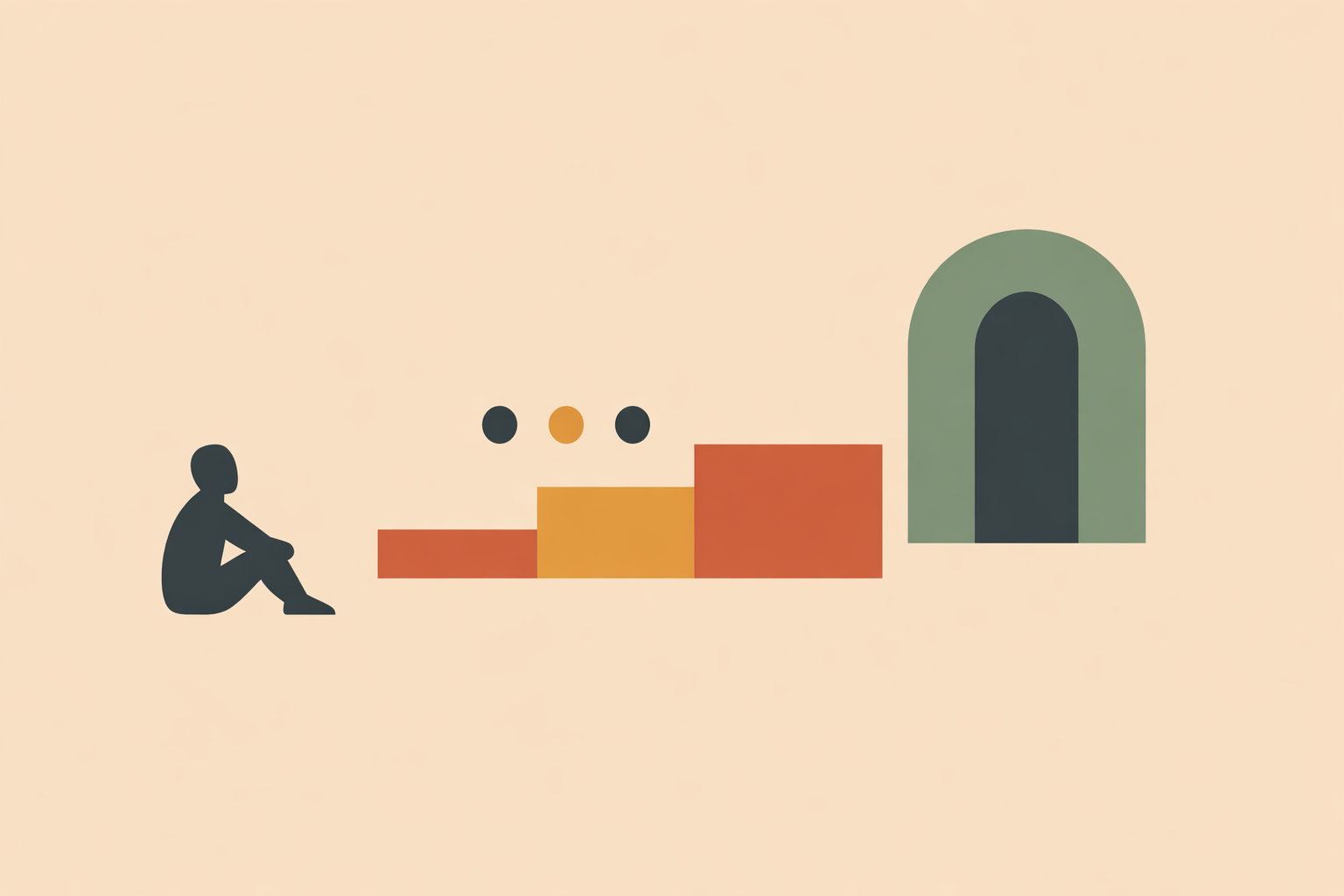
Most practitioners know this moment well: you deliver a thoughtful plan, the client nods, and two weeks later very little has shifted. The schedule took over, the family needed them, and your beautiful protocol now feels like one more demand. The friction usually isn’t your judgment—it’s the distance between an ideal plan and a human week.
Plans that truly stick tend to be staged, simple, and co-created. They begin with the whole person, translate insight into a few clear pillars, and turn change into short, workable experiments. Early review keeps progress visible and the plan flexible enough for real life.
Key Takeaway: Sustainable wellness plans work best when they’re co-created and built in stages: start with a whole-person view, choose a few memorable pillars, and turn each into one small, time-bound action. Keep it visible with light tracking and review early so the plan can adapt to real-life constraints.
Start with the whole person
Personalization begins with story. A whole-person assessment helps reveal the patterns behind what someone is experiencing, so the plan feels relevant, grounded, and manageable.
In traditional naturopathic thinking, well-being isn’t neatly separated into compartments. Work, family roles, community, environment, and belief systems all shape how health unfolds. Sleep rhythm, nourishment, movement, stress load, emotional coping, social support, spiritual practice, and readiness for change belong in the same conversation.
And these areas often move together. Stress disrupts sleep, while social isolation drains vitality in quieter ways. Practitioners have long observed that digestion, mood, rhythm, and resilience often rise and dip as a set. Once those links are visible, the plan stops being generic and starts fitting the person in front of you.
Tools can help organize the picture, but the heart of it is simple: ask well, listen closely, map the terrain, then choose a practical starting point. Within a whole-person view, it’s often wise to begin with the one area that matters most right now—the first doorway that keeps the work small enough to sustain.
Build a minimum-viable wellness plan
A simple structure beats a sprawling protocol. Build a minimum-viable plan around 3–5 core pillars, each with one concrete action.
Most people don’t need complexity to begin improving their well-being. They need a steady scaffold. In practice, many naturopathic plans start with foundations like hydration, whole-food nourishment, sleep rhythm, movement, and basic nutritional support—small choices that often create reliable lift.
From there, organize the plan into a few memorable pillars (for example: nourishment, rhythm, movement and rest, connection, ritual). The goal isn’t a perfect model; it’s a structure the client can actually remember and return to when life gets busy.
Each pillar should point to one visible behavior, not a paragraph of good intentions. That’s how the plan stays light enough to enter daily life.
- Nourishment: Half my plate is colorful plants at lunch.
- Rhythm: Screens off by 10:00 pm and lights dim at 9:30.
- Movement and rest: Walk for 15 minutes after lunch, five days a week.
- Connection: Send one midweek check-in message to a friend.
- Ritual: Take two minutes for gratitude before dinner.
Simplicity isn’t a compromise—it’s often the most compassionate and effective design choice available.
Co-create micro-steps your client can live with
Once the pillars are clear, translate each one into a tiny, time-bound action the client helps shape. Think of it like a short experiment, not a life sentence.
Co-creation is where a plan becomes sustainable, because the client can recognize themselves inside it. Focusing on one behavior at a time lowers mental load, and small actions tend to outlast extreme changes.
So swap broad goals for specific steps. Instead of “manage stress,” try “three minutes of belly breathing before bed for the next seven days.” Instead of “eat better,” try “add one nourishing breakfast on Monday, Wednesday, and Friday.”
A quick confidence check refines the step: “On a scale from 0 to 10, how confident are you that you’ll do this most days?” If the number is low, shrink the step until it becomes an honest yes.
Then deepen ownership with a simple prompt: “I’m choosing this because…” That turns the step from compliance into meaning.
- This week I will walk for 10 minutes after lunch on Monday, Wednesday, and Friday.
- Confidence: 8 out of 10. If the day gets crowded, I will do five minutes instead.
- Why: I want a clearer head for my afternoon work.
When framed as a 7–14 day experiment, change feels lighter. If it works, keep it. If it doesn’t, learn from it and adjust.
Layer traditional supports without overwhelm
Start with foundations, then add traditional supports gradually and thoughtfully. One well-chosen addition is usually more useful than five scattered ones.
Many practitioners begin with food, hydration, sleep rhythm, movement, and stress downshifting because these create a strong base. Once those essentials have some rhythm, other supports can be added with more clarity and less confusion.
This is where traditional practice brings real richness. Herbal preparations, aromatic plants, hydrotherapy, touch-based practices, rest rituals, and time in nature can all belong—matched to the person, the season, and the wider plan. They don’t need to be dramatic to be meaningful; they need to be consistent and well-fitted.
For restoring calm and body-awareness, mindfulness is associated with less stress and improved well-being, and massage may support relaxation and ease.
Digestion and evening wind-down are also common focuses. Peppermint is a familiar plant ally, and peppermint oil has been explored for digestive comfort. Bedtime teas and aromatic rituals carry deep traditional use, and in day-to-day life, fit and repetition matter more than an elaborate routine.
- Week 1–2: Set a hydration target and begin a lights-down evening ritual.
- Week 3–4: Add a post-lunch walk and a brief pre-bed breathing practice.
- Week 5–6: Introduce one botanical or aromatic support that suits the aim.
- Week 7–8: Consider a gentle water-based, nature-based, or restorative practice.
The principle stays the same: build slowly enough that the plan remains usable.
Write it down, track lightly, review early
Make the plan visible. A shared written plan, light tracking, and early follow-up turn a one-time conversation into a living framework.
Written plans help people remember what they actually agreed to do. And tailored messages tend to land better than generic ones because they feel personal. A simple format is usually enough: 3–5 pillars, one action each, the when and where, a confidence rating, and the client’s own reason.
Early review is part of the work, not an optional extra. Reminder systems and light follow-up help keep the plan top of mind while a new rhythm is still forming.
Between sessions, gentle self-observation can be surprisingly powerful. Journals and logs help people notice patterns—what supports them, what drains them, and what needs adjusting. Think of it like turning the lights on in a familiar room: you’re not judging what you see, just navigating better.
- 3–5 pillars, one action each
- When, where, and how
- Confidence rating
- Client’s “why” in their own words
Then use the review gently:
- What worked well?
- What felt heavy?
- What is the next small adjustment?
This keeps the process kind, practical, and responsive.
Adapt the plan to culture, capacity, and digital life
The best personalized plans respect culture, capacity, and context. They’re shaped to fit real lives, not idealized ones.
Practices are often more likely to land when they are culturally tailored. That may mean choosing familiar foods, honoring family rhythms, drawing from meaningful traditions, or using language that feels natural to the person. Respect for cultural roots matters—and it should always be paired with humility and care, so support never slips into appropriation.
Capacity matters just as much. Budget, caregiving, work hours, housing conditions, and access to nourishing food shape what’s realistic. A beautiful plan that ignores bandwidth isn’t truly personalized.
Digital tools can help when they strengthen connection rather than replace it. Evidence suggests tools work best when they support communication and follow-up. In practice, that might be one clear written summary, one meaningful reminder, and one early check-in through a secure platform.
- Which foods, practices, or traditions already make you feel at home?
- What time, energy, and budget do you realistically want to give this each week?
- Who could support you: a friend, family member, or community group?
When the plan fits the person’s world, it stops feeling imported and starts feeling like their own.
Simple, kind, and steady
The most effective personalized wellness plans rarely look dramatic. They start with the whole person, focus on a few meaningful pillars, use client-authored micro-steps, and evolve through early review. Grounded in tradition and shaped with care, they’re modest enough to survive an ordinary week.
For practitioners, this is often the real craft: not creating the most impressive plan, but creating the one a person can genuinely live with. Start small. Write it down. Review early. Adjust kindly.
A final note of care: when someone wants to add new foods, botanicals, or practices—especially alongside ongoing health conditions or medications—encourage them to check for fit and safety before layering too much, too soon. Simple, kind, and steady is how lasting well-being often finds its way.
Train in Naturopathy Certification
Deepen your whole-person planning skills with the Naturalistico Naturopathy Certification.
Explore Naturopathy Certification →