Most health and wellness coaches don’t lose clients because they don’t care. They lose them because the container is unclear. A few strong sessions land, then the rhythm slips, plans get scattered across messages, and clients stop seeing where the work is headed. Without a visible arc—and a little human presence between sessions—even motivated people drift. Around session five, momentum often blurs and “next steps” start to feel optional.
The fix usually isn’t more tactics. It’s a relationship-centered system that makes continuity obvious and progress easy to feel. When the journey is mapped, goals are kept alive in the client’s language, and touchpoints are steady, clients relax into the process—and staying makes sense.
Key Takeaway: Retention improves when clients can feel a clear, ethical container: a mapped journey, a living plan in their language, and steady between-session touchpoints. Pair time-bound arcs and tiers with privacy-minded structure and light tech so progress stays visible and the relationship stays central.
Step 1: Map the client journey your health & wellness coaching system will follow
Scattered sessions become sustainable when clients can recognize the arc. When your system shows where they are, where they’re going, and how you’ll walk with them, commitment becomes much easier to maintain.
From scattered sessions to a steady container
Drop-off is often a rhythm problem, not a care problem. People “lose the thread” when there are no clear waypoints—especially because change is lived out between sessions, not only inside them.
That’s why relationship-centered habits matter: listening closely, reflecting goals in the client’s own words, and keeping gentle touchpoints. These are core ingredients of effective coaching built on trust and shared commitment.
Continuity also shows up repeatedly in wider summaries of coaching impact. In cardiopulmonary rehab contexts, reviews point to over 400 studies linking ongoing coaching relationships with stronger follow-through and day-to-day outcomes. Put simply: an ongoing relationship helps people remember who they’re becoming.
Professional standards reinforce this role as one centered on self-determined goals, accountability, and sustainable lifestyle-building—so each conversation ideally ends with clear next steps inside a rhythm clients can trust.
Here’s a simple journey map to adapt:
- Welcome and orientation: establish values, boundaries, and hopes
- Foundations arc (8–12 weeks): build consistent daily practices
- Deepening arc: personalize routines to body cues and cultural rituals
- Integration and maintenance: seasonal check-ins and community
“Physical fitness is not only one of the most important keys to a healthy body, it is the basis of dynamic and creative intellectual activity.” — John F. Kennedy
That line is a helpful reminder to design for rhythm and creativity—not perfection. A good map isn’t mechanical; it’s relational. Each phase gives clients a felt sense of place, so the work becomes a journey they can stay with.
Step 2: Welcome clients with a values-rooted onboarding that feels like entering a circle
Onboarding works best when it feels like being welcomed in—steady, human, and clear. When people feel seen and safe at the threshold, they’re far more likely to continue.
Invite clients into a shared story, not just a signup flow
Retention deepens when the first steps are warm and structured: a warm onboarding, a co-created plan, and a consistent cadence of check-ins.
The 2026 framing of the role emphasizes client-centered processes like self-discovery and values alignment—outlined in the 2026 scope and ethics overview. It also names coaches as translators—helping clients bridge ancestral wisdom, lifestyle science, and ethics in a way that protects autonomy and keeps things practical.
In that spirit, onboarding can honor each client’s roots: foodways, stories, spiritual language, and what “well-being” truly means for them. Consent-based structure and clear repair processes matter too, as described in these consent-based safety guidelines. Professional competencies also emphasize adapting to each person’s literacy and beliefs to strengthen rapport.
Try this light, values-led onboarding flow:
- Roots & values: “What did wellness look like in your family or community? What parts still feel alive?”
- Scope & boundaries: plain-language overview of what coaching is and isn’t, your role, privacy norms, and how to pause or end
- Intentions: 1–3 outcomes in the client’s own words
- First step: a tiny habit that fits their week and culture
- Belonging cue: a welcome note or voice memo naming something you admire in their story
“Health is the greatest gift, contentment the greatest wealth, faithfulness the best relationship.” — Buddha
That “faithfulness” begins here: steady, kind, and explicitly collaborative.
Step 3: Co-create a living wellness plan clients can see, feel, and make their own
A plan clients can actually see—and sense in their body—becomes a home base. When the plan is built in their words, rituals, and signals, they come back to it naturally.
Anchor goals in client language, body, and culture
After onboarding, co-create a simple “living plan”: shared notes, checkboxes, or a tiny dashboard. Coaches often find that a visible plan reduces dropout because momentum is easy to spot; it’s highlighted as a key retention lever in this living plan walk-through. It also matches the self-determined ethos: the client’s outcomes and language lead.
Make it somatic—ground it in present-moment signals. You might start with a quick orientation to present-moment cues (breath depth, warmth, contact with the ground), then agree on a couple of simple baseline assessments to revisit. Think of it like “felt data” that sits alongside any practical tracking.
Personalization can also use frameworks clients already trust. If someone resonates with Human Design, you can shape small experiments around energy and timing that feel natural to them. Essentially, the structure is there to reduce resistance and honor identity—not to force a belief system.
Build the plan in layers:
- Language: goals written in the client’s words (“wake feeling clear,” “move with ease at work”)
- Rhythms: 2–3 daily anchors (breath, water, movement) plus one weekly ritual from their culture
- Felt markers: two somatic cues to track (e.g., shoulder softness, steadier breath count)
- Visible wins: a small, visible tracker they actually enjoy using
- Next step: one action you’ll celebrate together next session
“I have coined the saying ‘See it, Believe it and you will Achieve it.’ Be clear about your goal, imagine how succeeding would feel and take action towards achieving it.” — Terrence
When the plan is visible and embodied, belief grows because evidence grows—from within.
Step 4: Shape clear arcs and tiers instead of endless, open-ended sessions
People tend to stay when they can see the path. Clear arcs and tiered journeys replace “book when you can” with a structure that makes progress—and continuation—feel natural.
Arcs, tiers, and apprenticeship-style journeys
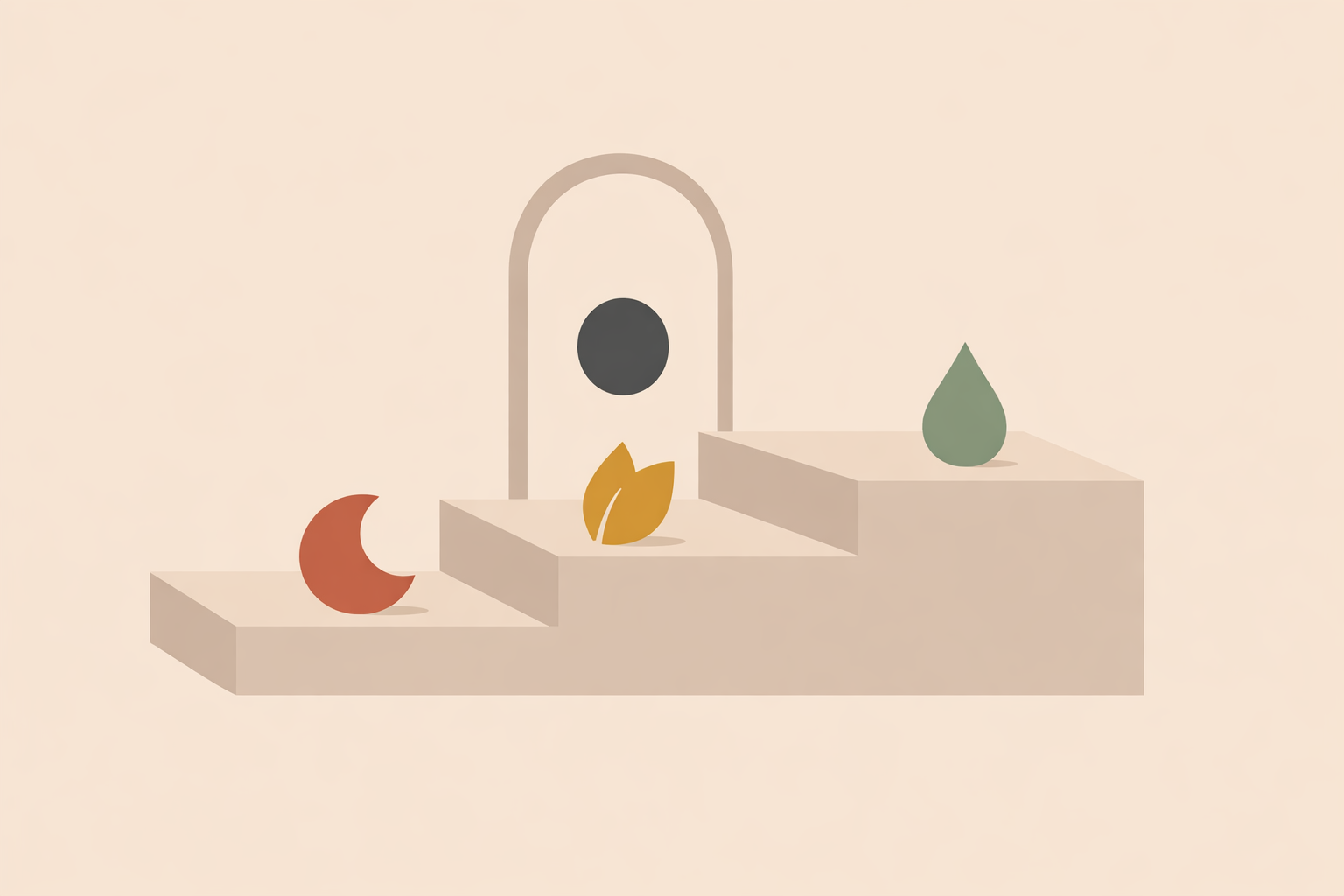
Many practices start with an initial container of 8–12 weeks focused on one theme (Morning Energy, Seasonal Grounding). That single focus helps clients feel early traction. From there, tiered journeys—foundations, deepening, maintenance—create tiered progressions that feel like growth rather than restarting.
Some coaches build multi-stage, apprenticeship-style paths across the year, so clients aren’t just “in a program”—they’re building personal culture. Education in behavior-change frameworks supports this kind of structure, and Naturalistico’s behavior-change training explores how theory-informed programs tend to outperform ad-hoc tips.
Consider a simple tiered offer:
- Tier 1—Foundations (10 weeks): micro-habits, somatic grounding, and one cultural ritual; a single focal marker like “morning clarity ≥3 days/week”
- Tier 2—Deepening (12 weeks): rhythm refinement, energy management experiments, seasonal adjustments, community circle
- Tier 3—Maintenance (Quarterly): seasonal check-ins, recommitment ritual, light group challenge if desired
“Focus on long-term nutrition, not short-term perfection.” — nutrition
Arcs create momentum; tiers create belonging to a longer path.
Step 5: Stay present between sessions with gentle check-ins and real community
What holds clients isn’t only the session—it’s the thread between sessions. Traditional circles of support have always known this: steady witnessing changes what people can sustain.
Designing check-ins that feel human, not spammy
Light touchpoints help prevent small slips from turning into “I fell off.” Simple weekly check-ins—a one-question form, a voice memo, a short message—keep the relationship warm and the plan alive. Coaching research also supports this idea of feedback loops: clients stay engaged when they can lead their development between sessions.
Even automation can feel personal when it’s written in your personal voice and reflects the client’s words. And when you add community—small groups, gentle circles, seasonal challenges—you mirror communal ritual in a modern form. These community features often support renewals because people feel witnessed, not alone.
Try a light-touch rhythm:
- Monday nudge: “What’s one tiny practice you’ll honor this week?”
- Wednesday witness: “What’s more present in your body today than last week?”
- Friday celebration: “Name one win. I’ll name one I saw in you.”
- Monthly circle: a 45-minute group for shared reflection and seasonal intention-setting
“Health is the greatest gift, contentment the greatest wealth, faithfulness the best relationship.” — Buddha
Here, “faithfulness” is simple presence—steady, non-judgmental, and kind.
Step 6: Build ethical structure around scope, safety, and confidentiality
Clients stay when the container feels safe. Clear scope, cultural humility, and strong privacy practices help people settle into the work and trust it over time.
Boundaries and privacy as part of client care
Professional scope standards keep coaching client-centered: self-determined goals, aligned action, and accountability. When you’re explicit about what’s in—and what’s out—clients can relax, because the edges are clear.
Confidentiality is part of that safety. Codes of ethics emphasize confidentiality and plain-language agreements about what’s shared, what’s not, and any limits. In privacy and customer experience research, privacy-first design has been associated with increased loyalty because trust rises when people feel their information is handled with care.
If you use digital tools, keep things simple and explicit: secure messaging/storage, minimal sensitive detail, and clear consent. Privacy professionals also note that coordinated “privacy tech stacks” can foster trust when they improve transparency and reduce risk.
For spiritual or energetic work, ground the space in safety practices like consent-based rituals, trauma-aware pacing, cultural humility, and clear boundaries. Community-based programs even provide models for plain-language privacy notices that center client rights.
Consider adding to your welcome packet:
- Scope one-pager: what coaching is, what it isn’t, and how you collaborate
- Consent & privacy: what happens with notes, messaging norms, limits of confidentiality
- Repair protocol: how you address misattunements or cultural harms if they arise
- Right to pause or end: stated explicitly and kindly
Ethical structure isn’t bureaucracy; it’s relational care. When clients can feel the edges, they can go deeper with confidence.
Step 7: Let technology carry the admin load while you stay devoted to the relationship
Use a lean, privacy-conscious tech stack to reduce friction and make progress visible—without diluting the human connection. The goal is support, not replacement.
Build a lean tech stack that fits your way of working
Start with the basics: scheduling, session notes, gentle check-ins, and one place for resources. Coaching systems often improve follow-through when clients can see “wins” reflected back; some summaries note that real-time data can boost motivation because progress feels more tangible.
Whatever you choose, keep privacy central: explain how information is stored, set clear messaging expectations, and don’t mix personal and professional channels. Privacy-first stacks can also enhance transparency when they’re used thoughtfully and kept appropriately simple.
A few practical tips:
- Automate lightly: one weekly check-in and one celebration prompt, both in your natural voice
- Keep notes simple: action, reflection in the client’s words, next step; avoid unnecessary sensitive detail
- Centralize links: one client portal or folder; reduce the “five apps” overwhelm
- Close the loop: every automation invites a human reply or a 60-second voice memo from you
When tech stays light and values-aligned, your presence remains the center of the work—and clients feel that.
Conclusion: Design one simple health & wellness coaching system clients can grow with
Bring it all into one clear blueprint: a mapped journey, values-rooted onboarding, a living plan, time-bound arcs and tiers, steady between-session presence, ethical structure, and a lean tech stack. This is the kind of system that can hold real change—and it naturally deepens as your skills and ancestral understanding deepen too.
Start with the smallest version you can run consistently, then refine one link at a time: a warmer welcome note, a clearer opening ritual, a more visual and embodied plan, a check-in that truly sounds like you. Holistic coaching is often the art of weaving traditional wisdom into modern life so people can walk a practical path of evolution—captured well in this single-sentence explanation of holistic coaching.
Over seasons, clients stay for what they can feel: clear structure, cultural respect, and your steady presence. A few final cautions help keep that trust strong—be explicit about scope, keep consent central (especially with spiritual language or practices), and choose tools that protect privacy without creating complexity.
Train as a Health Coach
Deepen your retention-ready coaching system with the Health and Wellness Coach course.
Explore Health and Wellness Coach →