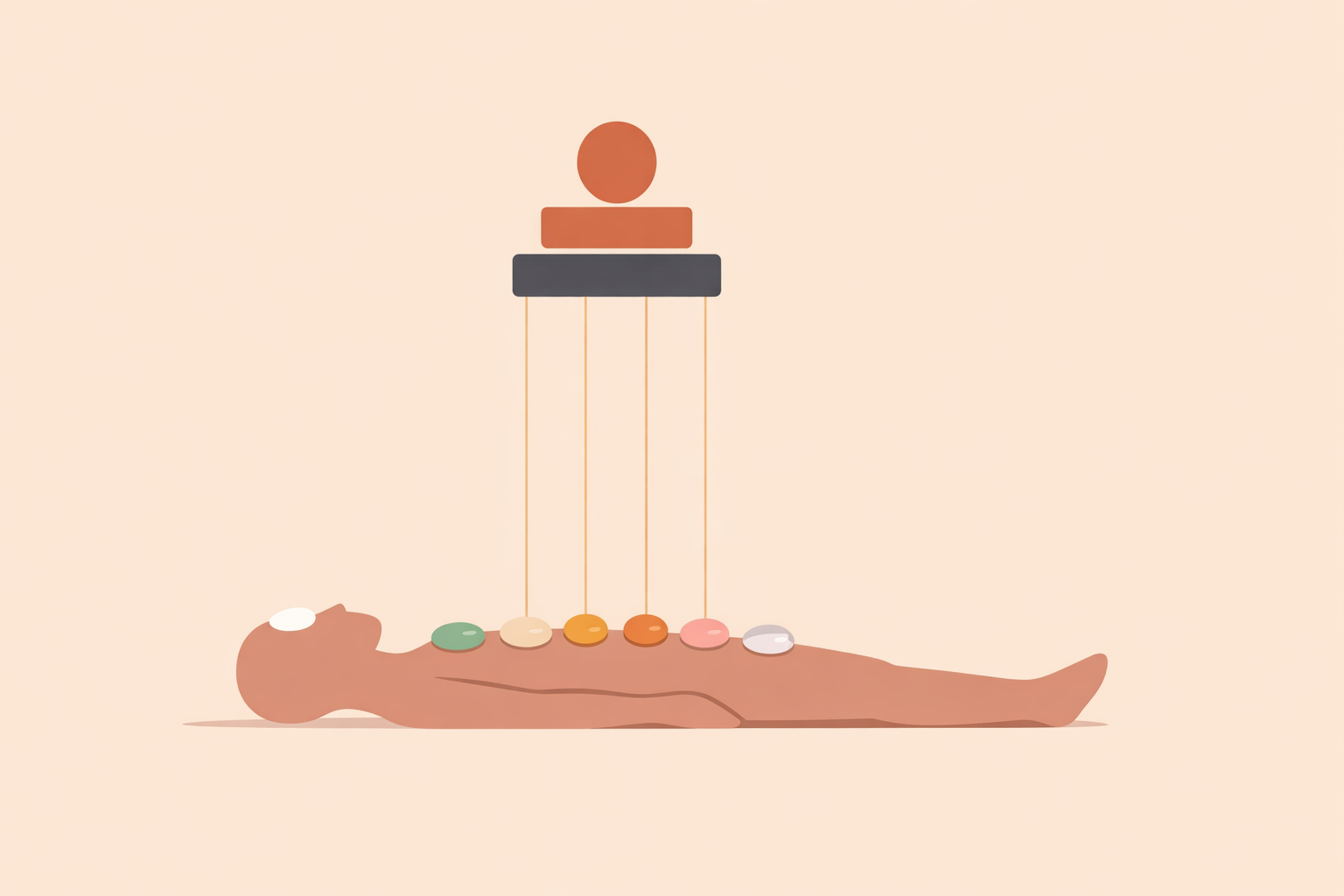
Energy sessions rarely unfold in a straight line. One client settles quickly with black tourmaline; the next feels nothing until a heart layout softens something tender. Weeks later, they ask what helped last time—and your memory competes with half-finished notes. Intuition guides the work; documentation makes it steady, repeatable, and truly client-centered.
When you record the intention, the layout, and what actually happened in the room, you can trace which stones, placements, and cues tend to support balance for this person (not “people in general”). You also give clients something many of them quietly crave: continuity they can feel.
Key Takeaway: Thoughtful notes help you track what each client actually experiences with specific stones, placements, and cues over time. By recording intention, layout details, responses, and integration in a consistent format, you can spot patterns, adjust sessions responsibly, and offer continuity that feels grounded and client-centered.
Why Document Chakra Balancing with Crystals?
Clear, kind documentation turns subtle work into a trustworthy process. With consistent notes, you can follow what supports a client over time—and they can feel your care in the way each session builds on the last.
Traditional crystal practice has long described stones as carriers of subtle information—often framed as a steady vibration or a distinct signature. That’s why many practitioners choose crystals with intention and track placements: it respects the nuance of what you’re inviting into the session. Many also work with crystals as purifiers and amplifiers—supporting clients to access what’s already within. Noting how that amplification shows up (warmth, images, emotion, grounding, relief) keeps the work personal rather than generic.
Good records also leave room for complexity. Meaning and expectation can shape experience; the placebo effect is part of being human, not an insult to the work. A double-blind meditation comparing quartz and glass found participants couldn’t reliably tell them apart—another reason to document both what you did and what the client felt. And when sessions include breath or meditation, it helps to track not only ease and insight, but also any adverse effects such as overwhelm, agitation, or fatigue, so you can pace the work wisely.
Ultimately, documentation is a form of care: it strengthens your integrity, refines your craft, and invites the client into a co-created journey that can hold both traditional wisdom and modern expectations.
Clarify Your Chakra–Crystal Framework Before You Start Recording
A shared map keeps your notes consistent. Before you start tracking sessions, get clear on the chakra model you’re using, the crystal allies you reach for, and the outcomes you’re exploring.
Seven chakras at a glance
Many practitioners work with the seven-chakra system described in traditional Vedic and yogic teachings, flowing from root to crown. Each chakra is often linked with a dimension of well-being—such as stability, creativity, personal power, love, self-expression, insight, and spacious awareness. When your notes use this shared language, they become easier to review and more meaningful over time.
Keep correspondences simple and consistent. For the root, many practitioners choose black tourmaline, hematite, or red jasper for grounding. The sacral is often paired with carnelian or orange calcite for creative flow, while the solar plexus commonly draws on citrine or tiger’s eye for confidence and focus.
For the upper centers, many return to rose quartz, blue stones such as lapis, amethyst, and clear quartz—classic allies for compassion, communication, intuition, and connection; these pairings show up across many practitioner guides. In the language of chakra–crystal traditions, crystals can harmonize and stimulate chakras in ways that support overall well-being.
Crystal allies and session intentions
Create a short list of your core crystals per chakra and add two or three keywords for each (for example: “root—steady, safe, grounded”). Then anchor every session with one compassionate intention: “Invite steadiness at the root,” “Soften grief in the heart,” or “Support clear expression at the throat.”
Think of this like a musical key signature: once it’s set, every note you write down makes more sense. Keep the framework visible—on a card by your mat or a one-page reference in your digital workspace—so every record points back to the same map.
Create a Simple System for Documenting Chakra–Crystal Sessions
Pick a format you’ll actually use. Paper, digital, or hybrid can all work—as long as it captures essentials in minutes and still feels human.
Paper, digital, or hybrid structures you’ll actually use
A one-page template is usually enough. Many guides recommend recording session details like which stones you used, where they were placed, and how long they stayed. Consistency matters more than length, so aim for brief entries you can keep up with.
Use five simple blocks:
- Arrival: baseline energy, mood, focus
- Intention: one sentence linked to your chakra map
- Layout: placements (stone → chakra → location), plus time
- Experience: sensations, imagery, emotions, breath
- Integration: aftercare, practices, what to notice
It can help to pre-define journal sections and keep stone charts nearby. Visual thinkers often add body diagrams to mark placements. If you like a hybrid system, a quick photo log of the layout (with permission) can create a clear visual timeline.
Whatever you choose, keep friction low. A system you enjoy using is the system that will support your practice long-term.
What to Record in a Single Chakra–Crystal Session
Capture the full arc: what you intended, what you did, what was felt, and how the client will integrate it. That’s what makes the next session feel like a natural continuation rather than a reset.
Before the session: intention and baseline
Start with your stone-clearing practice in a way that aligns with your lineage—smoke, sound, moonlight, or simple breath and presence are all commonly used; cleansing stones is a long-standing custom in many traditions. Then invite the client to share what brought them in today, and write a present-tense intention that feels empowering.
Next, record a baseline snapshot using a simple 1–5 scale: grounding, emotional flow, mental clarity, and overall energy. These numbers aren’t the point—they’re just a clear “starting place” you can return to later.
During and after: placements, sensations, integration
Note the environment (lighting, music, temperature) and a brief arrival ritual. Many chakra layout guides suggest letting the client lie down and settle first. Then record the layout clearly: typically one stone per chakra from root to crown, often held for about 20–30 minutes.
If you add breathwork or imagery, write the exact cue you used. Chakra–crystal guidance often highlights how simple visualizations can support the experience, and those small details are what make your sessions repeatable. Track sensations in plain language: warmth, coolness, tingling, pulsing, heaviness, ease. If anything feels uncomfortable, note what you adjusted or removed.
Many energy teachers describe crystal placement as creating a kind of resonance between stone and energy center. What this means in practice is simple: write down where the client actually felt the shift (or didn’t), and how it changed across the session.
Close with the client’s words first—capture exact phrases when you can—then add your observations. Finish with one integration practice (breath, journaling prompt, rest, hydration) and a gentle focus for the days ahead.
Turn Session Notes into Long-Term Chakra Patterns
Over time, your notes become a map of change. When you review multiple sessions, you start to see themes that guide crystal choices, pacing, and integration between sessions.
Set aside time each month to review the last few sessions. Look for repeating words, recurring chakras, and familiar sensations. Practitioners who journal repeated sessions often find it easier to adjust layouts based on real responses, not assumptions.
Many guides also encourage noticing subtle cues—like heaviness at the root, a tight jaw around throat work, or fuzzy focus when supporting the third eye. Once you can see patterns, your next intention becomes clearer: continue grounding, invite more flow, or support expression more directly.
Context matters too. Track simple life notes that relate to the session: big deadlines, conflict, grief, travel, new habits. That’s often where the chakra story becomes most coherent. Session rhythm can vary, so let your plan reflect lived experience alongside general session frequency suggestions and what your notes show.
With steady practice, many people report feeling more grounded, fluid, and clear. Your records help those subtle shifts become visible—encouraging for the client and instructive for you.
Add Gentle Metrics: Tracking Energy, Mood, and Mindfulness
Light, non-clinical markers can bridge ancestral practice and modern observation. Used well, they support the work without reducing it to numbers.
Blending ancestral wisdom with light, research-informed markers
Because many sessions include breath and stillness, it’s useful to track changes often associated with mindfulness. Reviews suggest mindfulness may ease anxiety and support better sleep in the short term. A broad review also described meditation programs as moderately helpful for mood and discomfort, and research with veterans has echoed similar possibilities.
It’s also wise to track intensity. Some meditators report adverse experiences such as agitation or destabilization at points in their practice. Recording those moments helps you co-adjust with care.
Here’s a gentle set that tends to feel supportive rather than clinical:
- Mood check: 1–5 before and after (calm, uplift, steadiness)
- Energy level: 1–5 before and after (rooted vs. wired)
- Sleep notes: 1–2 lines the next morning (settling, awakenings)
- Mindfulness minutes: estimated stillness/breath time in-session
- Notable sensations: 3–5 words (warm chest, tingling brow, soft jaw)
- Flag for care: agitation, overwhelm, or headache (Y/N + short note)
If you’re curious about the physics language sometimes used in crystal circles—like vibrational resonance—you can stay open and observant while remembering that most crystal–chakra work is guided by traditional use and practitioner experience. The metrics simply help you notice how the practice lands for this client, now.
Ethical, Culturally Respectful Chakra–Crystal Record-Keeping
Integrity is part of the container. Your notes can protect client autonomy, honor cultural roots, and keep your scope clear—without cooling the heart of the work.
Write notes that are honest, kind, and culturally aware
First, be transparent about what you offer. In some Western circles, crystal work is labeled pseudoscience or placed outside mainstream frameworks. Your job isn’t to win an argument; it’s to support well-being responsibly. As one guide reminds us, “Just because we don’t know how an ancient modality works, doesn’t mean it won’t work at all,” and some aspects of energy practice can’t measure well with current tools. Keep your language clear: you’re offering supportive sessions for self-awareness and well-being, not guarantees.
Second, avoid appropriation. Credit the lineages you draw from, stay teachable, and use terms with respect rather than trendiness. Ethics also includes sourcing. Many practitioners now consider environmental and social responsibility when choosing stones, with awareness of the lands and communities involved.
Third, keep consent and privacy simple and strong. Frame sessions as collaborative exploration, and document permission for photos or sharing summaries. Many guides present this work as a complementary approach rather than a stand-alone solution. If strong emotions arise, record what happened and co-create a plan: lighter layouts, more grounding, shorter sessions, or a pause.
Kindness, clarity, and cultural respect aren’t extras—they’re what allow the work to deepen with dignity.
Conclusion: Let Your Chakra Documentation Become a Living Map
Thoughtful records aren’t bureaucracy; they’re a living map of a client’s unfolding and your growth as a practitioner. Each entry honors the intention, tracks energy in motion, and shows what truly supports this person.
Over time you’ll see which layouts reliably ground, which stones open the heart gently, and which prompts help clients integrate between sessions. This is how a method matures: consistent notes reveal what to keep, what to refine, and where to seek fresh inspiration. Practitioners who map layouts and reflect on outcomes often find their approach naturally evolve as they go.
Clients often describe more clarity, steadiness, and emotional ease when this work is tended over time. Documentation helps them recognize that progress—and helps you keep the practice grounded. As a final note, keep your records secure, keep your claims modest, and pay attention if any practice feels too intense; those are the moments to slow down and re-center together.
Go Deeper with Lithotherapy
Apply your session documentation skills within Naturalistico’s Lithotherapy Certification for clearer, more consistent crystal work.
Explore Lithotherapy Certification →