Most visitors won’t arrive fluent in “creative wellness.” They’re simply looking for a clear, human explanation of what you offer, why it can support well-being, and what it feels like to take part—without jargon or promises you can’t ethically make.
If your current description sounds beautiful but hazy, it often comes from a common mix-up: people blend licensed art therapy with broader therapeutic approaches to art-making. The result is confusion about scope and expectations. Regulated profession and wellness-based creative support can share principles, but they’re not the same lane.
When you name your work with warmth and precision, visitors relax—they can finally picture themselves in the space. As one artist put it,
“Art has so much power…a form of self care…a freedom to explore, make mistakes, let go and feel the things you struggle with.”
Key Takeaway: Explain therapeutic arts in plain, sensory terms: what you do in a session, what it feels like, and what people commonly experience afterward. Pair warmth with clear scope boundaries (therapy vs wellness support), so visitors know what to expect and can decide with confidence.
Why your current explanation isn’t landing with visitors
People decide quickly whether they feel safe and understood. When website copy reads as too abstract (“transformational alchemy”) or too clinical (“symptom reduction”), visitors can’t tell what will actually happen—or whether it’s for them.
It doesn’t help that public-facing descriptions often blur licensed work with general creative well-being support, leaving people unsure what’s being offered. Public confusion
The three biggest website traps
- Jargon without translation. Practitioner language can be accurate and still miss the mark. Pair it with plain outcomes people can feel: “calmer in your body,” “less tangled in your thoughts.” Translate jargon
- Mixed signals about scope. If you use “therapy” casually, many visitors will assume psychotherapy. If you offer guided creative coaching for well-being, say that clearly and respectfully. Clear terms
- Vague feel-good claims. “Art heals” may inspire, but “Here’s what we do in a session” builds trust. And it’s not only for kids or “artsy” people—creative support can serve many ages and backgrounds when the process is made visible. All ages
Newcomers often say things like “I’m not an artist” or “I don’t really know what this is.” That’s not resistance—it’s a request for reassurance and clarity. Not an artist
The arts can communicate what words can’t. As one community program puts it,
“Through art, we can communicate our thoughts and feelings in a way that transcends language.”
Start with a grounded, story-based definition of therapeutic arts
Start with a definition a real person could repeat to a friend—rooted in lived experience, respectful of tradition, and free of clinical positioning.
A simple definition clients can repeat:
“Therapeutic arts are guided creative sessions—drawing, collage, clay, movement, sound, or writing—where the focus is on what you feel and discover while making, not on producing ‘good art.’ We use simple materials and gentle prompts to help you express what’s inside, find calm, and make meaning.”
Then add a clean boundary. Licensed art therapy is a mental-health profession. Many practitioners offer non-clinical, wellness-focused sessions that draw on similar principles—active making and reflection—within wellness spaces.
It’s also worth naming the deeper lineage with confidence: long before modern frameworks existed, communities across the world used image, rhythm, story, and movement to process loss, change, and belonging. That long practice history matters—it’s part of the work’s lived evidence. Ancestral roots
Modern descriptions often echo the same heart: active making, meaning, and growth. Expressive-arts pioneer Natalie Rogers wrote that the arts in a safe, non-judgmental setting can “awaken creativity”—a phrase many practitioners translate into everyday website language. Awaken creativity
Explain how therapeutic arts can help, in everyday language
Most people don’t choose sessions because of theory—they choose them because life feels heavy, fast, numb, or stuck, and they want a different experience this week. Connect what happens while making to what changes after.
Three simple pathways usually make sense to newcomers:
1) Get it out of your head and onto the page. When words don’t come, making images can create distance and clarity—like placing your inner world on the table so you can finally look at it. Research also points to how externalising emotions through image-making may support emotional awareness and ease tension.
2) Help your system settle. Rhythmic, repetitive actions—colouring, brushstrokes, clay rolling, simple drumming—often invite the body into “rest and digest.” Across studies, a strong majority point toward meaningful stress reduction.
3) Make meaning, gently. After you create, you pause and notice what stands out—colours, symbols, themes, body sensations. What this means is you don’t have to “think your way through” everything; the image can guide a small next step you can actually use.
Some early evidence also notes a measurable drop in cortisol (a stress-linked hormone) after relatively short art-making sessions, even for people with no prior art experience. Program summaries in wellness and recovery settings similarly report that around 70% experienced less stress and anxious feelings across a series of creative sessions.
As Susan Buchalter put it, the arts invite us to “express and understand emotions.” Put simply, many people walk away with more self-awareness—and a steadier way of meeting everyday life. Express emotions
Let people step into the room: describe what a session feels like
Clear, sensory description builds confidence. When visitors can picture the flow, they don’t have to guess what they’re signing up for.
From first hello to closing the space, a typical 60-minute arc might look like this:
- Arrive and settle. A short check-in and a simple intention. Predictable openings help people feel safe and supported right away. Predictable openings
- Choose materials. Markers, paint, collage, clay, natural objects—approachable options so the body can choose what feels right today. Range of materials
- Make. Guided or open prompts, with freedom to pause or switch mediums. The goal is presence, not performance. Guided prompts
- Reflect. You look at what you made and notice themes, feelings, and what stands out. You decide what it means, and what you want to carry forward.
- Close. A grounded ending so you leave feeling resourced, not rushed back into the world. Grounded close
Many individual sessions run 45–60 minutes, and plenty of people enjoy a weekly rhythm for a while to deepen the process.
As Bruce Moon wrote,
“Every paint streak, each chalk line…declares to the artist: I am here and I have something to express.”
Name who this work is for—and your scope—with clarity
Clarity isn’t “dry.” It’s care. When you name who you support and where your boundaries are, the right people lean in—and everyone feels respected.
Therapeutic arts sessions can support people navigating everyday stress, anxious feelings, low mood, grief, life transitions, creative block, and a desire for deeper self-connection. Many practitioners welcome a wide range of ages, from teens to elders, and no art experience is required.
Some people living with more intense experiences also seek creative sessions as present-moment support and a way to practise feeling steadier—always at a gentle pace, with choice throughout. Intense experiences and present-moment support can coexist when the container is clear.
Scope still matters. This work can complement care, but it doesn’t replace crisis support or clinical services. Ethical practitioners signpost to appropriate local resources when someone needs a different level of support.
That transparency protects participants. Guidance in the field highlights how clear descriptions safeguard participants and uphold integrity. As one recovery-oriented program writes,
“Art for recovery is a minimally invasive way to address trauma, explore emotions, calm intrusive thoughts and quiet anxieties…as you begin to reshape your life.”
Weave research and ancestral wisdom into your website (without writing a textbook)
The most trustworthy pages don’t overwhelm. They offer a few grounded signals, then return to the human experience.
- Time-tested roots. Acknowledge that creative healing lives in Indigenous and ancestral traditions worldwide, using image, rhythm, and movement for grief, celebration, and transition. A simple line can hold a lot. Global practice
- Contemporary signals. You can include one or two brief findings, such as increased connectivity in key brain networks after a period of visual art sessions, or reviews reporting that over 80% of creative-arts interventions studied were linked with reduced stress or improved mood.
If mind-body language fits your approach, mention how mindful mark-making pairs breath with slow pattern or clay work, and that even short sessions can lower cortisol for many people. Keep it light: one sentence, not a lecture. Mindful mark-making
Quotes can also carry meaning when used sparingly and with respect. As Sandra Bertman wrote, the arts can
“thaw what trauma and suffering freezes,”
And in Patricia Berry’s words, when seen from the perspective of soul,
“making art is making soul.”
Shape your words like a holding space
Your copy can do what a good session does: offer choice, reduce pressure, and help people feel safe enough to begin.
Simple, trauma-aware adjustments:
- Lead with choice. Use opt-in language and clear permission to pause. This aligns with trauma-informed principles that emphasise choice and collaboration.
- Normalise “not feeling creative.” Offer low-pressure starting points like mindful colouring, repetitive patterns, or small collages. Low-pressure beginnings make “I can do this” more likely.
- Invite play, not performance. Reviews in expressive-arts work highlight that play matters. Language like “experiment,” “follow your curiosity,” and “mistakes welcome” sets the tone.
- Make mess safe. When you normalise experimentation, perfectionism softens—and people stay with the process long enough to learn from it. Normalising mess
- Keep instructions gentle. Slow, repetitive mark-making with kind, non-directive prompts can help down-regulate arousal, especially when people can stop or shift at any point.
Shaun McNiff reminds us that creative action can nourish a deeper sense of worth. Let your sentences carry that feeling: calm, respectful, and quietly confident.
Turn your therapeutic arts explanation into a living story
A strong website page is more like a studio wall than a final essay: it evolves as you learn what people actually need to hear. Let real sessions refine your language over time. Iterative practice
Quick checklist to tighten your page:
- Swap jargon for felt outcomes: “feel steadier,” “sleep more easily,” “see patterns on paper.”
- Add a plain-language definition someone could repeat at dinner.
- Describe the session flow (arrival to close) so it’s easy to imagine.
- State scope clearly: who it’s for, and what you don’t offer.
- Add one lineage line and two research lines—then stop.
- Use language that sets ethical expectations, like “can support” and “many people report,” and avoid guarantees.
- Use the words you hear from real people, and revisit them as your practice grows. Client phrases
Over time, your page can feel like your space: welcoming, grounded, and quietly powerful. Or, in McNiff’s words, a practice that grows a “sacred passion for life.”
Deepen your practice with therapeutic arts training
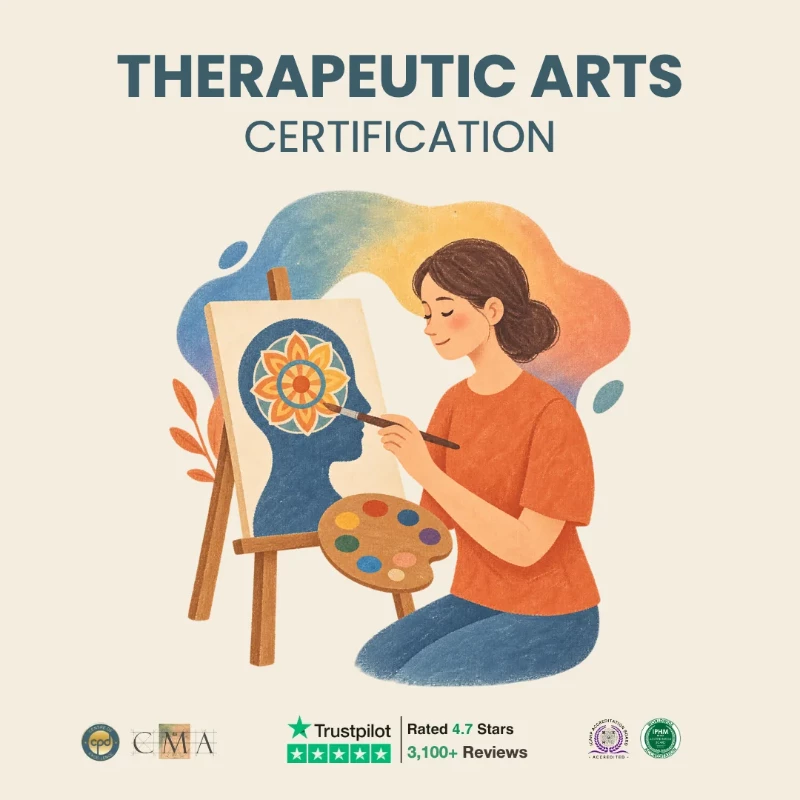
If you’d like your website language to come from confident, lived facilitation skills, you can explore Naturalistico’s Therapeutic Arts Certification, which weaves creative process, ethical awareness, and practical session frameworks for real client work.
Ready to Go Deeper?
Take the next step with a Naturalistico certification — designed for practitioners ready to deepen their expertise.
Explore the Course →