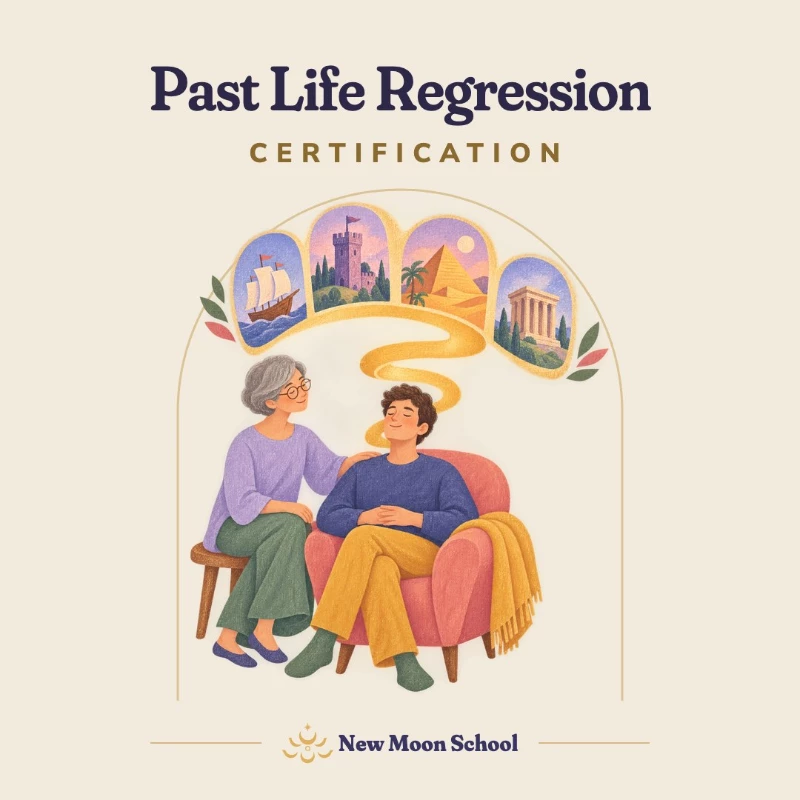
Integration is the second half of the journey—the part that turns profound inner experience into grounded, present-life clarity. A well-held closing is where ancestral wisdom meets modern, consent-centered facilitation.
Most regression processes use guided relaxation and focused awareness to explore what arises within. Many experienced guides hold this as a subjective experience—something that can be deeply meaningful without needing to be proven as literal history. This protects the client’s agency, especially because trance work can heighten suggestibility.
The deeper point is simple: even the most vivid scenes don’t create change on their own. Change comes from a coherent arc—intake, preparation, exploration, meaning-making, and grounded integration—so insights land cleanly and translate into real choices. As Brian Weiss reminds us, “Someday your current life will become another past life … it makes karmic sense to focus on the here and now.”
Key Takeaway: A strong past life regression session is measured by what changes afterward: ethical, consent-centered closing and integration turn vivid material into practical steps. By using non-leading language, grounding the nervous system, and co-creating small follow-through actions, clients keep agency and apply insights safely in daily life.
Why Integration Is the Heart of Past Life Regression
The value of a skilled regression space isn’t measured by how dramatic the journey looks, but by what shifts afterward. Integration is where perceived past-life (or symbolic) material becomes traction for present-life patterns, boundaries, and decisions.
After a session, people often notice echoes—recurring patterns in relationships, reactions to places, or familiar emotional “weather.” These echoes can illuminate why certain triggers feel outsized, or how long-standing fears keep resurfacing. Here’s why that matters: once a pattern is named, it can be met with choice rather than habit.
A practical first step is to capture what mattered while it’s fresh. Many facilitators encourage clients to note key highlights and themes within 24 hours. Those notes become the raw material for connecting the session to everyday life—work dynamics, family roles, money stories, or creative expression.
From there, integration becomes a weaving. The inner material comes together with the client’s current values and commitments, turning imagery into practical wisdom. Your role is to keep the focus on application—an approach aligned with a present-focused, integration-focused ethos.
From Story to Pattern: Guiding Integration Conversations
Clients don’t need anyone to certify their story as literal. They need help noticing the pattern, finding the lesson, and deciding what to do with it—without being led.
Many contemporary practitioners frame regression as meaningful inner narratives, which keeps the space inclusive for different beliefs. Think of it like working with a powerful dream: you don’t argue about whether it “really happened”—you ask what it’s revealing about the person’s inner world and current path.
In practice, I’ll often say: “We don’t have to decide ‘did this really happen’ to benefit. We can respect what you saw and felt and still focus on what it wants for you now.” That opening makes it easier to link regression material to similar challenges in the present—resentment, avoidance, grief that needs voice, or a boundary that’s overdue. Put simply, integration is choosing a lesson and practicing it in real life.
Some modern researchers suggest regression experiences may appear in symbolic form, expressing parts of someone’s personal narrative that were previously split off or hard to hold. Even through that lens, the work remains valuable—because symbols move us and can reorganize meaning. Many people report more clarity around persistent emotional struggles after integration-focused sessions, whether they interpret what arose as literal memory or metaphor. As Frederick Lenz put it, “All the records of your past lives are contained within your own mind,” which speaks to a traditional truth: the wisdom is already within, and the session helps bring it forward.
Non-leading prompts you can use:
- “What scenes felt most charged, and what do they echo in your present life?”
- “If that younger you had a message for you now, what might it be?”
- “What boundary or practice would honor the lesson of that story this week?”
- “Which parts feel like metaphor, and how could that metaphor guide a choice?”
- “What’s one small action that embodies the person you were becoming in that scene?”
Designing Ethical, Consent-Centered Closing Scripts
A closing script should leave the client clearer, steadier, and more autonomous—not dependent on you or on the story. That requires clean boundaries, informed consent, and non-leading language.
Ethical closings also clarify the limits of interpretation: regression is a subjective experience, not “proof.” This matters because trance work may increase suggestibility and the risk of false memories. It’s entirely possible to hold genuine reverence for ancestral and reincarnation perspectives while also acknowledging that some mainstream sources label regression pseudoscience. Clarity doesn’t dilute depth—it protects it.
Ethics writers emphasize that concerns about memory and spiritual framing belong in the consent process; without full disclosure, informed consent isn’t truly informed. Some critiques describe regression as not evidence-based by conventional research standards, and others summarize the scientific consensus similarly. Your role isn’t to debate anyone’s worldview—it’s to communicate clearly so the client can choose freely.
Consent-centered closing language you can adapt:
- “Everything you experienced today is honored as your inner wisdom. We won’t claim it proves literal history unless that’s a conclusion you choose for yourself.”
- “Because trance can heighten suggestibility, I avoid adding interpretations. You’re the authority on your experience.”
- “Here’s what we do know: the meaning you make and the steps you take now are what shape change in your current life.”
- “If anything feels unsettled later, please reach out. We can adjust pace, approach, or integration practices.”
- “If you’d like to learn more about methods or backgrounds, I encourage your own research before any future deep dives.”
Grounding Clients as You Close the Session
After deep inner work, a gentle landing matters. A steady closing arc helps clients feel oriented and ready to step back into their day.
Many people feel safer when there’s containment—time to breathe, settle, and set a simple intention—instead of an abrupt stop. Plan this from the start and reinforce it as you close: the arc, the aftercare, the pace. Revisit choice, too: clients can pause or stop anytime, move, sip water, or sit in silence.
Closing structure you can follow:
- Mark the threshold: “We’re going to return now, at your pace, bringing only what serves.”
- Re-anchor safety: Reintroduce familiar anchors used earlier—breath patterns, a phrase, or a gentle scent.
- Reorient the senses: Invite noticing of present-time senses: what the fingers touch, sounds in the room, a sip of water.
- Invite choice: “Would you like a few minutes of quiet or to speak a headline of what stands out?”
- Reflect and contain: Offer a brief, non-interpretive summary; name that deeper processing can continue over the coming days.
- Offer next steps: Co-create one small integration step, plus journaling prompts and a check-in plan.
Always track regulation and pacing. Without careful containment, deep regression work can risk destabilization, especially for those with a trauma history. Leave space. As Weiss says, “Patience and timing … everything comes when it must.”
Integration After the Session: Journaling and Follow-Up
Integration doesn’t end when the session does. Simple, consistent practices help insights turn into lived change—without creating dependency.
In the first day, encourage a short, structured “download”: key phrases, symbols, and charged moments, then gentle reflection on connections to present life. Many facilitators recommend writing the essence within 24 hours, then revisiting it a few days later to see what still feels alive. The aim is to apply insights, not collect stories.
Journaling prompts clients can use:
- “If this story were a guide, what does it ask me to do in the next 48 hours?”
- “What boundary or practice would honor the lesson here?”
- “Where do I feel a gentle ‘yes’ to change—and where do I need more time?”
- “What would ‘one notch kinder’ look like in how I speak to myself this week?”
Follow-ups work best when they’re brief and collaborative. A simple check-in at 48–72 hours can support momentum and surface integration questions. Commentary on effective helping relationships highlights the role of client engagement, supported by clear goals and practical tools like journaling. James Pandarakalam also suggests people may benefit more when regression work is directed toward specific present concerns rather than a vague hope that “everything improves.”
Simple integration menu you can offer:
- Daily 5-minute reflection: one sentence on how the theme showed up today.
- One boundary practice: a clear “no” or “not now” aligned with the session’s lesson.
- One nourishment practice: a ritual, song, or place that restores steadiness.
- One choice point: identify a decision this week where you’ll act from the new insight.
Making Strong Closings Part of Your Practice
Consistent, thoughtful closings can become your signature. They build trust, honor cultural roots, and keep your work grounded in ethical clarity.
At a practical level, systematize the arc: consent-centered intake, clear pacing, exploration, and gentle integration, with notes that bridge sessions. This kind of consistency supports a strong working alliance: shared expectations, empathy, and a clear rationale for how change unfolds. Evidence summaries suggest practitioners may outperform standard approaches when methods are tailored and there’s strong agreement on goals and tasks.
Keep your toolkit flexible and lineage-aware. Blend reframing, mindfulness, and body-based awareness into individualized integration, while respecting each client’s cultural and spiritual framework. Culturally sensitive work honors origins without appropriation or imposition.
Finally, let your worldview be transparent and kind. Some authors argue a reincarnation lens can offer unique insight into personality and meaning-making. You don’t need to convince anyone; you only need a respectful container that helps clients discover what supports their well-being now.
Practice builders:
- Create a one-page integration handout with prompts and pacing tips.
- Standardize a 10-minute closing sequence you can adapt per client.
- Document themes and agreed next steps; revisit at the start of the next session.
- Set a 48–72 hour check-in policy for integration support and safety.
- Maintain lineage respect: name sources, avoid appropriation, credit cultures of origin.
Conclusion: Mastering Integration and Closing Scripts
Past life regression becomes genuinely supportive when the story turns into aligned action. With a clear arc—from induction through a paced, ethical close—insights land well, clients feel steady, and integration naturally flows into everyday choices.
Your closing scripts are the bridge. Use them to reinforce autonomy, choose one or two doable steps, and keep the door open for follow-up. Encourage clients to monitor how they feel afterward; if something consistently feels off, adjust the pace and approach. Stay alert for red flags in any helping relationship—blurred boundaries, judgment, or missing safety planning—and keep your own standards uncompromising.
Integration is not a single event; it’s an ongoing process of revisiting and re-applying wisdom as life evolves. As Frederick Lenz wrote, life can feel like a string of knots—and the craft is loosening them, one gentle step at a time. Keep refining your closings, practicing your scripts, and letting tradition and contemporary care meet in your hands.
Master Past Life Regression
Build ethical closings and integration skills with Naturalistico’s Past Life Regression course.
Explore Past Life Regression →