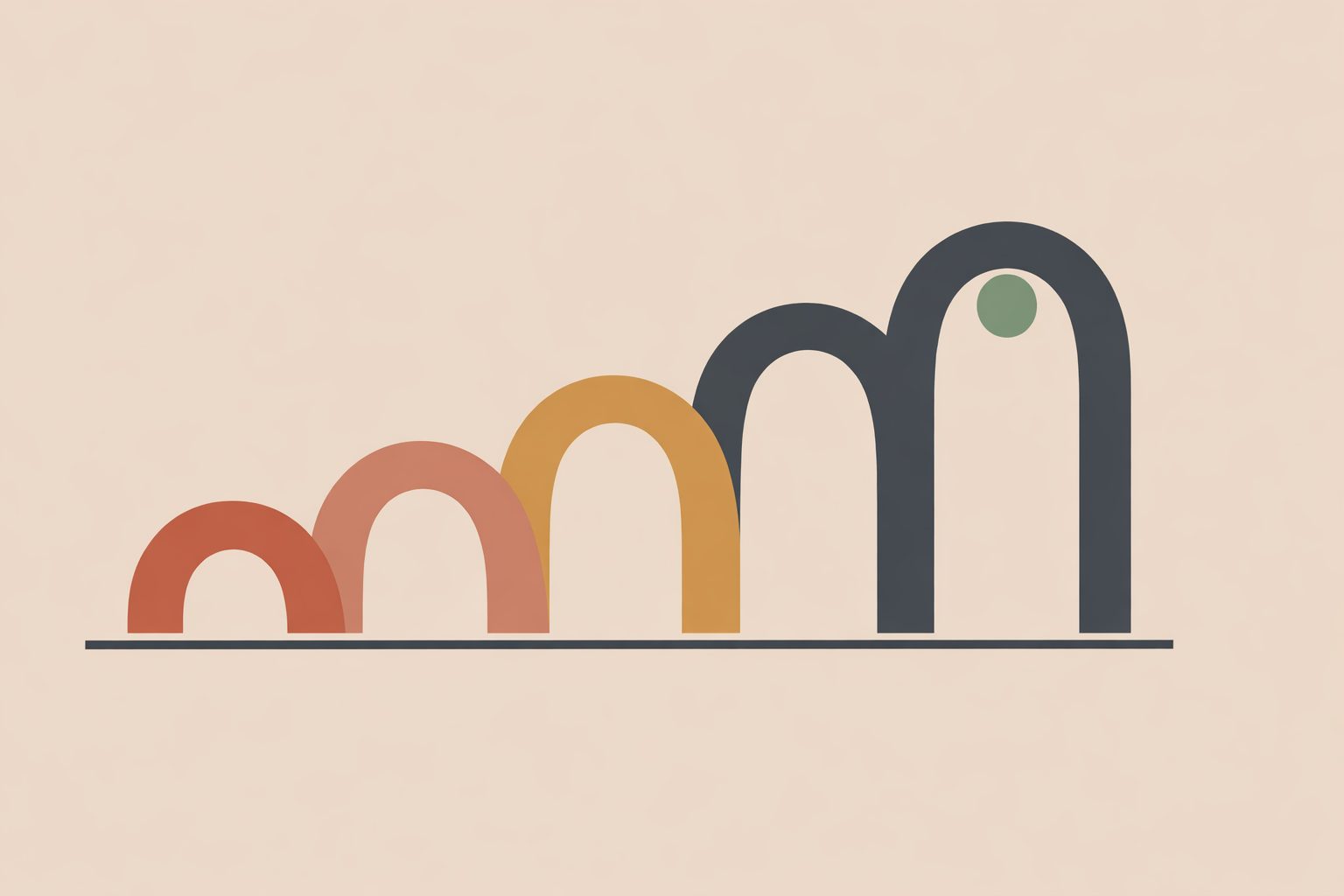
Mapping five clear stages turns scattered sessions into one coherent journey—from first contact to lived integration. It helps you meet each person where they truly are, while honoring both ancestral wisdom and modern research.
Change is rarely linear. People arrive with different histories, capacities, and day-to-day realities. A simple stage map gives you shared language for the “dance” of behavior change—so you can respond to what’s happening now, instead of forcing a plan too early.
The COM-B lens (Capability, Opportunity, Motivation) is especially useful for understanding what’s shaping choices today, and the readiness stages from the Transtheoretical Model help you anticipate how commitment often unfolds over time.
Naturalistico teaches this as a systems view: hormones, digestion, energy, and the nervous system aren’t separate projects—they’re one living ecology. That keeps sessions focused on patterns and real-life outcomes like steadier energy, better sleep, kinder self-talk, and more reliable habits—practical outcomes that land best when the timing is right.
Most importantly, Naturalistico blends current findings with ancestral foodways and culturally rooted practices. Traditional knowledge and careful practitioner observation are meaningful forms of evidence, and this five-stage map is designed to hold both—guiding clients from awareness to embodied daily living.
Key Takeaway: A five-stage map helps you match coaching tools to a client’s readiness, constraints, and culture—moving from safety and story-mapping into commitment, skill-building experiments, and long-term integration. Using COM-B and maintenance thinking keeps plans realistic, respectful, and more likely to stick.
Stage 1 – Awakening & Safety: Meet clients where they are
Stage 1 is about emotional safety and honest awareness. Before strategy, create a space where someone feels seen, respected, and clear about what coaching can (and can’t) do.
Many clients aren’t ready for a structured plan on day one. The early readiness stages often include ambivalence and protective habits; moving too fast can strain trust. A better opening is presence: What feels off-rhythm? What’s already working? What would “steady” look like in three months?
This is also where the COM-B lens quietly does its work. You’re listening for what’s really limiting change right now—Capability (skills/knowledge), Opportunity (time/resources/environment), or Motivation (meaning/drive).
Keep scope and boundaries simple and explicit: you support learning, habits, and accountability—not clinical decision-making. Then offer gentle, grounding skills that build self-awareness without pressure. Even basic mindful eating practices—tracking hunger and fullness, noticing energy dips, pausing before meals—can create space between urge and action and replace self-judgment with curiosity.
A soft intake that focuses on context (not prescriptions) might include:
- Two strengths you’re proud of this month
- One area that feels most off-rhythm (sleep, energy, digestion, stress, meals)
- Your cultural food staples—what feels like home in a bowl?
- One friction point we’ll be kind to, not force
Stage 1 isn’t about perfection. It’s about starting with real life—because that tone shapes everything that follows.
Stage 2 – Story-Mapping & Root Patterns: Turn lived experience into a metabolic map
Stage 2 gathers meaningful stories—sleep, stress, cultural foodways, energy rhythms—and turns them into a shared, simple map. From here, both coach and client can finally “see” the terrain.
Once safety is established, people usually share more honestly. Food logs become life stories: not just what was eaten, but when, with whom, and how it felt afterward. The aim is “precision with kindness”—blending lived experience and simple habit data in the spirit of precision coaching.
In practice, it helps to map a few universal domains:
- Energy rhythms: morning alertness, afternoon slumps, post-meal steadiness
- Sleep: time of lights-out, awakenings, morning refreshment
- Stress load: workload, travel, care responsibilities, life transitions
- Digestion: appetite, regularity, comfort after meals
- Meals: timing, protein anchors, cultural staples, shared rituals
- Movement: walks, lifting, dance, everyday labor
- Environment & community: kitchen setup, food access, family patterns
To connect dots without overwhelm, many practitioners use an organizing framework. A systems lens like HIDDEN—Hormones, Immune function, Digestion, Detoxification, Energy production, Nervous system—works well as a backstage “filing cabinet,” aligned with Naturalistico’s HIDDEN framing. It’s not a label; it’s a way of thinking in layers.
From there, co-create a one-page story map: two or three themes and a couple of realistic goals. Naturalistico models this kind of focused sequencing in its 7‑week plan, where story-based intake becomes a few clear projects rather than a sprawling overhaul.
“Food is not just fuel. Food is about family, food is about community, food is about identity.” – Michael Pollan
That’s why this stage matters so much. When you anchor change in what already feels like “us,” planning becomes more sustainable and respectful—exactly the spirit of heritage-centered work.
Stage 3 – Choice & Commitment: Co-create a grounded 90‑day vision
Stage 3 translates insight into a shared 60–90 day direction that honors culture and constraints. You choose what’s truly possible now—and commit to a rhythm that fits real life.
Here, COM-B becomes a compass: what’s the main bottleneck—Capability, Opportunity, or Motivation? When goals match the bottleneck, they feel more humane and tend to stick. It also shapes the questions that matter most: What benefits feel meaningful? What concerns might show up? Where will this live in the day?
Next, set a 90‑day container and break it into 14–28 day focus blocks. This is how a goal like “steadier mid-afternoon energy” becomes a sequence: meal timing anchors, then protein scaffolding, then an evening wind-down. Naturalistico’s 90‑day structure keeps attention tight without becoming rigid.
Micro-commitments help bridge insight into action—small enough to be realistic, meaningful enough to build momentum. The 7‑week plan shows how these week-to-week steps can create steady traction without overwhelm.
“True fitness is measured not in aesthetics, but in endurance, mobility, and metabolic strength.” – Wayne Chirisa
In this stage, “strength” becomes practical: steady rhythms, reliable meals, and a plan that respects identity and culture.
Stage 4 – Skill-Building & Experiments: Turn outcomes into daily actions
Stage 4 breaks the vision into tiny, testable actions. You reverse-engineer outcomes into skills—and then into daily practices that can survive real life.
Start with the outcome and work backward. If the outcome is steadier post-lunch energy, the skills might include balanced plate building, protein-forward lunches, and mindful pauses before afternoon snacking. Then each skill becomes a few small actions—like “two palm-sized protein portions by 2pm” or “10-minute walk after lunch.” This outcome-to-skill-to-action flow sits at the heart of Naturalistico’s precision coaching.
Run experiments in 14–28 day blocks—long enough to feel a shift, short enough to adjust quickly, consistent with short focus blocks. Baselines keep things resilient, too. For example, one shared heritage meal a week can support consistency without triggering all-or-nothing thinking, echoing weight-neutral coaching design.
Mindful eating tools add a humane buffer between urge and action. A pre-meal breath, a gratitude cue, or simply noticing aroma can help the body downshift before eating. Naturalistico’s mindful eating guide pairs practical scripts with self-soothing skills for stress-eating moments.
Keep tracking light but honest: two to four signals that match the current block (energy rating, post-meal comfort, lights-out time, protein anchors). That’s often plenty to refine the plan, aligned with weekly tracking.
“Perfectionism is a lost cause. Focus your energy on being the best you can be.” – Domonique Bertolucci
Gentle experiments clients often enjoy:
- Meal-timing anchor: “Eat within 60 minutes of waking on weekdays.”
- Protein scaffolding: “Two palm-sized portions by mid-afternoon.”
- Evening downshift: “Screens off at 9:30; brew sleep tea; lights out by 10:30.”
- Heritage meal ritual: “One shared family recipe each week, cooked slowly.”
- Stress buffer: “Before snacks, 2 calm breaths and one glass of water.”
Stage 5 – Integration & Maintenance: From trying to embodied living
Stage 5 is where new rhythms become “how I live.” Skills become familiar, setbacks become workable, and habits weave into identity, family life, and community.
In weight-neutral approaches, this often resembles a “Have” phase—ease over effort, alignment over constant fixing—consistent with maintenance sensibilities. The emphasis shifts from adding more to protecting what’s already working.
Practically, maintenance means tracking a few simple indicators that reinforce self-trust—energy stability, mood steadiness, basic meal regularity. These are felt, meaningful indicators. From the Transtheoretical perspective, maintenance is about consolidating gains and preventing backsliding—not endlessly piling on new goals.
Integration also honors culture as a true support system. Shared meals, seasonal rituals, and traditional preparations aren’t “extras”—they’re powerful maintenance tools. Naturalistico’s heritage-centered practices make room for this wisdom, so progress feels like belonging, not replacement.
Many coaches close this stage with a simple blueprint: what to keep, what to pause, and what to revisit seasonally. A light follow-up rhythm—monthly, then quarterly—helps clients feel accompanied over time, echoing the value of ongoing cadence in other professional support relationships.
As skills settle in, many people move from “I’m trying” to “this is who I am,” a shift aligned with identity-linked habits.
Conclusion – Weaving the 5 client stages into one metabolic coaching journey
When you hold the whole map—Awakening, Story-Mapping, Commitment, Skill-Building, Integration—sessions stop feeling fragmented. Each conversation has a clear role in a larger arc, grounded in systems thinking and cultural respect.
If you’re starting fresh, keep it simple: sketch five boxes on one page and add a few guiding questions to each. Build a 90‑day container with two or three 14–28 day focus blocks. Naturalistico’s 90‑day container offers a clean backbone, and the 7‑week arc shows how to adapt the stages for specific seasons of life and communities.
Keep scope clear from day one: you support learning, habit change, and accountability; you don’t make clinical decisions. That clarity protects trust and keeps work ethical, as outlined in Naturalistico’s scope guidance.
Finally, continue to listen for both kinds of evidence: today’s best insights and the older signals carried through family, culture, and tradition. Naturalistico’s emphasis on ancestral foodways helps keep coaching evidence-informed, rooted, and deeply human.
Your next step: choose one client this week, gently name their current stage, and design one tiny experiment that respects their story. That’s how maps become lived journeys—one well-chosen step at a time.
Train in Metabolic Coaching
Apply these five stages with confidence in the Metabolic-Health Coaching Certification.
Explore Metabolic-Health Coaching →