Coaches rarely lose clients because they “don’t know enough.” More often, people drift away when the plan doesn’t flow—early enthusiasm fades, sessions start feeling improvised, and the work either piles on too many habits or turns into open-ended talking.
Clients want progress without burnout, and they want proof the work can fit inside real schedules, not ideal weeks. A solid container helps focus effort, pace change, and make progress visible—even through travel, caregiving spikes, and the occasional lapse.
A 12-week coaching plan offers that kind of structure: long enough to build real momentum, short enough to keep attention. Paired with a steady weekly rhythm and brief check-ins, it gives both coach and client a shared map—so when life interrupts, the process bends without breaking.
Key Takeaway: A successful 12-week coaching plan creates momentum by sequencing change in phases and anchoring each week in a repeatable session flow. When intake is values-led and obstacles are planned for with minimum-viable routines, clients can stay consistent through real-life disruptions without burning out.
Why a 12‑Week Container Works So Well
Twelve weeks is long enough to create meaningful change and short enough to stay focused. It naturally creates a beginning, middle, and integration phase—more human than a rushed reset, and far more supportive than a plan with no shape.
Most people don’t need more information. They need a structure that helps insight become rhythm. Public health guidance on behavior change often points to an 8–12 week window as a practical span for building patterns that start to feel more automatic when goals, environment, and accountability line up.
Good coaching also respects the fact that change usually isn’t dramatic—it’s lived. As Karen Koffler puts it, coaching is not about directing people from above, but helping them connect with their own motivation. And as Mladen Golubic notes, “Unlike health fads that come and go, health coaching has strong evidence behind it backing its effectiveness for improving health and well-being.”
Traditional wisdom has long organized growth through cycles: seasons, harvests, and lunar rhythms. Calendars such as the Chinese lunisolar calendar remind us that change unfolds in stages, not straight lines. A 12-week plan mirrors that natural tempo: steady, cyclical, and realistic.
Modern programs reflect a similar rhythm. Many coaching models that run for about 12 weeks report meaningful improvements in lifestyle patterns and quality of life. In cardiac rehabilitation settings, 12-week programs are associated with significant improvements in exercise capacity and risk factors—showing what’s possible with consistent support over three months.
Consistency is even stronger when there’s ongoing connection. In one 12‑week lifestyle program, app-based feedback was linked with better adherence to activity and diet recommendations—essentially, structure plus relationship.
That’s why 12 weeks works: it honors lived reality while giving change enough time to settle. With the container set, the real craft begins with how you open—centering the person, not a preset protocol.
Weeks 1–2: Intake, Deep Listening, and a Values‑Led Vision
The first two weeks are for listening before planning. A strong 12-week journey starts by understanding how someone actually lives, what matters to them, and what “thriving” means in their world.
New coaches often rush this stage: a few goals are named, and suddenly it’s habits, meal ideas, and routines. But when context is missed, the plan can quietly conflict with values, responsibilities, or readiness. Approaches such as Motivational Interviewing emphasize values and context early, and that approach is linked to more effective behavior change than directives delivered too soon.
A grounded intake balances structure with spaciousness. Questionnaires and simple scales can be useful as self-awareness aids, but the real map comes from conversation: What drains them? What already works? Where is the friction? What support feels welcome?
Here’s why that matters: follow-through grows when people feel ownership. Research rooted in Self‑Determination Theory highlights autonomy and values-alignment as central for long-term consistency.
This is also where the coach invites what Motivational Interviewing calls change talk—the client’s own language for what they want and why. As Karen Koffler says, “Health coaching is not about telling people what to do; it’s about helping people harness their own intrinsic motivation to change.”
A values-led vision is often beautifully ordinary: “I want enough energy to cook three nights a week,” or “I want mornings to feel steady instead of chaotic.” Those goals work because they’re real—easy to recognize in daily life.
Early sessions should also establish scope, consent, and boundaries: how communication works, how information is handled, and when it may be appropriate to collaborate with other qualified professionals. That kind of boundary clarity builds trust.
When this phase lands well, people often feel supported before any major habit shifts. In one testimonial, a client shared that within a few weeks she was sleeping better, felt calmer, and finally had a realistic self‑care plan. That early relief is often the first sign the plan truly fits.
Map the Arc: Three Phases of Your 12‑Week Journey
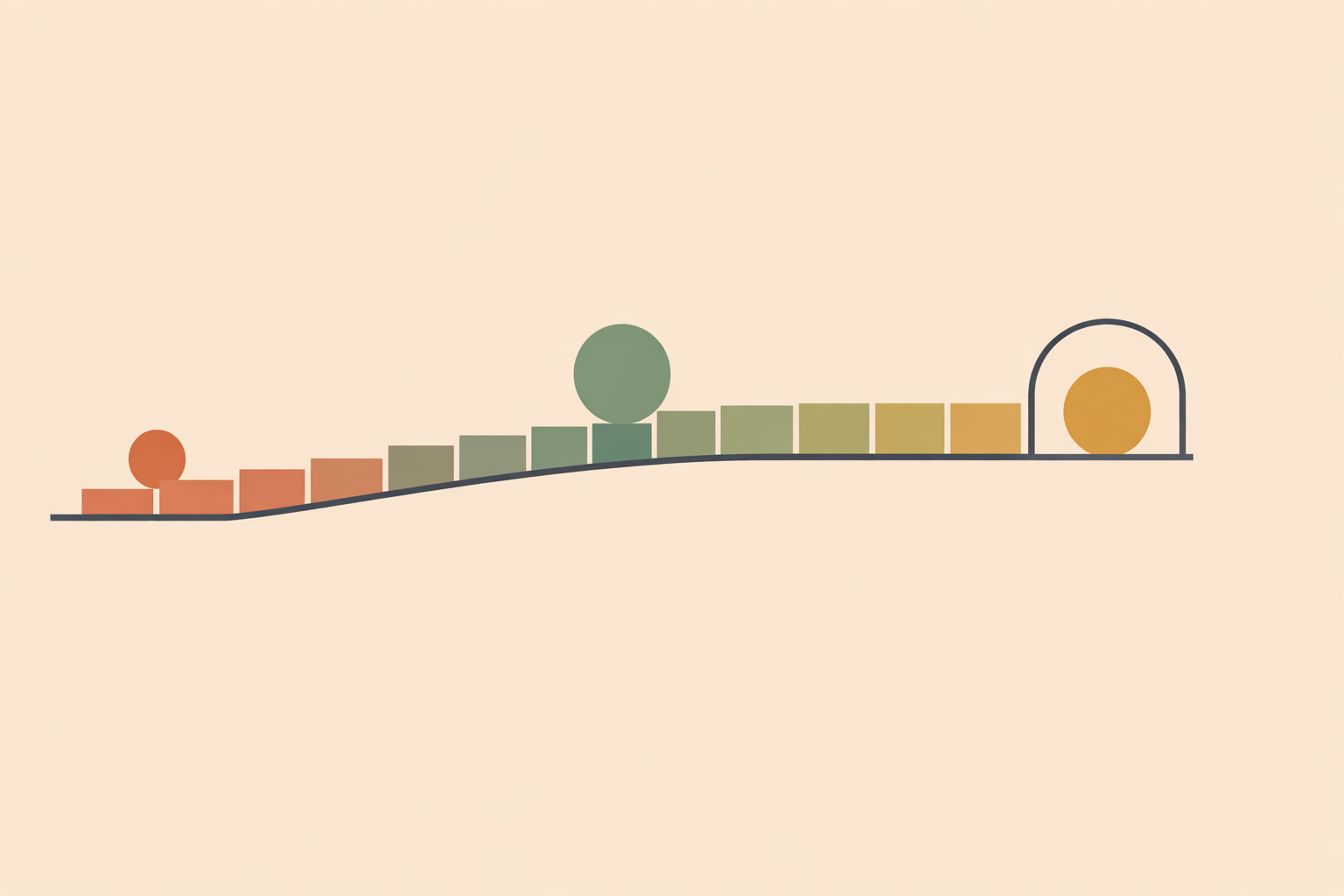
A 12‑week plan flows best when it’s shaped in phases, not packed into one block of goals. Foundation, expansion, and integration give each week a clear job to do.
Without an arc, sessions can be meaningful yet scattered. With an arc, each conversation builds naturally, and the client can feel where they are in the journey.
A simple three-phase structure works well:
- Weeks 1–4: Foundation and exploration
- Weeks 5–8: Expansion and experimentation
- Weeks 9–12: Integration and future‑proofing
In the foundation phase, the goal is stabilization—not intensity. You build trust, notice patterns, and start with a few doable practices. This aligns with staged models that emphasize phased implementation rather than an immediate overhaul.
Starting smaller protects people from overload. Gradual approaches that begin with manageable goals tend to show better adherence and lower dropout than plans that demand too much too soon.
By weeks 5–8, traction is usually stronger. This is where you experiment: deepen what’s working, test new supports, and connect domains—like improving an evening wind-down so mornings feel steadier, or building a simple meal rhythm that makes movement easier.
Weeks 9–12 are where the change becomes durable. Progress is named, reviewed, and woven into real life, which strengthens self‑efficacy—the felt sense of “I can do this.”
If integration is skipped, old patterns tend to creep back. Programs without clear maintenance strategies often see gains fade over time, which is exactly why the final phase deserves real attention.
Traditional systems have long described transformation as a passage—initiation, apprenticeship, mastery. Coaching language may differ, but the human pattern is the same: foundation, experimentation, integration.
And this pacing is kind to real lives. One client described seeking coaching because she was “burned out by my current routines” and needed a new way to manage stress. A phased arc meets that reality: no reinvention in week one—just steady, respectful sequence.
Design a Weekly Session Flow Clients Can Rely On
Clients tend to do better when each session follows a familiar rhythm. A repeatable flow creates steadiness, reduces anxiety, and reliably turns insight into next steps.
Many successful programs use a recognizable structure built around check‑in and review, reflection, planning, and summary. Think of it like a well-known trail: the scenery changes, but the path is dependable.
A simple weekly flow might look like this:
- Arrival: How are you today, and what feels most present?
- Review: What happened with last week’s practice?
- Insight: What patterns, obstacles, or wins stood out?
- Planning: What is the next small step?
- Closing: What are you taking with you from today?
The plan also needs to be small enough to live. Brief daily practices around 10–20 minutes often show good adherence in stress‑reduction programs, and many people do well starting even smaller. When clients don’t follow through, it’s often friction—not motivation. Even small barriers can reduce follow‑through.
That’s where practical tools shine. An if–then plan ties intention to a real moment: “If I finish lunch, then I’ll take a 7‑minute walk.” Research suggests these plans can support maintenance under stress—exactly when routines are most likely to wobble.
Review isn’t just “reporting back,” either. When coaches elicit and reinforce change talk, motivation strengthens over time, because the client keeps hearing their own reasons for continuing.
For many people, doing one regulating practice during the session helps it land in the body, not just the mind. In-session guided practice has been linked with more home practice and better outcomes. Even a single 5‑minute mindful breathing exercise can reduce state anxiety in students—showing how quickly a shift can be felt.
As Karen Koffler observes, many people already know what they “should” do. A reliable session rhythm helps close the gap between knowing and doing.
Sequence Core Themes: Movement, Rest, Nourishment, Stress, and Meaning
A whole-person plan works best when it follows themes, without becoming rigid. The craft is choosing the right focus at the right time—based on what will create support and momentum for that specific person.
Most clients don’t arrive with neat categories. Low energy might involve rest, nourishment, stress load, and disconnection all at once. Reviews in this area highlight how these factors often interact together, which is why coaching commonly spans multiple well‑being domains.
At the same time, trying to do everything every week scatters focus. A steadier approach is modular: pick one main theme for a stretch while lightly supporting the others. Often, the best first theme is the one that reduces strain fastest.
Movement benefits from a wider definition than “formal exercise.” Many people carry all-or-nothing beliefs, and those beliefs are linked with lower activity levels. A 12-week plan can rebuild trust through accessible movement—walking, gentle strength work, mobility, or “movement snacks” spread through the day.
Rest is frequently the lever that makes everything else easier. Sleep extension can improve daytime energy and self‑regulation, which helps other routines feel less demanding. Often it’s not about perfection—just one consistent wind-down cue and a kinder morning start.
Nourishment tends to work best through patterns rather than rules. Mediterranean-style dietary patterns are associated with better long‑term adherence and outcomes for many people than highly restrictive approaches. Traditional food cultures echo this with seasonal ingredients, plant diversity, shared meals, and eating with attention.
Stress support isn’t an “extra.” Small-dose breathwork and mindfulness are linked with reduced perceived stress in many programs, even when practices are brief. Essentially, stress support weaves through every other theme.
Meaning often belongs earlier than expected. When practices align with values and identity, they’re more likely to be maintained long‑term. Meaning is what turns “a routine” into “how I live.”
When these domains are sequenced well, clients often feel a growing sense of coherence, not just a list of habits. Programs that address multiple pillars tend to show broader quality‑of‑life gains, which matches what many experienced practitioners observe over time.
As one coaching client shared, “I’m cooking way more at home, and I feel like I finally have a sustainable routine that works for me.” That phrase—sustainable routine—is the true north.
Build a Safe, Inclusive, Culturally Rooted Plan
A strong plan isn’t only effective; it’s safe, respectful, and built with consent. People stick with the work when they feel resourced rather than pushed.
Once you know the priorities, the next question is delivery: timing, pacing, intensity, and framing. The same practice can feel supportive in one season of life and overwhelming in another.
With contemplative tools especially, good pacing matters. Research notes that some people report increased anxiety or distress with intensive mindfulness formats, particularly without careful support. Skilled practice here is gentle, choice-led, and responsive.
For many clients, modest practices are the most sustainable starting point: two minutes of awareness, slow nasal breathing, or simply noticing the feet on the floor. Short, accessible options in the 2–5 minute range often invite consistency better than “big” techniques, especially during stressful periods.
Inclusion also means widening what “progress” looks like. Rather than centering appearance or body size, many clients do better when the focus is energy, daily function, confidence, self‑trust, and relationship to routine. Weight-neutral approaches are associated with improved body satisfaction and psychological outcomes compared with weight-focused approaches, which fits a respectful, non-judgmental coaching stance.
Cultural rootedness matters, too. If you draw from yoga, tai chi, herbal infusions, prayerful reflection, or time in nature, name the roots with care. Invite clients to explore what feels authentic to their own background and beliefs, rather than stripping practices of context and turning them into trends.
Integrity also means staying within ethical behavioral scope. Extreme restriction and unregulated products carry real risks; public guidance notes some supplements and extreme diets have been linked with nutrient issues and adverse events. A steadier foundation—sleep rhythms, food patterns, movement, stress support, and everyday routines—keeps the work grounded.
When clients feel that level of care, the plan becomes collaborative instead of prescriptive. As one testimonial put it, “She is truly an expert in understanding your needs and building a plan specific to you.” That feeling of specific to you is a big part of what “safe” looks like in real life.
Plan for Obstacles, Setbacks, and Real‑Life Adaptations
A strong 12‑week plan expects disruption. Instead of treating setbacks as failure, it builds flexibility in from the start.
Real life brings travel, grief, caregiving, deadline weeks, hormonal shifts, poor sleep, and plain exhaustion. If the plan can’t bend, it won’t hold people through the weeks they most need support.
Behavior-change guidance frames lapses as learning opportunities. This protects clients from the “I missed a few days, so I ruined everything” spiral and keeps momentum intact.
One of the most useful tools is a minimum viable routine: the smallest version of the practice you agree on in advance for hard weeks. If–then planning supports this continuity, and research suggests it helps people maintain habits under changing conditions.
For caregivers and highly stressed clients, scaling down is often the most respectful choice. Tailored plans matched to caregiver burden have been shown to be more feasible and supportive than one-size routines. Even small practices like 1–3 minutes of paced breathing can shift arousal when chosen thoughtfully.
Adaptation also includes honoring different schedules. For shift workers, occupational guidance emphasizes routines aligned to shifts to support alertness and well‑being—working with reality rather than fighting it.
Neurodivergent clients may benefit from low-friction design: visual cues, timers, body doubling, shorter sessions, and one-step habits. Guidance for ADHD highlights the value of external structure and reminders—not as “crutches,” but as smart scaffolding.
When a plan includes adaptation from the outset, it’s easier for clients to build something that lasts. The goal is never perfection; it’s that sustainable routine that keeps working in the life they actually have.
From Map to Practice: Bringing Your 12‑Week Plan to Life
A 12‑week coaching plan becomes valuable when it’s lived, tracked, and refined. The framework matters, but the real craft is responsiveness—watching what changes, what sticks, and what needs adjusting.
With the foundation in place—deep listening, a phased arc, a reliable weekly flow, clear theme sequencing, and respectful boundaries—the process becomes a steady practice of attention. What feels easier now? What still feels sticky? Where does the client need more support, or less pressure?
Simple progress tracking helps clients notice shifts in energy, mood, confidence, and daily function. Across many domains, self-monitoring and feedback have been shown to enhance outcomes, and coaching approaches with structured accountability are associated with meaningful improvements in habits and quality of life.
Good practice also stays clear about scope: warm communication, clean boundaries, and thoughtful collaboration with other qualified professionals when appropriate. That’s how trust is protected over the full 12 weeks—and beyond.
Ultimately, a flowing 12‑week plan isn’t about controlling someone’s transformation. It’s about creating conditions that support it. Programs that combine movement, nourishment, stress support, and mindfulness often point to better sleep, calmer mood, and more realistic self-care overall, and multicomponent programs give a useful glimpse of why that blend works so well.
One client captured it simply: sleeping better, feeling calmer, and finally having a realistic plan they could carry forward on their own. That’s the heart of a well-built 12-week journey: a structure that helps people reclaim their rhythm.
Coach With Clear Structure
Strengthen your 12-week planning and session flow skills in Naturalistico’s Health and Wellness Coach course.
Explore Health and Wellness Coach →