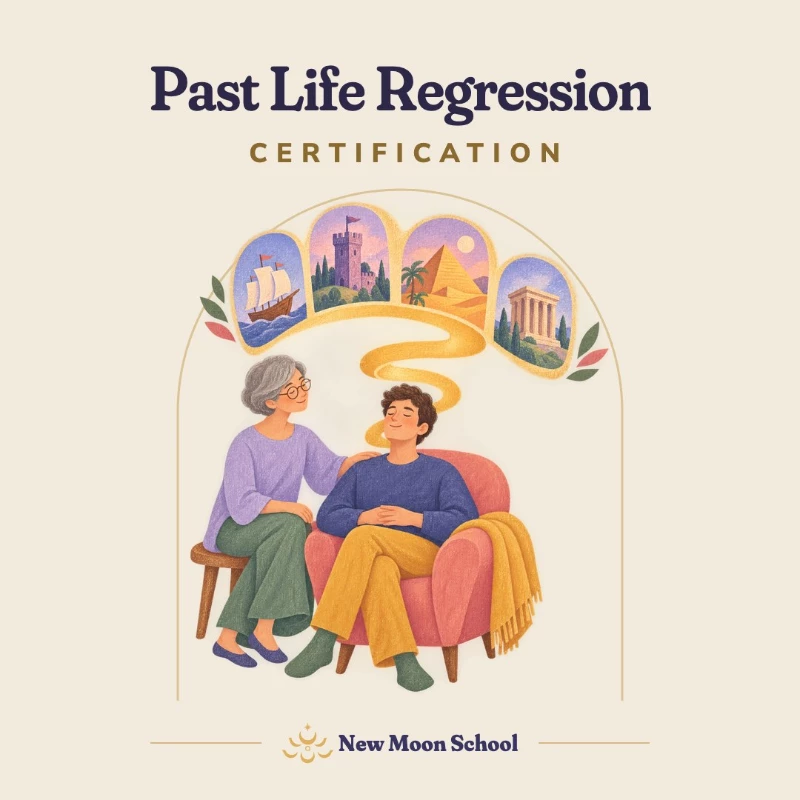
Past life regression holds deep meaning for many seekers, and it can also attract skepticism. The most sustainable way to grow this work is to market with kindness, clarity, and zero hype.
In practice, that means choosing trust over time rather than urgency, spectacle, or pressure. In conscious business circles, long-term trust is often highlighted as the steady alternative to manipulative tactics—and it fits this work beautifully.
It also means matching your inner intention to your outward message, so your presence feels congruent rather than salesy. When your outreach align intentions with action, the right people tend to recognize themselves in your words—without being pushed.
Key Takeaway: Ethical marketing for past life regression centers on transparency, consent, and non-leading language, prioritizing client autonomy over certainty or hype. When you frame sessions as meaningful exploration for present-life integration—without promises or pressure—you build durable trust and attract better-fit clients.
Ethical, No‑Hype Marketing for Past Life Regression
“Someday your current life will become another past life... focus on the here and now.” – Brian Weiss
That quote doesn’t require anyone to adopt a single worldview. It simply keeps the work anchored: whatever a person experiences, the real value is how it supports grounded, day-to-day growth—and that same groundedness makes your marketing feel safe.
From Selling Sessions to Guiding Thoughtful Explorers
A helpful shift is moving from “selling sessions” to guiding thoughtful explorers. Offer regression as a supportive inner journey for present-life insight—not a promise to prove history.
Many people arrive during tender, transitional seasons. Those vulnerable moments call for extra care with language, pacing, and consent, so curiosity stays empowering rather than suggestive.
From a traditional perspective, the practitioner’s role is clear: be a guide, not a guru. You hold a steady container, keep the process clean, and help people translate what they experience into real-life integration. When the work stays centered on present-life growth, expectations tend to become healthier and more realistic.
And yes—people often describe meaningful shifts after a session: more ease in relationships, a softened fear response, or a gentle loosening of old patterns. Practitioners commonly describe behaviour change as possible when the exploration is paired with reflection and ongoing self-awareness.
“I learned—again—that there is more to our lives than this plane we currently inhabit.”
You can invite that spaciousness—without needing to claim certainty about where every image comes from.
Be Honest About Belief, Evidence, and the Risk of False Memories
Clear disclosure is a form of care. Being upfront about belief, research limits, and memory risks protects autonomy—and it strengthens trust without flattening the spiritual depth of the work.
Some ethicists argue regression relies on an unproven reincarnation hypothesis, and that people deserve to know this before they participate. Traditional and cross-cultural wisdom around rebirth and ancestral continuity remains meaningful evidence in its own right; modern research simply asks different questions, and you can honor both by being transparent.
It’s also well established that hypnosis can increase suggestibility, which can lead to vivid experiences that aren’t necessarily accurate memories. In that spirit, UVA’s researchers advise against using hypnotic regression to investigate alleged past lives, because suggestion can shape reports more than people realize.
Public discussion reflects mixed views—from deeply meaningful accounts to questions about literal accuracy. That range isn’t a problem; it’s a reminder to frame the work with clarity and consent.
When a client wonders, “Maybe I made it up?” Ann Barham offers a grounded reframe: treat the material as illustrative metaphors—images that can illuminate present-life patterns whether or not they’re historically literal. Think of it like a dream: not “proof,” but often rich with insight.
Write Transparent Offers That Don’t Overpromise
Ethical offers are simple: describe what you do, what you don’t, and who tends to benefit—without guarantees.
Start with the process. Explain how sessions unfold, the role of relaxation and guided imagery, and the range of experiences people may have. Ethics guidance recommends setting realistically expectations, including the possibility of strong emotions and the uncertainty of specific outcomes.
Then choose language that respects timing. Avoid selling instant transformation. Instead, invite people into a participatory path where insight and integration unfold at their pace.
It’s true that practitioners sometimes witness big shifts—“a behaviour change, feeling more secure in relationships, or a massive karmic shift.” The ethical edge is not turning those moments into a universal promise, because that can create false hope. Use stories to show possibilities, not guarantees, and if you use frameworks like Problem-Agitate-Solution, keep it compassionate: name the challenge, acknowledge the pain, then offer regression as one supportive option among many.
Sample offer language you can stand behind:
- What I offer: Guided past-life exploration focused on insight, personal meaning, and present-life growth.
- What I don’t offer: Verification of historical details or guaranteed results.
- Who it’s for: Thoughtful explorers curious about symbolic imagery and willing to engage reflective integration between sessions.
- What to expect: A calm, guided process; non-leading questions; and space to journal or debrief feelings that may arise.
Share Stories as Possibilities, Not Proof
Stories make your work relatable—especially when they’re shared in a grounded way that protects choice and autonomy. Let examples spark curiosity, not act as evidence.
First-person accounts can help newcomers orient. One writer described regression as “watching a movie” through the eyes of another life. That kind of sensory detail is useful, as long as your tone stays calm and non-sensational.
When you share a case (even anonymously), highlight the client’s agency and the present-life takeaway. A helpful frame is to hold the images as illustrative metaphors—“story-maps” that reveal patterns without needing historical certainty.
Trust also grows when you share the human parts: surprise, resistance, integration, and the slow unfolding. Pages that offer a nuanced picture tend to feel more credible than highlight reels of constant dramatic wins.
Testimonials deserve the same care. Present them as individual experiences, not typical outcomes. One client described feeling “extremely emotional” and supported by their session—powerful, and also one person’s story.
Use Suggestion‑Safe Language in Copy and Sessions
Keep your words neutral and spacious. The goal is to reduce leading language so people have room to discover their own imagery and meaning.
Because hypnosis can amplify suggestibility—especially with leading prompts—ethical discussions caution that wording can contribute to implanted memories. That’s also why researchers advise to avoid regression for investigative purposes.
Suggestion-safe language doesn’t mean making the experience cold or mechanical. It means keeping the invitation soulful while the questions stay clean. Many educators recommend non-leading questions like: “What do you notice?” “What’s your sense of this place?” “What feels important right now?”
Suggestion‑safe swaps you can use today:
- Instead of: “Were you a soldier?” → Try: “What role, if any, seems to be present?”
- Instead of: “Is this the life where you were betrayed?” → Try: “What themes or emotions do you notice here?”
- Instead of: “You’re walking down a corridor…” → Try: “If anything is forming, what do you sense around you?”
One practitioner reflected on eventually “wrapped [their] head around” the idea of wandering souls carrying memories. Language like that can honor mystery and tradition—without telling someone what must be true or what they must see.
Spiritual Marketing Without Manipulation or Scarcity
Let values, boundaries, and genuine connection do the attracting. Pressure-free marketing is not only ethical—it’s naturally aligned with deep inner work.
Practically, it looks like truth-telling and resonance instead of urgency. Many teachers emphasize a heart-to-heart approach: speak your values, name what you stand for, and extend an invitation rather than pushing for a quick yes.
Boundaries belong in your marketing as much as in your sessions. Be explicit about who it’s for and who it isn’t, so people can self-select with dignity.
Behind the scenes, your inner stance matters. When you keep clarifying intentions, your message tends to feel cleaner and more consistent. And on the practical side, differentiated branding helps people understand what makes your approach distinct—without reaching for grand claims.
“All the records of your past lives are contained within your own mind, just as the records of your ancestors are contained within your DNA.” – Frederick Lenz
Lines like these can honor lineage and mystery, while still keeping the client in the driver’s seat and oriented toward the life they’re living now.
Build a Trust‑Rich Content Ecosystem Around Your Work
Move from sporadic promotions to a steady, educational presence. Consistency builds familiarity, and familiarity builds trust.
Start with a simple home base that clearly states what you offer and how to engage. Business guides often recommend consistent content that teaches and reassures—not just sells.
On social channels, share small, honest pieces: a two-minute grounding, a reflective prompt, or a plain-language post about what a session feels like. Strategy articles emphasize free value and real community engagement so your audience grows organically through relationship, not reach-chasing.
Content ideas to keep your ecosystem warm:
- Process peeks: “What non-leading questions sound like in session.”
- Integration tips: How to journal after a session; gentle ways to ground if strong feelings arise.
- Belief & evidence: A plain-language post about why you disclose limits and honor metaphor.
- Stories as possibilities: Anonymous composites that show how imagery can echo present-life themes.
“Learning that I was a powerful healer … moved me to pursue becoming a Reiki practitioner.”
Shared with care, these ripple effects become invitations, not prescriptions—examples of how symbolic imagery can nudge life choices without implying everyone “should” do the same.
Turn Ethical Intentions Into a Simple, Sustainable Marketing Plan
Ethical marketing works best when it’s repeatable. A simple plan you can actually stick with will carry your message further than bursts of intensity.
Here’s a lightweight, 90‑day plan to ground your practice:
- Week 1–2: Clarify stance and safety. Draft a one-page ethics statement: belief vs. evidence, consent, and your approach to non-leading prompts. Many ethics conversations emphasize non-maleficence and transparency as the foundation.
- Week 3–4: Refresh your offer page. Use the transparent framework above. Add a short FAQ on expectations, emotions, and integration support.
- Week 5–8: Build your content rhythm. Post twice a week: one educational post, one behind-the-scenes/process post. Send a monthly email with a short practice and a story-as-possibility.
- Week 9–10: Gather grounded testimonials. Invite a few clients to share what felt meaningful, not miraculous. Encourage specificity without absolutes.
- Week 11–12: Host a gentle intro session. Offer a live Q&A or mini-journey that demonstrates non-leading language and emphasizes present-life integration.
Measure progress with integrity metrics as much as bookings: Are inquiries thoughtful? Do people reference your ethics page? Are questions showing informed choice and grounded expectations?
Over time, integrity becomes a growth strategy. Many teachers emphasize kindness as effective long-term business practice, while exaggerated claims can erode trust and make the whole field feel less safe.
And throughout, keep circling back to the present. Ethical marketing for regression is, at its heart, a quiet commitment to supporting the life someone is living now—without pressure, without hype, and with deep respect for their inner authority.
Explore Past Life Regression
Past Life Regression helps you practice client-centered exploration with clear language, consent, and grounded integration.
Explore Past Life Regression →