Many practitioners know this moment well: a client can explain their pattern perfectly, yet their body still feels braced. Talking helps name what’s happening; it doesn’t always help the system settle. In fast-paced settings—coaching, classrooms, wellbeing services, community support—you need something that works mid-session and can travel home with the client.
That’s where breathwork for nervous system regulation shines. When it’s taught simply and offered by choice, paced nasal breathing with a slightly longer exhale can reduce activation, help make insights stick, and strengthen a client’s sense of agency between appointments. It complements your core method rather than competing with it, and it’s accessible across cultures—easy to scale from 1:1 work to groups.
Key Takeaway: Simple, consent-based breathwork—especially nasal breathing with a slightly longer exhale—can help clients downshift in real time and carry regulation skills into daily life. Used within scope and adapted to individual preferences, it supports your core method by making embodied change easier to access between sessions.
How the breath speaks to the nervous system: a map you can share
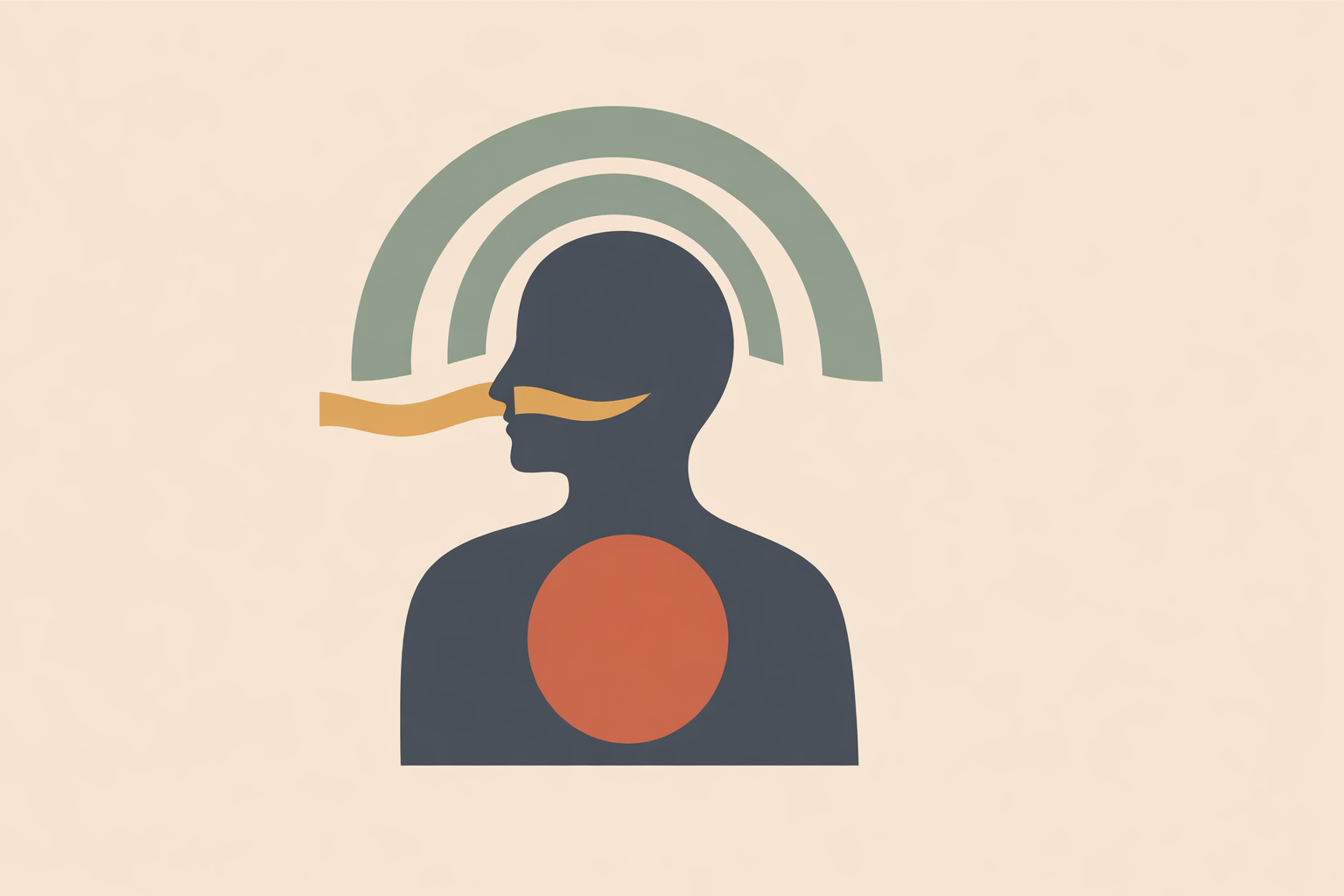
Clients don’t need a neuroscience lecture; they need a usable map. A helpful way to frame it is this: the breath is a dial into your state. Lengthening exhale tends to turn down activation, a steady rhythm builds steadiness over time, and chest vs. belly breathing can reflect whether the body is bracing or settling.
Here’s the plain-language explanation many clients appreciate: the nervous system is the body’s communication network for mobilizing and settling. The vagus nerve connects brain, heart, lungs, and digestion, and slower, more intentional breathing can activate a “safety” signal along that pathway. Essentially, you change the message by changing the breath.
Two levers do most of the work: pace and proportion.
- Pace: is breaths per minute. Many people find that breathing at about 5–6 breaths per minute supports HRV and a more settled state. Think of HRV as a snapshot of how flexibly the system adapts—often used as an indicator of resilience.
- Proportion: is how long the inhale is compared to the exhale. A longer exhale than inhale often cues a “settling” tilt. Put simply: exhales longer than inhales can signal that it’s safe to unwind.
That’s why approaches like 4-7-8 breathing or gentle paced breathing with an extended exhale are often associated with calmer states. Slow, diaphragmatic breathing is also linked to increased parasympathetic activity and lower stress markers.
For clients who like structure, simple protocols can help. A pattern sometimes called A52 (5-second inhale, 5-second exhale, 2-second pause) fits with broader findings that slow breathing can improve HRV markers and reduce “fight-or-flight” dominance. More broadly, slow-paced breathing can build vagal tone and HRV, supporting resilience to stress.
A simple metaphor makes it click: inhale is the accelerator, exhale is the brake. When life speeds up, you don’t slam the brake—you tap it smoothly and often. Extended-exhale breathing is that smooth tap.
Here’s a two-minute demo that’s easy to teach and easy to repeat:
- Minute 1: Seated or standing, hand to lower ribs. Inhale softly through the nose for 4, exhale for 6. Repeat 5 rounds. Notice what changes.
- Minute 2: Keep the 4:6 ratio, then add a tiny pause after the exhale—one comfortable beat. If it feels edgy, shorten the pause or skip it.
After a brief extended-exhale practice, clients commonly notice warmth in the belly, a softer jaw, or more space in the chest. What this means is the system is receiving a new signal: we can downshift now.
“You cannot control every thought that enters your mind, but you can always control the breath that follows it.”
When the mind races, that’s the invitation: you may not choose the thought, but you can often choose the next breath. With practice, that choice becomes a steady kind of agency.
Staying within scope: offering nervous-system breathwork ethically
Breathwork lands best when it’s offered with consent, clear boundaries, and plain language about what you do—and don’t—provide. That clarity builds trust.
Set scope early and keep it consistent. A simple framing helps: you’re teaching practical breath skills and supporting wellbeing habits, not replacing other kinds of support. Naturalistico’s definition of scope centers on what you’re truly competent to offer—see their framing on scope of practice.
Consent isn’t a one-time question; it’s an ongoing rhythm. Techniques work best when they are chosen, not imposed—an approach Naturalistico highlights where breathwork is offered, not imposed. You can normalize choice with a line like: “I’ll suggest an option, and you decide what feels right today.”
Before shifting intensity, do a quick check-in and offer easy modifications: slow down, shorten counts, change posture, or pause. This kind of “you can stop anytime” culture is central to consent-forward practice.
It also helps to maintain a small referral network and use clean, respectful language when something else is the better fit. Naturalistico’s ethics guidance encourages being explicit about referral pathways.
Finally, keep brief notes for continuity: what you practiced, what the client noticed, and what you agreed to try next. Naturalistico underscores simple record-keeping as a practical way to support quality and progress.
“Your breath is your power. Whether you realize it or not, you derive all your personal power from your breath.” — Catherine Carrigan, The Little Book of Breathwork
This lands best when it’s paired with an equally important truth: power includes the right to choose your pace, your boundaries, and your supports.
Designing a nervous-system-focused breathwork session
A strong session doesn’t begin at the first inhale—it begins the moment someone arrives, and it settles only after integration. A simple arc keeps things clear: arrive, regulate, integrate.
Arrive, regulate, integrate: a simple session arc
- Arrival: Welcome, brief check-in, reaffirm consent and choice. Offer grounding through orientation to the space and a few easy nasal breaths. Naturalistico emphasizes beginning with orientation and co-regulation—see their take on arrival and orientation.
- Intention + options: Ask what would feel most supportive today (settling, steadier focus, or gentle energy). Offer two or three breath options mapped to those aims, and remind them they can adjust at any time.
- Core practice: Begin with slow, nasal, diaphragmatic breathing. Many clients settle around 5–6 breaths per minute, while others prefer shorter counts at first. Extended exhale is often the simplest downshift. If you’re introducing a more structured pattern (like A52), do it after the baseline rhythm is established. Reviews associate these approaches with improved HRV and parasympathetic tilt.
- Micro-integration: Pause briefly to notice what’s shifting. This keeps the practice embodied rather than effortful.
- Close: Ease out slowly, orient again, and choose one small next step (for example, a 60-second extended-exhale practice before lunch).
- Aftercare (as needed): If someone feels “revved up,” soften and shorten the breath, reduce counting, and return to basics. Naturalistico highlights simple integration touchpoints like journaling prompts or planning cues to help the practice carry into daily life.
Trauma sensitivity stays central: prioritize choice, gentle pacing, and responsiveness to overwhelm cues (like breath-holding, fidgeting, or spacing out). Naturalistico emphasizes trauma-sensitive facilitation so the experience feels supportive rather than pressuring.
Across sessions, it often works better to iterate than to escalate. Build familiarity with slow nasal and extended-exhale foundations first, then add complexity only when a client can reliably return to baseline.
Two practical templates you can adapt:
- 60-minute 1:1: Arrive + orient, intention + choice, core practice (exhale emphasis), micro-integration, second round (steady or structured), close + reflection, planning + check-out.
- 30-minute group: Arrive, options, paced breathing at 5–6 breaths per minute, pause, second round, close + journal prompt.
Keep the agreement clean and consistent: session length, what’s included, and how (or whether) you’re available between sessions. When expectations are clear, the system often feels safe enough to learn.
Conclusion
Breathwork for nervous system regulation isn’t a niche add-on; it’s a time-tested way to help clients regain steadiness in everyday life. It honors ancestral wisdom while also aligning with modern measures like HRV—two languages describing the same human capacity for self-regulation.
When you weave in consent, stay within scope, and design sessions with thoughtful pacing, breathwork becomes more than a technique: it becomes a reliable skill clients can return to on ordinary days, not just hard ones. Start small, teach clearly, and integrate gently.
Master Breathwork Practitioner certification
Apply breathwork for nervous system regulation with confidence through the Breathwork Practitioner certification.
Explore Breathwork Practitioner →