Most practitioners meet intrusive-thought OCD in the same way: a client looks terrified, asks for certainty, and you offer calm reassurance because it feels kind and efficient. Then the question returns next session—again and again—and the “help” that soothed briefly starts to fuel the loop you’re trying to interrupt. You begin to recognize the pattern: repeated what-ifs, confession spirals, and subtle checks for moral absolutes. The practical challenge is steady and real: how do you stay supportive without becoming part of the ritual?
The core move is to target the response, not the thought. That means separating “having a thought” from “doing a ritual,” stepping out of certainty-on-demand, and using concise non-engagement language that validates discomfort without opening a fresh debate. From there, you can set scope-aware boundaries, introduce gentle ERP-informed experiments within a coaching role, and use mindfulness and lifestyle anchors—without letting any of these become reassurance in disguise.
Key Takeaway: Supporting intrusive-thought OCD works best when you stop providing certainty and instead help the person notice the loop: trigger, distress, ritual, temporary relief. By using brief non-engagement responses, setting process-focused boundaries, and applying scope-aware ERP-informed experiments, you can stay compassionate without reinforcing compulsions.
See the OCD loop clearly: thought versus ritual
A practical way to support OCD is to separate having a thought from doing a ritual in response. The thought may be shocking or repetitive, but the ritual—especially subtle mental rituals—is usually what keeps the loop alive.
Public descriptions note that obsessions and compulsions can become time‑consuming. In everyday coaching language: something triggers the mind, a thought appears, distress rises, and then the person does something to get relief.
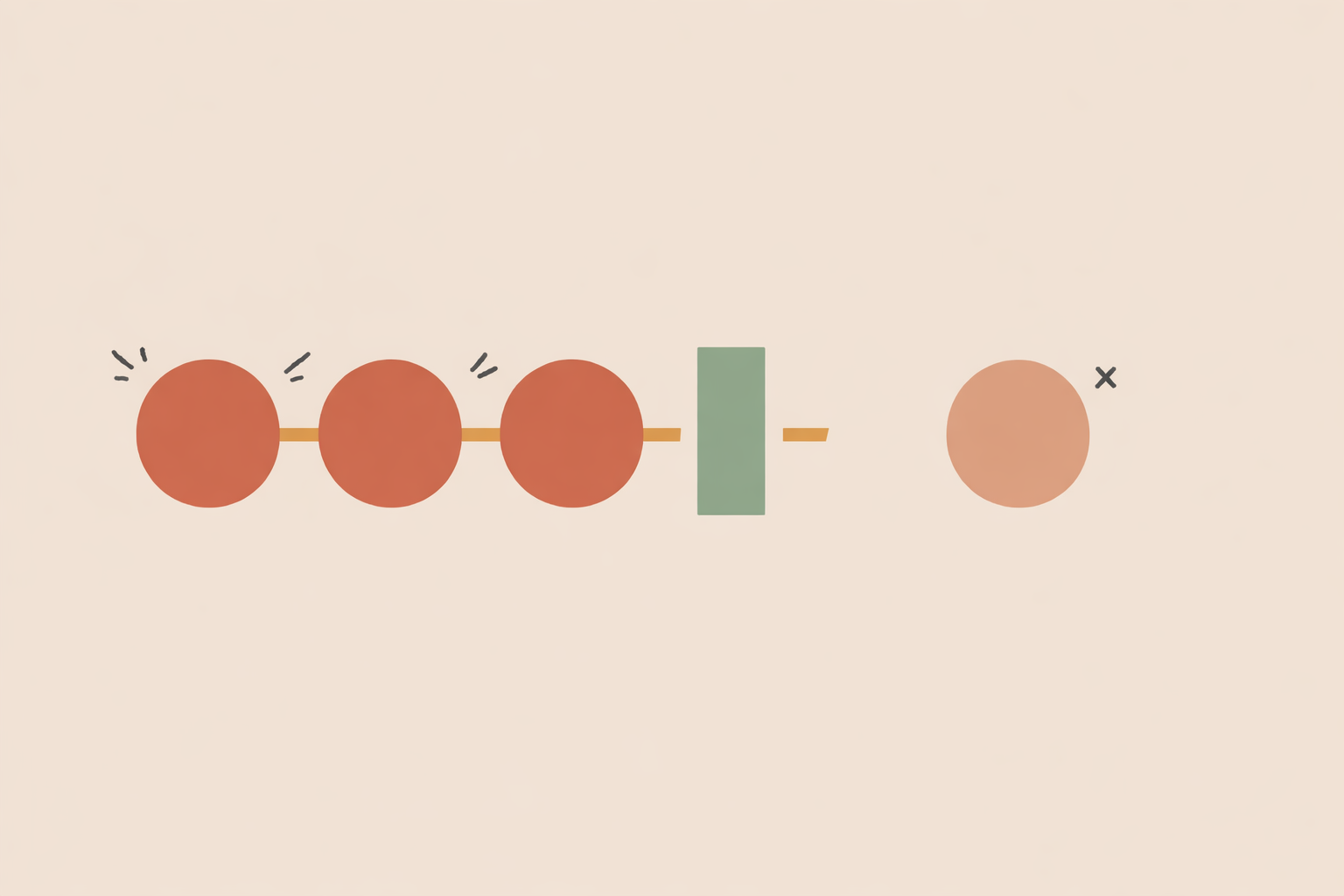
The theme can vary—contamination, sexual or violent images, moral or religious doubts, relationship uncertainty—but the pattern repeats: trigger → intrusive thought → distress → compulsion → temporary relief → stronger urgency next time.
Here’s why that matters: when distress drops after a ritual, the brain learns “good thing we checked.” Compulsions reduce anxiety in the short term, which reinforces compulsions over time.
Many people picture compulsions as visible actions, but OCD is often maintained by mental rituals: reviewing memories, testing feelings, silently repeating phrases, replaying conversations, or trying to figure out what the thought “really means.” The IOCDF highlights these as part of the same stuckness.
This distinction changes the conversation. If someone says, “I keep having this horrible thought,” the instinct is to address the content. Often the more useful question is, “And what happens next?” Do they Google? Confess? Check sensations? Replay the memory? Ask the same question again with slightly different wording?
Once the sequence is visible, support becomes more compassionate and precise. The thought is no longer treated as proof of character or danger. Instead, we recognize that suppression backfires, while a different relationship to the thought can loosen its grip.
This aligns naturally with long-standing contemplative traditions: thoughts arise and pass, and wrestling them can give them strength. Modern guidance says the same plainly—pushing thoughts away can make them more persistent.
“Become an expert about the tactics your OCD uses to manipulate you.” – Alicia H. Clark
That invitation to study the tricks helps people shift from being fused with the thought to observing the pattern—and it also helps you notice when support itself is being pulled onto the ritual side of the loop.
Spot when your help turns into reassurance
You’re probably feeding the loop when the conversation starts chasing certainty, moral proof, or immediate emotional relief. The issue isn’t asking for help; it’s when the help becomes repetitive, urgent, and built around making doubt disappear right now.
In sessions it can sound reasonable: “Do you think this means something about me?” “Can I tell you exactly what happened so you can say if it was wrong?” “I know you answered before, but I need to be sure.” These are classic forms of reassurance-seeking.
Confession loops can work the same way—sharing every detail in hopes you’ll say the one perfect sentence that finally lands. Scrupulosity resources note that repeated confessions bring temporary relief but quickly lead to renewed doubt.
This is why “just one more answer” can be so costly. The IOCDF notes that one more certainty check often gives short-term relief while deepening the overall pattern.
Reassurance can be subtle, too: analyzing whether they feel “anxious enough,” reading your facial expression for approval, asking if their reaction is “normal,” or testing your boundary with slightly altered versions of the same question. The IOCDF warns that analytical discussion and moral absolution can function as rituals.
The pivot isn’t to become cold. It’s to become process-focused: name the loop, and offer steadiness instead of certainty.
That can sound like:
- “I notice the urge to get certainty is really strong right now.”
- “I don’t want to help OCD feel stronger by answering that in a reassurance way.”
- “Let’s slow down and notice what the urge is asking you to do.”
- “Can we make space for not knowing, just for this moment?”
This stays kind without joining the ritual. Shame is never helpful here. In Guy Doron’s study, some participants felt blamed by unqualified helpers—an ethical red flag for any supportive role.
Boundaries are part of care. OCD-UK has warned about exploitative red flags and advises people to proceed with caution when support is offered without relevant training or oversight.
When you stop serving as a certainty dispenser, you can offer something far more effective: responses that acknowledge the thought without feeding it.
Non-engagement responses: language and practices that don’t feed the loop
The most useful support is often brief, calm, and deliberately unexciting. Instead of debating the intrusive thought, help the person notice it, name it, make room for discomfort, and return to the next meaningful action.
The IOCDF describes non-engagement responses as short statements that acknowledge difficulty or uncertainty without launching a new argument. The heart of the method is to disengage.
So rather than “That thought doesn’t mean anything,” a non-engagement response might be: “Maybe, maybe not,” “There’s that OCD story again,” or “I can handle not solving this right now.” Think of it like refusing to add wood to a fire—you’re not trying to make the spark impossible, you’re stopping the fuel.
This also matches ERP principles: people practice tolerating uncertainty and refraining from rituals. The Mayo Clinic describes this as learning to refrain from rituals while facing triggers.
ACT-style approaches can support this beautifully. Defusion means seeing thoughts as mental events, not commands. A trial of ACT for OCD linked acceptance and defusion with symptom reductions. Put simply: the goal isn’t to prove the thought wrong—it’s to reduce the authority you give it.
Traditional contemplative practice has held this wisdom for centuries: witness the mind, allow the wave to rise and fall, return to breath, posture, prayer, movement, or chosen action. When used skillfully, these practices build steadiness rather than control.
Sequence matters: notice, name, allow, return. Not notice then analyze; not allow then secretly check if the discomfort has gone. The IOCDF emphasizes non-engagement works best as a final response, not the start of a new reassurance loop.
Useful language includes:
- “A thought is here, and I do not need to solve it.”
- “Uncertainty is present, and I can make room for it.”
- “This may feel important, but I’m choosing not to engage.”
- “I can return to what matters, even with discomfort here.”
Mindfulness supports this best when it’s simple and non-perfectionistic: observe without judgment. It helps most when it’s not used as a constant anxiety check. The IOCDF cautions that mindfulness can become compulsion when it turns into monitoring.
The work is learning not to obey the thought. Non-engagement does not promise a clean mind; it builds a freer relationship with the mind you have.
From here, many practitioners also want to support gentle behavior change. That’s where ERP principles can be introduced carefully within scope.
Gentle exposure and response prevention within a coaching scope
At its core, exposure and response prevention (ERP) means turning toward what triggers the loop while choosing not to perform the usual ritual. The Mayo Clinic describes ERP as approaching feared objects or obsessions while learning not to do compulsive rituals.
Within a coaching role, this often looks like small, carefully framed experiments around avoidance, uncertainty, and reassurance reduction—paired with clear limits and referral routes. The International OCD Foundation emphasizes ERP is specialized and recommends working with helpers trained in ERP, which should guide your scope decisions.
So what can fit inside a coaching container? Typically not full ERP protocols for severe OCD. But there may be room for ERP-informed support: spotting reassurance habits, selecting one small response to change, and building tolerance for the discomfort that follows.
Micro-experiments might include:
- delaying a reassurance text by 10 minutes
- letting a question remain unanswered for the evening
- reading a triggering word without immediately neutralizing it
- leaving a minor uncertainty unresolved and noticing what happens
The focus stays on the response, not on forcing confidence. Essentially, you’re practicing non-obedience in small, sustainable steps.
It also helps to remember that general CBT alone may not move OCD much without ERP structure. Jenny Yip has similarly described seeing very little progress with generic methods before specialist OCD training—an important reminder that OCD has its own rules.
Referral pathways matter, especially with persistent or highly disruptive patterns. Professional materials recommend referral to OCD specialists for severe or complex presentations, including perinatal/postpartum OCD and prominent harm obsessions.
Perinatal presentations deserve particular care. Reviews estimate perinatal OCD affects around 3–5% of new mothers, and postpartum OCD resources emphasize the importance of informed, specialized support.
When done well, gentle exposure principles feel collaborative and transparent. You’re not promising a breakthrough—you’re helping someone build uncertainty tolerance and reduce ritualized responding over time.
Because this work can be demanding, supportive daily anchors can help. The key is making sure those anchors don’t quietly become rituals.
Mindfulness, embodiment, and lifestyle without creating new rituals
Mindfulness, breathwork, movement, journaling, and daily rhythm can all support steadiness—when they’re used as anchors, not secret safety behaviors. An anchor helps someone stay present with uncertainty; a ritual is used to make uncertainty disappear.
Traditional practice offers many grounded anchors: slow breathing, walking, chanting, prayerful repetition, time in nature, handwork, and sensory grounding. These can be deeply supportive when framed as ways to be with experience rather than control it.
Modern guidance aligns with this: sleep, movement, and nourishment can support wellbeing and lower overall stress, making it easier to practice non-engagement.
But the boundary is important. If bedtime routines, supplements, journaling, or grounding become mandatory acts to prevent a feared outcome, support has slid into compulsion. The IOCDF warns that relaxation and meditation can turn into rituals when used rigidly.
Mindfulness is most helpful as nonjudgmental awareness, not constant checking for whether anxiety has gone. The IOCDF cautions that mindfulness used as an “anxiety monitor” can itself become a compulsion.
Breathing and stress-management tools also work best as supportive additions. Clinical guidance notes they should complement ERP or other OCD-specific work rather than replace it.
A simple screening lens for holistic supports:
- Does this help them stay present with discomfort?
- Or is it being used to guarantee relief or safety?
- Can they skip it sometimes without panic?
- Does it reconnect them with life, or trap them in monitoring?
Journaling is a good example. Writing can support reflection, pattern-tracking, and emotional digestion. But it can also become proof-gathering, memory review, confession, or checking. OCD experts describe such recording as potential compulsions when used to seek certainty. In other contexts, repeatedly writing triggering words can be used deliberately as planned exposure. Same tool—very different intention.
The same goes for embodiment. A short grounding sequence (feet on the floor, longer exhale, soften jaw, look around) can help someone stay present while resisting a compulsion. If they repeat it until they “feel right,” it may need simplifying.
In practice, holistic supports tend to work best when they are:
- regular rather than urgent
- gentle rather than controlling
- values-based rather than fear-based
- chosen for nourishment, not proof
The aim isn’t to erase intrusive thoughts. It’s to strengthen presence, rhythm, and resilience so the person can respond differently when thoughts arrive.
Building intrusive-thought OCD support that doesn’t feed the loop
Helpful support for intrusive-thought OCD isn’t about finding the perfect comforting sentence. It’s about recognizing the loop, refusing to reinforce rituals, and offering steady guidance that builds tolerance for uncertainty over time.
In this frame, your role becomes cleaner and kinder. You’re not there to prove thoughts false, decode their meaning, or promise a fast transformation. You’re there to support a different relationship with intrusive thoughts—rooted in non-engagement, compassion, structure, and respect for scope.
That’s why OCD literacy matters. Public guidance stresses that generic reassurance can become part of the compulsion cycle, making specialized understanding essential. OCD-UK likewise advises caution when support is offered without appropriate training and oversight.
Over time, progress often looks like better functioning, fewer rituals, and greater tolerance for uncertainty—not the total disappearance of unwanted thoughts. Traditional mind-body wisdom has always pointed here: thoughts will come and go, and you don’t have to bow to each one.
The most important caution is simple: avoid becoming part of the ritual, and know when a presentation is complex enough to refer on. With that in place, your support can be a steady place where people learn to meet intrusive thoughts with more freedom—and less fear-driven doing.
Train in OCD Coaching Skills
Apply non-reassurance support with clear scope using the Obsessive Compulsive Disorder (OCD) Coach Certification.
Explore the OCD Certification →