Starting a crystal coaching business works best when it grows from your own story, honors ancestral stone wisdom, and rests on practical, ethical foundations. Build from that place—rather than chasing trends—and your work will feel steady, personal, and real.
Crystals have accompanied humans for millennia as amulets, symbols of protection, and anchors for prayer and balance. Many historical accounts of lithotherapy describe long-standing use for protection and balance across cultures, from Ancient Egypt and Greece to Vedic and Indigenous traditions.
Modern perspectives also highlight how expectation and ritual can shape what people notice—focus, relaxation, and felt “shifts.” Ethnographic insights suggest these experiences are highly personal, often influenced by belief, presence, and the meaning someone brings to the moment.
Key Takeaway: Build your crystal coaching business from lived experience, clear boundaries, and ethical practice—then validate it with real client conversations before scaling. When you treat crystals as supportive anchors for mindful ritual (not quick fixes), you can create sessions and offers that feel grounded, safe, and sustainable.
Step 1: Return to the moment crystals first "clicked" for you
Anchor your business in the moment you first felt the pull toward crystals. That memory becomes a thread you can weave into your offers, your language, and the boundaries that make your work feel unmistakably yours.
Maybe smoky quartz helped steady you during a major transition, or rose quartz softened the way you related to yourself. When your work comes from lived experience, clients often feel the sincerity—especially when you speak from practice, not performance.
Many people naturally relate to stones as companions in growth, which pairs beautifully with the “living beings” idea living beings—a reminder to approach crystals with respect, patience, and relationship.
If you’re rebuilding your connection, keep it simple. Many beginner guides encourage you to choose the stone you feel drawn to, then learn it slowly. It also helps to begin with just a few stones tied to clear intentions—rather than collecting without connection.
Try this short reflection to clarify your “why”:
- Which crystal first moved you, and what was happening in your life?
- What did you notice in your body, breath, or mood as you worked with it?
- What value or lesson did that moment give you that you now share with others?
Keep that story close. You’ll lean on it as you define who you support and how you guide.
Step 2: Decide who you’re here to support and what crystal coaching means to you
Define your niche by matching your story with the people who will resonate with it—and clarify what “crystal coaching” looks like in your hands: a relationship built around growth, practice, and presence.
Crystals tend to land best with people already open to intuition and ritual. So the question becomes: who’s already leaning in the direction you’re guiding? Spend time where those people gather—mindfulness communities, breathwork spaces, ancestral arts circles—and listen for the exact words they use for stress, transitions, confidence, or purpose.
As you position your work, keep it both grounded and ethical. Many resources recommend framing crystal work as support for well-being, self-awareness, and life direction. Clear welcome materials help: what sessions include, what they don’t, and what other support you might signpost when appropriate.
Clarify your role as a guide
“The first step in healing is to recognize that you are not broken.” – Michael Bernard Beckwith
This is a strong foundation for crystal coaching: people are not projects to fix. Your role is to hold a respectful space, offer practical rituals and reflective tools, and reinforce agency—“not broken” is the starting point.
Try a positioning prompt:
“I guide [who]—for example, newly promoted leaders, sensitive creatives, or new parents—using [how]—for example, stone‑anchored mindfulness, ritual, and values‑led planning—so they can [outcome]—for example, make changes gently, trust their voice, and stay grounded through transitions.”
Refine until it feels specific, honest, and easy to say out loud.
Step 3: Test your crystal coaching idea with real people, not just your friends
Before you build a big website or a full menu of offers, test your idea in simple, human ways. Real conversations show you what people actually want—and what they’ll invest in.
One principle worth taking seriously is validating with from your customers, not your friends. Friends mean well, but the people you intend to support will tell you what resonates, what feels unclear, and what they truly need right now.
Start with 15–20 gentle outreach messages in relevant communities. Be transparent that you’re shaping an offer and want to listen. Ask what they’re navigating, what’s helped, what hasn’t, and what kind of crystal-centered support would feel practical and comforting.
Listen for real-world language and willingness to invest
Two signals matter most: the exact phrases people use to describe their challenges, and whether they’d pay for support (and at what level). It also helps to review a few similar practitioners’ public offers so you understand typical formats and pricing—then clearly name what makes your approach different.
Use this simple script:
- “I’m building a small coaching offer that blends mindfulness with crystals to support [outcome]. If anything here speaks to you, would you be open to a 15‑minute chat so I can learn what would make this truly helpful?”
- On the call: “What do you most want support with right now? If a crystal‑anchored session helped you move the needle, what would that change in your day‑to‑day life?”
- Close with: “If a focused 60‑minute session plus a written ritual plan were available at [price range], would that feel worthwhile?”
“Time is the ultimate healer, but it’s what you do with that time that counts.” – Regina Brett
Those early conversations help you use your time wisely—focused on what you do with that time, and building something people genuinely want.
Step 4: Shape offers and pricing that honor both your energy and your income
Now turn what you learned into offers with clear boundaries and prices you can stand behind. The goal is sustainability—so you can keep showing up with warmth, consistency, and good energy.
Start small and specific. Many practitioners begin with 1:1 sessions, then expand into group circles or short series once their process feels smooth. Examples you can adapt:
- Clarity Session (60–75 minutes): Intention‑setting, stone selection, guided practice, and a written ritual plan.
- 3‑Session Arc (4–6 weeks): Opening, deepening, integration—each supported by a stone and mindfulness sequence.
- Monthly Circle (90 minutes): Theme‑based communal ritual with a single anchor stone and journaling prompts.
For pricing, blend practical research with body-based intuition. Try three potential price points and notice where your body tightens. Think of it like a tuning fork: when the number is off, your system often tells you—then you can adjust while staying grounded in what your audience can realistically pay.
Some coaches also keep stones nearby for steadiness in business conversations. Citrine and fluorite are often associated with self-belief and clarity, especially when practicing boundaries and clean communication around money.
“The human capacity for burden is like bamboo—far more flexible than you’d ever believe at first glance.” – Jodi Picoult
Build offers that can flex with your season of life—because you are far more flexible than you think, but you shouldn’t have to bend until you break.
Step 5: Build simple, ethical foundations so your business feels safe to grow
Create a grounded container—legally, financially, and ethically—so your work can grow with trust. This part can be simple, but it deserves care.
Give your practice a grounded legal and financial base
Many small practices form an LLC to separate personal and business assets, then file the appropriate paperwork locally and keep clean records. From there, consider an EIN where relevant, check local requirements for a general business license, and open a dedicated business bank account to keep finances clear.
It also helps to budget realistically. Some industry estimates suggest startup costs around $1,000–$6,500, plus roughly $3,000–$8,000 to support the first months of tools, marketing, and operations.
Align your sourcing with your values and your clients’ trust
Ethical crystal work starts with supply. Seek vendors who offer transparent origins, fair labor, and lower-impact practices when possible. Many practitioners prefer small-scale miners, local artisans, and surface or river collection where appropriate—and they share their sourcing approach openly, because clients can feel the integrity.
Keep safety in view, too. Some stones are toxic if ingested or if dust is inhaled. Skip risky practices (like DIY crystal-infused drinks) in client work unless you’re using methods that keep stones fully separated from water and you understand the material’s safety profile.
“The journey of healing starts with a single step, no matter how small.” – attributed to Lao Tzu
Putting these basics in place is that single step—the kind that makes the rest of your growth feel calmer and more trustworthy.
Step 6: Craft grounded crystal experiences that blend ritual, mindfulness, and intuition
Design sessions that feel both meaningful and practical. Use crystals as anchors for attention and intention, and be transparent about what supports the experience—symbolism, focused presence, and the power of ritual.
Some research suggests people may report energy sensations whether holding real or placebo stones, pointing to the role of expectation and suggestion. In practice, that’s not a flaw—it’s a doorway. When handled with care, ritual can help someone concentrate, settle their nervous system, and commit to meaningful change.
Use crystals as anchors for presence, not quick fixes
Mindfulness is widely recognized as helpful; some overviews note it reduces stress and supports mood. Crystals can serve as anchors for intention—a tactile reminder that keeps the practice close, like a bookmark for the mind.
Here’s a simple session arc you can adapt:
- Arrival (5–10 minutes): Breath, body scan, gentle orienting. Invite the client to hold or gaze at a chosen stone.
- Intention (10 minutes): “Today, I’m honoring [value] by [specific action].” Keep it clear and felt.
- Practice (20–25 minutes): Stone‑anchored mindfulness: breath synced with touch or gaze; or a short movement ritual.
- Meaning‑making (10 minutes): “What did you notice in your body? What felt supportive?” Offer symbolism as an option, not a rule.
- Integration (10 minutes): Co‑create a micro‑ritual: when, where, with which stone, and for how long.
Many crystal-practice traditions include simple steps like cleansing a stone, stating an intention, and visualization. Essentially, these are focus tools—small actions that help the mind and emotions organize around what matters. Journaling prompts or a brief affirmation can deepen that effect.
Ethics in session design:
- Stay client‑centered. Offer, don’t impose; invite the client’s symbolism and language.
- Be clear on scope. Frame your work as support for well‑being, awareness, and aligned action.
- Honor culture. Credit lineages and avoid appropriating closed ceremonies.
- Model consent. Ask before touch, before placing stones on the body, and before any photos or shares.
As your sessions mature, keep iterating. Notice what clients repeat, which stones become trusted allies, and how your own energy feels across a day. Ethnographic perspectives on energy work suggest a key ingredient is that intuitive being-in-the-moment-ness—your presence, your listening, and your ability to work with what’s actually happening.
Bringing your crystal coaching business to life
A strong crystal coaching business is built on relationship: your relationship with stones, with the people you support, and with the cultures and lands these practices come from. When that relationship stays central, your work tends to grow in a way that feels like home.
Keep your origin story close, choose a niche that matches your voice, and validate with real conversations. Build offers you can sustain, and let your sessions be both soulful and straightforward. Finally, protect the long-term integrity of your work with ethical sourcing, clear boundaries, and simple safety-minded choices.
Go Deeper with Lithotherapy
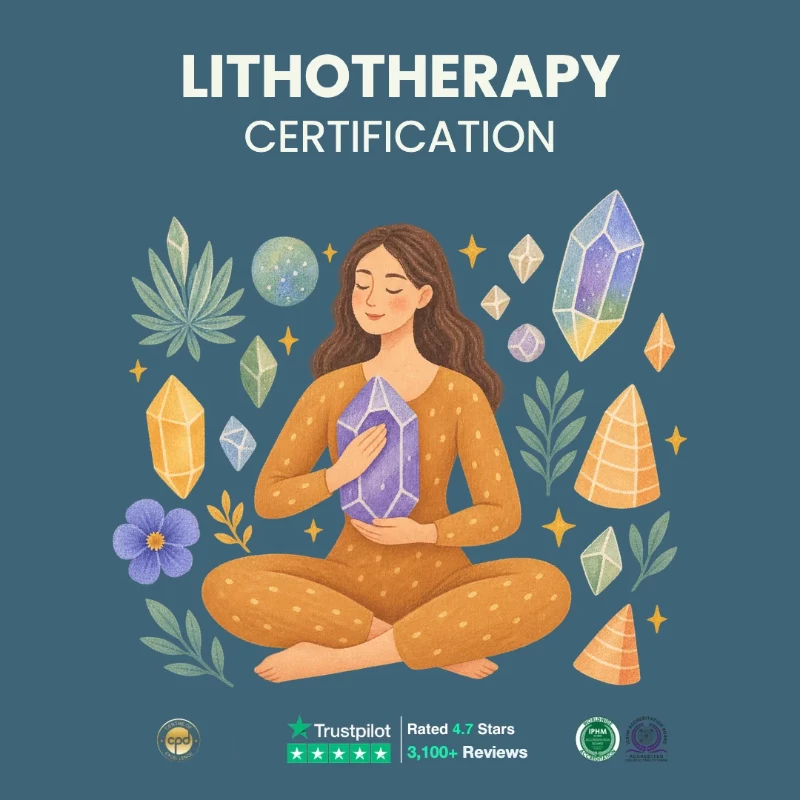
Deepen your crystal coaching skills with Naturalistico’s Lithotherapy Certification and build confident, ethical, practice-ready sessions.
Explore Lithotherapy Certification →