Coaches who support clients with intrusive thoughts often meet the same moment: a client asks, “Are you sure?” or “But what if…?” A clear answer can bring instant calm—and then the doubt returns, louder, demanding another answer. Sessions slowly shift from building capacity to chasing certainty, and loved ones can get pulled into the same loop between meetings.
The most supportive move is rarely “solving” the thought. In intrusive-thought work, reassurance can function like a compulsion—so the work becomes validating the emotion while refusing to feed the doubt. That means coaching the process: naming the loop, redirecting to skills and values, and using repeatable frameworks that build tolerance for uncertainty rather than trying to erase it.
Below are the session-level patterns to watch for, language that comforts without colluding, and practical structures that help clients move from relief-seeking to durable confidence—while staying clear about boundaries and when to invite specialized support beyond coaching.
Key Takeaway: Support clients with intrusive thoughts by validating distress while refusing to provide certainty that reinforces the reassurance loop. Name the pattern, redirect to skills and values, and use repeatable frameworks that build tolerance for uncertainty—while keeping clear boundaries and referring out when obsessive loops overwhelm daily life.
Reframing intrusive thoughts: from “who I am” to “what my mind is doing”
Reassurance loses its grip when intrusive thoughts are reframed as mental events—not moral verdicts. Think of the thought like a loud notification: attention-grabbing, not necessarily meaningful.
Intrusive thoughts can be vivid and frightening, but they aren’t a true measure of character. Educational resources emphasize intrusive thoughts are not character, and many educators note they’re universal; in OCD they can behave like false alarms—urgent, repetitive, and insistent.
This is where simple scaffolds shine. The Four Steps—Relabel, Reattribute, Refocus, Revalue—help clients identify “this is OCD,” attribute it to brain noise, shift attention, and treat the thought as mental noise. Compassion-focused practices echo the same move in gentler language, consistent with compassionate self-coaching.
Traditional contemplative lineages have named this for centuries: “wandering thoughts,” “mental winds,” the practice of witnessing without merging identity with the mind’s passing weather. This parallels modern defusion, while honoring ancestral understanding of the mind. As Jon Hershfield and Tom Corboy put it, “The problem with OCD isn't that you think too much. It's that you confuse the intensity… of your thoughts with their importance.”
From this viewpoint, clients can hold a steady paradox: “This thought scares me—and it doesn’t define me.” Amy Keller Laird’s reminder supports that frame: OCD thoughts are often “ego-dystonic,” contrary to one’s values, pointing to what the mind is doing rather than who the person is.
Spotting reassurance traps in real coaching conversations
Reassurance usually enters quietly, dressed up as “just checking” or “getting it clear.” Catching it early keeps the session from sliding into a ritual.
Common disguises include repeated “Are you sure?” questions, confession-style details that fish for “You’re fine,” or “just one more” requests to check, review, or Google. These can shift from genuine curiosity into repetitive checking. Many guides advise supporters to avoid reassurance because it can reinforce compulsions.
To tell clarification from compulsion, follow the pattern: urgency, repetition in slightly new wording, and relief that disappears quickly. Family education on reassurance-seeking reflects these markers. If the loop starts dominating daily life, it may be time to invite additional support beyond coaching.
It also helps to normalize “spikes.” Intrusive content often surges and settles; expecting that rhythm turns each spike into practice rather than an emergency. One educator captured the pace of change well: “As you've unwittingly trained yourself… it's going to take time and perseverance to retrain yourself.” And the Recovery Inc. line is a clean compass: “Refuse to act on an obsession, and it will die of inaction.”
Holding space without answering the doubt: language that soothes without solving
You can be deeply comforting without answering the question OCD is asking. The skill is emotional validation plus a gentle pivot back to tools, values, and choice.
Start by naming the pattern kindly, then redirect. Supporters often say, “I notice OCD is asking for certainty again,” which mirrors guidance on labeling the urge and redirecting toward coping skills. A short script like, “I can hear how hard this is—what skill could you use right now?” keeps warmth while stepping out of the compulsion.
Next, offer presence over answers. Some clients explicitly request, “Sit with me without answering,” which supports practicing uncertainty tolerance—consistent with approaches for reducing reassurance-seeking. In-session, scope-safe phrasing keeps agency with the client: “Notice what your body is doing,” “What would a two-degree kinder choice look like?” and “Let’s breathe together first,” aligned with scope-safe coaching.
Here’s why that matters: steady, relational language can help the body settle, making it easier to choose values over compulsions easily.
- Validate: “I see how strong that urge is.”
- Normalize: “Minds do this. You’re not alone.”
- Redirect: “Which tool do you want to try for two minutes?”
- Hold: “I’m with you. We can breathe and not answer the doubt.”
Frameworks that help: Four Steps, exposure principles, and psychological flexibility
Frameworks reduce improvising and help clients practice the same core moves until they become familiar. Three reliable anchors are the Four Steps, exposure-informed principles, and psychological flexibility.
The Four Steps—Relabel, Reattribute, Refocus, Revalue—create a repeatable rhythm: identify OCD, attribute it to brain noise, refocus for a set period, then treat the thought as noise. For many clients, that sequence turns a foggy spiral into something they can actually do.
Exposure-informed principles add courage and pacing: meeting feared experiences in manageable steps while resisting rituals like reassurance, building real confidence with uncertainty. This aligns with widely shared exposure-based principles in OCD education. In coaching, this is often adapted as values-led experiments rather than formal protocols.
Psychological flexibility adds the “why” and “where next”: contact values, unhook from sticky thoughts, and take small actions that reflect what matters, even with discomfort present—core elements of flexibility. Strengths-based reframes help too, especially when paired with tiny between-session experiments, consistent with positive psychology.
As Fiona Challacombe puts it, “When you deliberately do the opposite of what the OCD wants by exposing yourself to your fears and engaging in anti-OCD behaviour, you start to take the power away.” A framework makes that bravery feel structured rather than overwhelming.
Honouring sensitivity and ancestry: grounding practices that steady the nervous system
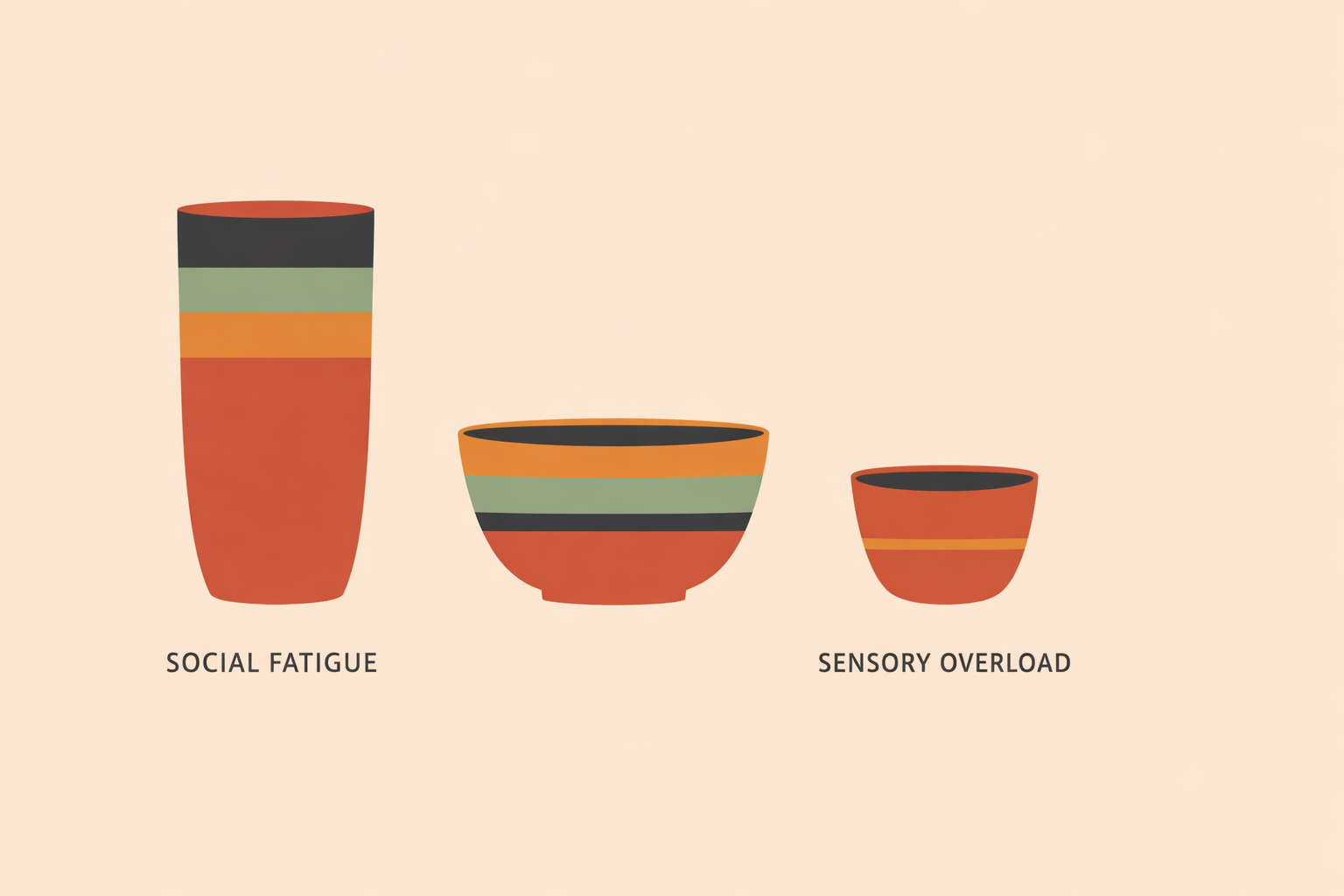
Reducing reassurance asks a lot of the nervous system—especially for highly sensitive clients. The more steadiness you can build, the more choice becomes available.
Many clients benefit from the DOES map of sensitivity—Depth of processing, Overstimulation, Emotional reactivity, Sensitivity to subtleties. It normalizes why certain cues land intensely and how that intensity can amplify loops, as described in HSP-focused coaching. Compassion protocols like RAIN (Recognize, Allow, Investigate, Nurture) also soften shame and support steadier engagement with hard moments.
Even small session openers can change the whole hour: paced breathing, orienting to the room, and naming a value for the session. Neuroscience-informed scripts recommend grounding and present-moment awareness for regulating before moving into complex content. Alongside modern techniques, traditional practices can be powerful anchors: a family song line, a brief prayer, a plant-based ritual, or a familiar movement sequence—always chosen from the client’s own lineage and held with respect, without appropriation.
Mindfulness fundamentals still hold: steady breathing, gentle muscle relaxation, and simple embodiment help clients ride spikes without leaning on reassurance—skills widely recognized as supportive alongside traditional calming practices. As James Callner encourages, “The only way over fear is through it — one step at a time — never giving up hope.”
Putting it all together: sustainable support for OCD intrusive thoughts without reassurance traps
Lasting change is built in small increments: track the pattern, practice the pivot, and keep returning to values. Over time, short-term soothing becomes long-term self-trust.
A practical starting point is tracking reassurance behaviors and reducing them gradually. Behavioral guidance often recommends gradually reducing reassurance so the change feels doable. Micro-experiments help: two minutes of “not answering the doubt” today, then three next week—paired with grounding rituals the client genuinely connects with.
Because reassurance often involves other people, team agreements matter. A simple script—“I’m with you. What skill can you use?”—keeps care intact while removing certainty guarantees, reducing the relational push-pull that can strain bonds. When everyone knows the plan in advance, spikes are easier to navigate.
Coaches also protect the work with clear boundaries. If obsessive loops start taking over time, disrupting relationships, or feeling impossible to shift, that’s a cue to invite additional support beyond coaching. Community spaces can complement 1:1 work too, offering shared understanding without turning into one-to-one reassurance.
Finally, systems make consistency easier. Naturalistico’s practice tools—intake forms that surface reassurance patterns, session trackers for micro-experiments, and between-session prompts—support routines that prioritize long-term wellbeing, as described in our tech stack guide. And Patrick McGrath’s reminder fits the heart of this work: “You do not have to live the life that OCD wants you to live – you can live the life that you want to live.”
Conclusion
Compassionate boundaries are one of the greatest gifts in intrusive-thought coaching. When you stop answering the content and start supporting the process—naming the loop, returning to values, and grounding in body and lineage—clients learn to trust themselves instead of the next reassurance.
Use simple maps: Four Steps for structure, exposure-informed principles for courageous practice, and psychological flexibility for wise action. Lead with language that validates emotion and redirects to skill. Support sensitivity with grounding and traditions that feel like home.
As with any work involving intense anxiety and compulsive loops, it’s important to keep scope clear and collaborate with additional specialized support when needed. Done well, this is steady, human work—less about perfect certainty, more about building the inner steadiness to ride the wave without needing someone else to hold it still.
Explore OCD Coach Certification
Use these process-first skills in the Obsessive Compulsive Disorder (OCD) Coach Certification.
Explore OCD Certification →