Between coaching sessions, one of the kindest ways to turn “mystery crashes” into clear, coachable insights is to track lived experience—energy, mood, cravings, and sleep—against daily rhythms. When ancestral wisdom meets a few modern tools, clients often discover why some days hum and others wobble.
In practice, glucose levels and energy can move together across the day. Many people feel their best when their day stays within gentle ranges—often described as fasting near 80–130 mg/dL and post-meal under 180 mg/dL. These aren’t “rules,” just a reference frame for steadiness.
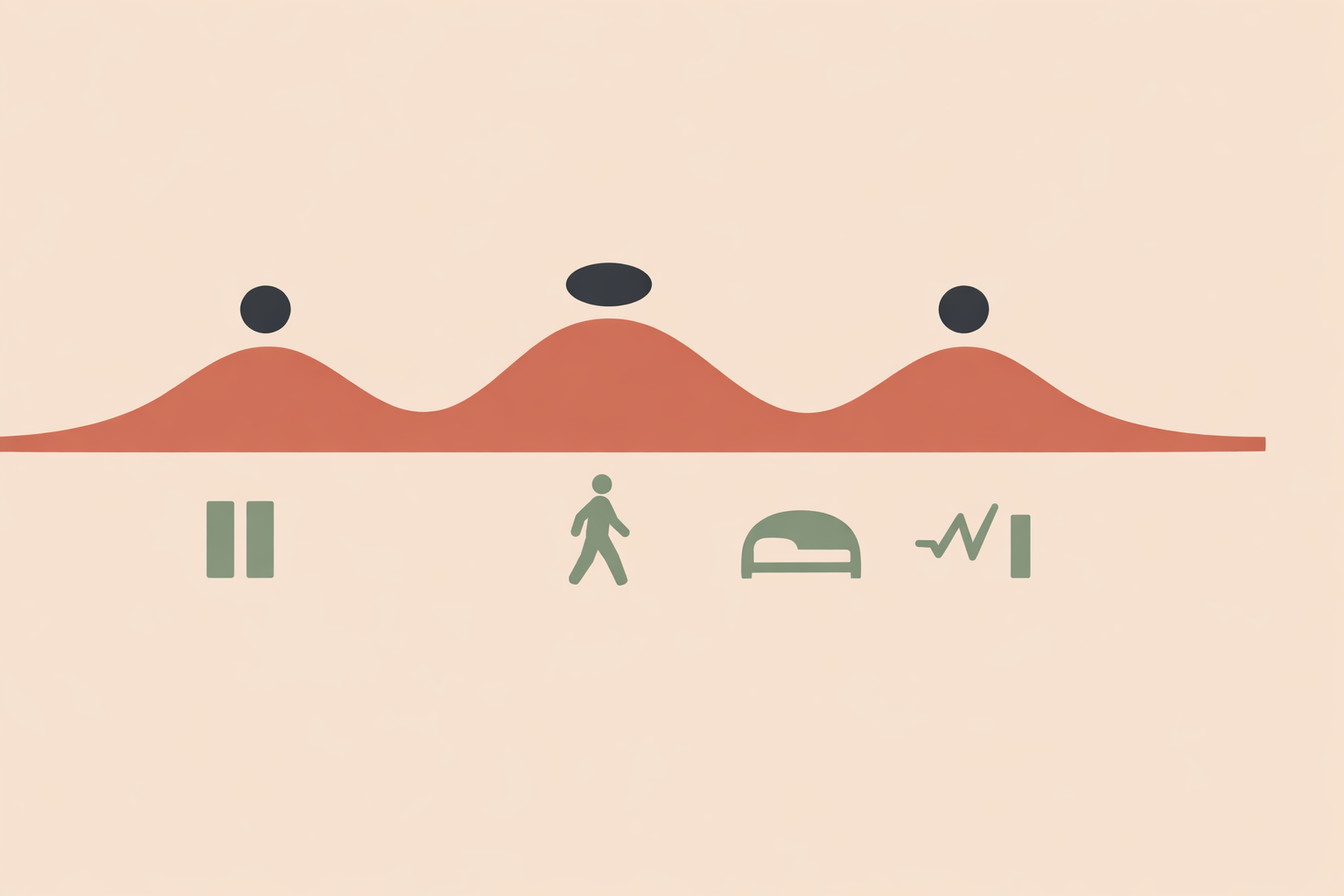
What matters most for coaching is the pattern: increased fatigue tends to show up alongside glucose shifts, matching what clients mean when they say, “I’m fine until 3 p.m., then I crash.” As one summary puts it, “Fatigue from glucose fluctuations is pervasive.” A simple, culturally respectful symptom log can surface these links quickly—without turning the process into something clinical.
Key Takeaway: A simple, story-first symptom log—paired with meal timing, stress, movement, and sleep—turns “mystery crashes” into recognizable blood sugar patterns. When clients can see these rhythms, they can test small, culturally familiar shifts that support steadier energy without turning the process clinical.
Why your clients’ “mystery crashes” are rarely random
Afternoon slumps, brain fog spurts, and “hangry” moments usually follow a rhythm. When clients track what they feel alongside when and how they eat, move, and rest, the story becomes visible—and workable.
Short windows of real-time tracking show that higher average levels correlate with increased fatigue across the day, with some patterns more pronounced in women. That’s why even a brief, consistent log can feel like someone finally turned the lights on.
Stress adds another layer to the same story. When pressure rises, the body releases cortisol and adrenaline, which can shift glucose upward—or create sensations that feel like a dip (shakiness, sweating, a fast heartbeat). Research on how cortisol levels influence blood sugar supports what many people recognize in real life: your calendar can show up in your body.
Reframing fatigue as a blood sugar story, not a character flaw. Clients aren’t “undisciplined” when they fade mid-afternoon. They’re living a glucose–energy pattern shaped by food timing, plate balance, sleep, and stress. Tracking replaces self-blame with practical levers—earlier meals, different meal structure, short walks, and more supportive daily rhythms.
Key blood sugar imbalance patterns to watch
Once clients see the “crash” isn’t random, shared language helps them spot what’s happening in the moment. Most experiences fall into three buckets—low, high, and reactive swings—with stress able to mimic any of them. Continuous-monitor findings that stress affects blood glucose echo what clients often report: life events can move the needle.
Low blood sugar (a dip below your steady state) often feels like:
- Shakiness, cold sweats, faster heartbeat
- Dizziness or lightheadedness, sudden hunger, irritability
- Confusion, weakness, anxiety, headache, heavy fatigue
These are well-described in guides to low blood sugar—though clients may say “wobbly,” “spacy,” or “urgent hunger.”
High blood sugar (a steadiness drift upward) can be subtler at first:
- Heaviness or sleepiness after meals, brain fog, intense cravings
- Thirst and more frequent bathroom trips
- Blurred vision or slow-healing scrapes (over longer time spans)
Some people notice few immediate signs, which is why linking meals to energy can help spot patterns of high blood sugar earlier.
Reactive swings (spike then drop within 2–4 hours) are the classic “wired, then crash” arc. After a high-glycemic or very large meal, clients may notice shakiness, dizziness, sweating, irritability, anxiety, or confusion—often right when they need steady focus. This timing-based pattern matches common descriptions of reactive hypoglycemia.
Movement can also shift the picture. During or after exercise, muscles draw more glucose from the bloodstream, which can trigger shakiness, dizziness, or weakness in sensitive individuals—consistent with exercise-induced dips.
Finally, stress overlays any of the above. Hormone surges can mimic or drive swings, with anxiety, irritability, dizziness, hunger, nausea, confusion, and fatigue arriving in clusters. Logging sensations alongside stress events helps clients tell the difference between a food pattern and a work or relationship storm—even when both land in the body.
From chaos to clarity: co-create a simple symptom log
A one-page log—built with the client, not for the client—turns scattered notes into a practical story map. The goal isn’t data hoarding; it’s noticing cause and effect in a way that protects dignity and builds momentum.
Start small. Between sessions, clients can capture energy, mood, cravings, sleep quality, and a few body cues (shakes, sweats, fog). Keeping entries in simple clusters makes it easy to maintain:
- Energy: steady, dip, crash
- Mood/Focus: clear, irritable, foggy
- Body Cues: shaky, sweaty, rapid heartbeat
- Cravings: none, mild, intense
- Sleep: quality and duration
Then add just enough context to connect sensations to likely drivers: time since last meal, rough plate composition (carbs/protein/fiber), caffeine or alcohol, stress events, movement, hydration, and sleep. It’s similar to practical glucose logs, simply adapted for coaching.
Build a one-page story map, not a giant spreadsheet. A humane tracking arc supports change without overwhelm:
- Awakening: establish safety and a shared story
- Story-mapping: identify themes and choose 1–2 goals
- Commitment: set a 90-day container
- Skill-building: run small “outcome-to-action” experiments
- Integration: keep what works, gracefully drop what doesn’t
These stages honor traditional rhythms while making smart use of modern reflection. To keep it practical, many coaches also use the COM-B lens—Capability, Opportunity, Motivation—so tracking fits culture, constraints, and readiness instead of fighting them.
Weave in traditional rhythms and daily cycles
Most clients settle faster when tracking follows natural tides: when they eat, move, work, rest, and sleep. Essentially, the log works best when it mirrors real life—especially the rhythms clients already understand from family kitchens and community practices.
Across many traditional foodways, steady meal anchors, fiber-rich plants, and protein-forward plates are familiar foundations. Our training highlights how “ancestral foodways inform tracking,” blending lived tradition with modern views of glucose dynamics. Practically, that often means noticing whether protein and fiber act like scaffolding for steadier energy.
Time windows matter, too. Encourage clients to check in for about two hours after meals—and up to four hours when helpful—to catch the spike-then-drop arc of reactive dips. This is where small, culturally familiar shifts can have outsized effects, like adding a palm-sized protein at breakfast or legumes with lunch.
Movement is a classic steadier. A 10–20 minute post-meal walk can soften spikes, and many clients report clearer focus when it becomes a daily anchor. Monitoring tools also suggest CGMs can reveal dips before fatigue fully sets in—matching what clients often feel once they build consistent post-meal movement.
Many traditions also use smaller, protein-rich meals or snacks throughout the day. In real-world logs, this approach often softens swings and supports steadier energy, even as research continues to map the full range of cultural patterns.
Sleep deserves its own line item. Short sleep—often less than 6 hours—tends to nudge morning glucose higher and amplify cravings. Logging sleep separately helps clients avoid misreading a rough night as a “food failure.”
To keep changes gentle and sustainable, a 90-day container with focus blocks works well (for example: meal anchors first, then protein/fiber scaffolding, then post-meal walks). Over time, the log stops feeling like “tracking” and starts feeling like self-knowledge.
Layer in numbers without leaving your coaching scope
Subjective logs come first. Then, if it suits the client and stays within scope, light-touch numbers—spot-checks, periodic lab results they already have, or a short CGM trial—can refine body awareness rather than replace it.
Continuous glucose monitors (CGMs) can offer helpful perspective. A small sensor provides real-time data every few minutes for roughly two weeks, helping people notice post-lunch dips, stress-related bumps, or exercise-related drops that self-report can miss. Real-world experience and research suggest CGMs can highlight metabolic “noise” from fluctuations, supporting steadier energy and focus through clearer feedback. And because self-reported logs can contain frequent inaccuracies, a short CGM window can be especially clarifying.
App-based systems have also made short-term tracking more visual and approachable, helping clients translate insights into everyday choices that support steadier patterns.
Fingerstick spot-checks (SMBG) can also complement symptom logs. A few checks across a week—upon waking, two hours after a typical lunch, and on a high-stress day—can help clients notice time-of-day trends, similar to guidance for before and after meal checks.
Big-picture markers like HbA1c provide a three-month average—useful context, but not a window into a Tuesday 3 p.m. slump. For clients who already have results, it can be helpful to pair that backdrop with everyday notes, as described in A1c basics.
Numbers can also support clients who don’t reliably feel early signals of a dip. This “unawareness” may affect about 40% of people with longer-standing imbalances, so a little objective feedback can help rebuild body literacy with confidence.
- Scope lines for coaches:
- Use numbers to inform habits, not to interpret or advise on medical issues.
- Keep language centered on energy, mood, cravings, and daily function.
- If numbers or symptoms raise concern, support clients to seek appropriate care.
Conclusion: track blood sugar imbalance symptoms between sessions the humane way
Tracking blood sugar imbalance symptoms between sessions isn’t about micromanaging numbers. It’s about helping clients reclaim steadier energy with a story-first approach: simple logs, cultural foodways, daily cycles, and (when appropriate) a few optional metrics—held inside a supportive coaching container.
Ethical metabolic health coaching stays within scope. Keep the work centered on learning, habit support, and accountability through symptom awareness—focused on well-being and personal evolution rather than clinical interpretation.
For structure, use a 90-day arc with 14–28 day focus blocks: start with meal anchors, layer protein and fiber, add post-meal walks, then refine sleep. Measure progress in human terms—fewer “hangry” moments, steadier focus, calmer afternoons. Those are the signs the system is settling and the client is finding their footing again.
When tracking is done with kindness, respect for tradition, and discerning use of modern tools, energy crashes stop being mysteries. They become maps—and maps help people return to steady ground.
Master Metabolic Health Coaching
Deepen this symptom-first approach with Naturalistico’s Metabolic-Health Coaching Certification.
Explore the Certification →