Your clients aren’t asking for bigger goals—they’re asking for steadier mornings, sharper focus, and resilience when work and life collide. Many coaches respond with more accountability or a new habit app, only to watch adherence stall when energy and recovery aren’t supported. Others are intrigued by biohacking but hesitate: is it just gadgets, is it ethical, and does it fit coaching scope?
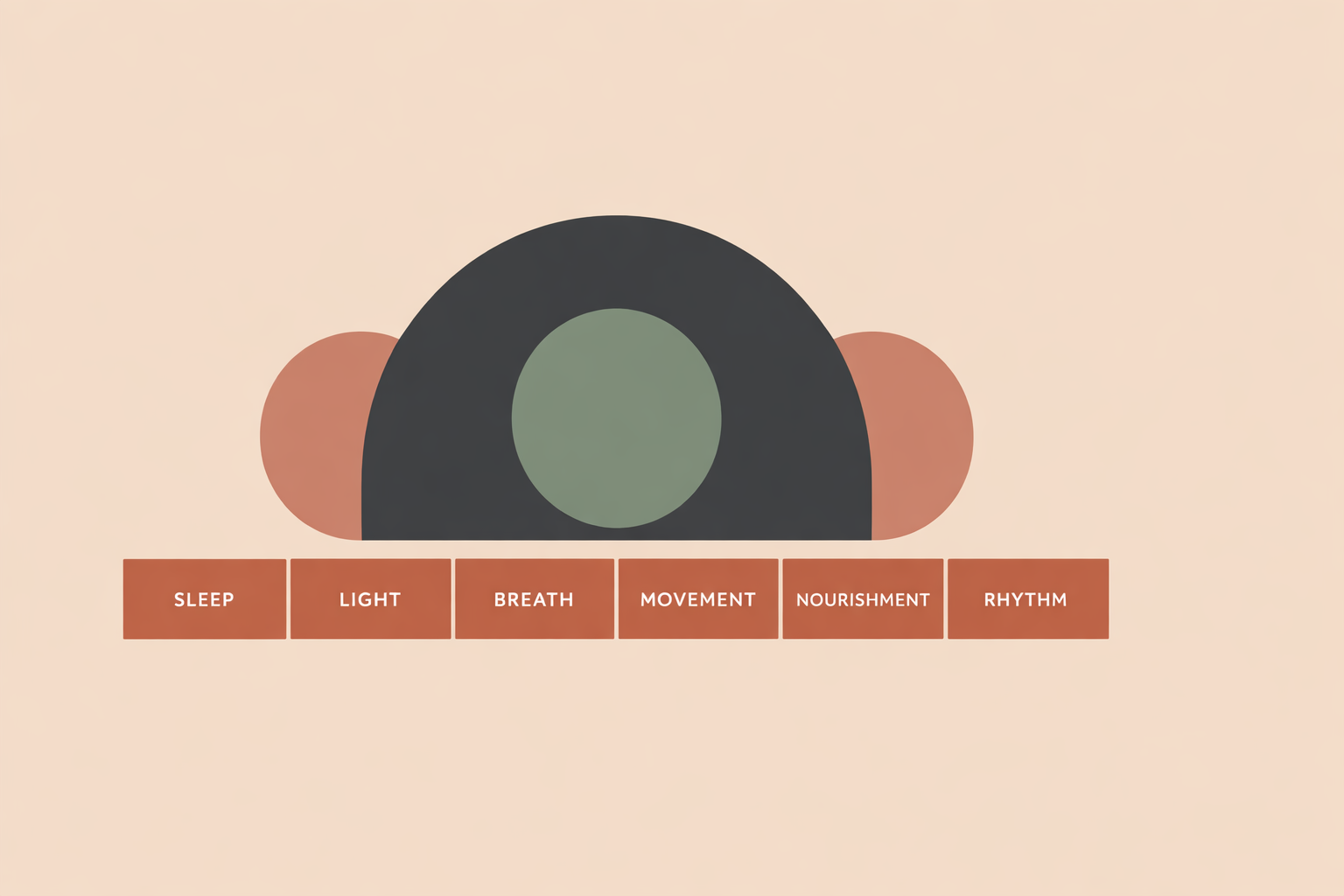
A calm, coaching-friendly approach is practical and immediate: guide low-risk, time-boxed experiments that improve how a client’s day actually feels—without drifting into anything that looks like medical practice. The foundations come first: sleep, light, breath, movement, nourishment, and rhythm. Traditional practices sit naturally here, and modern tools are simply optional add-ons when they genuinely help.
Key Takeaway: Bring biohacking into coaching as a foundations-first, ethical process: run small, reversible experiments around sleep, light, breath, movement, nourishment, and daily rhythm, using minimal data to guide decisions. This keeps clients focused on “felt” outcomes—steadier energy, clearer focus, and better recovery—without drifting into medical territory.
Redefining biohacking inside your coaching scope
Biohacking for coaches is calm, ethical, and iterative—not extreme. It’s guiding small, reversible experiments that clients can feel, understand, and sustain.
Forget stunts. Think structured self-experiments that blend tradition and modern tools with informed consent and realistic expectations. The grassroots culture values open science, shared learning, and accessibility—an easy match for coaching when boundaries stay clear.
A coaching-friendly definition of biohacking
Here’s a definition you can share with clients: “Biohacking is the art of tuning sleep, light, breath, movement, nourishment, and recovery—using simple data and self-awareness—so your days feel clearer and more powerful.” From there, coaches translate priorities into personalized protocols that support steady energy and mental performance without guesswork.
DIY biology communities emphasize public education, safety, and transparency—useful touchstones for teaching clients to test changes in low-risk ways. And as Sanzere reminds us, “Making changes in your life doesn’t need to feel daunting... don’t take on unrealistic modifications.”
Ethical guardrails that keep you grounded
Anchor every experiment in consent, reversibility, and fit with real life. A simple teach-back step—asking the client to explain the plan in their own words—confirms clarity and choice. Naturalistico outlines consent processes like teach-back to keep protocols scope-appropriate and client-led.
When you measure progress, keep it human. Use time-boxed experiments that are easy to reverse, and focus on felt improvements: steadier energy, fewer slumps, smoother evenings.
Start with sleep, light, breath, and rhythm
Before any advanced tools, build the foundation. Many clients see meaningful gains by aligning sleep, light exposure, breath habits, and daily rhythm—essentially, returning to what bodies have always thrived on.
Client-ready protocols for 2026 often start with circadian-aligned living, realistic nourishment, and sustainable movement. With consistent basics, many people notice shifts within 2–4 weeks—often enough to build trust and motivation.
Circadian-aligned living as a performance lever
Support clients to stabilize evening routines, reduce late-night light, and get morning sun. Patterns like reduced late-night light and increased morning natural light are associated with better sleep quality, and better sleep usually shows up as clearer thinking and easier mornings. Wearables can support routines that improve sleep quality, but the real driver is the rhythm, not the device.
“Biohacking should fit seamlessly into your life,” Sanzere says—so aim for consistency over perfection. Think of it like setting a metronome for the day: light, meals, and movement become steady cues the body can trust, and adherence often rises because the plan respects real life.
Low-tech neurohacking with mindfulness and breath
Some of the strongest “hacks” are traditional: breath, stillness, and deliberate pauses. Try mindful transitions—60 seconds of nasal breathing before deep work, a few quiet minutes after, and a short daylight break between blocks. Low-risk neurohacking like mindfulness, nasal breathing, and digital hygiene often delivers the best return on effort.
Practices such as meditation are associated with reduced stress and improved focus, which can translate directly into better performance consistency. As routines stabilize, add a weekly reflection: what felt easier, where did energy dip, and what’s the smallest next adjustment? That’s how foundations become long-term levers, not short-lived challenges.
Use data without obsession to support peak performance
Track a few simple signals to guide change—then get back to living. Data works best as a compass, not a courtroom.
Begin with a light dashboard built around sleep, energy, and focus. Establish personal baselines with a week or two of gentle tracking, then use the pattern to choose the next experiment.
Baselines, not perfection: what to measure first
Start with one subjective and one objective marker. For example: a daily 1–10 energy score plus total sleep time, with a quick note about unusual stress or a meaningful win. Over time, you’ll see what reliably moves the needle.
Wearables can help when they reduce friction; research suggests they can support well-being and stress management. The trade-off is that tracking can also create data overload if clients start second-guessing every number—so keep it light and purposeful.
HRV and mindful performance without data anxiety
Heart rate variability (HRV) is widely used as a recovery-readiness signal in performance settings. Some coaches invite clients to use daily HRV check-ins to guide a breath break, a lighter session, or an earlier night—then reflect on how that choice felt in the body and mind.
As Butcher notes, we can “bring technology in” to bio-track processes, but the emphasis stays on behavior and awareness. Keep improvement grounded in lived outcomes—steadier mornings, fewer slumps, calmer evenings—using client-centered markers and reversible experiments.
Design a layered peak-performance protocol for your clients
Think in layers: understand context, stabilize foundations, run one focused experiment, then add recovery or tech only if it clearly helps. That’s how performance becomes durable rather than fragile.
Start by meeting the client where they are. Many coaches begin with light baseline assessments—daily schedule, sleep rhythm, perceived stress, and simple movement observations—then introduce one change at a time so the system can adapt cleanly.
From assessment to first experiment
Week 1–2: Observe. Map wake/sleep times, light exposure, meals, movement, and energy patterns. Set a baseline with one wearable or a basic journal. Choose the bottleneck (late-night light, inconsistent meals, long sitting blocks) and design a 14-day, reversible experiment.
Week 3–4: Implement. Shift evening light, add a short dusk walk, or adjust meal timing. Hold everything else steady. Review the results and decide: keep, tweak, or retire—then move to the next bottleneck with the same calm, time-limited approach.
Recovery, mitochondria, and movement as your engine
Recovery is where adaptation happens. Getting adequate quality sleep and building strategic rest into the week is often what turns “trying harder” into genuine capacity. As clients stabilize recovery, they commonly report fewer energy crashes and more even focus.
Under the hood, foundational lifestyle work supports mitochondrial energy production—essentially, how cells make and use energy. Pair that with movement that matches the client’s season of life: morning walks, a few resistance sessions weekly, and short mobility breaks between meetings. In sport contexts, some coaches also explore approaches linked with reduced inflammation and improved resilience.
When foundations are reliable, advanced tools can be tested where appropriate and within scope: red light, sauna, cold immersion, PEMF, or compression. Keep these experiments time-limited, track felt effects, and stay focused on practical outcomes. As Butcher reminds us, sometimes you need to train the system peripherally, not just centrally—think breath, muscles, mechanics, and daily movement quality.
Blend ancestral wisdom with modern biohacking tools
Traditional practices have always supported energy, clarity, and resilience. When taught with context, respect, and consent, they stand shoulder to shoulder with modern tools—often as the core that makes everything else work better.
Consider hot–cold cycles: cultures around the world have used them for fortitude and recovery long before wearables existed. Today, athletes still lean on saunas and cold plunges for similar reasons—feeling more awake, more grounded, and better prepared for the next demand.
Honouring traditional practices as performance support
Breath practices, mindful movement, prayer, and contemplative pauses are time-tested ways to settle the nervous system and deepen focus. Modern frameworks may describe mechanisms with terms like photobiomodulation, but the lived wisdom is straightforward: regulate breath, align with light, and respect rhythms.
When teaching these practices, name their roots and avoid appropriation. Naturalistico supports inclusive, iterative integration of traditional practices with modern routines, refined through real-world community feedback.
Blending cultural roots with careful modern evidence
Ethical biohacking rests on dignity, safety, and responsibility. Legal analyses emphasize human dignity and environmental care—principles that naturally align with respecting cultural knowledge. DIY communities also promote open access and education, encouraging transparent sharing rather than secrecy or hype.
And it helps to remember that performance isn’t “mind vs body.” As Butcher notes, that split is a false dichotomy. Many ancestral practices support both at once—which is exactly what clients want: steadiness, clarity, and resilience as a whole person.
Turn biohacking into a clear, ethical coaching offer
Package your work so clients instantly understand what they get: foundations first, one focused experiment at a time, and simple ways to see progress. Keep boundaries transparent, respectful, and kind.
Design a journey that de-emphasizes gadgets and spotlights rhythm, breath, and daylight. Add technology only when it genuinely supports adherence or outcomes—never for prestige. That’s the heart of low-risk foundations.
Design a biohacking journey clients instantly understand
Position your package around three pillars:
- Align – sleep, light, and meals.
- Build – movement, focus, and recovery rituals.
- Refine – gentle data and time-limited experiments.
Make deliverables simple: regular check-ins, one experiment per cycle, and a brief decision at the end (keep/tweak/retire). Naturalistico’s method centers on scope clarity, informed consent, and “feelable” outcomes like steadier energy, smoother focus blocks, and better bounce-back after stress.
Measure ROI and stay within your scope
Stay in education and habit support. Avoid interpreting complex biomarkers or prescribing specific supplement or fasting regimens. When questions go beyond your role, refer to appropriate professionals and return to the coaching process.
Save the strongest safety boundaries for your offer itself. Frameworks restrict high-risk areas like genetic modifications; in coaching terms, that means avoiding extreme or unregulated domains. It’s also wise to caution clients about hazards from mega-dose supplements, and to keep perspective around restrictive eating patterns—very tight time windows have been linked to higher cardiovascular risks in observational research. Keep experiments sane, reversible, and aligned with the client’s real life. As Sanzere says, change shouldn’t be unrealistic.
Conclusion: next steps for biohacking in your peak performance coaching offers
Choose one grounded experiment—try it yourself first, then bring it to clients. For example: 14 evenings of lower light plus 10 deep breaths before bed. Many people notice tangible shifts within two to four weeks, and that early “felt win” creates momentum.
Keep the work steady and within scope. Skip anything extreme or unregulated; grounded habits in sleep, nourishment, movement, and stress regulation often outperform extreme “hacks” over time. Favor privacy, prudence, cultural realism, and iterative learning—principles at the core of Naturalistico’s sustainable protocols.
And remember Butcher’s invitation: be an n-of-1 first. Live the protocol, notice the shifts, then guide clients from real experience. That’s how biohacking becomes a calm, ethical engine for peak performance—and for a coaching practice built on doing right by people.
Master Ethical Coaching Biohacking
Apply these foundations with confidence in the Biohacking Certification Course.
Explore Biohacking Certification →