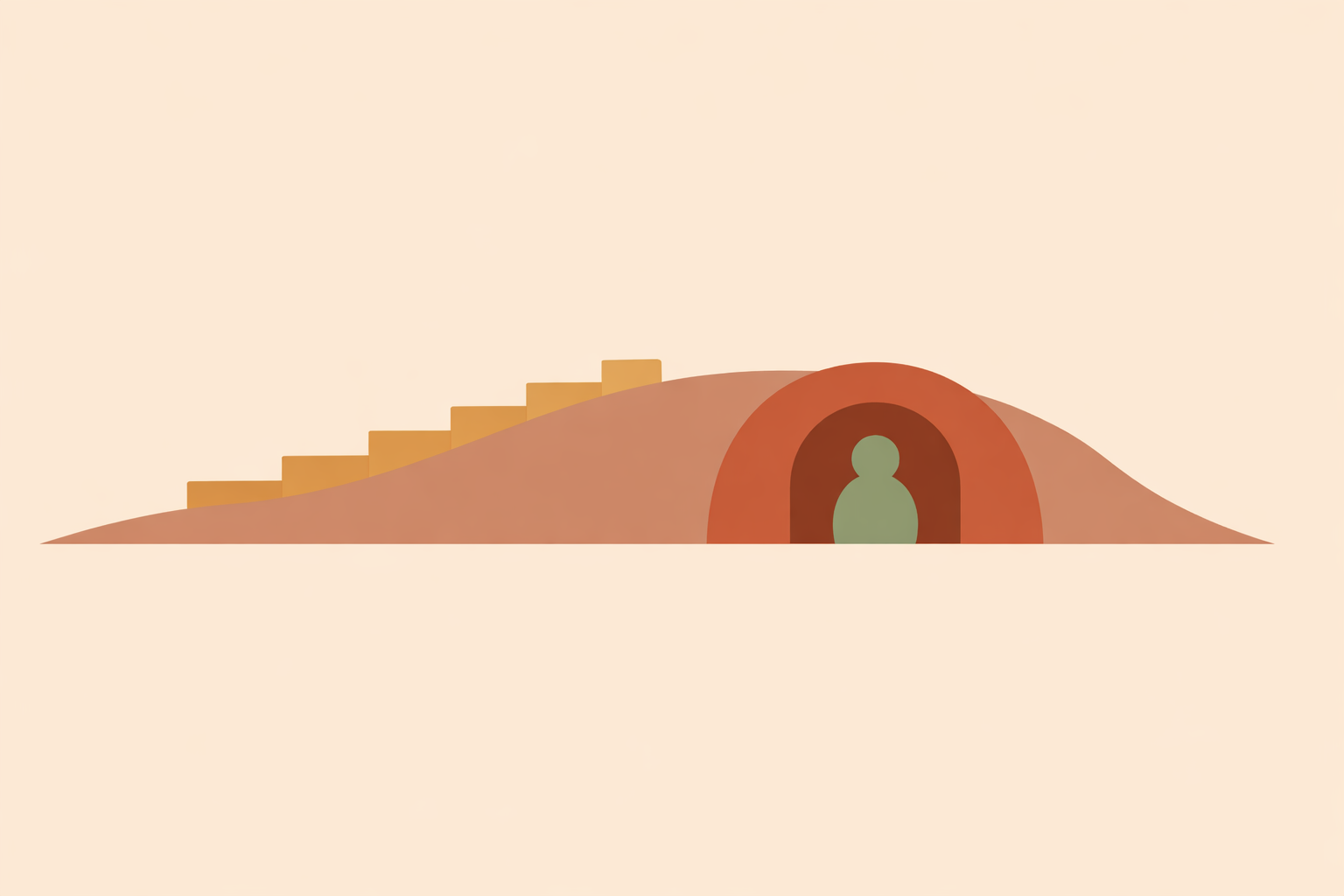
The Hobbit Vault Guide supports client stories that feel grounded, clear, and easy to remember. It borrows from land-based building traditions: simple materials, steady pacing, and progress you can actually see. As a metaphor, it suits honest holistic work—small steps, real life, and quiet wins that compound.
On Naturalistico, the Hobbit Vault Course carries that same spirit through hands-on lessons that translate naturally into storytelling. The real Hobbit Vault is a modest, earth-sheltered build—often upcycled and done on a lean budget—which is a helpful reminder: meaningful change doesn’t need a grand, complicated arc to be real.
Client stories work the same way. You’re not aiming for cinematic transformation; you’re aiming for a repeatable path that respects where someone is now and where they’re sincerely drawn. As Tolkien put it, “A single dream is more powerful than a thousand realities.” Let the dream set direction, then keep the steps practical—and the story tends to stick.
What follows uses the vault’s build flow as a narrative toolkit: map the “land” into a journey, use seven progressions as story beats, keep one evolving identity (your “client hobbit”), maintain continuity with warm recaps, hold cultural safety with care, and run gentle audits so your stories keep maturing alongside your craft.
Key Takeaway: Build client stories like a small, earth-sheltered vault: map the journey, move through seven clear beats, and keep one evolving identity so progress stays coherent. Use warm recaps, cultural safety, and gentle audits to protect continuity and let modest wins compound into a story people remember.
Step 1: Turn the Hobbit Vault Build into a Client Journey Map
From blueprint to story frame
Start the way you’d start on land: orient first, then sketch. Early vault steps—light drawings, simple massing, small decisions—offer a story frame that honors where your client stands today and what they’re reaching for next.
In real sessions, that means using a light map instead of a heavy plan. A quick one-page sketch (or simple model) helps you both re-enter the same storyline without fuss—especially after a gap. Naturalistico also recommends sending a brief recap with agreed next steps between sessions, so continuity stays shared rather than living only in memory.
This approach carries a kind of humble strength. As The Hobbit reminds us, “There is little or no magic about them, except the ordinary everyday sort.” Ordinary moves—orient, name what matters, choose one doable step—are often the ones that last.
When you weave in ancestral ways of seeing, do it with care and consent. The Hobbit Vault draws inspiration from earth-sheltered traditions while being explicit about avoiding appropriation. In your mapping, invite the client to bring their own land stories, symbols, and practices—chosen and named by them—so the narrative begins on familiar ground.
- Five-minute opener: “Where are we standing today? What feels like north?”
- One-page sketch: Name the current place, the near goal, and one modest next step.
- Session close: Confirm the step, the timeframe, and how you’ll both know it’s done.
Step 2: Use the Seven Hobbit Vault Progressions as Story Beats
Seven progressions as narrative rhythm
Complex builds—and complex lives—move better when progress is broken into small, named beats. The Hobbit Vault uses seven short progressions with clear starts and finishes, which keeps attention up and overwhelm down.
For storytelling, you can borrow that rhythm—often framed as “draw, level, harvest, assemble, raise, bury, seal”—and let each progression become a chapter. Each chapter captures a modest win, then closes cleanly, so momentum doesn’t leak away.
That clean finish matters for self-belief: repeated small arcs with definite endpoints tend to build steadiness over time. The vault even emphasizes “definite endpoints”—like stepping away once something is sealed—so effort stays sustainable. Or, as Tolkien says, “It’s the job that’s never started as takes longest to finish.” Begin, finish, rest—then begin again.
Here’s one simple way to map a client story through the seven beats:
- Draw: Clarify one desire in plain language.
- Level: Remove a small obstacle underfoot (time, space, tool).
- Harvest: Gather what’s already available (friend, ritual, herb, journal).
- Assemble: Connect two pieces (habit + reminder, breath + posture).
- Raise: Do a visible one-day action that stands on its own.
- Bury: Protect the gain (schedule, consented boundary, quieter structure).
- Seal: Close the loop, acknowledge the win, and step away to rest.
Think of it like building a small stone path: each placed stone is modest, but it changes how the next step feels. Naturalistico’s teaching style mirrors that—clear, practical, and beginner-friendly—so your stories invite realistic progress rather than performance pressure.
Step 3: Keep One Evolving Client Hobbit (Identity Entities)
Strong beats need a steady through-line. Keep a single, evolving persona for each client—their “hobbit”—so every session, message, and offering adds to one living story instead of scattering into disconnected fragments.
The “vault” metaphor becomes surprisingly precise here. In HashiCorp’s system, identity entities tie multiple logins or aliases back to one real person, helping prevent fragmentation. In storytelling terms, different touchpoints (intake, check-in, group space) should still connect to one evolving identity and one coherent aim.
This is more than organization—it’s integrity. When you avoid one-size-fits-all narratives (the storytelling version of overusing “root” access), you create more room for client agency. Naturalistico emphasizes personalized planning over generic lists, which keeps stories true to a person’s context rather than forcing everyone into the same script.
Gandalf “doesn’t know everything—and there will be unexpected hazards ahead.” Your role is to guide continuity, not claim omniscience.
Practically, that can look like:
- Use the same name, photo, and one-sentence aim for a client story across your site, newsletter, and talks.
- Track wins against the same identity record so progress adds up over months.
- Avoid inflating “client counts” by counting channels as people; keep your marketing honest and grounded.
Step 4: Use Sketches and Recaps to Keep Client Stories Warm
Recaps as warm-standby stories
Stories cool down when life interrupts. Keep them “warm” with short recaps, quick sketches, and easy restarts—so you both re-enter without drama.
In Vault operations, teams use a warm standby replica and pay attention to RPO and RTO so outages don’t erase continuity. In client work, the parallel is simple: open with a brief recap that covers “what we did,” “what moved,” and “what’s next.” Naturalistico recommends sending a short recap with clear next steps between sessions so you can both rejoin the same story quickly, even after a gap.
You can even rehearse your “restart,” the way operators test failover. Decide on a two-minute reboot script for missed weeks. Essentially, you’re lowering the memory load so the story stays usable—and you can gently retire old arcs when they’ve done their job.
Try this five-part warm-standby recap:
- Yesterday: One sentence on what changed.
- Now: One sentence on how it feels.
- North: One sentence on the near aim.
- Next: One sentence on the very next beat.
- Stop: One sentence naming how you’ll know it’s sealed.
“Courage is found in unlikely places,” Tolkien writes. A humble recap is one of those places: it turns “we fell off” into “we’re back,” often in minutes.
Step 5: Practice Cultural Safety Inside the Hobbit Vault Metaphor
Let clients define what safety feels like
Metaphors are never neutral. Use the Hobbit Vault frame as an invitation, not a costume—something you co-create with the client (or set aside) so the story feels respectful and genuinely supportive.
A cultural safety lens recognizes that helping spaces carry power and history, and that practitioners need to stay responsive to emotion, context, and feedback. That stance sits at the heart of many discussions of cultural safety. Research on cross-cultural imagery also highlights that symbols can land very differently across backgrounds—so it’s wise to assume difference, and choose imagery together.
The Hobbit Vault integrates earth-sheltered traditions while clearly naming how to avoid appropriation; mirror that clarity. Some clients enjoy an adventure frame, while others—like Bilbo early on—have “no use for adventures.” Let them decide what “safe” and “respectful” feel like in practice.
- Ask consent for the metaphor: “Would a land-and-shelter story feel grounding or not quite right?”
- Invite ancestral threads: “Any symbols from your people or place you’d like to weave in?”
- Name opt-outs: “We can switch metaphors anytime. What signals should I watch for?”
- Debrief misses: “If I step on your toes, how would you prefer I make it right?”
Keep your tone as modest as your claims. Many Naturalistico learners describe the experience as informative and enlightening—not flashy—because the goal is attunement, not spectacle.
Step 6: Audit, Measure, and Evolve Your Hobbit Vault Client Stories
Story audits and gentle upgrades
Living systems need tending. Treat your client stories like a well-loved homestead: notice what thrives, track what repeats, and make calm upgrades on a cadence that respects both tradition and new learning.
In Vault, you’d rotate audit logs, watch metrics, and follow an upgrade cadence. For your practice, that translates into periodic story review: Which beats tend to stick? Where do people stall? Which metaphors serve which communities best?
Upgrades should feel steady, not trendy. Confidence often arrives the old way—through repeated, well-paced progressions—and your stories can reflect that accumulated proof rather than constant reinvention.
Or, in Gandalf’s dry humor: “Burglar he is… or will be when the time comes.” Trust the process, and let proof accumulate.
Try a monthly story audit:
- Continuity check: One identity per client across channels? Any fragments to merge?
- Beat balance: Are you overusing “raise” and underusing “bury” and “seal” (the protect-and-finish beats)?
- Safety signals: What feedback arrived about imagery, language, or pacing? What repairs were made?
- Outcome notes: Which modest wins repeated? What rhythms (daily, weekly) worked best?
- Upgrade plan: One small improvement to your recap script, templates, or visuals—ship it, then rest.
Many Naturalistico courses are described as in-depth and genuinely useful, and your storytelling can grow the same way: aligned with lineage, honest about what seems to help, and open to learning in community.
Conclusion: Anchor Your Next Client Story with the Hobbit Vault Guide
When client stories follow the Hobbit Vault Guide, they tend to become sturdier: mapped like land, paced through seven progressions, held by one evolving identity, kept warm with recaps, protected by cultural safety, and refined through quiet audits. The result is less “flash,” more follow-through.
To start this week:
- Pick one client and write a one-page land map: where we are, where we’re headed, one next step.
- Name the next beat (draw, level, harvest, assemble, raise, bury, or seal) and put a date on it.
- Draft a 90-second warm-standby recap you can read at the start of the next session.
- Check continuity: one identity, one through-line aim, used across all mentions.
- Ask for cultural safety input and set one easy upgrade you’ll ship afterward.
The vault teachings show that seven small, repeatable progressions—linked through one identity and supported by warm-standby recaps—can build steadiness and trust over time. Naturalistico meets you there with practical tools, a caring community, and learning that respects tradition while staying modern and humane.
In the end, the work is simple and real. A “single dream” can carry a long way when it’s walked in small, well-chosen steps. Keep your stories light, threaded with care, and built to last.
Explore the Hobbit Vault Course
Use Hobbit Vault Course lessons to turn your client journey maps and seven beats into repeatable stories.
Explore Hobbit Vault Course →