Your sessions land. Clients open up, connect the dots, and message later to say something genuinely shifted. And still, the calendar can swing between full and quiet—especially when you’re selling one-offs, improvising discovery calls, and publishing content without a clear path that gently carries people forward.
Most of the time, the issue isn’t your skill. It’s structure. Consistent clients come from a human, rhythm-based system that helps someone move from first contact into a defined journey—long enough for change to take root, simple enough to stay steady.
Key Takeaway: Consistent clients come from structuring your work as a rhythm-based 90-day journey, supported by a warm intake and value-first teaching. When progress is tracked through simple anchors and ethical stories, clients feel held in a process—and continuity, retention, and referrals become the natural outcome.
From One-Off Sessions to 90‑Day Journeys Clients Can Settle Into
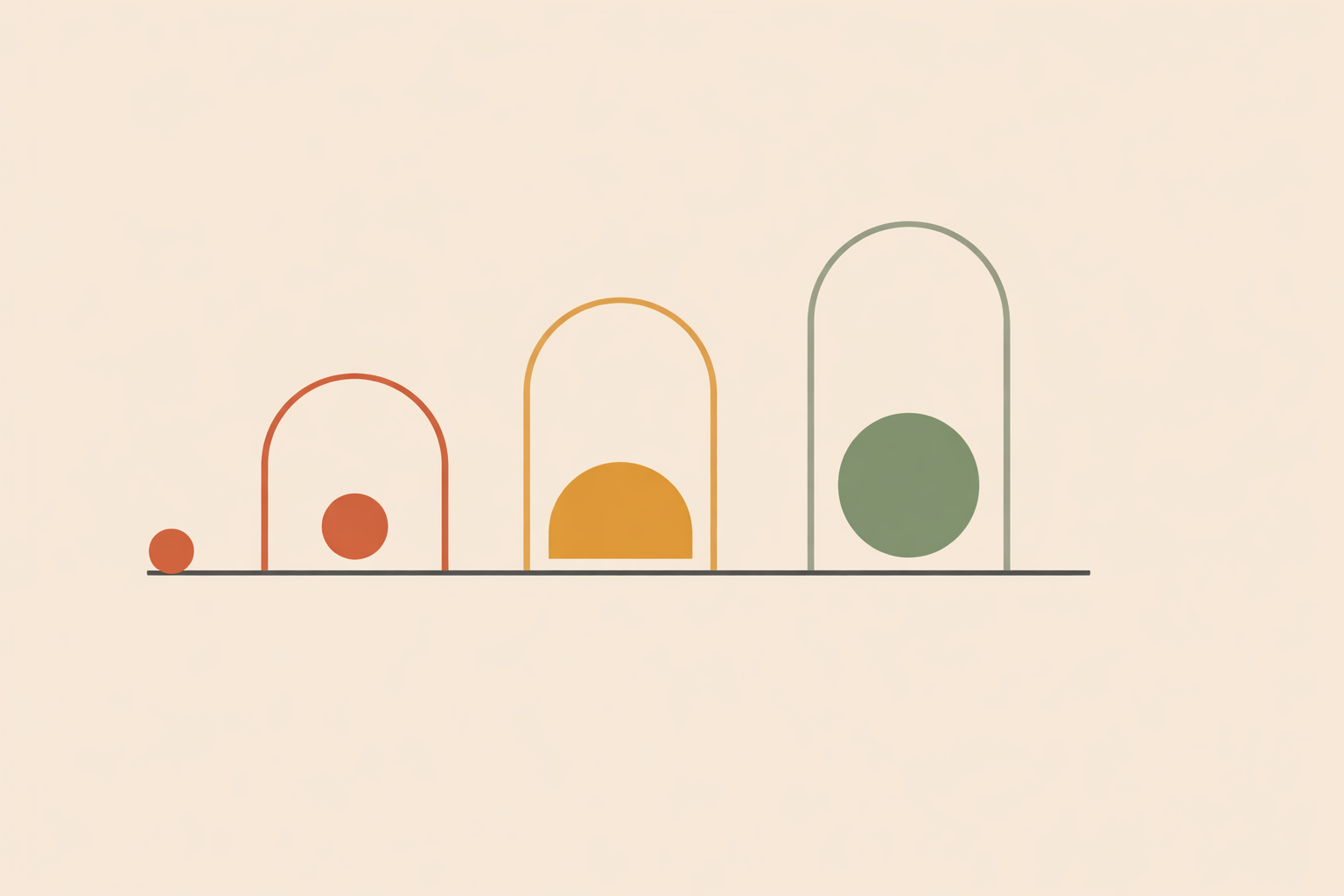
Ninety days is long enough for meaningful change, without feeling like an endless commitment. Think of it like a season: a clear beginning, a steady middle, and a thoughtful close.
Humans rarely transform in isolated spikes; we change in cycles. There are times we feel resourced and focused, and times we feel foggy or drained. Honoring internal rhythms makes growth more sustainable for clients and for you.
Across cultures, traditional mentors and guides have long worked in contained arcs of practice and reflection—try, notice, refine. That apprenticeship spirit maps beautifully onto modern coaching, especially when it’s built around small rituals people can maintain.
In rhythm-focused journeys, clients often notice improvements in daily rhythm as they move from “I’m scattered” to a clearer inner direction. Over a concentrated window, purpose practices can support purpose clarity—which tends to show up as calmer decisions and cleaner boundaries.
As Mel Robbins reminds us, “You are one decision away from a completely different life… step by step.” Your 90‑day arc is that decision, designed to turn one step into the next until transformation feels like a new normal.
Turning 90‑day arcs into the backbone of your practice:
- Name a single focus for each journey: identity, boundaries, or purpose.
- Set 2–3 anchor rituals tied to existing routines (waking, commuting, or evening wind-down).
- Run two-week experiments with reflection prompts; refine each session based on what’s real in their life.
- Close with a simple integration plan and an option to continue into a fresh 90‑day cycle.
Crafting a Warm, Story-Based Intake That Naturally Leads to “Yes”
A gentle, story-led welcome helps people recognize themselves in your work before you ever discuss pricing. When someone feels seen and safe, a 90‑day journey can feel like the next honest step—not a leap.
One of the cleanest shifts is replacing the hard-sell discovery call with a culture-aware welcome flow. Many coaches start with a story-based resource—an audio, short guide, or mini-class—that shows how they work and what “change in rhythm” looks like in real life. From there, a values-listening call checks readiness and fit, then offers a structured path if it’s aligned. Done consistently, a warm welcome can outperform cold outreach because it begins with trust.
Two details tend to lift conversion: a genuinely story-based resource, and language that is inclusive in a real, lived way. People want to hear examples, feel respected, and understand what working together would be like.
That’s where braided funnels shine—email, community, and content woven together so people can move from curiosity to clarity without pressure. That’s the intention behind braided funnels: a steady, relational path that supports commitment.
As a mainstream leadership publication once noted, coaching conversations “absolutely affects relationship.” Your intake should do the same—strengthen trust from the very first hello.
Discovery conversation sketch (gentle and clear):
- Open with a human moment: “What drew you to this? What’s been on your heart lately?”
- Listen for cultural rhythms, responsibilities, and energy patterns, not just goals.
- Reflect a vision in their language; offer one 90‑day focus that fits their life.
- Invite: “If this feels like a yes, we’ll set anchors together and begin.”
Personalizing with Tools and Rituals So Clients Feel Tangible Shifts
Personalization builds trust because it makes change feel trackable. When you blend insight tools with embodied practices and respectful tradition, clients can feel their growth—not just talk about it.
Start with clarity. Thoughtful psychometric tools can surface patterns and strengths in a structured way, so you’re not relying on guesswork. Pair that with evidence-informed reframing from positive psychology, and many clients experience a softer inner critic and more grounded self-talk within a single arc.
Then make it embodied. Gentle, mindfulness-based practices—breath, brief body scans, reflective writing—help people regulate and remember what they’re learning. Put simply: insight sticks better when the body is included.
Even micro-practices can matter. A daily five-minute cyclic sighing practice produced greater boosts in positive affect over 28 days than a brief mindfulness practice. What this means is that “small and doable” can still create real momentum.
Finally, braid in tradition with care. Rituals—like grounding at dawn, a gratitude offering at meals, or a hand-on-heart pause before a hard conversation—root the work in something steadier than a to-do list. When clients carry these anchors into daily rhythm, the journey becomes lived, not just discussed.
“I decided to help others in their human journey,” Ann Betz shares—a reminder that tools serve the person, not the other way around.
Make inner shifts visible:
- Start and end each session with a 1–10 energy and clarity check.
- Track three micro-markers weekly (for example: sleep quality, breath pauses, boundary follow-through).
- Celebrate one “proud micro-moment” at the top of every call.
Braided, Value-First Marketing That Lets Your Teaching Bring Clients to You
Teach in public, invite in private. When your marketing feels like support—not performance—aligned clients tend to arrive more ready.
If your coaching is generous in-session, let your marketing be generous out of session too. Create practical resources that answer real questions your future clients are already searching for. Well-crafted SEO-optimized content often attracts better-fit inquiries than generic posting because it meets someone at a specific point of need.
Then braid your touchpoints. A short teaching-email sequence, one or two community gatherings a month, and respectful check-ins can become an engine that runs quietly in the background. Hybrid virtual-community models can help steady the pipeline as people move from free spaces into paid 90‑day journeys.
Peer connection also adds momentum. Coaches who run small reflection or accountability groups often see stronger ongoing engagement and repeat business, because community reinforces practice between sessions.
The same warm nurture sequences that ease acquisition also set expectations for how you’ll work together: steady, caring, and clear. You’re not persuading—you’re demonstrating what support with you actually feels like.
Teach generously, invite softly:
- Publish one deeply useful piece monthly; repurpose it into social posts, an email, and a mini-class.
- Host a community check-in twice a month; close with a quiet invitation to your next 90‑day cohort.
- Track which topics lead to consults; build new content around those real questions.
Turning Growth Markers into Ethical Stories That Spark Referrals
When progress is named simply and respectfully, clients trust what they’re building—and they’re more likely to talk about it. Ethical storytelling doesn’t hype outcomes; it makes real change easy to recognize.
Start with shared language. Core growth markers can include shifting from “I should” to “I value,” making choices from values instead of fear, and using more self-affirming statements. Even small rituals can signal integration. Tracking the rise of “I sense” language can reflect a client’s growing self-trust and inner listening.
Over a 90‑day arc, many clients also report steadier days when they work with anchors and rituals—feedback that often echoes improved daily rhythm.
Next, make progress concrete. Participants in a coaching intervention reported improvements in perceived capability and opportunities. You can mirror this kind of grounded specificity in your own way: “When we began, you rated boundary confidence at a 3; today, it’s a 7.” It’s clear, human, and doesn’t overstate.
Finally, invite stories that honor privacy and agency. Ask, “What changed for you that you can feel every day?” With permission, share brief, anonymized vignettes centered on the client’s choices and practices—not your heroics. Over time, these become the quiet heartbeat of referrals.
Simple outcome tracker (shareable and ethical):
- Track three markers: one language shift, one embodied ritual, and one values-led choice per week.
- Monthly self-rating (1–10): energy, self-trust, boundary clarity.
- One-paragraph reflection: “What I’m proud of, what I’m learning, what’s next.”
Staying Coachable Yourself: The Inner Work Behind Consistent Clients
Your steadiness sets the tone. When you remain coachable, honor your lineage, and keep learning, your practice stays rooted—and your systems stay humane.
Depth practitioners know we can only guide where we’ve walked. Staying coachable—open to new tools while staying true to your core philosophy—keeps your work alive. Community matters too: coaches who host or join reflection circles often experience more stability and repeat business, because they’re practicing in relationship, not isolation.
Let your approach be both ancient and current. Seasonal rituals and apprenticeship-style learning bring seasonal rhythms into planning and reflection. At the same time, modern supports—like AI-assisted tools for note-taking or pattern-spotting—can be welcomed thoughtfully, as long as the heartbeat stays human.
And don’t underestimate scheduling. Coaches who design around natural rhythms are better positioned to carry a steady client load without burning out, which protects the quality of your work and the consistency of your availability.
As Courtland Warren says, “Choice is a function of awareness.” Keep raising yours—about your energy, your systems, and the communities that hold you—and your client flow will tend to reflect that inner order.
Your support stack (lightweight and lasting):
- Quarterly self-retreat: review your anchors, simplify offers, reconnect to purpose.
- Monthly peer circle: trade sessions, share what’s working, refine nurture flows.
- Ongoing learning: one tool for precision (assessment, questioning) and one for embodiment (breath, ritual).
Bringing It All Together
Consistency isn’t a mystery; it’s a rhythm you design. When you shift from one-off sessions to 90‑day journeys, welcome people through story-led intake, personalize with tools and ritual, and let value-first teaching carry your invitations, your calendar steadies.
Track small growth markers so clients can trust what they’re building. Share outcomes with humility and consent. Keep yourself supported through community and continued learning. Over time, a values-led, transformational practice grows step by step—until “consistent clients” becomes the natural result of how you work.
Build 90-day journeys
Naturalistico’s Transformational Coach pathway helps you turn depth work into a steady, ethical client journey.
Explore Transformational Coach →